Akchour Waterfalls: How to Visit the Hidden Blue Paradise of the Rif Mountains
Akchour Waterfalls: How to Visit the Hidden Blue Paradise of the Rif Mountains
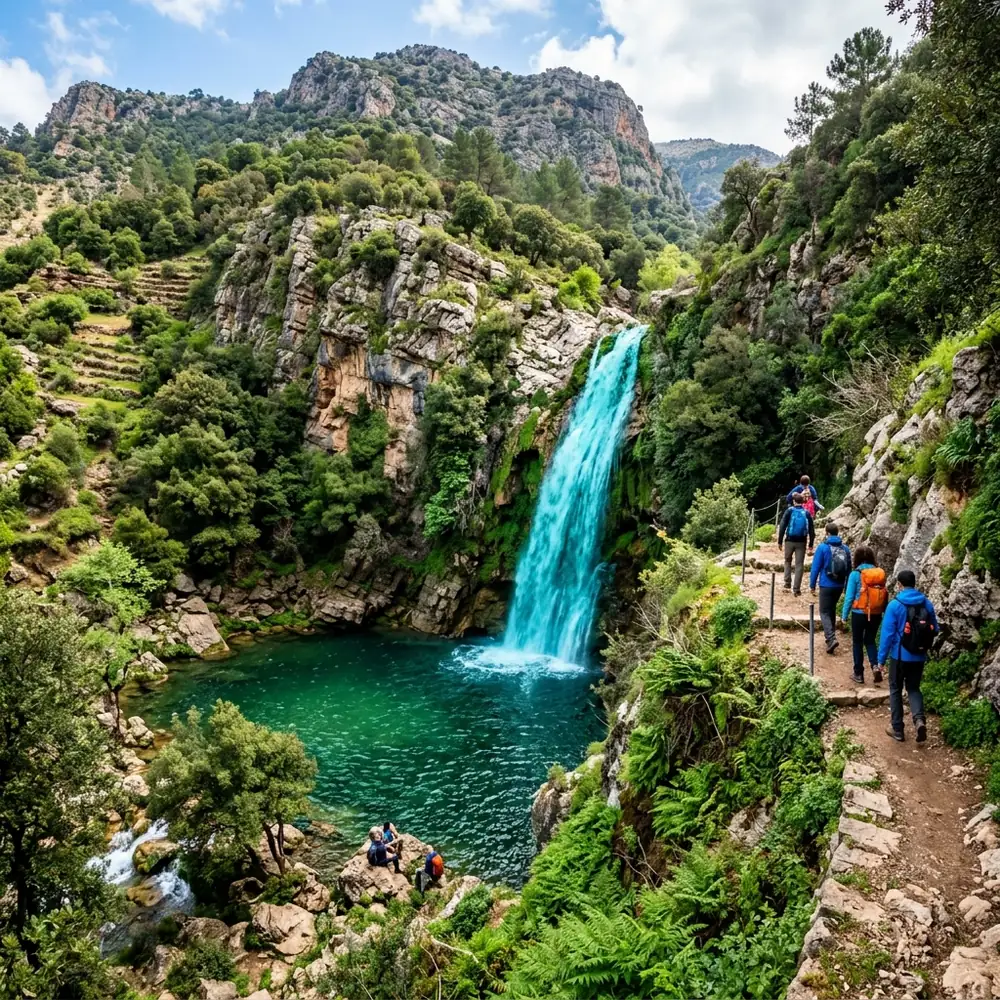
There is a colour that happens when very cold, very clean mountain water runs over limestone bedrock and catches the north Moroccan light. It is a specific blue — turquoise at the edges, deep green at the centre — that does not look real until you are standing in front of it.
That is what waits for you at Akchour.
Where Is Akchour?
Akchour is a small Rif Berber village in Chefchaouen province, approximately 28km northeast of Chefchaouen. The waterfalls are within the Talassemtane National Park, one of Morocco’s most ecologically important protected areas, home to Spanish fir forests that have no equivalent elsewhere in North Africa.
The nearest major city is Chefchaouen — the famous blue city — which serves as the logical base for a visit. Tetouan (70km) and Tangier (110km) are also accessible for day trips, though long ones.
The Two Waterfalls: What You Are Actually Visiting
Most guides describe “Akchour waterfalls” as a single destination. There are actually two separate waterfalls accessible from the village, requiring different amounts of effort:
The First Waterfall (Cascade Principale)
Distance from Akchour village: About 3km one-way Elevation gain: Modest — this is a relatively gentle trail Time: Approximately 45–60 minutes each way Difficulty: Easy to moderate. Families with older children manage it comfortably.
The trail follows the Oued Farda river upstream through a narrow gorge. The riverbed itself serves as the trail in places — you will get your feet wet. The payoff is a 30-metre waterfall dropping into a deep turquoise pool. In spring, the flow is powerful. In summer, more gentle but still beautiful.
Swimming is possible. The water is cold year-round; very cold in spring when snowmelt is contributing.
The God’s Bridge (Pont de Dieu)
Distance from Akchour village: About 6km one-way Elevation gain: Significant in places Time: 2–3 hours each way Difficulty: Moderate. Requires reasonable fitness and sturdy footwear.
This is the more dramatic of the two destinations. The “God’s Bridge” is a natural rock arch spanning the gorge — formed by the river eroding through a softer section of the limestone cliff over thousands of years. The arch is large enough to walk across.
The trail to the Bridge climbs out of the gorge valley, offering views across the Rif forest before descending to the river again. You pass through cedar and fir forest inhabited by Barbary macaques (Morocco’s Atlas monkey) — you will almost certainly see them.
Note: Guides at Akchour village sometimes conflate these two destinations and offer single-day tours covering both. This is feasible for fit hikers starting very early. Most people choose one or the other.
Getting to Akchour: Practical Transport
From Chefchaouen:
The standard route uses a grand taxi (shared long-distance taxi) from the Chefchaouen taxi rank near the main square. The adventure takes about 45–60 minutes on a road that switches between tarmac and dirt in the final section.
Cost: Approximately 25–40 MAD per person if you share (6 passengers per grand taxi). To hire the entire vehicle for the day (recommended for flexibility): 250–400 MAD for the return trip.
Timing: Get an early start. Taxis begin running by 7am from Chefchaouen. Arriving at Akchour by 8:30am gives you the trails before the heat builds and before the organised tour groups arrive around 10–11am.
By private car:
The drive from Chefchaouen takes approximately 45 minutes. Park at the designated parking area near the village. There is a small parking fee of 10–20 MAD. Sat nav works — use “Akchour Cascades” as the destination.
Day trip from Tangier or Tetouan:
Possible but long. A 5am departure from Tangier gives you a comfortable day. Most tour operators in Chefchaouen also offer organised day trips from Tangier.
What to Bring
Essential:
- Water shoes or old trainers you do not mind getting wet — the trail crosses and follows the river
- At least 2 litres of water per person — there are cafés at the start but nothing in the gorge
- Sunscreen — the gorge is surprisingly exposed at midday
- Cash (dirhams) — cafés and guides only accept cash
Strongly recommended:
- Trekking poles for the Bridge trail — some descents are steep
- A bag liner or dry bag for electronics if you plan to photograph near the waterfall
Leave at home:
- Flip-flops or sandals without heel straps — the wet rocks are genuinely slippery
The Café Culture at Akchour
The village itself has a handful of simple cafés and restaurants clustered at the trailhead. These are run by local Amazigh families and offer:
- Tagine (usually available by noon — order on arrival so it is ready when you return)
- Msemen with honey and butter
- Mint tea
- Omelettes
The food is basic and honest. The setting — terraces over the river — is extraordinary. Plan to eat here after your hike.
Timing Your Visit: When Is Best?
Best months: April, May (spring wildflowers, full water flow but not flood season), October, November.
Acceptable months: March (can be cold and wet), September (still warm, water lower but still beautiful), June (starting to get hot).
Avoid if possible: July and August. The heat in the gorge builds significantly by late morning. The waterfalls are at their lowest. And the trail becomes crowded with domestic summer tourism.
Frequently Asked Questions
Is a guide necessary for Akchour? For the First Waterfall: no. The trail is clear and well-used. For the God’s Bridge: a local guide is recommended if this is your first visit. The trails are less obvious in the upper section. Guides charge 100–200 MAD per group.
Is there accommodation near Akchour? Limited but growing. A few guesthouses have opened in the village. Most visitors stay in Chefchaouen (excellent choice, and worth the night for the blue city itself) and do a day trip.
Are there entrance fees for the national park? As of 2026, there is a small conservation fee (20–30 MAD per person) collected at the trailhead. Verify current rates on arrival.
Can I swim at the waterfall? Yes. The pool below the first waterfall is used for swimming. Current is strongest in spring. Always check conditions before entering — flash flooding, while rare, can occur in the gorge after rainfall upstream.
Experience the true heart of Moroccan heritage through its culinary traditions. Join us in preserving and honoring these ancestral recipes.
What People Are Saying
No comments yet. Be the first — we'd love to hear from you.
The Moroccan Editorial Team
Culturally Verified & Fact-CheckedThe Moroccan Food editorial team brings together native culinary researchers, heritage preservationists, and experienced home cooks across Marrakech, Fes, and Casablanca. Every recipe and cultural guide is reviewed against ancestral oral traditions and authentic regional practices.