The Alchemy of Smudging: Serghina and Oud in Moroccan Homes
archived: false
Step into a traditional Moroccan riad on a Friday afternoon or on the eve of a celebration, and before you hear the greeting of your hosts, your senses will be enveloped by a fragrant, resinous cloud of white smoke drifting from the central courtyard. This is Bkhour, the ancestral Maghrebi art of aromatic smudging, space clearing, and welcoming hospitality.
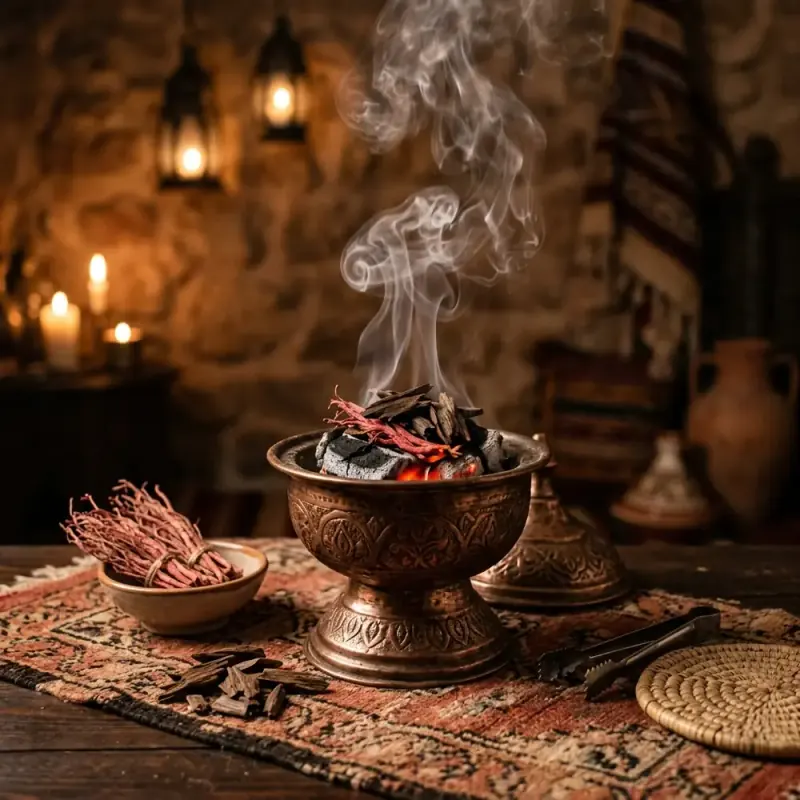
While modern Western households burn paraffin-scented candles or aerosol room sprays, Moroccan domestic life has relied for centuries on glowing oak charcoal braziers (Majmar) burning natural botanical roots, tree resins, and precious wood fragments. At the center of this smudging tradition stand two revered aromatics: Serghina, the indigenous scented root of the bride, and Oud, the legendary resinous agarwood imported from Southeast Asian rainforests.
The Ritual Hardware: The Majmar and Mbikhra
The smudging ceremony requires traditional tools crafted by medina artisans:
- The Majmar (Charcoal Brazier): A pierced terracotta or glazed ceramic brazier containing burning lumps of hardwood charcoal. The coals must burn down to a gentle bed of gray ash before any resin is placed atop them; direct high flames would scorch the delicate essential oils into bitter smoke.
- The Mbikhra (Censer): A tall, footed chalice forged from hammered brass, engraved nickel silver, or pierced copper. As resin melts against the embers inside, fragrant smoke curls upward through filigree vents in the domed lid.
- The Welcoming Wave (Tahia): When guests arrive or after a formal banquet, the hostess walks through the salon holding the smoking censer, gently waving the cool brass base toward each guest so the fragrant smoke washes over their clothing and hair.
Serghina: The Terroir of the Atlas Bride
Unlike imported incense woods, Serghina (Corrigiola telephiifolia) is deeply indigenous to the arid stony hillsides of the Atlas Mountains:
- The Root Harvest: Rural Berber women harvest the knobby root systems of wild mountain knotweeds in early spring. The roots are washed, split, and dried in shaded courtyards.
- The Fragrant Maceration: Raw Serghina has a pleasant, mild wood aroma. The magic happens during curing: the dried roots are steeped in natural orange blossom water (Ma Zhar) or rose water (Ma Ward), mixed with powdered musk, crushed amber, benzoin resin (Jawi), and tinted with food-safe saffron yellow or crimson aker fassi pigments.
- The Wedding Tradition: During bridal hammam rituals and wedding henna nights, Serghina is burned continuously to perfume the bridal chamber, dispel nervous tension, and bestow spiritual blessings (Baraka) upon the new union.
Oud (Agarwood): The Luxury of Kings
At the higher end of the fragrance hierarchy sits Oud (Qist al-Hindi or Oud Qmri). Formed inside the heartwood of Aquilaria trees when infected by specialized molds, pure resin-saturated agarwood chips are among the most expensive raw natural perfumery materials in existence.
In wealthy Fassi and Rabati merchant families, tiny slivers of dark, oil-dense Oud are placed on the embers only on monumental occasions: the birth of a child, Eid celebrations, or when welcoming an honored guest. The smoke is deep, balsamic, leather-sweet, and meditative, lingering in woolen salon carpets and cedarwood ceilings for days.
Psychological and Hygiene Functions of Smudging
Beyond spiritual protection (Tard Al-Ayn or warding off the evil eye), the weekly burning of natural aromatics served critical architectural and hygiene purposes:
- Natural Pest Deterrent: Serghina, benzoin, and cedar smoke contain natural terpenes that naturally repel mosquitoes, moths, and carpet beetles from antique wool rugs.
- Moisture and Odor Purification: In thick-walled traditional riads, the dry, warm, antimicrobial smoke purified indoor air during damp winter months.
- Aromatherapeutic Calming: Inhalation of natural frankincense, benzoin, and agarwood resins stimulates olfactory receptors, triggering parasympathetic nervous system relaxation and easing mental fatigue.
Frequently Asked Questions
Is it safe to inhale smudging smoke in an enclosed room?
Traditional Moroccan smudging is practiced with windows or courtyard roofs open for proper airflow. The censer is moved through the room for two to three minutes to scent the air and fabrics, rather than left burning continuously in a closed, unventilated bedroom. Always ensure adequate ventilation.
How do I tell genuine Serghina roots from cheap dyed wood shavings?
Real Serghina consists of dense, fibrous, twisted root segments. When placed on warm charcoal, it melts slowly, releasing sweet honey-rose aromatics without scorched chemical smells. Cheap counterfeits use regular pine wood shavings drenched in synthetic chemical perfumes that smell harsh and sting the eyes.
What kind of charcoal is best for burning natural Moroccan resins?
Use natural hardwood charcoal (such as compressed olive wood or coconut shell coals) that is chemical-free. Avoid self-igniting chemical barbecue briquettes treated with petroleum lighter fluids, which ruin the pure fragrance of natural resins.
Can I burn Moroccan Bkhour on an electric burner without charcoal?
Yes. Modern electric incense warmers are an excellent alternative. Set the burner to medium heat (around 160°C, 180°C) and place a small piece of foil beneath the resin chips. The indirect heat melts the volatile oils cleanly without producing combustion smoke.
Experience the true heart of Moroccan heritage through its culinary traditions. Join us in preserving and honoring these ancestral recipes.
What People Are Saying
No comments yet. Be the first — we'd love to hear from you.
Samira
Culturally Verified & Fact-CheckedSamira researches rural foodways and wild mountain herbs across the High Atlas and Rif, championing local farmers and small-scale cooperatives.