Alum Stone (Chebba): The Natural Mineral Antiseptic of Moroccan Hammams
archived: false
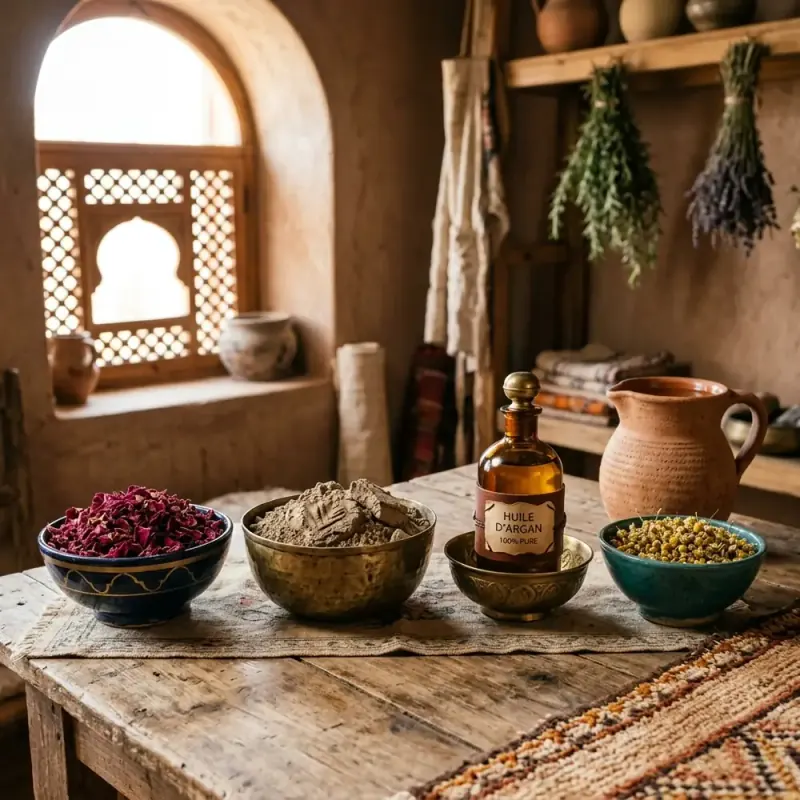
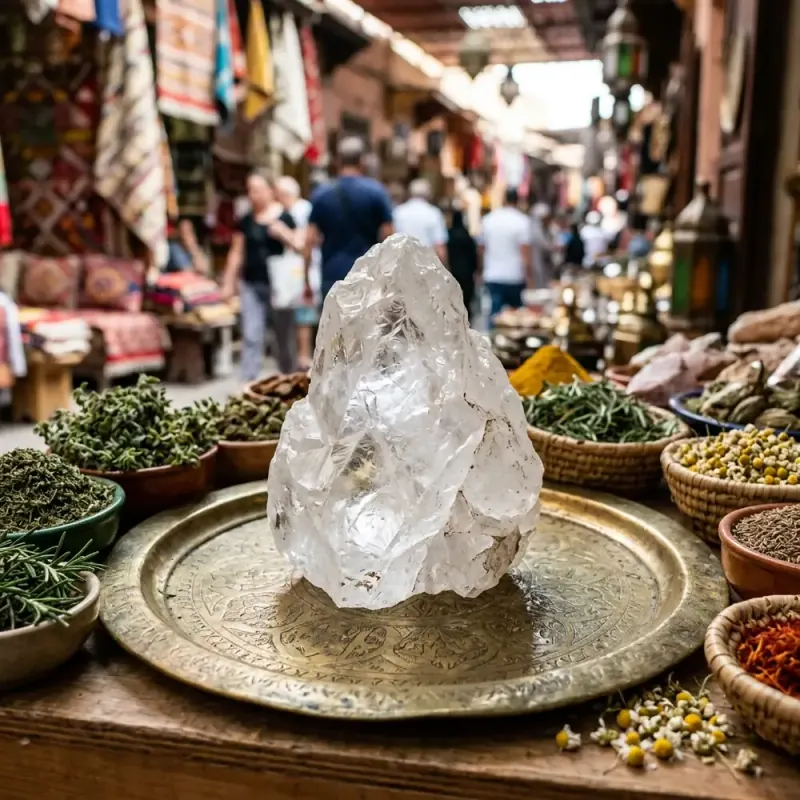
In the traditional herbalist stalls (Attarine) and neighborhood barbershops of the Moroccan medina, you will always spot heavy glass jars filled with jagged, translucent white crystals that look like chunks of raw sea salt or quartz mineral. In Moroccan Darija, this natural mineral crystal is known as Chebba (Potassium Alum, Shabbah in classical Arabic).
Long before modern industrial cosmetic laboratories manufactured synthetic aluminum chlorohydrate antiperspirants, alcohol-based aftershaves, and chemical astringents, Moroccan households and hammam bathers relied on Chebba as a gentle, completely natural mineral antiseptic, blood coagulant, and personal hygiene stone.
The Mineral Nature of Natural Potassium Alum
Natural Chebba is potassium alum (hydrated potassium aluminum sulfate, $KAl(SO_4)_2 \cdot 12H_2O$), a naturally occurring mineral salt harvested from natural volcanic deposits and limestone evaporite beds in the Atlas Mountains and pre-Saharan plateaus:
- The Crucial Chemical Distinction: Commercial synthetic antiperspirants contain aluminum chlorohydrate or aluminum zirconium, which consist of microscopic synthetic molecules that absorb through the skin into the bloodstream and physically plug pores to block natural sweating.
- The Natural Potassium Alum Mechanism: Natural potassium alum consists of large, stable crystalline salt molecules that cannot penetrate the skin barrier. Instead of blocking sweat glands, Chebba sits on the surface of the skin, creating an invisible, microscopic saline mineral film that inhibits the reproduction of odor-causing bacteria without halting natural thermoregulatory perspiration.
Traditional Moroccan Uses of Chebba
Chebba plays versatile roles in domestic Moroccan wellness:
1. The Barber’s Styptic Block
Walk into an authentic medina barbershop in Fez or Marrakech for a straight-razor shave, and the barber will finish the service with a smooth block of Chebba. Moistened with cold water and swept across freshly shaved skin, the mineral’s natural astringent properties instantly constrict surface capillaries, stop minor nicks or razor bleed points on contact, and soothe razor burn without synthetic alcohol stinging.
2. The 24-Hour Hammam Natural Deodorant
Following a deep steam and body scrub in the public hammam, bathers wet a polished crystal of Chebba with pure rose water or spring water and rub it gently under the arms. Because bacteria cannot survive on the saline mineral barrier, it provides reliable, twenty-four-hour odor protection without staining white cotton clothing or disrupting natural skin flora.
3. Powdered Eye Care and Oral Astringent
In traditional Moroccan dental hygiene, a pinch of finely pulverized Chebba powder mixed with ground cinnamon and sea salt was used as a tooth-cleaning powder to firm bleeding gums, soothe mouth ulcers, and reduce oral bacterial colonies.
4. Natural Textile Dye Fixative
Beyond cosmetics, traditional carpet weavers in the Middle Atlas use Chebba as a chemical mordant. When boiling natural sheep wool with plant dyes (such as madder root for red or pomegranate rind for yellow), adding Chebba to the dye bath forms a chemical bond between the wool keratin and the plant pigments, locking in bright, fade-resistant color for decades.
How to Select Real Potassium Alum
When buying Chebba in the medina, be aware that industrial synthetic ammonium alum blocks are sometimes sold alongside natural mineral crystals:
| Attribute | Natural Potassium Alum (Authentic Chebba) | Synthetic Ammonium Alum | | : - | : - | : - | | Visual Texture | Translucent to semi-opaque crystalline matrix; natural mineral veins and irregular fractures. | Uniform, milky, chalky white appearance; perfectly molded shape. | | Weight & Feel | Dense, cool to the touch like raw mineral rock. | Slightly lighter; feels powdery on the fingertips. | | Origin | Harvested from natural volcanic mineral veins. | Manufactured from industrial chemical byproducts. |
Frequently Asked Questions
Can Chebba cause skin irritation?
Natural potassium alum is generally hypoallergenic and well-tolerated by sensitive skin. However, because it is an astringent mineral salt, applying it to severely cracked or sunburned skin may cause mild transient tingling. Always moisten the crystal with water before rubbing it against skin.
How long does a single piece of Chebba last?
A single fist-sized crystal of Chebba can easily last an individual two to three years of daily use. Because it dissolves only microscopically when moistened with water, the crystal wears down very slowly over time.
Does Chebba leave white residue on dark clothing?
No. Unlike stick deodorants formulated with white waxes, talc, or petroleum oils, Chebba is a clear, water-soluble mineral salt. Once it dries on your skin, it is invisible and will not leave chalky yellow or white stains on shirts.
Can Chebba be used to purify muddy drinking water?
Yes, historically in rural southern Morocco, nomad travelers used small crystals of alum to clarify turbid river water. Adding a piece of Chebba causes suspended mud and clay particles to coagulate and settle rapidly to the bottom of the vessel, leaving clean, clear water on top.
How should you store a block of natural Chebba to prevent dissolution?
Always keep your potassium alum block on an elevated, perforated soap dish in a dry area outside the direct steam of the shower. Because natural alum is a water-soluble mineral salt, allowing it to sit in a pool of water will erode the crystal structure rapidly and cause it to break down into brittle fragments.
Can Chebba be used alongside conventional fragrances?
Yes, natural alum works purely by creating a micro-thin mineral barrier that neutralizes odor-causing bacteria without blocking perspiration or releasing any scent. Because it is completely odorless, you can apply your favorite botanical oils, orange blossom water, or perfumes without any aromatic clashing.
Experience the true heart of Moroccan heritage through its culinary traditions. Join us in preserving and honoring these ancestral recipes.
What People Are Saying
No comments yet. Be the first — we'd love to hear from you.
Sara
Culturally Verified & Fact-CheckedSara studies the nutritional and functional science of Moroccan ingredients, from pure argan oil and Taliouine saffron to wild medicinal herbs.