The Art of the Medina Butcher: Nose to Tail Eating
The Art of the Medina Butcher: Nose to Tail Eating
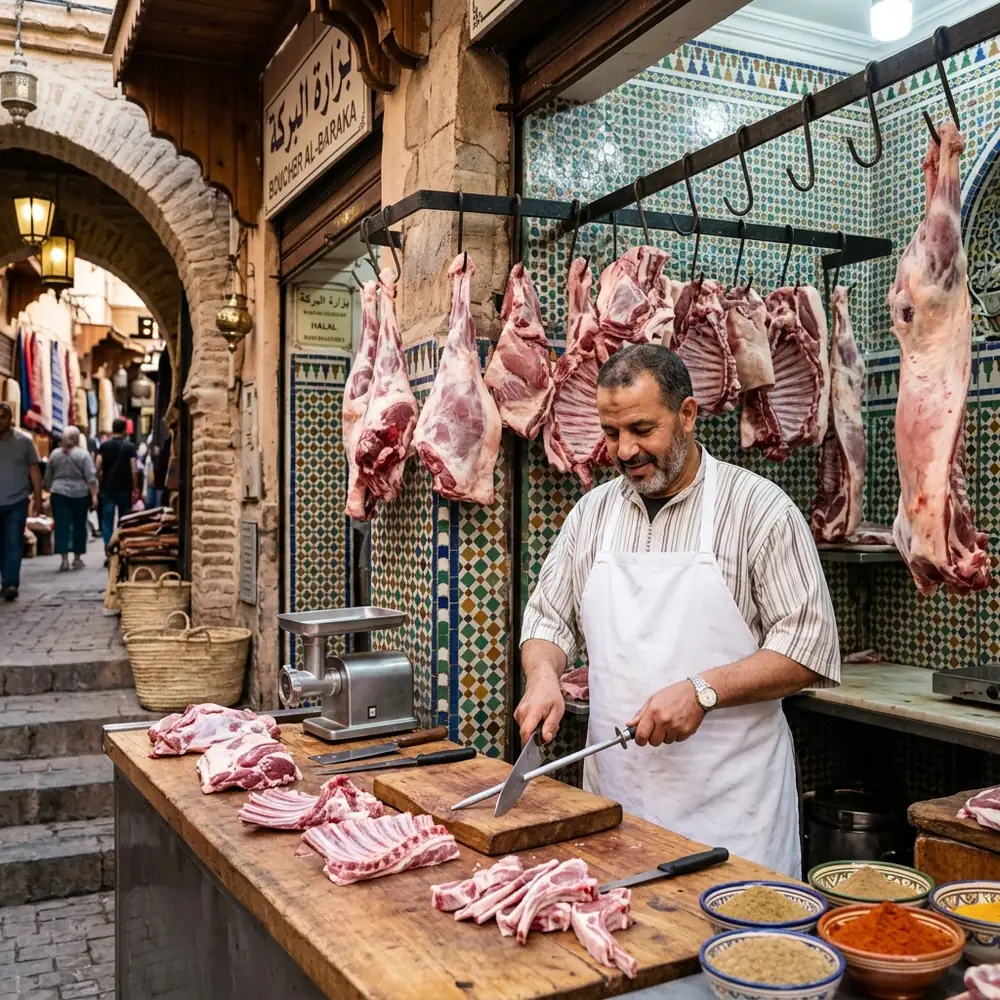
Walk past the butcher’s stall (Guezzar) in a traditional Moroccan medina, and you will not just see neat steaks wrapped in plastic. You will see entire lambs hanging on hooks, rows of meticulously cleaned sheep heads, lungs, tripe, and trotters.
For the Moroccan cook, meat is precious. Long before “nose-to-tail” dining became a fashionable trend in Western restaurants, the traditional Moroccan kitchen was built on the philosophy of absolute zero waste.
The Tripe Stew: Tkalia
Consider Tkalia, a fiercely beloved dish made from lamb or beef tripe, lungs, and sometimes intestines. It requires an extraordinary amount of prep work—cleaning, boiling, and scraping. It is then slow-cooked in a thick, velvety tomato sauce heavily spiced with cumin, paprika, garlic, and preserved lemon. The result is deeply savory, gelatinous, and rich.
The Roasted Head
During Eid al-Adha (the Festival of Sacrifice), the sheep’s head is never discarded. It is charred over an open fire in the street to remove the hair, thoroughly cleaned, and then steamed for hours with cumin and salt. The cheek meat is considered the most tender and flavorful part of the animal, often reserved for the elders of the family.
Even the trotters (Kour3ine) are slow-cooked overnight with chickpeas and raisins to create a rich, collagen-heavy stew. By respecting every part of the animal, Moroccan cuisine honors the sacrifice and ensures that the poorest communities can still access deeply nourishing, highly spiced, and delicious protein.
Experience the true heart of Moroccan heritage through its culinary traditions. Join us in preserving and honoring these ancestral recipes.
What People Are Saying
No comments yet. Be the first — we'd love to hear from you.
Youssef Amazigh
Culturally Verified & Fact-CheckedThe Moroccan Food editorial team brings together native culinary researchers, heritage preservationists, and experienced home cooks across Marrakech, Fes, and Casablanca. Every recipe and cultural guide is reviewed against ancestral oral traditions and authentic regional practices.