The Art of the Moroccan Spice Market: How to Buy Spices Like a Local
archived: false
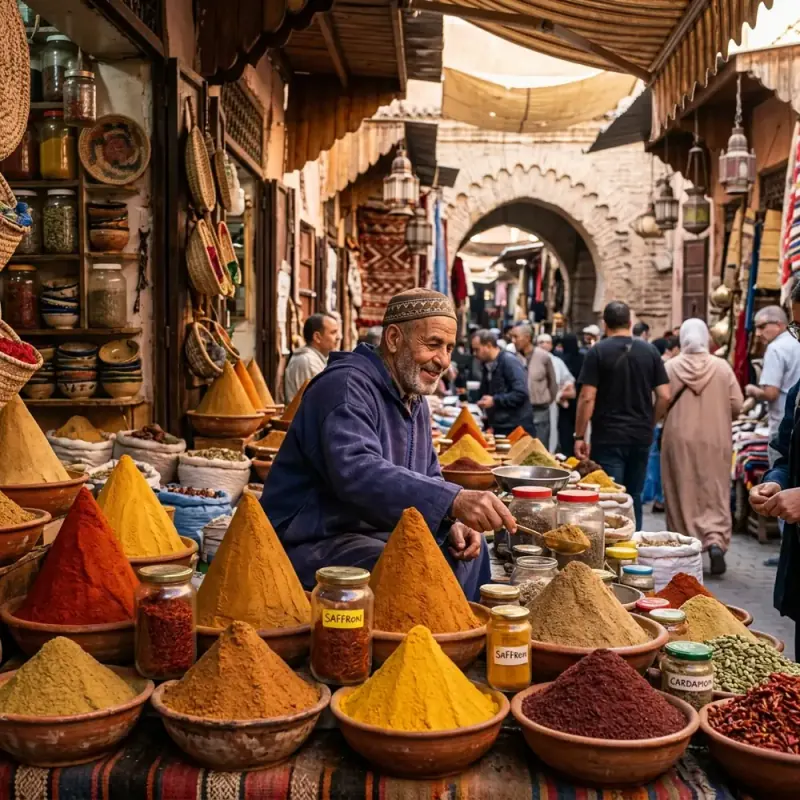
For travelers visiting Morocco, stepping into the historic spice markets, whether the ancient Souk el-Attarine in the medieval heart of Fez, the sunlit Rahba Kedima square in Marrakech, or the ocean-facing alleys of Essaouira, is an unforgettable sensory awakening. Towering, razor-sharp geometric cones of golden turmeric, scarlet paprika, and mottled Ras el Hanout rise out of woven rush baskets; burlap sacks overflow with fragrant cinnamon quills, dried rosebuds, and wild mountain thyme.
Yet for all its sensory romance, the Moroccan spice souk is a serious commercial trading arena that has operated according to strict mercantile traditions for a thousand years. Unprepared visitors frequently purchase stale pre-ground powders, adulterated saffron, or overpay by three hundred percent for generic blends packaged for tourists.
Learning to navigate the spice souk with local knowledge, territorial discernment, and respectful bargaining etiquette allows you to bring home the authentic culinary gold of the Kingdom.
1. The Cardinal Rule: Buy Whole, Not Ground
The single most important principle practiced by discerning Moroccan cooks is simple: never buy pre-ground spices from open decorative mounds in high-traffic tourist alleys.
While those towering, perfectly sculpted cones of cumin, ginger, and paprika look stunning in travel photographs, they are essentially open-air displays exposed to baking desert sun, windblown medina dust, humidity, and diesel fumes from passing delivery mopeds:
- Essential oils (such as cuminaldehyde in cumin and zingiberene in ginger) oxidize rapidly upon contact with air and sunlight, losing eighty percent of their flavor potency within weeks.
- Open powders are vulnerable to commercial adulteration: low-grade paprika is often cut with red brick dust or dyed corn flour, and ground turmeric is stretched with yellow chemical food dyes.
The Local Practice: Walk into the shop, ignore the open cones on the street, and look for the deep glass jars or clean burlap sacks in the back containing whole spices: whole wrinkled nutmeg seeds (Gouza), whole dried ginger roots (Skinjbir), curled quills of true Ceylon cinnamon (Qerfa Beldia), and whole greenish-brown cumin seeds (Kamoun Beldi). Ask the merchant (Attar) to weigh your whole spices and grind them directly in front of your eyes using his heavy stone or electric spice mill.
2. Master Sensory Tests for Authenticity
When purchasing premium spices, execute these quick sensory and physical tests before agreeing on a price:
Saffron (Za’afran Horr)
- The Test: Place two threads into a small cup of cold water provided by the shopkeeper. Genuine saffron from Taliouine takes five to ten minutes to diffuse a clear golden-yellow hue, and the thread itself stays crimson red. If the water turns instant chemical red or the thread turns white, it is dyed corn silk or safflower. Walk away.
True Cinnamon vs. Cassia (Qerfa)
- The Test: Inspect the bark quill. True Moroccan Ceylon Cinnamon (Qerfa Beldia) consists of multiple ultra-thin, delicate, paper-like layers rolled tightly together like a fine cigar; it crushes easily between your fingertips and has a sweet, subtle, woody perfume. Inexpensive industrial Cassia consists of a single thick, dark brown, hard, hollow woody cylinder that cannot be broken with bare fingers, carrying an aggressive, spicy, harsh medicinal burn.
Cumin (Kamoun Beldi)
- The Test: Rub a few whole seeds between the palms of your warm hands and bring them to your nose. Authentic Moroccan Kamoun Beldi releases an immediate, room-filling, warm, peppery, earthy fragrance with zero stale, dusty undertones.
3. Demystifying Ras el Hanout: Custom Blend vs. Pre-Mix
Ras el Hanout translates literally to “The Head of the Shop”, the proprietary master blend representing the apex of each individual spice merchant’s craft.
Avoid purchasing pre-packaged plastic bags labeled “Ras el Hanout” from souvenir stalls, which often consist of cheap curry powder, excessive yellow food dye, and stale black pepper. Instead, engage with a reputable master herbalist (Maâlem Attar):
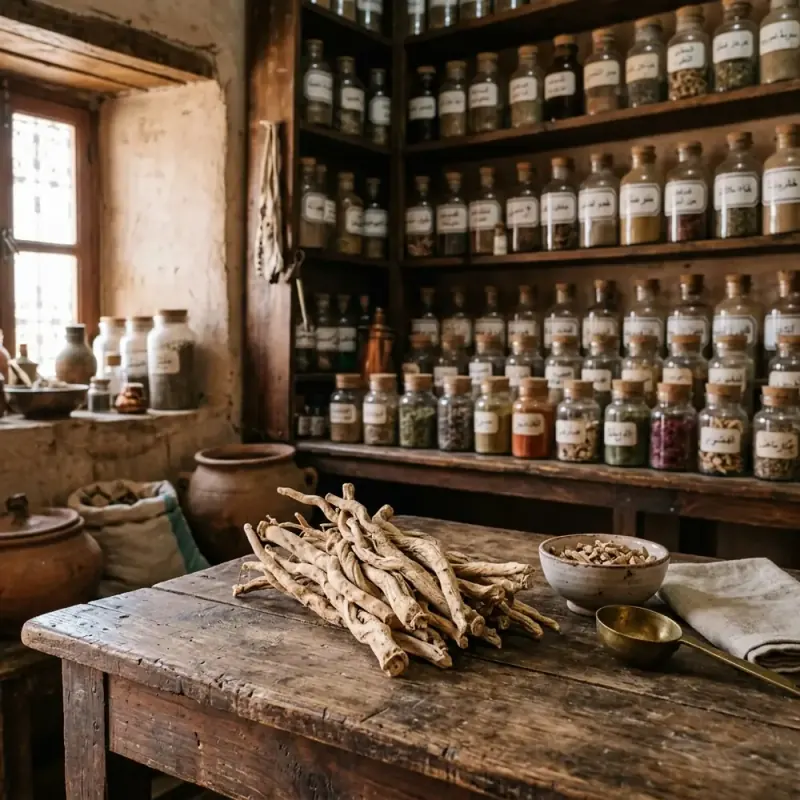
- Ask him what aromatics compose his blend. A true traditional Ras el Hanout contains between twenty to thirty-five distinct whole botanicals: cubeb pepper (Kebbeba), mace blades (Bsibisa), green cardamom (Qaqoulla), dried ashwagandha roots, monk’s pepper, dried Damascus rosebuds, grains of paradise, and nutmeg.
- Ask him to blend and grind a small 100-gram batch for you on the spot.
4. Souk Etiquette and Respectful Bargaining
Bargaining in a Moroccan spice souk is not a hostile confrontation; it is a polite social conversation over sweet mint tea.
- Establish Rapport First: Greet the merchant warmly with “Salam Alaykum” (peace be upon you), ask how his day is progressing, and show genuine curiosity about his spices.
- Ask for the Price per Kilo: Always ask for the price by weight in kilograms (Bchhal l’kilo?) rather than asking how much a small unmarked bag costs. This immediately signals to the merchant that you understand market mechanics.
- The Realistic Fair Discount: In certified spice shops, fair discounts are typically fifteen to thirty percent below the initial opening quote. Spices are agricultural commodities with real production costs; do not expect to purchase hand-harvested Taliouine saffron or wild mountain herbs for ninety percent off.
- Accepting Tea: If the merchant invites you to sit on a wooden stool and pours a glass of hot mint tea, accept with gratitude. Drinking tea does not legally obligate you to buy, but it signifies mutual respect. If you agree on a price, conclude the purchase with a smile and a handshake.
Frequently Asked Questions
Which Moroccan cities have the best spice markets?
Fez is renowned for imperial culinary spices and rare medicinal resins in the historic Souk el-Attarine; Marrakech offers an overwhelming variety of colorful displays and custom spice blends in Rahba Kedima; and Essaouira is celebrated for pristine coastal sea salt, Atlantic wild herbs, and fresh spices sold at honest, relaxed prices.
How should I pack spices in my luggage for flying home?
Spices should be sealed in double ziplock plastic freezer bags or airtight glass jars, and packed in your checked luggage. Declare all dried culinary spices at customs when entering your home country; commercial dried culinary spices for personal use are generally permitted by customs authorities in North America and Europe.
How long do whole spices remain fresh at home?
Stored in airtight glass containers in a cool, dark kitchen pantry away from your stovetop and direct sunlight, whole unground spices retain their essential oils, medicinal potency, and fresh, potent aroma for two to three years. Ground spices should ideally be consumed within six to nine months.
Can I buy culinary Argan oil at the spice market?
While spice merchants sell argan oil, verify that you are buying culinary argan oil (pressed from lightly toasted argan kernels, possessing a deep golden-amber color and intense hazelnut aroma) rather than cosmetic argan oil (cold-pressed from raw untoasted kernels, which is pale yellow, virtually scentless, and intended exclusively for skin and hair).
Experience the true heart of Moroccan heritage through its culinary traditions. Join us in preserving and honoring these ancestral recipes.
What People Are Saying
No comments yet. Be the first — we'd love to hear from you.
Houssam Elmrabet
Culturally Verified & Fact-CheckedHoussam Elmrabet is a Moroccan researcher in territorial marketing and cultural heritage preservation. His work documents regional gastronomic identities, local agricultural heritage, and how ancestral culinary traditions define authentic territorial branding across the Kingdom.