Ashwagandha in the Maghreb: The Ancient Energy Root of Moroccan Herbalists
archived: false
In contemporary Western herbalism, Ashwagandha (Withania somnifera) is celebrated as one of the premier adaptogenic super-herbs of Ayurvedic tradition. Yet few travelers, and surprisingly few modern city dwellers in Morocco, realize that this ancient restorative plant grows wild across the rocky hillsides, coastal scrublands, and semi-arid valleys of the Moroccan Kingdom, where traditional apothecaries have utilized it for centuries under the classical Arabic and Amazigh names Sakran or Al-Faqqous.
Often nicknamed by local herbalists as the “Ginseng of the Maghreb,” Moroccan Withania is a botanical powerhouse: an ancient tonic root that simultaneously calms a stressed nervous system, rebuilds physical stamina, supports adrenal health, and promotes restorative nighttime sleep.
Botanical Terroir: The Resilient Shrub of the Sous Valley
Withania somnifera is a hardy, drought-resistant perennial shrub belonging to the Solanaceae (nightshade) family:
- The Physical Plant: Reaching a height of one to one-and-a-half meters, it features dull green oval leaves, small bell-shaped green flowers, and brilliant scarlet-red berries enclosed within papery lantern-like calyces resembling miniature tomatillos.
- The Terroir: It thrives in poor, rocky, sun-baked soils from the Sous Valley near Taroudant to the Mediterranean coastal hills near Tetouan. The plant’s ability to flourish under intense solar radiation and minimal rainfall concentrates its bioactive secondary metabolites.
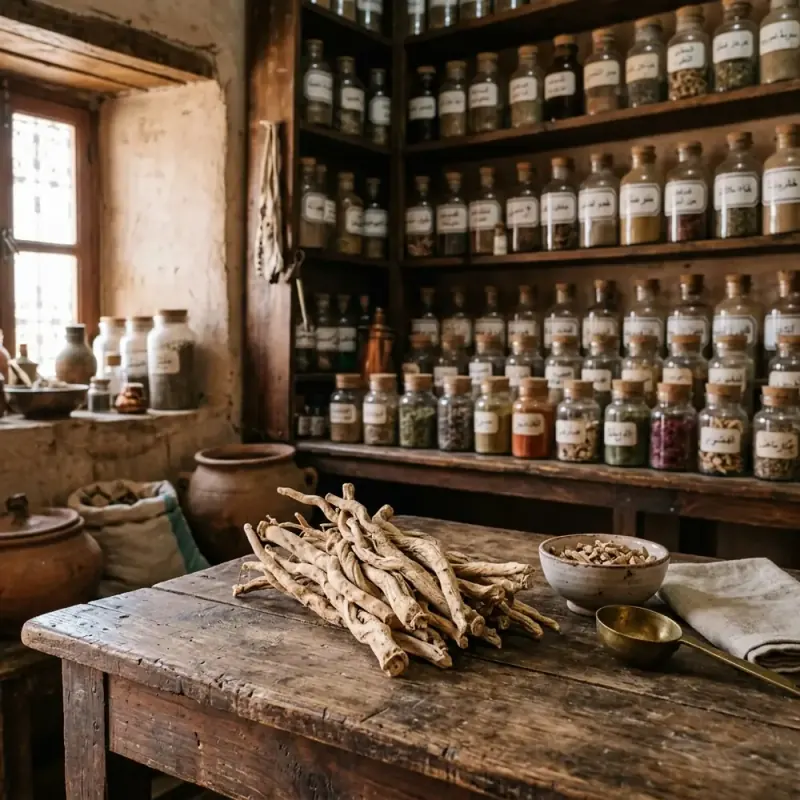
- The Harvest: The prized medicinal portion is the long, fibrous, tuberous taproot. Harvested in late autumn after the berries ripen, the roots are scrubbed clean, dried in shaded verandas, and ground into pale-tan, earthy-smelling powder.
The Science of Adaptogens: Withanolides and Calm Energy
What makes Withania somnifera remarkable is its dual, bidirectional regulatory action within the human body:
The primary bioactive compounds in the root are withanolides (steroidal lactones) and alkaloids (including withanine and somniferine):
- Cortisol Modulation: When the body is under acute or chronic stress, withanolides interact with the hypothalamic-pituitary-adrenal (HPA) axis, modulating excessive cortisol spikes and blunting the physiological toll of chronic tension.
- GABA-Mimetic Calming: The Latin species name somnifera translates to “sleep-inducing.” Specific phytochemicals in the root gently stimulate gamma-aminobutyric acid (GABA) receptors in the brain, quieting mental racing and easing anxiety without causing heavy chemical grogginess.
- Physical Stamina and Vitality: Unlike caffeine, which provides artificial nervous energy by depleting adrenal reserves, Withania supports cellular mitochondrial ATP production, enhancing natural endurance and muscular recovery.
Traditional Moroccan Apothecary Formulations
In traditional Moroccan medina herbalism (Al-Tibb Al-Arabi), master Attarine prepare Withania root in specific synergistic combinations:
1. The Winter Restorative Electuary (Ma’joun Al-Quwwa)
For physical fatigue, elderly debility, or recovery after illness, herbalists blend finely ground Withania root with toasted almond butter, pure mountain thyme honey, ground ginger, and a pinch of Ceylon cinnamon. A teaspoon taken every morning provides sustained metabolic warmth and stamina.
2. Golden Night Milk for Insomnia
To induce peaceful sleep, grandmothers simmer half a teaspoon of powdered root in a cup of whole goat’s milk or almond milk with a pinch of turmeric, black pepper (which enhances phytochemical absorption), and a few strands of Taliouine saffron. Consumed thirty minutes before sleep, it calms the nervous system and relaxes tight muscles.
3. Joint and Rheumatic Compresses
The fresh leaves of the plant, crushed and warmed with pure olive oil, were historically applied as topical poultices to soothe inflamed, arthritic knee joints and swollen tendons after hard agricultural labor.
Important Precautions and Usage Rules
Because Withania somnifera belongs to the nightshade family and carries potent physiological effects, respect these practical guidelines:
- Dosage Discipline: Standard daily culinary and herbal dosage of the raw root powder is modest, between half a teaspoon to one full teaspoon (roughly 1.5 to 3 grams) daily.
- Avoid During Pregnancy: Pregnant women should avoid therapeutic doses of Ashwagandha, as high concentrations of withanolides can stimulate uterine tone.
- Take with Food or Healthy Fats: The fat-soluble withanolides in the root are absorbed most efficiently when consumed with healthy fats such as whole milk, olive oil, or almond butter.
Frequently Asked Questions
Does Moroccan Ashwagandha taste bitter?
Yes, the raw root powder has a pronounced earthy, slightly bitter, woody taste with an aroma traditionally described in Sanskrit as “the smell of a horse” (reflecting the ancient belief that it imparts equine strength). In Moroccan practice, the powder is almost always blended into sweet mountain honey, warm milk, or spiced nut butter to mask its natural bitterness.
Can Ashwagandha cause drowsiness during daytime work?
When taken in normal moderate doses in the morning, Ashwagandha typically provides calm, focused mental clarity rather than daytime sedation. It calms nervous tension while enhancing physical energy. Higher doses taken in the evening promote natural sleepiness.
How long does it take to notice the benefits of Ashwagandha?
Ashwagandha is a tonic adaptogen that builds cumulative benefits over time rather than providing an instant stimulant jolt. Most individuals notice improved stress resilience, calmer sleep, and better physical stamina after two to four weeks of consistent daily use.
Can Ashwagandha interact with thyroid medication?
Yes. Because Withania has been shown to naturally stimulate thyroid hormone production (particularly T4 to T3 conversion), individuals taking pharmaceutical thyroid replacement medications should consult their healthcare provider before using concentrated Withania supplements.
Experience the true heart of Moroccan heritage through its culinary traditions. Join us in preserving and honoring these ancestral recipes.
What People Are Saying
No comments yet. Be the first — we'd love to hear from you.
Sara
Culturally Verified & Fact-CheckedSara studies the nutritional and functional science of Moroccan ingredients, from pure argan oil and Taliouine saffron to wild medicinal herbs.