The Great Atlas Cedar Forests: Protecting the Ancient Alpine Soul of Morocco
archived: false
Ascending into the cool, mist-shrouded limestone massifs of the Middle Atlas mountains around Azrou, Ifrane, and Khénifra, the palm oases and olive groves of the lowlands give way to an astonishing alpine ecosystem: towering, ancient evergreen forests dominated by the magnificent Atlas Cedar (Cedrus atlantica, known in Moroccan Darija as Al-Arz).
Reaching heights of up to forty-five meters and living for well over five hundred to a thousand years, the Atlas cedar is the botanical emperor of North Africa. More than a majestic tree, it forms the ecological backbone of Morocco’s high-altitude water catchment systems, the ancestral sanctuary for endangered wildlife, and the fragrant source of the carved wooden ceilings that adorn every imperial palace, madrasa, and mosque in the Kingdom.
Botanical Grandeur of Cedrus atlantica
The Atlas Cedar is an endemic conifer native exclusively to the high mountain ranges of Morocco and northern Algeria:
- The Alpine Habitat: It thrives at high elevations between fifteen hundred and twenty-five hundred meters, where freezing winter temperatures, heavy snowfall, and cool mountain mists provide the moisture required to survive blazing Mediterranean summers.
- The Architecture of the Tree: Young cedars grow in classic pyramidal shapes, but as they mature past a century, their crowns flatten into massive, tiered horizontal platforms of silvery blue-green needle clusters that catch and condense airborne cloud moisture.
- The Ancient Girth: Massive specimen trees, such as the historic Cèdre Gouraud near Azrou, feature trunk circumferences exceeding eight to ten meters, with root systems that penetrate deep into limestone karst fissures, anchoring mountain canyon soils against catastrophic erosion.
The Fragrant Soul of Moroccan Craftsmanship
Walk into the Ben Youssef Madrasa in Marrakech, the Bou Inania Madrasa in Fez, or any historic riad, and look up at the ceiling: the intricate, honeycombed stalactite carvings (Muqarnas) and painted floral beams are carved from Atlas cedarwood:
- Natural Resistance to Decay: Atlas cedarwood contains concentrated levels of natural terpene resins and essential oils (atlantone and cedrol) that make the timber naturally toxic to termites, wood-boring beetles, and fungal rot. Cedar structural beams installed in twelfth-century Almoravid monuments remain sound and intact today.
- The Enduring Aroma: Even after eight centuries, cedarwood beams inside traditional riads continue to release a dry, warm, resinous, balsamic perfume that repels moths and infuses interior living spaces with calm, forest-like freshness.
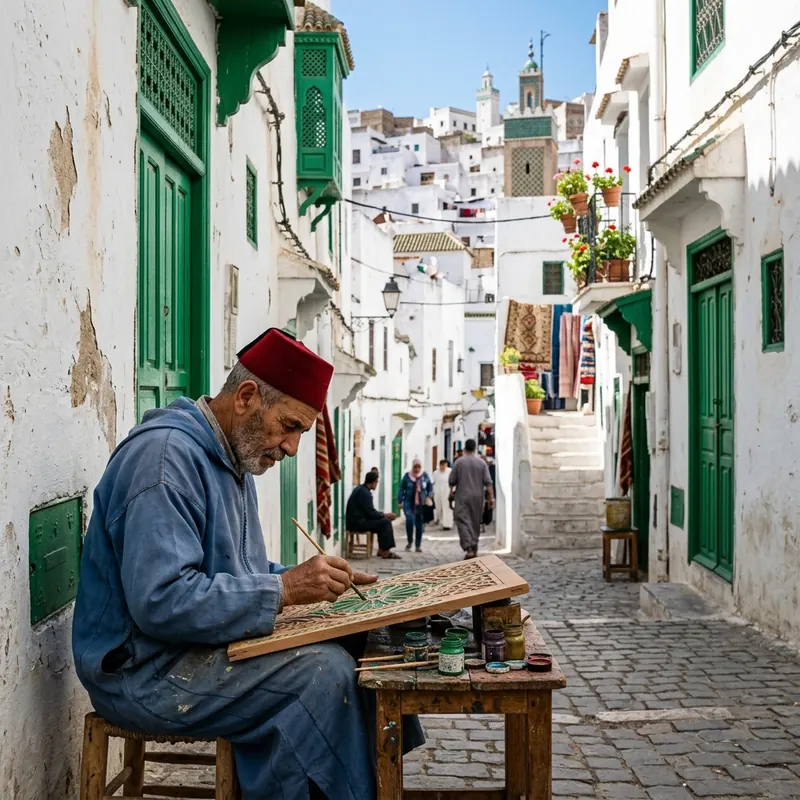
- Artisanal Marquetry of Essaouira: In the coastal craft workshops of Essaouira, master artisans blend dark, fragrant cedarwood with the burl of the thuya tree (Tetraclinis articulata) and citrus wood to create intricate inlaid boxes, chess sets, and decorative tables.
Sanctuary of the Barbary Macaque
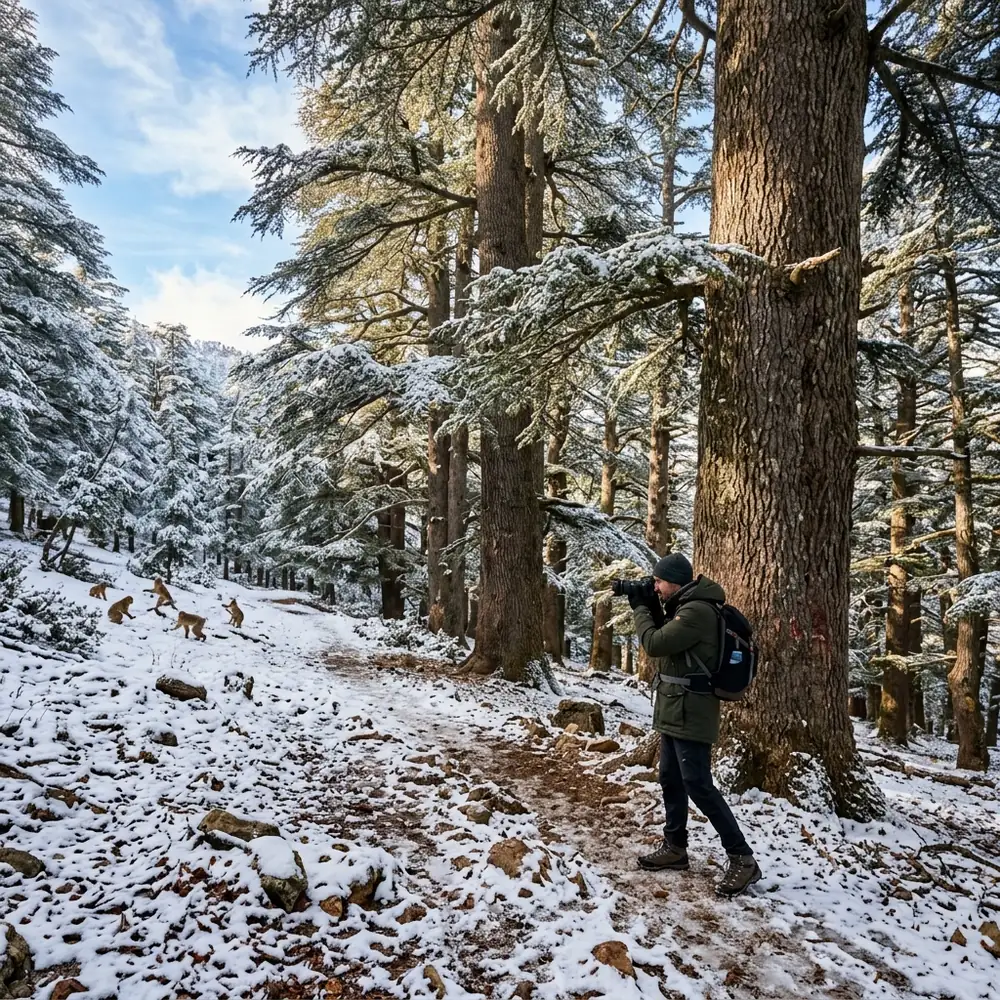
The Middle Atlas cedar forests constitute the critical primary habitat for the Barbary Macaque (Macaca sylvanus), the only wild primate species native to Europe and North Africa, and the only macaque species living outside Asia:
- An Endangered Treasure: Classified as Endangered on the IUCN Red List, roughly seventy percent of the world’s remaining wild population survives in the cedar and holm oak forests of Morocco’s Ifrane National Park and Tazekka National Park.
- Ecological Mutualism: The macaques play a vital ecological role as seed dispersers and forest pruners, feeding on cedar seeds, acorns, wild truffles, and sweet bark shoots.
- Responsible Wildlife Viewing: When visiting the cedar forests around Azrou, observe the macaques from a respectful distance. Do not feed wild macaques processed human foods (bread, snacks, candy), which causes severe dental disease, digestive illness, and aggressive habituation.
Environmental Stewardship and Conservation Challenges
Despite their resilience, Morocco’s ancient cedar forests face modern ecological threats:
- Climate Change and Drought: Successive years of prolonged drought and rising summer temperatures have reduced winter snowpack, lowering the mountain water tables that support ancient root systems.
- Overgrazing: Large herds of domestic sheep and goats grazing unchecked in national park zones consume young cedar saplings, preventing natural forest regeneration.
- National Park Conservation: Under the High Commission for Waters and Forests, Morocco has established protected biosphere reserves, implemented strict patrols against illegal logging, and launched community-led seedling nurseries in mountain Amazigh villages to replant thousands of hectares of young cedar forest every year.
Frequently Asked Questions
When is the best season to visit the Middle Atlas cedar forests?
Spring (April to June) offers mild, crisp weather, wildflowers blooming across alpine meadows, and active wildlife. Winter (December to February) brings magical snowy landscapes around Ifrane (often nicknamed “the Switzerland of Morocco”), where visitors can snowshoe or cross-country ski beneath snow-laden cedar branches.
How far are the cedar forests from Fez?
The cedar forests around Azrou and Ifrane are approximately seventy kilometers south of Fez, easily reachable in seventy to eighty minutes via well-paved highway N8. They make an ideal day excursion or a scenic stopover on the overland journey between Fez and the Sahara desert.
What is Cedar Essential Oil used for?
Steam-distilled from cedarwood sawdust and shavings, pure Atlas Cedar Essential Oil (Huile de Cèdre de l’Atlas) is widely used in natural perfumery, aromatherapeutic chest balms, and scalp serums, where its natural antiseptic and astringent properties help soothe dandruff and stimulate hair follicle circulation.
Can visitors hike independently in the cedar forests?
Yes. Ifrane National Park features well-marked hiking trails, gentle walking paths around the Cèdre Gouraud clearing, and scenic forest circuits suitable for all fitness levels. For backcountry mountain hikes, hiring a local licensed guide in Azrou ensures route safety and rich botanical interpretation.
Experience the true heart of Moroccan heritage through its culinary traditions. Join us in preserving and honoring these ancestral recipes.
What People Are Saying
No comments yet. Be the first — we'd love to hear from you.
Houssam Elmrabet
Culturally Verified & Fact-CheckedHoussam Elmrabet is a Moroccan researcher in territorial marketing and cultural heritage preservation. His work documents regional gastronomic identities, local agricultural heritage, and how ancestral culinary traditions define authentic territorial branding across the Kingdom.