Souk el-Attarine: The History of the Master Spice Merchants of Fez
archived: false
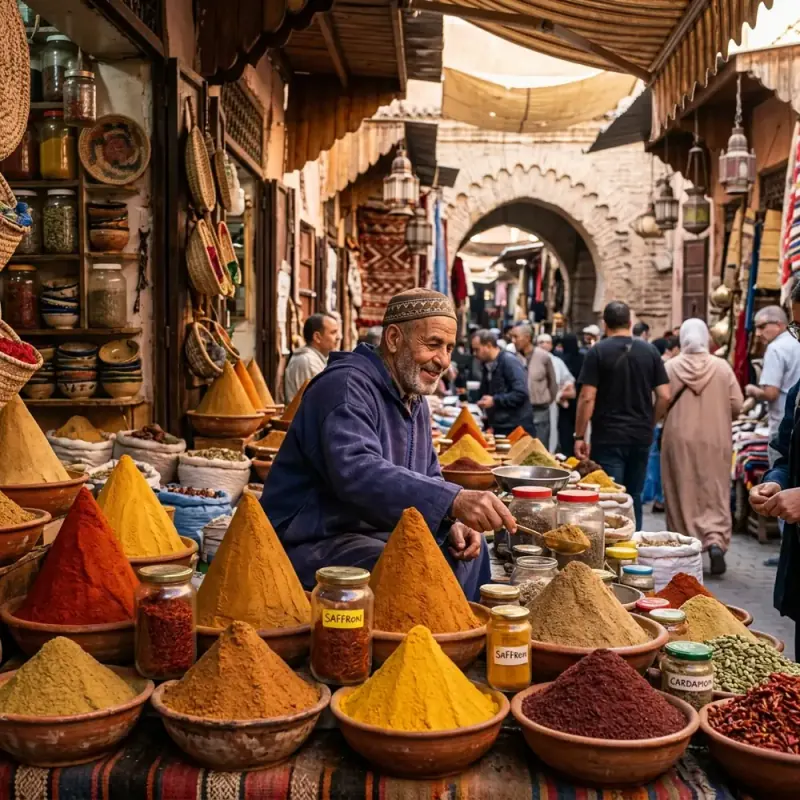
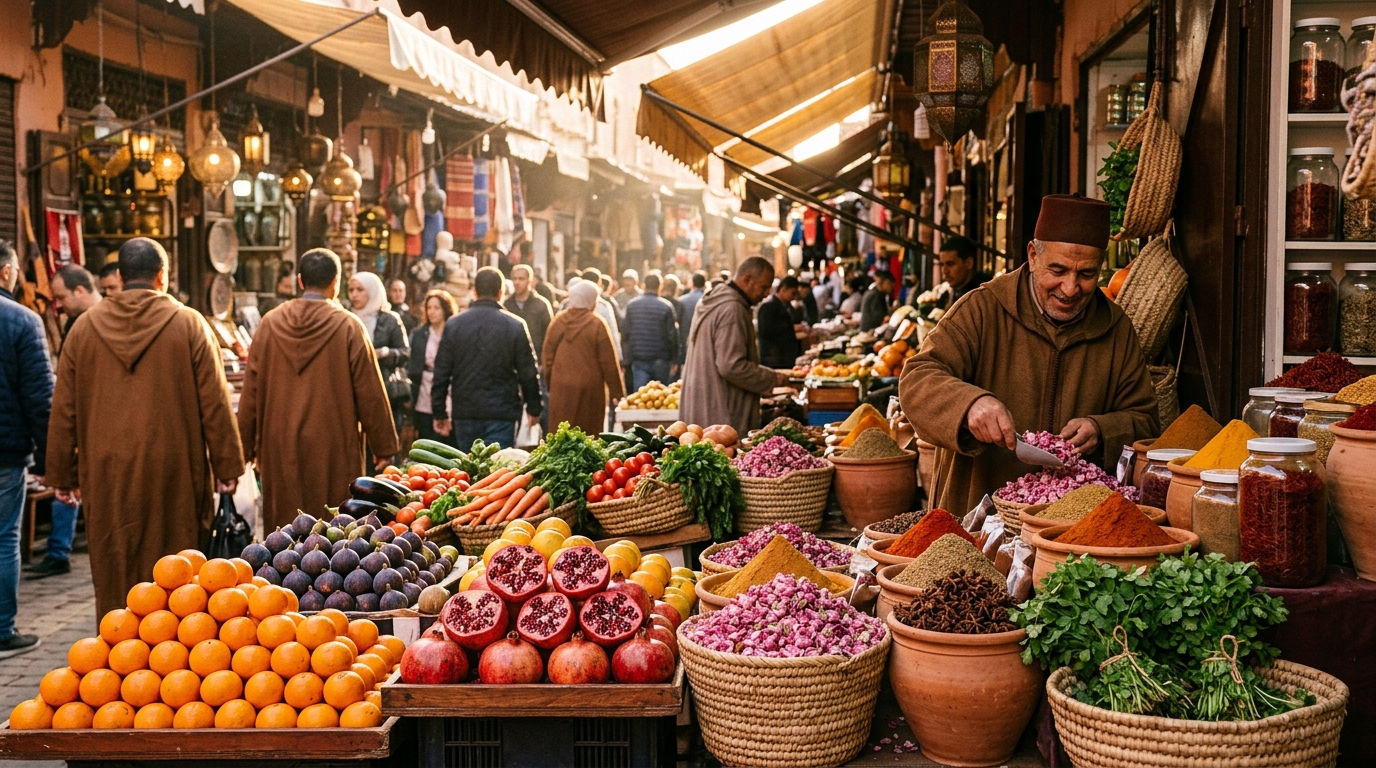
In the labyrinthine pedestrian heart of Fez el-Bali, the oldest continuously inhabited medieval city in the Islamic world, lies a vaulted street where the sensory atmosphere changes dramatically: the pungent smells of the tanneries and donkey traffic vanish, replaced by an intoxicating, cool cloud of frankincense, powdered Ceylon cinnamon, pure Damascus rosebuds, and crushed Atlas cedar. This is the legendary Souk el-Attarine (the Spice and Perfume Market), positioned strategically directly beside the sacred ninth-century Al-Qarawiyyin University and Mosque.
Founded in the ninth century by Sultan Idris II and formalized during the Marinid dynasty in the thirteenth and fourteenth centuries, Souk el-Attarine is not merely an alley of tourist shops; it is the oldest, most prestigious, and historically most powerful mercantile craft guild in Moroccan civilization.
The Geography of Prestige: Proximity to Al-Qarawiyyin
In medieval Islamic urban design, the physical layout of the medina was an architectural reflection of spiritual hierarchy:
- The Sacred Epicenter: The Al-Qarawiyyin Mosque and University, founded in 859 AD by Fatima al-Fihri, occupied the holy physical and spiritual center of the city.
- The Inner Ring of Purity: Only trades deemed clean, noble, and spiritually pure were permitted to operate directly against the exterior sanctuary walls of the mosque. The Attarine (herbalists, apothecaries, and spice masters) and the Kettanine (fine bookbinders and manuscript scribes) were granted this premier location.
- The Outer Ring: Industrial trades that produced noise, smoke, or unpleasant odors, blacksmiths (Haddadine), dyers (Sabbaghine), and tanners (Debbaghine), were relegated by municipal decree to the outer perimeter gates of the city downwind from residential quarters.
Because Islamic scholars, royal judges, and visiting dignitaries entered the university daily through the Bab al-Attarine gate, the spice merchants were expected to be men of supreme moral integrity, deep religious scholarship, and impeccable personal hygiene.
The Master Herbalist: Physician, Botanist, and Alchemist
Historically, an Attar was far more than a grocery clerk weighing cumin; he was a certified practitioner of Greco-Arabic humoral medicine (Al-Tibb Al-Yunani), operating according to the pharmacological treatises of Ibn Sina (Avicenna), Al-Ghafiqi, and Ibn al-Baitar:
- The Apprenticeship: Before a merchant could open a stall in Souk el-Attarine, he spent years as an apprentice (Mteâlem), memorizing the medicinal virtues, humoral classifications (hot, cold, dry, moist), toxicological boundaries, and botanical origins of over five hundred herbs, roots, minerals, and animal extracts.
- The Master Guild Master (Al-Amine): The spice guild was strictly governed by an elected guild provost (Amine al-Attarine). The Amine inspected shop scales for legal weight accuracy, audited inventory for purity, and punished merchants who adulterated expensive remedies or cheated customers.
- The Communal Pharmacopeia: Local residents visited their family Attar for medical consultations: requesting custom warming electuaries (Ma’joun) for winter bronchial chills, restorative botanical teas for postpartum mothers, or mineral powders to soothe eye infections.
The Trans-Saharan and Maritime Crossroads
Fez was the northern terminal of the trans-Saharan camel caravan routes and the western junction of the Mediterranean maritime silk and spice lanes:
- From the Indian Ocean Dhows: Arab navigators brought cinnamon from Sri Lanka, cloves and nutmeg from the Moluccas, cubeb pepper from Java, and black pepper from Malabar through the Red Sea.
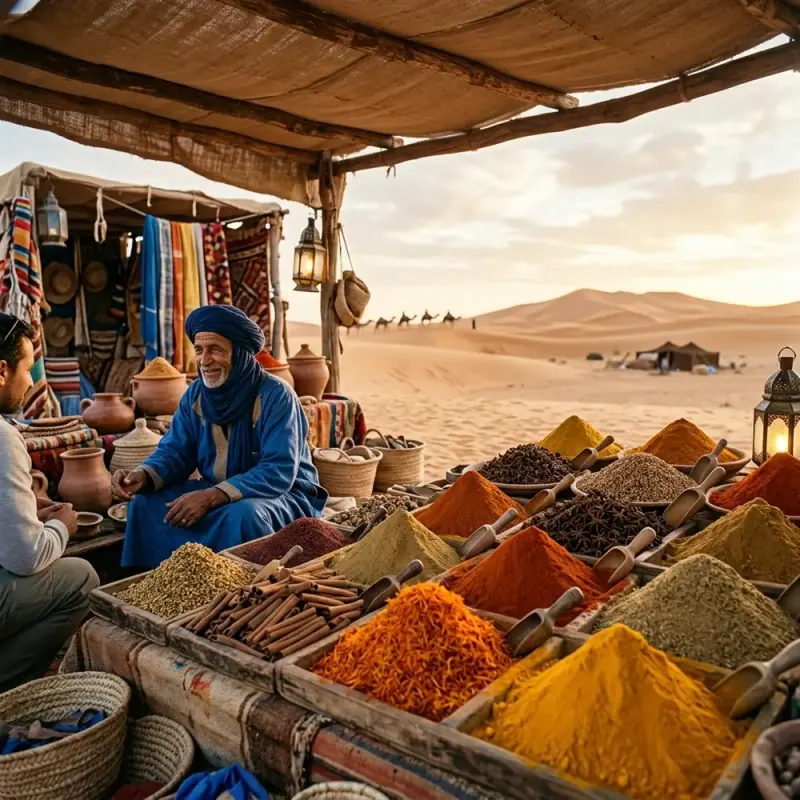
- From the Trans-Saharan Caravans: Caravans comprising thousands of camels arrived from Timbuktu and Gao, trading West African gold dust, gum arabic, and ivory for Fassi glazed pottery, mountain salt, and dried Mediterranean fruits.
- From the Moroccan Terroir: Indigenous Amazigh tribes supplied the market with wild mountain herbs: Taliouine saffron, Zagora henna, Rif mountain oregano (Za’atar), volcanic Ghassoul clay, and Atlas cedarwood oil.
The meeting of these global trade streams inside Souk el-Attarine created the most sophisticated spice and cosmetic culture in North Africa.
The Architectural Jewel: Medersa el-Attarine
At the northern entrance of the spice market stands the architectural masterpiece that bears its name: the Medersa el-Attarine (the College of the Perfumers). Commissioned in 1323 AD by the Marinid Sultan Abu Sa’id Uthman II, this Quranic residential college was built to train students studying at Al-Qarawiyyin.
Stepping into its central marble courtyard reveals the zenith of Moroccan decorative arts:
- Intricate, razor-sharp carved stucco arabesques and calligraphic Quranic bands.
- Hand-chiseled polychrome zellige tilework displaying complex geometric star polygons.
- Beams of fragrant Atlas cedarwood carved with muqarnas stalactite vaulting.
To this day, standing in the courtyard of the Medersa while the sweet scent of cinnamon, oud wood, and dried orange blossoms drifts from the adjacent spice stalls offers a complete sensory immersion into fourteenth-century Morocco.
Frequently Asked Questions
What does the Arabic word “Attar” mean?
The title Attar derives from the Arabic root Itr, meaning “perfume” or “pleasant fragrance.” While today it loosely translates as “spice merchant,” historically an Attar was a master perfumer, pharmacist, and botanical medicine practitioner.
Can visitors still consult traditional herbalists in Souk el-Attarine today?
Yes. Many historic stalls in Souk el-Attarine are operated by third- and fourth-generation herbalists who continue to prescribe traditional botanical remedies, mix custom Ras el Hanout blends, and sell natural beauty ingredients like Aker Fassi, pure argan oil, and Ghassoul clay.
Is Souk el-Attarine easily accessible on foot?
Yes, but only on foot. Fez el-Bali is the largest contiguous car-free urban pedestrian zone on earth. Souk el-Attarine is located along the main downhill pedestrian spine (Tala’a Kebira and Tala’a Seghira), a pleasant fifteen-minute walk from the historic blue gate of Bab Bou Jeloud.
How has modern medicine impacted the traditional Attar?
While modern hospitals and licensed pharmacies serve all primary medical needs in contemporary Morocco, the Attar remains a deeply trusted cultural figure. Moroccans frequently combine modern pharmaceutical treatments with ancestral herbal teas, hammam mineral rituals, and dietary spices prescribed by their medina Attar.
Experience the true heart of Moroccan heritage through its culinary traditions. Join us in preserving and honoring these ancestral recipes.
What People Are Saying
No comments yet. Be the first — we'd love to hear from you.
Youssef
Culturally Verified & Fact-CheckedYoussef is a food ethnology researcher documenting historic spice trade routes, Berber cooking methods, and the living food history of the Maghreb.