Baghrir: The Thousand-Hole Crepes That Sweeten Moroccan Mornings
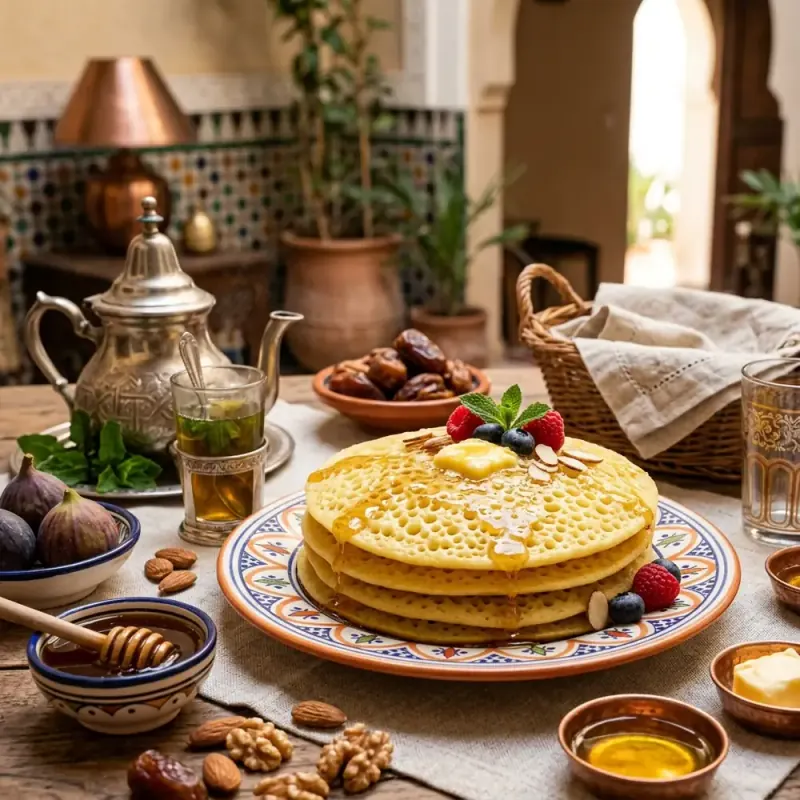
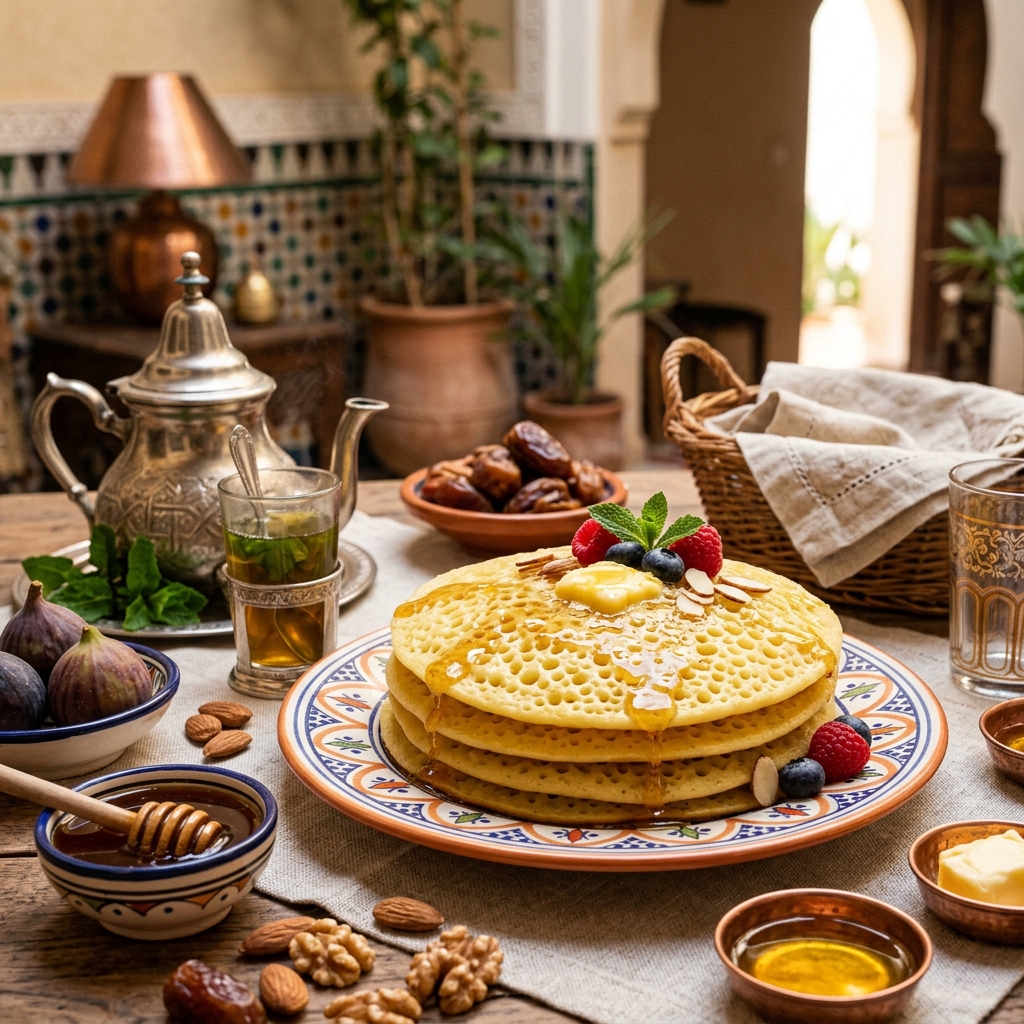
Stand next to a Moroccan grandmother at breakfast, and you will witness what looks like a quiet kitchen miracle. She pours a smooth, pale yellow batter into a hot pan. Within five seconds, the surface begins to erupt. Hundreds of tiny geysers bubble up through the wet semolina, popping open one by one until the entire round crepe is perforated with countless golden honeycomb craters. She never flips it. She simply watches the glossy batter turn matte, slides a spatula beneath the pale bottom, and sets it on a clean linen towel to steam.
This is Baghrir (بغرير), often celebrated as Morocco’s “thousand-hole crepe” (crêpe mille trous).
While the French crepe is paper-thin and smooth, and the American pancake is thick and cakey, Baghrir belongs to an entirely different culinary family. Leavened with yeast and made from golden durum wheat semolina, it is light, spongy, and specifically engineered to perform one sacred task: absorbing hot melted butter and wild mountain honey into its thousands of tiny reservoirs without ever turning soggy or heavy.
Here is the authentic heritage of Baghrir, the kitchen science that guarantees an explosion of even holes every single time, and the foolproof traditional recipe used across Moroccan medinas.
The Ancestral Roots: An Amazigh Breakfast Institution
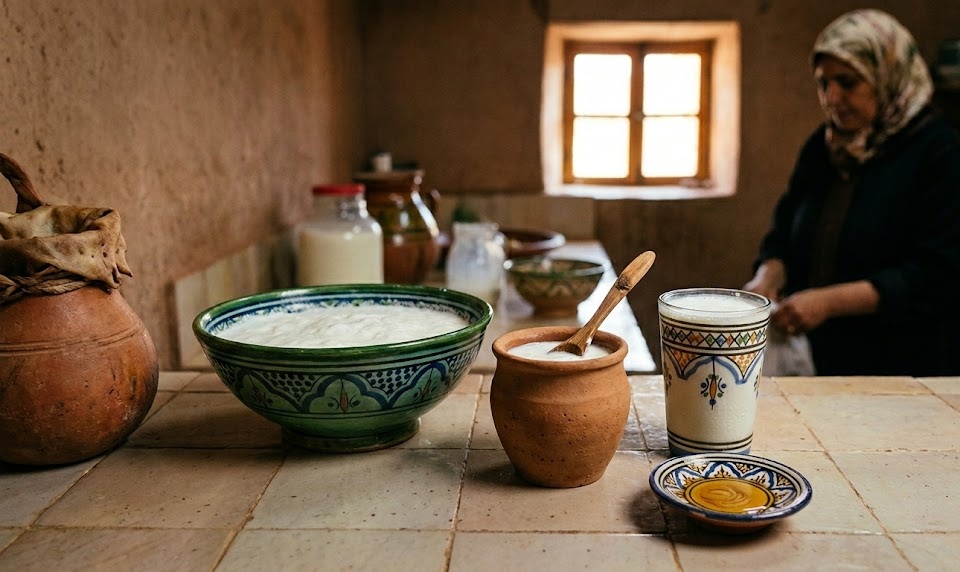
Long before modern non-stick pans and commercial blenders existed in Morocco, Amazigh (Berber) women prepared Baghrir over wood fires on heavy, round earthenware griddles called ferrah or taghadit.
In rural Atlas villages, making Baghrir was an intensely physical art. Women mixed fine semolina flour with water and sourdough starter in a wide terracotta bowl (gasaa), beating the loose dough with the heels of their hands for thirty minutes to aerate the batter and build gluten elasticity. When ladled onto the smoking clay plate rubbed with raw sheep fat, the bubbles rose in wild, uneven clusters.
In Moroccan folklore, an abundance of open holes in a morning batch of Baghrir symbolizes good fortune, fertility, and prosperity for the household. Conversely, a flat crepe with blind spots or closed pores was jokingly considered bad luck. Even today during Ramadan, when the sunset cannon fires to break the fast (iftar or ftour), a warm platter of Baghrir dripping with honey sits alongside steaming bowls of harira soup and fresh dates on almost every family table in the Kingdom.
The Physics of the Thousand Holes: Semolina, Yeast, and Heat
Beginner cooks often struggle with Baghrir because they treat it like ordinary pancake batter. If your Baghrir turns out rubbery, doughy, or fails to develop holes, one of three scientific principles has been broken:
1. Fine Durum Semolina (Smida Raqiqa)
Traditional Baghrir is not made from white all-purpose wheat flour. It relies on fine durum wheat semolina. Durum semolina gives Baghrir its distinctive golden color, its subtle nutty sweetness, and its airy, elastic chew (ta’laka). While modern recipes add two or three tablespoons of white flour to help bind the batter, the foundation must always remain semolina. Coarse couscous semolina is too heavy; it must be extra-fine (extra-fine or semoule très fine).
2. The Dual-Leavening Engine
Authentic modern Baghrir employs two separate leaveners working in harmony:
- Active Dry Yeast (Khmira d’el Khobz): Yeast ferments the semolina sugars during a brief 15-minute rest, creating millions of microscopic carbon dioxide bubbles suspended evenly throughout the batter.
- Baking Powder (Khmira Chemia): Added right at the end of blending. When the cold, batter hits the hot metal pan, the thermal shock instantly activates the baking powder, releasing a rapid surge of gas that forces the existing yeast bubbles to rush upward and burst through the surface before the starches set.
3. The Single-Sided Cook
Never flip a Baghrir. This is the golden rule of Moroccan baking. Baghrir cooks exclusively from the bottom up on medium heat. As the heat rises from the pan through the batter, it creates vertical steam chimneys that form the famous craters. Flipping the crepe would crush those delicate chimneys, seal the pores, and destroy the sponge structure. The bottom should be pale blonde with tiny freckles, while the top remains soft, velvety, and open.
The Secret Technique: Cooling the Pan Between Crepes
If you watch an experienced street vendor in Fes or Marrakech pouring Baghrir, you will notice a curious habit. Between every single crepe, the cook lifts the hot pan off the burner, runs the underside briefly under a stream of cold tap water (or rubs the surface with a cold, damp cotton cloth), and places it back over the flame before ladling in the next scoop of batter.
This is not superstition; it is thermodynamics. If the skillet is scorching hot when the liquid batter hits the surface, the bottom crust sears shut instantly, trapping the gas inside instead of allowing it to rise and pop into holes. Cooling the pan down to a moderate temperature gives the batter ten seconds to spread, settle, and allow the gas bubbles to migrate gracefully to the surface before the base hardens.
The Ritual Sauce: Honey and Melted Smen
Eating a dry, unadorned Baghrir is unthinkable in Moroccan culture. The crepe is fundamentally designed as an edible sponge for a warm emulsion known as Sirou d’el Aasal w’ez-Zbda:
In a small copper pot, equal parts pure mountain wildflower honey and farm-fresh unsalted butter are warmed together over low heat until the butter melts into the honey. In traditional mountain homes, a spoonful of aged fermented butter (smen) is whisked in, adding a subtle savory depth that balances the floral sweetness of the honey.
Just before serving, warm Baghrir are laid out on a round platter, and the hot honey-butter syrup is ladled generously over the top. The golden liquid sinks immediately into the thousand craters, filling every hollow. When you pick up a folded crepe, honey bursts onto your palate with each tender, velvety bite.
Foolproof Master Recipe for Baghrir
This recipe yields approximately 12 to 14 medium crepes and takes less than 30 minutes from start to finish.
Ingredients:
- 300 g extra-fine durum wheat semolina (semoule de blé dur très fine)
- 50 g all-purpose white flour (sifted)
- 1 tablespoon active dry yeast (instant baker’s yeast)
- 1 tablespoon baking powder (approximately 1 sachet / 11 g)
- 1 teaspoon fine sea salt
- 1 teaspoon white granulated sugar
- 550 to 600 ml lukewarm water (about 35°C / 95°F; never boiling hot)
For the Warm Honey-Butter Drizzle:
- 100 g unsalted butter (or good quality European-style butter)
- 100 g pure orange blossom honey or wildflower honey
- A tiny drop of orange blossom water (optional)
Step-by-Step Instructions:
- Blend the Batter: In a high-speed countertop blender, pour the lukewarm water first (putting liquid first prevents semolina from sticking to the blades). Add the fine semolina, all-purpose flour, yeast, sugar, and salt.
- Blitz for Two Minutes: Blend on medium-high speed for a full 2 minutes without stopping. You want to see a whirlpool forming with small froth bubbles on top. This intense mechanical mixing aerates the semolina and activates the gluten structure.
- Add the Baking Powder: Stop the blender, sprinkle the baking powder over the batter, and pulse for another 15 seconds to incorporate evenly.
- The Brief Rest: Pour the batter into a large bowl. Cover loosely with a clean kitchen towel and let it rest at room temperature for 12 to 15 minutes only. Do not over-proof the batter! If left for an hour like bread dough, the batter will become too thick and foamy, and the crepes will turn heavy and dense. After 15 minutes, you should see a gentle, frothy foam across the top.
- Prepare the Pan: Place an 8-inch (20 cm) non-stick skillet over medium heat. Let it warm up for 2 minutes.
- The Cold Water Trick: Lift the pan off the burner, run the bottom base under cold tap water for 3 seconds, wipe the inside dry with a clean cloth, and return to medium heat.
- Pour the Crepe: Ladle approximately 60 ml (1/4 cup) of batter directly into the center of the pan. Do not tilt or swirl the pan; let the batter spread naturally into a neat 6-inch circle.
- Watch the Magic: Within seconds, dozens of bubbles will begin bursting open on the surface. Lower the heat slightly to medium-low so the bottom does not brown before the top dries. Cook for approximately 2 minutes until the entire surface is covered in holes and no wet, shiny batter remains.
- Cool Without Stacking: Gently slide a thin spatula beneath the crepe and transfer it to a clean linen towel laid out on your counter. Never stack hot Baghrir on top of each other! Because the tops are soft and moist, stacking warm crepes will make them fuse together like glue. Let them cool side by side in a single layer for 3 minutes before overlapping.
- Repeat: Repeat the process with the remaining batter, remembering to cool the base of the pan with water between each crepe.
How to Serve and Reheat Baghrir
To serve, warm the honey and butter in a small pan until fully melted and combined. You can either drizzle the warm syrup over the crepes on a large platter or serve the hot syrup in small bowls for dipping.
If you have leftover Baghrir:
- Refrigeration: Store completely cooled crepes in an airtight container separated by sheets of parchment paper for up to 3 days.
- Freezing: Freeze crepes in a zip-top bag with wax paper between each layer for up to two months.
- Reheating: Reheat in a dry, ungreased non-stick skillet on low heat for 60 seconds (bottom down only) or in a wide toaster on low setting. Never microwave them, which makes them chewy and rubbery.
Frequently Asked Questions
Why didn’t my Baghrir develop holes?
The two most common reasons are over-proofing or using water that was too hot. If the water was hotter than 40°C (104°F), it killed the yeast. If the batter was left to sit on the counter for longer than 20 minutes, the yeast exhausted its gas and the batter collapsed. Keep the rest time strictly between 12 and 15 minutes, and ensure your pan is cooled with tap water between batches.
Can I make Baghrir entirely without white flour?
Yes! Authentic traditional Moroccan Baghrir was made with 100% fine durum semolina. Adding two tablespoons of white flour is a modern convenience that improves elasticity and makes the crepes less delicate to handle. If you omit the white flour, simply replace it with an equal weight of extra-fine semolina.
Why are my Baghrir burning on the bottom before the top cooks?
Your stove burner is set too high. Baghrir requires gentle, steady heat (medium-low) so the heat has time to travel up through the batter and pop the surface holes before the bottom caramelizes. The underside of a classic Baghrir should be pale ivory or light cream, never dark brown.
Can I make savory Baghrir?
While Baghrir is overwhelmingly enjoyed sweet with honey and butter, in some Berber regions, fresh warm Baghrir is topped with a drizzle of robust olive oil, a sprinkle of wild mountain thyme (za’atar), and soft fresh goat cheese (jben), creating an exceptional savory breakfast.
Experience the true heart of Moroccan heritage through its culinary traditions. Join us in preserving and honoring these ancestral recipes.
What People Are Saying
No comments yet. Be the first — we'd love to hear from you.
Khadija
Culturally Verified & Fact-CheckedKhadija is an artisanal pastry baker focused on the heritage of Moroccan confectionery, from hand-shaped almond gazelle horns to honey-soaked Ramadan pastries.