Clementine of Berkane: The Seedless Citrus Jewel of the Moulouya Plains & Export Excellence
Clementine of Berkane: The Seedless Citrus Jewel of the Moulouya Plains & Export Excellence
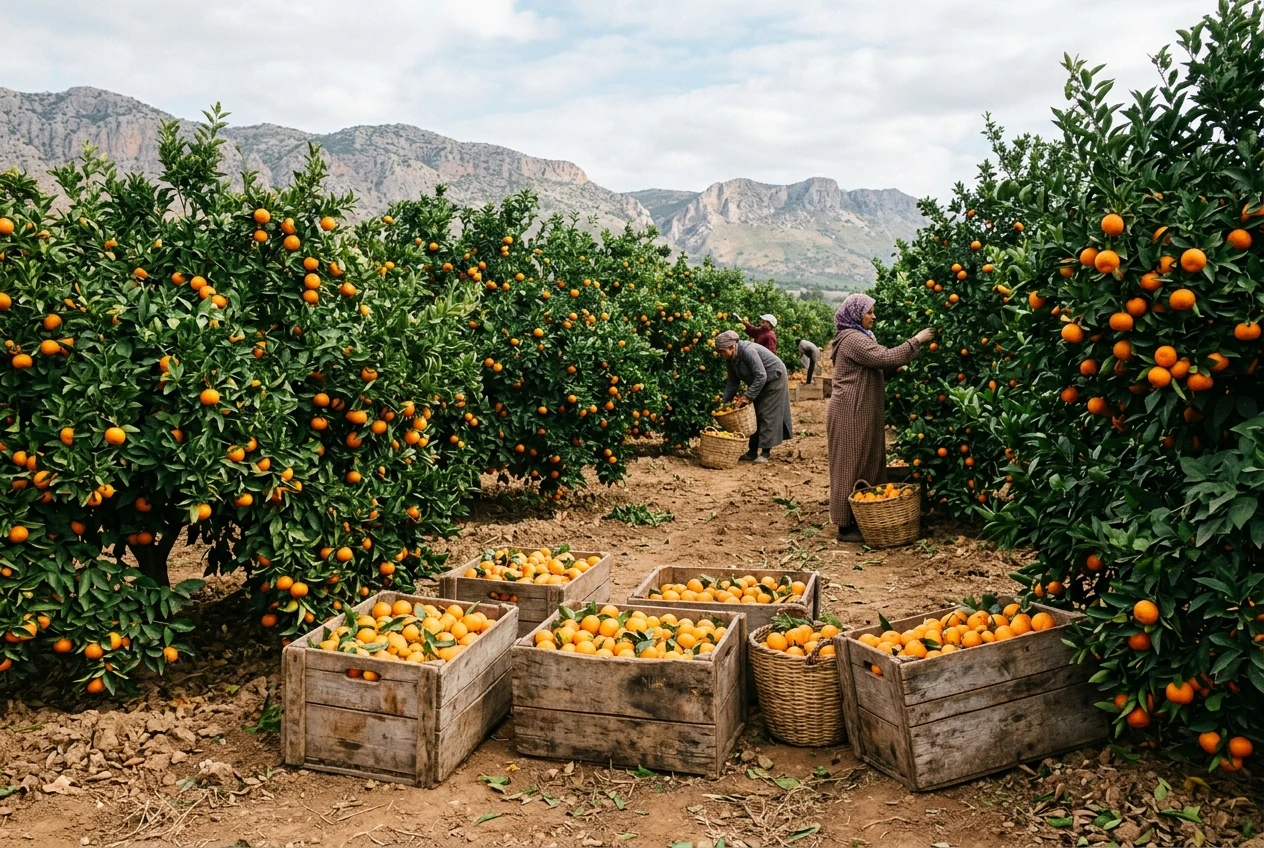
Stretching between the azure coastline of the Mediterranean Sea and the rugged limestone ramparts of the Beni Snassen mountains in Eastern Morocco lies the fertile alluvial expanse of the Triffa Plain. At its beating agricultural heart sits the vibrant city of Berkane, globally celebrated as the capital of Morocco’s finest citrus fruit: the Clementine of Berkane (Citrus clementina hort. ex Tanaka).
While supermarket shelves across the world are flooded with thick-skinned, watery, seed-riddled mandarins, Berkane’s citrus groves produce a fruit of rare aristocratic distinction. Awarded Morocco’s first citrus Protected Geographical Indication (IGP Clémentine de Berkane) in 2010, this seedless, easy-peeling orange jewel combines an exceptionally high juice yield with an intense, balanced sweet-tart acidity and intoxicating floral aromas.
This deep agro-economic investigation explores the alluvial terroir of the lower Moulouya river basin, official production and international export statistics, state-of-the-art optical packing stations, and the culinary prestige of Berkane clementines in Moroccan and international fine dining.
Alluvial Terroir: The Triffa Plain & Beni Snassen Barrier
The unique sensory personality of the Berkane clementine is shaped by an extraordinary convergence of geographical and climatic forces:
- The Beni Snassen Mountain Shield: Rising immediately south of the orchards to over 1,500 meters, the limestone massif of the Beni Snassen acts as an impenetrable physical barrier, blocking the blistering, moisture-sapping winds of the Saharan Chergui from scorching the orchards during the delicate spring flowering season.
- Mediterranean Maritime Moderation: Located less than 20 kilometers from the Mediterranean coast at Saïdia, sea breezes bathe the orchards in gentle maritime moisture, moderating summer heat and eliminating extreme winter frosts that would otherwise damage fragile citrus skins.
- The Fertile Moulouya Alluvium: For thousands of years, the Moulouya River deposited deep, nutrient-dense silt, clay, and calcareous loam across the Triffa depression. These fertile, deep-draining soils provide citrus roots with a continuous supply of calcium, potassium, and magnesium, promoting thin, elastic rinds and vibrant pigment synthesis.
- Pristine Mountain Snowmelt Irrigation: Orchards are fed by the Mechra Homadi and Mohammed V dam reservoirs on the Moulouya River, delivering pure water directly to automated micro-drip networks.
Official Harvest & Export Statistics (ORMVA/M & Morocco Foodex)
The agricultural administration of the Berkane citrus belt is overseen by the Regional Office of Agricultural Development of the Moulouya (ORMVA/M) in partnership with Morocco Foodex (EACCE) and the Association of Citrus Producers of Morocco (ASPAM).
The following verified quantitative indicators represent multi-year official audits and international export manifests:
| Key Sector Indicator | Official Quantitative Value | Regulatory & Institutional Source |
|---|---|---|
| Provincial Citrus Surface Area | 22,500 Hectares Under Modern Cultivation | ORMVA Moulouya Regional Cadastre |
| Clementine Orchard Share | 16,800 Hectares Dedicated Specifically to Clementines | MAPMDREF National Citrus Directorate |
| Annual Citrus Harvest Volume | 380,000 to 440,000 Metric Tons | Provincial Agricultural Directorate (DPA Berkane) |
| Annual International Exports | 95,000 to 115,000 Metric Tons of Fresh Fruit | Morocco Foodex (EACCE) Export Manifests |
| Total Modern Packing Stations | 26 Industrial High-Speed Packaging Stations | Regional Investment Center (CRI Oriental) |
| Official Geographical Label | IGP Clémentine de Berkane (Awarded March 2010) | Ministry of Agriculture Official Register |
| Export Logistics Gateways | Nador West Med & Tanger Med Maritime Hubs | National Ports Agency (ANP) Logistics Data |
| Direct Farm & Packing Jobs | Over 3.2 Million Work-Days Created per Season | Regional Employment & Social Security Census |
These official metrics confirm that the Berkane citrus belt is a cornerstone of Morocco’s agricultural export trade, generating hundreds of millions of dirhams in foreign currency while providing vital economic livelihoods for tens of thousands of rural families.
The Seedless Guarantee: PGI Quality Standards & Chemistry
Under the rigorous regulations of the IGP Clémentine de Berkane, every box destined for commercial markets must satisfy strict physical and chemical parameters governed by Moroccan Standard NM 08.5.030:
1. The Natural Seedless Guarantee (Zéro Pépins)
The Berkane clementine is naturally seedless because its flowers are self-incompatible: they cannot self-pollinate. To maintain absolute seedlessness, local regional laws strictly prohibit the planting of seeded citrus varieties (such as common mandarin or Valencia oranges) within bee-flight distance of certified clementine orchards. Cross-pollination is thus prevented, ensuring that over 99 percent of harvested fruit contains zero seeds.
2. Physical & Organoleptic Parameters
- Juice Yield Index: Must exceed 42 percent of total fruit weight, consistently averaging between 48 and 54 percent in prime Berkane harvests, creating an extraordinarily succulent, juicy mouthfeel.
- Maturity Index (Sugar-to-Acid Ratio $E$): Calculated by dividing total soluble solids (°Brix) by citric acid content: $$E = \frac{\text{Brix}}{\text{Acidity}}$$ While international standards accept a ratio of 7.0, IGP Berkane clementines are harvested strictly within the optimal window of 9.0 to 12.5, guaranteeing a sweet, explosive fruitiness balanced by a refreshing, palate-cleansing citrus tang.
- Thin, Supple Rind: The peel is smooth, thin, brightly pebbled with aromatic oil glands, and easily peeled in one continuous spiral by hand without tearing the tender juice sacs inside.
High-Tech Logistics: Optical Sorting & Nador West Med
The transformation of freshly picked orchard fruit into export-ready luxury produce is an engineering marvel:
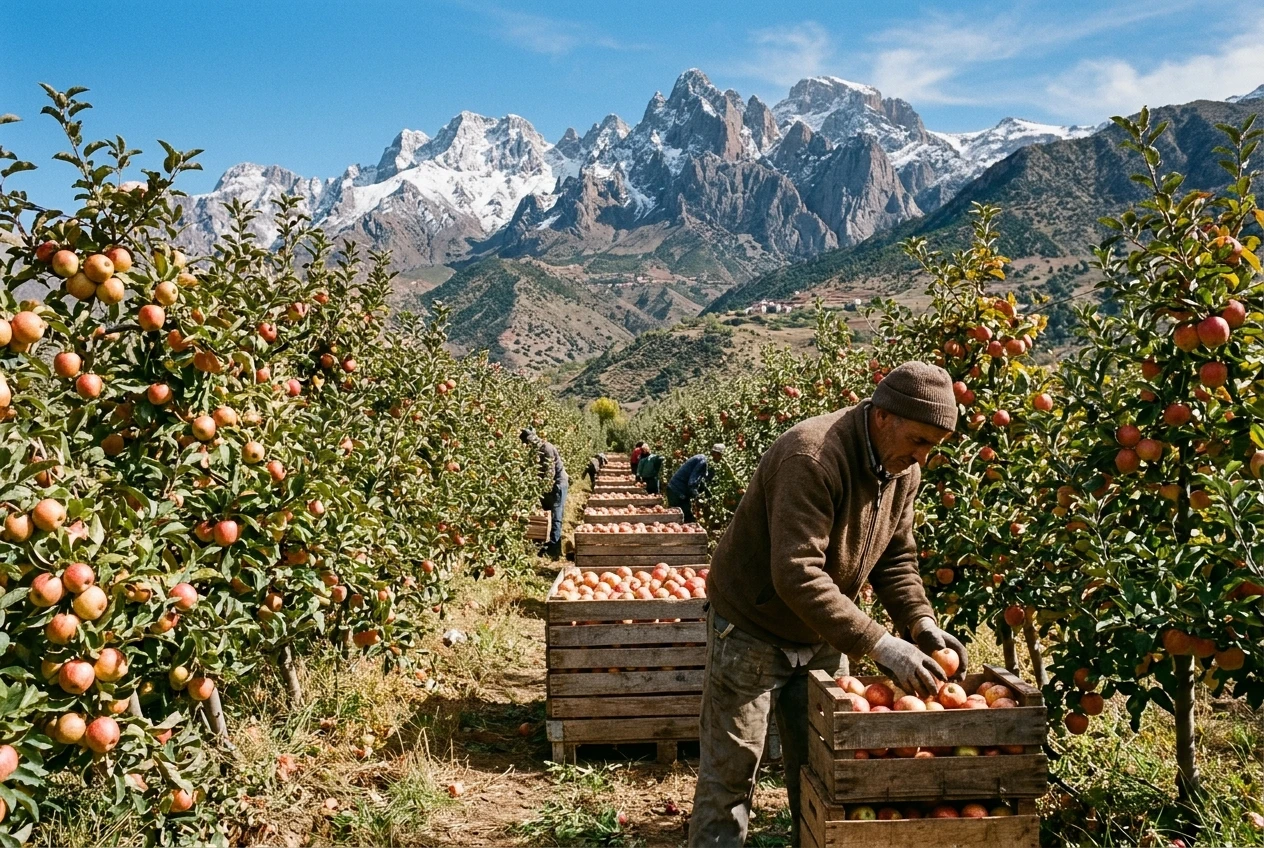
- Gentle Dawn Hand-Harvesting: Fruit is never pulled from the branch, which would tear the peel. Pickers use specialized rounded surgical shears to clip the fruit with a flush stem button (Calice vert intact), placing them in cushioned field crates.
- Infrared Optical Sorting: Upon entering the packing house, clementines pass through computer-vision cameras capturing 40 photographic angles per second. Fruit is sorted instantaneously by weight, exact millimeter diameter, roundness, skin color hue, and external blemish detection.
- Cold-Treatment Logistics: To meet strict phytosanitary protocols for entry into the United States, Russia, and Canada, fruit is chilled to a constant 1.1°C to 1.5°C in specialized maritime reefer containers.
- The Strategic Role of Nador West Med: Located less than 70 kilometers west of Berkane, the deep-water mega-hub of Nador West Med provides direct container feeder services, slashing shipping transit times to European and North American ports by more than 48 hours compared to legacy road haulage.
Berkane Clementines in Moroccan Gastronomy
In Morocco, the arrival of the Berkane clementine harvest in November signals the beginning of winter celebrations:
- The Fresh Winter Table: Served at the end of festive family feasts in tall, woven reed baskets, chilled slightly, their bright perfume filling the dining room as guests peel them whole.
- Salade d’Oranges et Clémentines à la Cannelle: Segments of fresh Berkane clementines tossed with a splash of distilled orange blossom water (Ma’ Zhar), a light dusting of freshly ground Ceylon cinnamon, and a scatter of ruby pomegranate seeds.
- Canard aux Clémentines de Berkane: A sophisticated imperial Moroccan tagine where roasted duck legs are braised with shallots, crushed coriander seeds, and saffron, then glazed with a reduction of fresh Berkane clementine juice, raw mountain honey, and whole caramelized clementine wheels.
- Artisanal Clementine Marmalade: Prepared by women’s cooperatives in Berkane, where whole unpeeled clementines are slow-cooked with cane sugar and wild star anise, preserving the rich essential oils found in the fragrant orange zest.
Frequently Asked Questions (FAQ)
What is the difference between a mandarin and a Berkane clementine?
The clementine is a natural hybrid between a sweet orange (Citrus sinensis) and a Mediterranean mandarin (Citrus deliciosa). Compared to common mandarins, Berkane clementines are completely seedless, significantly easier to peel, have a thinner and brighter orange skin, and offer a much higher juice content with a smoother, less pungent acidity.
When is the peak harvest season for Berkane clementines?
The peak harvest window opens in late October and runs through late January, with the absolute prime eating window occurring between mid-November and late December.
How should I store Berkane clementines at home?
At room temperature in a cool, well-ventilated fruit bowl away from direct sunlight, fresh Berkane clementines remain crisp and juicy for 7 to 10 days. For longer storage, keep them in the refrigerator crisper drawer (at 6°C to 8°C), where they retain their fresh juiciness and vitamin C potency for up to 3 weeks.
Experience the true heart of Moroccan heritage through its culinary traditions. Join us in preserving and honoring these ancestral recipes.
What People Are Saying
No comments yet. Be the first — we'd love to hear from you.
Houssam Elmrabet
Culturally Verified & Fact-CheckedHoussam Elmrabet is a Moroccan researcher in territorial marketing and cultural heritage preservation. His work documents regional gastronomic identities, local agricultural heritage, and how ancestral culinary traditions define authentic territorial branding across the Kingdom.