Beyond Couscous: The Hidden Traditional Dishes of Moroccan Cuisine You Probably Don't Know About
Beyond Couscous: The Hidden Traditional Dishes of Moroccan Cuisine You Probably Don't Know About
Marhaba. Come in, take off your shoes, and find a comfortable spot on the sedari—the plush, wrap-around sofa that graces our living rooms. Let me pour you a glass of atay (our iconic Moroccan mint tea). Watch as I lift the silver berrad high above the etched glass, creating that essential crown of foam. You are a guest in my home now, which means you are family.
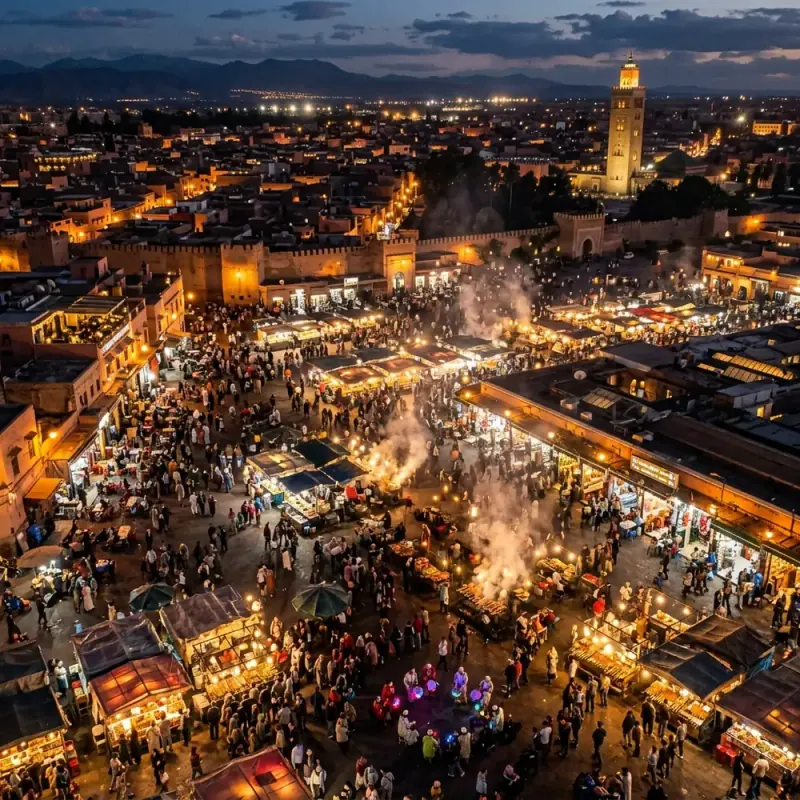
When most travelers speak of Moroccan cuisine, their minds instantly drift to the towering, steaming mounds of Friday couscous, or the bubbling, conical clay tagines filled with tender lamb and sticky-sweet prunes. While these dishes absolutely hold the soul of our nation, they are merely the gateway. To truly understand Moroccan food, you have to stray from the lively tourist paths of the Marrakech medina. You must venture into the High Atlas mountains, travel down to the sweeping dunes of the Sahara, and wander the eastern borders near Oujda.
I remember standing at my grandmother’s hip in a kitchen that always smelled faintly of toasted cumin, saffron, and orange blossom water. She used to tell me that the best dishes are the ones that take time, patience, and a little bit of secrecy. Today, I want to pull back the curtain on the hidden traditional dishes of Moroccan cuisine you don't know about—the culinary treasures that we usually reserve only for ourselves, our families, and our most honored guests.
The Earthy Embrace of the Souss: Baddaz
If you travel south towards the Souss region—the land of Argan trees and rugged coastlines—you will encounter a variation of couscous that completely rewrites the rules. Forget the fine wheat semolina you know. This is Baddaz, a rustic, robust couscous made entirely from cornmeal.
The first time I tasted Baddaz, I was sitting on a woven mat in a small Amazigh village outside of Taroudant. The women of the house had been working the cornmeal with their hands for hours, hydrating it with salted water and argan oil, rolling it until it yielded a perfectly tender, fluffy texture. This is no easy feat; cornmeal is temperamental and prone to clumping, demanding the skilled hands of a experienced Dada (traditional Moroccan cook) to coax it into submission.
Why Cornmeal Changes Everything
Unlike traditional wheat couscous, which absorbs delicate broths, Baddaz craves strong, unctuous flavors. It is traditionally steamed over a bubbling cauldron of dark, gelatinous fish broth—often using conger eel or local white fish—or slow-cooked goat meat. The cornmeal drinks in the rich, collagen-heavy liquid, transforming into a savory pudding-like grain that holds its shape. The earthiness of the corn pairs spectacularly with a heavy hand of black pepper and the subtle nuttiness of argan oil. It’s a dish that grounds you, a proof to the resourcefulness of southern Moroccan cooks.
The Buried Treasure of the Desert: Medfouna from Rissani
adventure with me now to the edge of the Sahara, to the ancient oasis town of Rissani. Here, where the sand meets the sky, you will find a dish affectionately known as the "Berber Pizza," though that moniker hardly does it justice. Its true name is Medfouna, which literally translates to "the buried one."
Historically, Medfouna was a practical dish for nomadic tribes. It is essentially a large, round, flatbread that is stuffed to the brim with a heavily spiced mixture of minced meat (usually beef or lamb), suet, onions, toasted almonds, hard-boiled eggs, and a staggering amount of cumin and coriander. But the magic of Medfouna isn't just in the filling; it's in the cooking method.
Baking in the Saharan Sands
In the old days, and still in some traditional settings, the prepared stuffed dough is buried directly in the hot, ash-rich sands of a dying campfire. The gentle, ambient heat of the earth bakes the bread to a crispy, golden brown, while the fat from the suet and meat melts inside, creating a self-basting, intensely flavorful center. When it is dug up, dusted off, and sliced open, the steam that escapes carries the scent of the desert itself.
Today, you are more likely to see locals bringing their prepared Medfouna to the neighborhood ferran (communal oven) to be baked on hot stones. I vividly recall tearing into a blistering hot slice on the side of a desert road, the rich, peppery meat juices staining my fingers, the crunch of the toasted almonds providing the perfect textural contrast. It is a hearty, deeply satisfying dish that tells the story of survival and celebration in the harsh desert environment.
The Sweet and Savory Masterpiece: Seffa Medfouna
Notice a theme? We Moroccans love hiding our food. While the Rissani Medfouna hides meat inside bread, Seffa Medfouna hides a savory treasure beneath a mountain of delicate sweetness.
Seffa is a dish of short vermicelli noodles (or sometimes couscous) that has been repeatedly steamed until impossibly soft and tender, then enriched with butter or smen (fermented, clarified butter). If you order Seffa on its own, it arrives adorned with a geometric, intricate lattice of ground cinnamon, powdered sugar, and crushed fried almonds. It looks like a dessert, and often serves as a sweet palate cleanser at weddings.
The Surprise Beneath the Vermicelli
But Seffa Medfouna is a main course that plays a delightful trick on your senses. When you dig your fork through that sweet, cinnamon-laced vermicelli, you strike gold: a savory, fall-off-the-bone portion of chicken or lamb that has been braised in a rich sauce of saffron, ginger, turmeric, and caramelized onions.
The juxtaposition is jarring at first, then incredibly addictive. You get the crunch of the almonds, the snowy sweetness of the sugar, the warm spice of the cinnamon, and the deep, savory umami of the saffron chicken all in a single bite. My mother used to make this on cool autumn nights, and the joy of "unearthing" the chicken at the center of the table was a competitive sport among my siblings. It is the absolute peak of Moroccan sweet-and-savory flavor profiling.
Oujda’s Street Food Legend: Karane
Let's step out of the home kitchen and into the vibrant, chaotic streets of eastern Morocco, specifically the city of Oujda, near the Algerian border. Here, the undisputed king of street food is not a kebab or a tagine, but a humble chickpea flan called Karane.
Karane is a minimalist masterpiece, proving that you don't need a pantry full of expensive ingredients to create something beloved. It is made from a batter of chickpea flour, water, a little oil, and eggs, baked in a wide, shallow copper pan until the bottom sets into a dense, creamy custard and the top blisters into a dark, savory crust.
The Ritual of the Chickpea Flan
You don't eat Karane on a plate. You approach a street vendor, who swiftly carves out a generous, wobbly wedge of the flan and aggressively smears it inside a piece of fresh, crusty baguette. They then dust it heavily with ground cumin, salt, and fiery paprika. The texture is wild—crispy bread giving way to a warm, velvety, almost melting chickpea center.
But the ritual isn't complete without Barida. Barida is an ice-cold, frothy, intensely sweet citrus drink served from a dispenser right beside the Karane cart. The sharp, sugary coldness of the Barida washes down the rich, spiced warmth of the Karane sandwich. Eating this on a lively Oujda street corner for a few dirhams is a rite of passage for any true food lover.
A Rare Delicacy: Desert Truffles (Terfass) with Tender Veal
For our final dish, we move to the world of luxury and seasonality. When you think of truffles, you likely picture the damp oak forests of Italy or France. But Morocco has its own truffles, known as Terfass, which grow beneath the arid soils of the eastern plateaus and the Sahara after heavy autumn rains.
These desert truffles are smoother, sandier, and possess a subtler, more earthy flavor than their European cousins. Because they are wild-foraged and dependent on the unpredictable rains, they are rare and highly prized.
Foraging in the Moroccan Soil
When a family is lucky enough to acquire a basket of fresh Terfass, it is cause for a feast. The truffles are painstakingly cleaned to remove the stubborn desert sand, then slow-cooked in a tagine with tender cuts of veal or beef. The sauce is kept intentionally mild—usually just a base of onions, olive oil, ginger, and a pinch of saffron—so as not to overpower the delicate, mushroom-and-earth flavor of the truffles.
The Terfass absorb the rich meat juices, taking on a texture that is somewhere between a tender potato and a firm mushroom. Dipping a piece of warm khobz (bread) into that earthy, luxurious sauce is an experience that connects you directly to the Moroccan soil. It is a dish that speaks of patience, reverence for nature, and the quiet elegance of our culinary traditions.
Preserving the Heritage of Moroccan Cooking
These hidden traditional dishes of Moroccan cuisine are more than just recipes; they are historical records. They tell us how our ancestors adapted to harsh climates, how they celebrated life’s milestones, and how they utilized every single ingredient available to them.
As globalization creeps into our kitchens, it is our responsibility to keep these obscure, labor-intensive dishes alive. So, the next time you visit Morocco, or the next time you pull out your tagine at home, look beyond the obvious. Ask the locals about Baddaz, seek out a slice of Medfouna, and dare to blend the sweet and savory with Seffa.
My table will always have room for you. B'saha w raha (to your health and comfort).
Frequently Asked Questions (FAQ) About Traditional Moroccan Food
What makes Moroccan food so unique?
Moroccan cuisine is a profound melting pot of Berber (Amazigh), Arab, Andalusian, and Mediterranean influences. What truly sets it apart is the fearless mastery of spices—such as saffron, cumin, ginger, and cinnamon—and the seamless integration of sweet elements (like dried fruits, honey, and almonds) into savory meat dishes, creating complex, layered flavor profiles that are rarely found elsewhere.
Is it difficult to cook traditional Moroccan dishes at home?
While some dishes, like a properly hand-rolled couscous or a delicate pastilla, require time and practiced technique, many Moroccan meals are incredibly accessible. Stews and tagines rely primarily on slow, gentle braising. With a good quality spice collection, a heavy-bottomed pot (if you don't own a clay tagine), and patience, you can absolutely replicate these comforting flavors in your own kitchen.
What is the etiquette for eating a traditional Moroccan meal?
Moroccans traditionally eat communally from a single large dish placed in the center of the table. You should always eat with your right hand, using pieces of bread (khobz) to scoop up the food and sauces from the section of the dish directly in front of you. Reaching across the platter is considered impolite. And always remember to wash your hands before the meal begins!
Can vegetarians enjoy these hidden Moroccan dishes?
Absolutely. While many celebration dishes feature meat, Moroccan cuisine has a deep agrarian root. You can find meat-free versions of Baddaz steamed over rich vegetable broths, or enjoy Karane, which is entirely plant-based (or vegetarian when eggs are used). Salads like Zaalouk (smoked eggplant) and Taktouka (tomato and pepper) are inherently vegan, vibrant, and bursting with flavor.
Image Prompts for Culinary Photographers
If you want to bring the magic of this article to life visually, here are five detailed image prompts for generating stunning, authentic culinary photography:
Subject: A close-up, top-down shot of Seffa Medfouna served in a traditional, hand-painted ceramic Fes plate. The dish features a pristine dome of steamed, golden vermicelli. Intricate, geometric lines of dark brown cinnamon and powdered sugar decorate the dome, interspersed with roasted, glistening almonds. A slight indent reveals a peak of rich, saffron-braised chicken underneath. Vibe: Warm, inviting, and slightly mysterious. Style: Moody, natural window lighting, high contrast, rustic food photography. Format: 4:3, high resolution, macro lens depth of field.
Subject: A lively outdoor scene in the desert town of Rissani. A weathered, flour-dusted local baker is pulling a large, golden-brown Medfouna (stuffed Berber pizza) out of a traditional wood-fired mud oven using a wooden peel. The flatbread is blistered and slightly charred on the edges. In the background, soft desert sunlight filters through the smoke of the oven. Vibe: Authentic, energetic, and raw. Style: Documentary photography, warm golden hour tones, highly textured. Format: 16:9, wide cinematic angle.
Subject: A steaming, rustic clay tagine filled with a rich, bubbling veal and Terfass (desert truffles) stew. The pale, earth-toned truffles are nestled among tender chunks of meat in a vibrant saffron-yellow sauce. A piece of torn, crusty Moroccan khobz (bread) rests on the edge of the tagine, dipped slightly into the sauce. Vibe: Luxurious yet grounded, comforting. Style: Editorial food photography, warm overhead lighting, rich earthy color palette. Format: 1:1 square, sharp focus on the truffles.
Subject: A street food cart in Oujda at dusk. A vendor is cutting a thick slice of Karane (chickpea flan) with a dark, blistered crust. The slice is being folded into a fresh baguette. A vibrant dusting of red paprika and brown cumin is mid-air, falling onto the sandwich. A frosty glass of yellow Barida drink sits on the metal counter beside it. Vibe: Vibrant, nostalgic, and appetizing. Style: Street photography, neon and warm streetlamp lighting, dynamic motion blur on the falling spices. Format: 4:5 vertical, shallow depth of field.
Subject: The hands of an elderly Moroccan woman wearing traditional silver Amazigh bracelets, gently rubbing and rolling yellow cornmeal (Baddaz) in a large wooden Gasaa (wide bowl). The cornmeal looks fluffy and hydrated. A silver teapot and fresh mint leaves sit blurred in the background on a colorful woven rug. Vibe: Intimate, generational, and soulful. Style: Lifestyle photography, soft natural daylight, emphasizing the texture of the hands and the cornmeal. Format: 3:2, medium close-up.
Experience the true heart of Moroccan heritage through its culinary traditions. Join us in preserving and honoring these ancestral recipes.
What People Are Saying
No comments yet. Be the first — we'd love to hear from you.
Youssef Amazigh
Culturally Verified & Fact-CheckedThe Moroccan Food editorial team brings together native culinary researchers, heritage preservationists, and experienced home cooks across Marrakech, Fes, and Casablanca. Every recipe and cultural guide is reviewed against ancestral oral traditions and authentic regional practices.