Beyond the Tagine: The Official Global Ranking of Moroccan Gastronomy (And Why the World is Finally Waking Up)
Beyond the Tagine: The Official Global Ranking of Moroccan Gastronomy (And Why the World is Finally Waking Up)
Ahlan wa sahlan—welcome to my table. Please, take a seat on the leather pouf, let me pour you a glass of atay, our signature gunpowder green tea steeped with copious amounts of fresh spearmint and a heavy block of sugar, pulled high from a silver teapot so it foams just right in the glass. Breathe in. Do you smell that? It’s the scent of toasted cumin, the sweet floral kiss of orange blossom water, and the deep, earthy hum of a slow-simmering lamb tagine wafting from the kitchen.
For generations, those of us who grew up in Moroccan kitchens—watching our grandmothers tirelessly roll semolina pearls by hand, or patiently waiting for a tanjia to return from the communal farnatchi (the wood-fired oven heating the local hammam)—knew a secret the rest of the world was only beginning to discover. We knew that our food was unparalleled. We knew it was a royal cuisine, a vibrant, complex mosaic of indigenous Berber, Arab, Andalusian, Jewish, and West African influences, woven together smoothly over centuries of trade and history.
But lately, the secret is officially out. The question I hear constantly from food lovers, international chefs, and culinary journalists alike is: What is the official ranking of Moroccan gastronomy globally? Where do we truly stand when placed side-by-side with the established culinary giants of France, Italy, or Japan?
Let's explore this global ascension, peel back the layers of our rich, aromatic culinary heritage, and discuss why the world’s most discerning palates are turning their gaze toward the Maghreb.
The Global Ascension: Where Does Moroccan Food Truly Rank?
When we talk about the "official ranking of Moroccan gastronomy globally," we have to look at the metrics, awards, and guides that define the modern culinary world. In recent years, prestigious platforms like TasteAtlas, the World Culinary Awards, Conde Nast Traveler, and various global food media outlets have consistently placed Moroccan cuisine in their top tiers.
The Numbers Speak: Recent Accolades
Depending on the year and the methodology, Morocco frequently ranks as the number one cuisine in Africa and the Arab world. On a broader scale, it comfortably sits within the top 20 to 30 cuisines globally on exhaustive aggregate lists. Some specialized lists, particularly those focusing on vibrant street food, rich spice profiles, and slow-cooking techniques, place cities like Marrakech and Fes firmly in their top 10 culinary destinations worldwide.
But numbers, lists, and rankings, while flattering and well-deserved, only tell a fraction of the story. They don't capture the soul of the food. A numerical ranking cannot measure the fierce warmth of a Moroccan mother insisting you eat "just one more bite" (kul, kul!). It cannot quantify the intricate, flaky, shatteringly crisp perfection of a properly folded pastilla.
Why the Sudden Spotlight?
Why is Moroccan gastronomy climbing these global ladders so rapidly now? I believe it is because modern, globally connected diners are exhausted by fast food, hyper-processed ingredients, and culinary trends that lack soul. They are craving exactly what Moroccan cuisine has offered for millennia: authenticity, slow cooking, bold but masterfully balanced flavors, and a profound connection to the earth and the seasons.
We are not a culture of rushing through a meal. We are a culture of time. It takes hours for a tagine to reach that perfect state where the tough meat yields to the back of a spoon and the sauce has reduced to a rich, sticky, caramelized glaze. It takes immense patience to create the delicate warka pastry, painting a hot copper pan with dough so thin it is translucent. In a fast-paced world, Moroccan food forces you to sit down, slow down, and truly savor.
The Pillars of Our Culinary Heritage
To understand our global ranking and why international chefs speak of our food with such reverence, you must first understand the pillars of our flavor profile. We do not use spices to mask poor ingredients; we use them to enhance exceptional ones.
The Art of Spices: Ras el Hanout and Beyond
You cannot speak of Moroccan gastronomy without bowing to Ras el Hanout. Translated loosely as "head of the shop," it represents the absolute best, most premium spices a merchant has to offer. My grandfather, a spice merchant in the labyrinthine old medina of Fes, used to tell me that a true Ras el Hanout has no strict, written recipe; it is an intuition, a fingerprint of the blender.
It can contain anywhere from 20 to over 100 spices, including green cardamom, nutmeg, mace, cinnamon, cumin, coriander, star anise, and sometimes even dried rose petals or grains of paradise. When a pinch of Ras el Hanout hits warm olive oil, it releases a fragrance that is deeply intoxicating. It is the secret heartbeat of our Mrouzia (a sweet and savory lamb dish traditionally prepared after Eid al-Adha) and gives our slow-cooked stews a complexity that leaves foreign chefs baffled, desperately trying to deconstruct the flavor notes.
Time, Patience, and the Clay Tagine
The tagine is both the iconic conical clay cooking vessel and the stew cooked within it. The shape of the lid is an ancient marvel of engineering; it forces condensation to drip back down onto the ingredients, braising the meat and vegetables in their own juices with very little added water. This creates an intensity of flavor that modern pressure cookers can mimic but never truly replicate. The earthiness of the unglazed clay itself becomes an ingredient, imparting a subtle, rustic flavor to everything cooked inside it.
Sweet and Savory: The Moroccan Signature
Perhaps the most sophisticated aspect of Moroccan cuisine—and a major reason for its high standing in the official ranking of Moroccan gastronomy globally—is our fearless, masterful embrace of sweet and savory in the exact same dish. This is a direct, living legacy of our Andalusian heritage from the golden age of Al-Andalus.
Take the Pastilla (or B'stilla). If I were to serve you only one dish to prove the absolute genius of Moroccan cooking, it would be this. Traditionally made with pigeon (though chicken is more common and accessible today), it is a savory meat pie encased in layers of tissue-thin warka pastry. Inside, the tender meat is slow-cooked with fresh ginger, saffron threads, and sweet onions, then mixed with eggs to form a rich, velvety custard. It is topped with a generous layer of crushed, fried almonds heavily scented with orange blossom water.
Before serving, it is baked until golden and then dusted with powdered sugar and a lattice of ground cinnamon. To the uninitiated, it sounds like a chaotic clash of dessert and dinner. But when you take a bite, the alchemy happens. The savory depth, the floral sweetness, the satisfying crunch, the melting softness—it is a masterclass in flavor architecture. It is dishes like this that make Michelin-starred chefs pause in silent reverence.
What the Rankings Miss: The Soul of the Darna (Our Home)
While the international culinary community rightly praises our intricate restaurant tagines and vibrant medina street food, there is a side of Moroccan gastronomy that rarely makes it onto a commercial menu, and thus, often escapes the official global rankings. It is the food of the darna—our home.
Friday Couscous: More Than a Meal, A Ritual
If you are in Morocco on a Friday afternoon, you will notice a distinct hush fall over the lively cities. Shops pull down their metal grates. The streets empty out. Families gather. It is time for couscous.
Globally, couscous is often tragically misunderstood as a simple, bland side dish, quickly hydrated from a cardboard box in five minutes. To a Moroccan, this is a culinary travesty. True Moroccan couscous is a sacred labor of love that takes three to four hours. The semolina is moistened with salted water and olive oil, rubbed gently between the palms to separate every single grain, and steamed three separate times over a special double-boiler (couscoussier) holding a bubbling, aromatic broth of meat, seasonal vegetables, and spices.
By the final steaming, the grains are incredibly plump, light as air, and have absorbed the fragrant vapors of the stew below. We gather around a massive communal clay platter (gasaa), eating together, often using our right hands to form the couscous and vegetables into small, perfect spheres. This ritual of sharing, of family unity, of blessing (baraka) the food—this is the true, unquantifiable peak of Moroccan gastronomy. No global ranking can measure the taste of a Friday couscous eaten with loved ones.
Street Food vs. Royal Cuisine
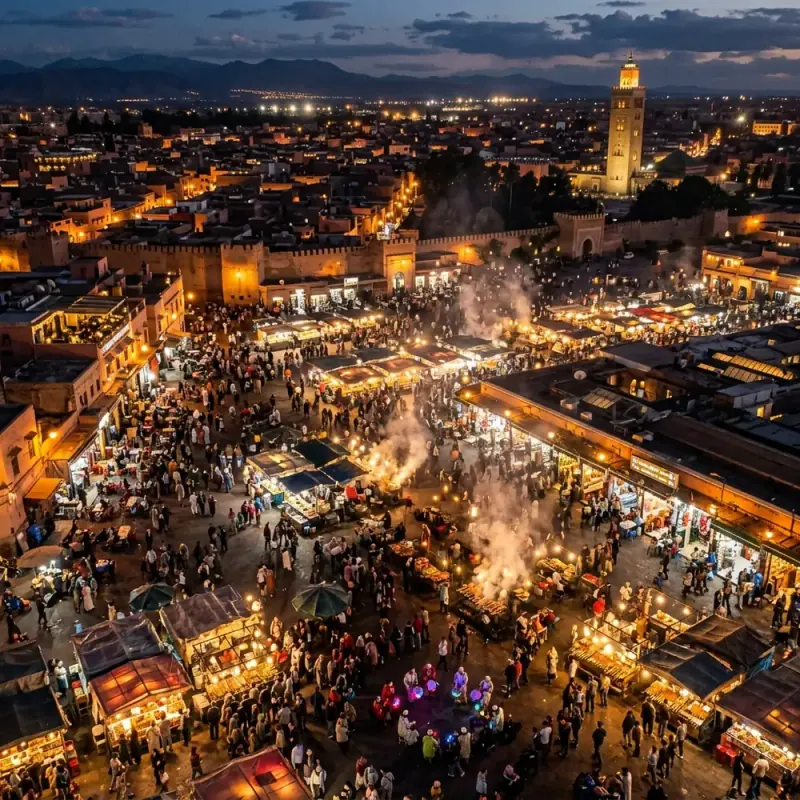
The dichotomy of Moroccan food is beautiful. On one hand, you have the royal cuisine of the palaces in Fes and Rabat—dishes that require days of preparation, utilizing expensive saffron, truffles, and complex pastry work. On the other hand, you have the vibrant street food of Marrakech's Jemaa el-Fnaa square: bowls of steaming snail soup (babbouche) flavored with thyme and licorice root, grilled sheep hearts, or simple, piping-hot sfenj (chewy, deep-fried dough rings dipped in sugar). Both ends of this spectrum contribute to our global standing, proving our food is both accessible to the working class and refined enough for royalty.
The Future of Moroccan Gastronomy on the World Stage
Modern Chefs Redefining the Classics
The official ranking of Moroccan gastronomy globally is not just based on preserving our history; it is actively being propelled into the future by a new, dynamic generation of Moroccan chefs. These culinary innovators are taking the ancient techniques of their grandmothers and applying modern plating, lighter fat preparations, and global culinary techniques.
They are deconstructing the tagine, turning the robust flavors of a classic Harira (our traditional, hearty Ramadan soup of tomatoes, lentils, and chickpeas) into elegant fine-dining tasting menus, and proving that Moroccan cuisine is not stuck in a historical time capsule. It is a living, breathing, continuously evolving art form. High-end Moroccan restaurants in Paris, London, Dubai, and New York are commanding long waiting lists and Michelin stars, elevating our rustic dishes into contemporary masterpieces without ever losing their authentic soul.
Conclusion: A Seat at the Head of the Table
So, what is the official ranking of Moroccan gastronomy globally? If you look at the lists, the awards, and the critical reviews, we are firmly established as one of the world's great culinary traditions, highly ranked, deeply respected, and increasingly sought after.
But as a Moroccan culinary writer who has spent a lifetime immersed in these flavors, smelling the woodsmoke of the communal ovens and grinding spices by hand, I tell you this: our true ranking is not defined by arbitrary stars, points, or internet lists. It is defined by the profound satisfaction of a guest who pushes their empty plate away with a contented sigh. It is defined by the undeniable fact that our food tells the epic story of our land, our diverse history, and our unyielding, legendary hospitality.
Moroccan gastronomy doesn't just feed the stomach; it feeds the spirit. And in that ranking, we have always been, and will always be, unparalleled.
Besseha wa raha (To your health and comfort).
Frequently Asked Questions (FAQ)
1. What makes Moroccan cuisine different from other Middle Eastern or North African cuisines?
While we share some base ingredients, Moroccan cuisine is highly unique due to its heavy Andalusian (Spanish-Moorish) and indigenous Berber influences. We use a distinct flavor profile that frequently pairs sweet ingredients (honey, dried apricots, raisins, cinnamon) with savory meats, a technique much less common in Levantine food. Our extensive use of preserved lemons, indigenous argan oil, and the complex spice blend Ras el Hanout also firmly sets us apart from our neighbors.
2. Is Moroccan food very spicy (hot)?
This is a very common misconception! Moroccan food is heavily spiced, but it is rarely spicy-hot. We use a massive amount of cumin, ginger, turmeric, sweet paprika, and cinnamon to build deep, aromatic, and complex flavors. While harissa (a fiery chili paste) is occasionally served on the side as a condiment for those who want heat, the core traditional dishes themselves are generally mild, making the cuisine very accessible and enjoyable for all palates.
3. What is the most traditional Moroccan dish to try for a beginner?
You absolutely cannot go wrong with a classic Chicken Tagine with Preserved Lemons and green Olives (Tagine Djaj Makalli). It perfectly encapsulates the Moroccan flavor profile: the savory depth of the slow-cooked chicken, the bright, salty, umami tang of the preserved lemons, and the rich, spiced, turmeric-infused sauce. Eat it the traditional way—using a piece of fresh, crusty Moroccan bread (khobz) to scoop it up instead of a fork!
4. Why is authentic Moroccan couscous traditionally only eaten on Fridays?
In Morocco, Friday is the holy day, similar to Sunday in Christian cultures. It is a day of communal mosque prayer and large family gatherings. Preparing an authentic, traditional couscous takes many hours of meticulous steaming and hand-rolling. It is a labor-intensive, generous dish meant to feed a large crowd, making it the perfect, celebratory centerpiece for a weekly family reunion after midday prayers.
5. Where does Moroccan food rank officially in the world?
While specific rankings fluctuate yearly and vary by publication, major platforms like TasteAtlas and various global culinary awards consistently rank Moroccan cuisine within the top 20 to 30 globally. More importantly, it is almost universally ranked as the #1 cuisine in Africa and the Arab world, celebrated globally for its historical depth, slow-cooking traditions, and unparalleled flavor architecture.
Image Prompts for Your Blog
If you are a publisher looking to bring this article to life visually, here are detailed prompts to generate or source the perfect, authentic imagery:
Image Prompt 1:
- Subject: A close-up, top-down view of a traditional Moroccan Chicken Tagine with preserved lemons and green m'eslalla olives. The glazed terracotta lid is slightly lifted, revealing a rich, golden-yellow turmeric and ginger sauce bubbling gently around tender chicken. A piece of crusty rustic round bread (khobz) rests on the side of a colorful tiled table.
- Vibe: Warm, inviting, rustic, deeply appetizing, and authentic.
- Style: Food editorial photography, highly detailed macro shot, natural soft lighting coming from a nearby window highlighting the steam.
- Format: High-resolution digital photograph, 4:3 aspect ratio.
Image Prompt 2:
- Subject: An elderly Moroccan woman's weathered, experienced hands expertly rolling and separating fine couscous grains in a large, handmade wooden communal bowl (gasaa). A light, magical dusting of semolina flour is visible suspended in the air.
- Vibe: Authentic, historical, intimate, showing the labor of love and generations of tradition.
- Style: Documentary lifestyle photography, shallow depth of field focusing sharply on the hands and the grains, warm ambient medina lighting.
- Format: High-resolution digital photograph, 16:9 aspect ratio.
Image Prompt 3:
- Subject: A towering, perfectly baked, intricate Moroccan Pastilla (B'stilla) resting on a beautifully patterned blue and white ceramic Fassi plate. The top of the golden, ultra-flaky pastry is heavily dusted with white powdered sugar and decorated with a precise geometric lattice pattern of ground cinnamon. One slice is neatly cut and pulled away, exposing the steaming savory chicken, egg, and crushed almond filling inside.
- Vibe: Elegant, rich, sophisticated, showcasing contrasting textures of sweet and savory.
- Style: Fine dining editorial photography, dramatic lighting highlighting the delicate texture of the warka pastry layers, rich saturated colors.
- Format: High-resolution digital photograph, 1:1 aspect ratio.
Image Prompt 4:
- Subject: A vibrant, chaotic, lively spice market (souk) deep inside the ancient medina of Marrakech. Large, perfect conical mounds of brilliantly colored spices (deep red sweet paprika, bright golden turmeric, earthy brown cumin, and mixed Ras el Hanout) are displayed in rustic burlap sacks. A softly blurred local Moroccan vendor in a traditional djellaba stands in the background.
- Vibe: Energetic, colorful, sensory overload, deeply traditional and transportive.
- Style: Travel editorial photography, vibrant color grading, capturing the lively atmosphere with dramatic natural sunlight filtering down through slatted wooden roofs creating light beams.
- Format: High-resolution digital photograph, 16:9 aspect ratio.
Image Prompt 5:
- Subject: The traditional Moroccan tea pouring ritual captured in mid-air. A beautiful silver, ornately engraved Moroccan teapot is held high, pouring a perfect, long, thin stream of golden-green mint tea into a small, delicately painted tea glass. Fresh green mint leaves spill playfully out of the top of the open teapot. The setting is a low hammered brass tray table with intricate geometric carvings.
- Vibe: Welcoming, hospitable, graceful, capturing a moment of cultural motion.
- Style: Action food photography, high shutter speed to perfectly freeze the tea stream, warm golden hour lighting reflecting off the silver and brass.
- Format: High-resolution digital photograph, 4:3 aspect ratio.
Experience the true heart of Moroccan heritage through its culinary traditions. Join us in preserving and honoring these ancestral recipes.
What People Are Saying
No comments yet. Be the first — we'd love to hear from you.
Youssef Amazigh
Culturally Verified & Fact-CheckedThe Moroccan Food editorial team brings together native culinary researchers, heritage preservationists, and experienced home cooks across Marrakech, Fes, and Casablanca. Every recipe and cultural guide is reviewed against ancestral oral traditions and authentic regional practices.