The Bitter Orange Trees: Why the Medina Streets Are Lined with Inedible Fruit
The Bitter Orange Trees: Why the Medina Streets Are Lined with Inedible Fruit
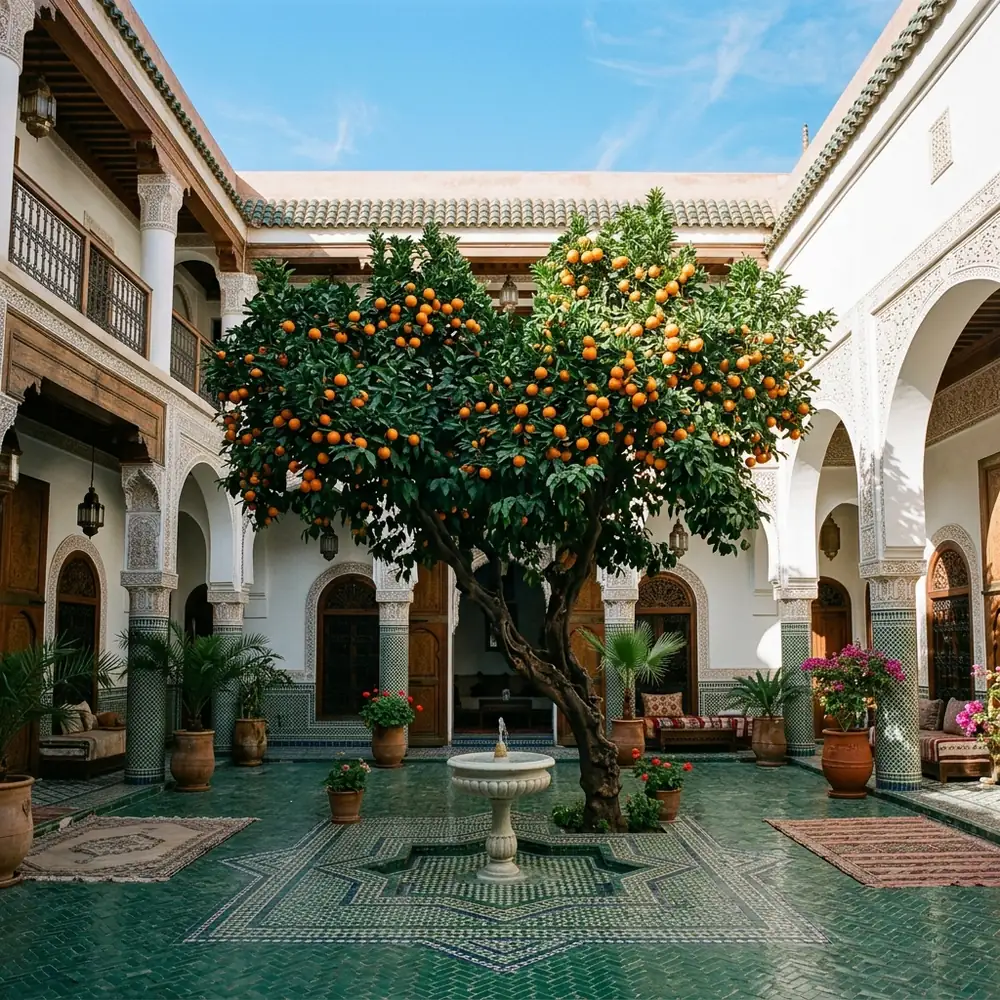
If you visit Marrakech, Fes, or Rabat in the winter, you will notice that the streets, courtyards, and palace gardens are heavily lined with beautiful trees bearing thousands of bright, perfectly round oranges.
To a tourist, it looks like an all-you-can-eat buffet. But if you reach up, pluck one of those beautiful oranges, and take a bite, your face will contort. It is shockingly sour, intensely bitter, and entirely inedible raw.
These are not standard sweet oranges. These are Seville Oranges (Bitter Oranges), and they are planted for a very specific, historical reason.
The Perfume of the City
The primary purpose of the bitter orange tree is not the fruit; it is the flower. In early spring, these trees erupt in thousands of tiny white blossoms (Zhar). For a few short weeks, the entire city smells absolutely intoxicating.
These blossoms are meticulously harvested, often by placing massive tarps under the trees and shaking the branches. The flowers are then taken to the copper stills to be steam-distilled into Maa Zhar—the pure Orange Blossom Water that is the absolute backbone of Moroccan perfumery and pastry making.
The Fate of the Fruit
So, what happens to the incredibly bitter fruit? In the traditional Moroccan kitchen, nothing goes to waste. The harsh, acidic juice of the bitter orange is an excellent tenderizer, often used to marinate tough cuts of meat or to wash raw poultry before cooking to remove any “gamey” smell.
More famously, the bitter rinds are heavily boiled to remove the astringency and then candied in massive amounts of sugar to make marmalades, or preserved in salt to be used much like preserved lemons.
The next time you see those beautiful street oranges, do not try to eat them. Just wait for the spring, and let the perfume explain everything.
Experience the true heart of Moroccan heritage through its culinary traditions. Join us in preserving and honoring these ancestral recipes.
What People Are Saying
No comments yet. Be the first — we'd love to hear from you.
Youssef Amazigh
Culturally Verified & Fact-CheckedThe Moroccan Food editorial team brings together native culinary researchers, heritage preservationists, and experienced home cooks across Marrakech, Fes, and Casablanca. Every recipe and cultural guide is reviewed against ancestral oral traditions and authentic regional practices.