Casablanca Smart City: How Morocco's Economic Capital Is Reinventing Itself for the Digital Age
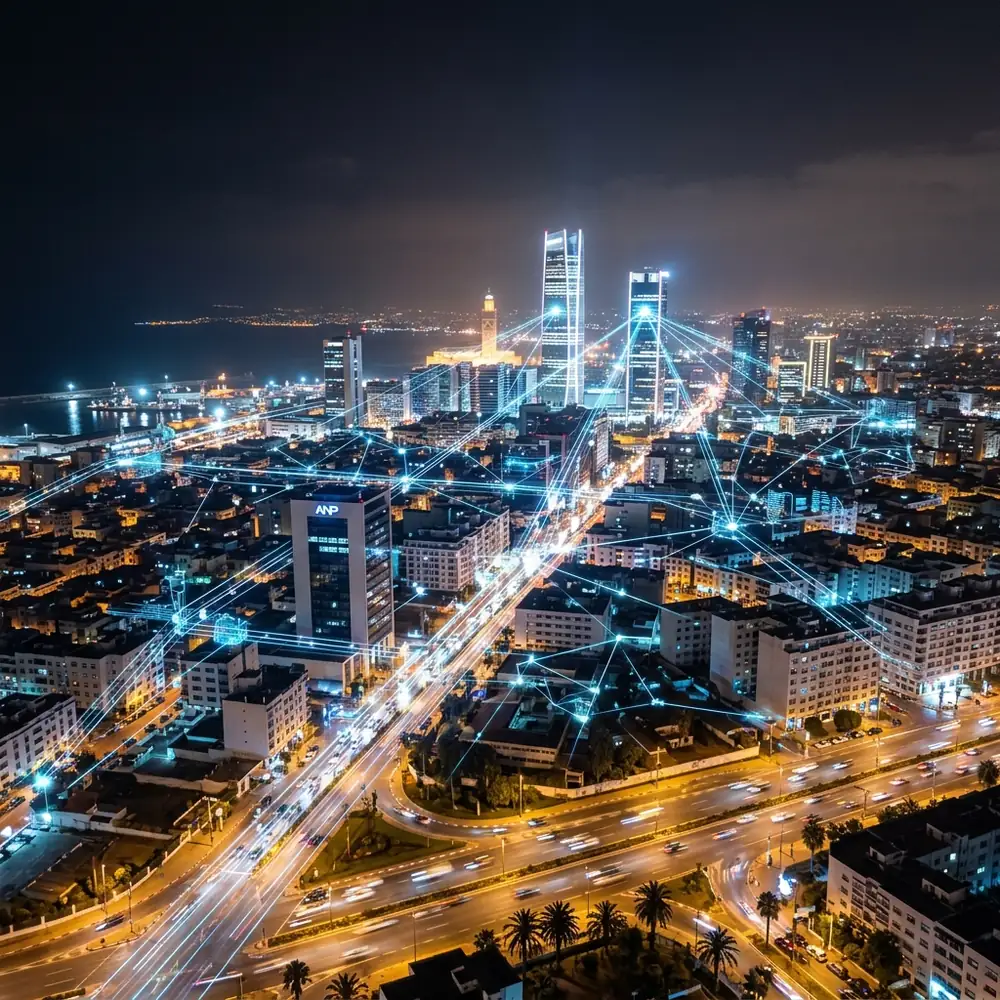
Casablanca Smart City: How Morocco’s Economic Capital Is Reinventing Itself for the Digital Age
There is a conversation happening about Africa’s technology future, and Casablanca wants to be in that conversation. Not just present in it. Leading it.
Whether you are a tech entrepreneur, an investor, a traveller curious about modern Morocco, or someone who last thought of Casablanca as a 1940s black-and-white film set — the city of 2026 will surprise you.
What Smart City Actually Means Here (Not Just Buzzwords)
Let us skip the marketing language for a moment. When Casablanca says “smart city,” what is actually being implemented?
Real initiatives currently operational:
1. Casablanca Smart City Platform
A centralised digital management system monitoring traffic flow, waste collection, water networks, and public lighting in real time. The city has installed over 1,500 sensors across the metropolitan area feeding data into a unified command centre in the Anfa district.
2. Intelligent Traffic Management
Adaptive traffic lights that respond to real-time congestion data. Variable message signs on major axes. This is particularly relevant given that Casablanca’s traffic is one of the most frequently cited frustrations of living and working there.
3. E-Government Services
Urban residency certificates, business registration, and administrative documents are now largely available through the Casabancoop and CasaPortal digital platforms. The paper queue at the prefecture is not entirely dead, but it is shorter than it was.
4. Casablanca Technopark
This is the anchor of the tech ecosystem. Founded in 2001 but significantly expanded in the 2020s, it houses over 300 companies — startups, SMEs, and subsidiaries of international corporations. An office with basic amenities costs around 3,500–8,000 MAD/month.
The Casablanca Finance City: A Different Kind of Hub
Separate from (but complementary to) the smart city initiative is Casablanca Finance City (CFC) — a purpose-built financial district in the Anfa area designed to be the financial gateway between Europe, Africa, and the Middle East.
CFC hosts the regional headquarters of over 200 multinational companies, including major French banks, British consulting firms, and African development institutions. It operates under a special regulatory framework with tax advantages, simplified business setup procedures, and connections to Moroccan labour and capital markets.
If you have ever wondered how a company gets from “we want to operate in Africa” to “we have a functioning office in West Africa within six months,” CFC is increasingly the answer.
Morocco’s Digital 2030 Strategy: The National Framework
The smart city initiatives are not happening in a vacuum. They sit within Morocco’s national “Digital Morocco 2030” strategy, which identifies several key pillars:
- Digital government (dematerialising administrative services)
- Digital economy (growing the tech sector’s contribution to GDP to 15% by 2030)
- Digital infrastructure (expanding fiber broadband to 95% of the population)
- Digital skills (retraining 500,000 workers in digital competencies by 2030)
The targets are ambitious. The track record is mixed — Morocco consistently overestimates implementation timelines — but the direction is unmistakable.
The Startup Ecosystem in 2026: What Is Real
This is where the hype and the reality diverge most visibly.
Morocco has a genuine startup ecosystem. It is not Lagos or Nairobi in terms of volume. But it has specific advantages:
Funding access:
Several Moroccan venture capital funds are active — Maroc Numeric Fund, Al Mada Ventures, and several joint Moroccan-European funds. Seed rounds of 500,000–2,000,000 MAD are achievable for qualified teams. Series A investments are rarer.
Talent:
Morocco produces approximately 50,000 engineering and technology graduates per year. Salaries for software engineers are 15–30% of Western European rates while quality can be comparable. This has made Morocco attractive for nearshore development.
The challenge:
The domestic market is relatively small (37 million people, limited purchasing power for B2C tech) and regulatory complexity for fintech and healthtech remains high. The most successful Moroccan startups tend to target the European market or the broader African market rather than Morocco-first.
Notable recent successes:
Companies like Chari (B2B e-commerce), Spenn (fintech), and several others have raised notable rounds and expanded internationally from their Casablanca base.
The June 2026 Smart City Event
The Casablanca Smart City Summit in June 2026 brought together urban planners, technology companies, and government officials from across Africa and Europe. Themes included AI in urban management, sustainable mobility, and water management technology.
The event itself is significant not for what was announced but for what it signals: Casablanca is positioning itself as the convener of conversations about Africa’s urban future. Hosts shape agendas.
Getting Around the New Casablanca
For visitors, the practical changes are visible.
The tramway (two lines, with a third under construction) makes neighbourhoods like the Corniche, Maarif, Gare de Casa Voyageurs, and the medina accessible without a car or petit taxi negotiation.
The urban bus network has been significantly upgraded under the M’dina Bus contract — new vehicles, digital displays at stops, and app-based tracking.
Parking remains a genuine challenge in central Casablanca. The city is building structured car parks at key nodes, but demand consistently exceeds supply.
Why Casablanca Still Frustrates People (Honest Section)
Any article about Casablanca’s smart city ambitions that does not mention the persistent frustrations is selling you something.
- Traffic. The tramway and traffic management help. They do not solve the problem. A 5km adventure across central Casablanca can take 45 minutes at the wrong time of day.
- Air quality. Industrial activity and vehicle emissions mean Casablanca has measurable air quality challenges, particularly in summer.
- Administrative complexity. The digital services are improving. But navigating Moroccan bureaucracy for anything serious — a business licence, a residency permit, a property transaction — still requires patience, a good local intermediary, and acceptance that timelines will slip.
This is not a reason to avoid Casablanca. It is a reason to come prepared.
Frequently Asked Questions
Is Casablanca worth visiting as a tourist? More so than its reputation suggests. The Art Deco architecture of the medina and the Maarif neighbourhood is genuinely beautiful. The Hassan II Mosque is extraordinary. The Corniche at sunset is one of the best free experiences in North Africa.
What industries are growing fastest in Casablanca? Fintech, logistics technology, agritech, and digital healthcare are seeing the most investment activity. Outsourcing (BPO) remains the largest digital employer.
Can foreigners own businesses or property in Casablanca? Yes. Morocco allows 100% foreign ownership in most sectors. Property ownership is possible and relatively straightforward, though legal due diligence is essential. The CFC offers simplified structures for international businesses.
What is the best neighbourhood to stay in for business visits? The Gauthier and Maarif areas offer the best combination of hotel quality, restaurant access, and proximity to the main business districts. The Corniche is pleasant but more distant from the city centre.
Experience the true heart of Moroccan heritage through its culinary traditions. Join us in preserving and honoring these ancestral recipes.
What People Are Saying
No comments yet. Be the first — we'd love to hear from you.
The Moroccan Editorial Team
Culturally Verified & Fact-CheckedThe Moroccan Food editorial team brings together native culinary researchers, heritage preservationists, and experienced home cooks across Marrakech, Fes, and Casablanca. Every recipe and cultural guide is reviewed against ancestral oral traditions and authentic regional practices.