Chefchaouen Beyond the Blue: The Real Life, Hikes, and Soul of the Rif’s Pearl
Chefchaouen Beyond the Blue: The Real Life, Hikes, and Soul of the Rif’s Pearl
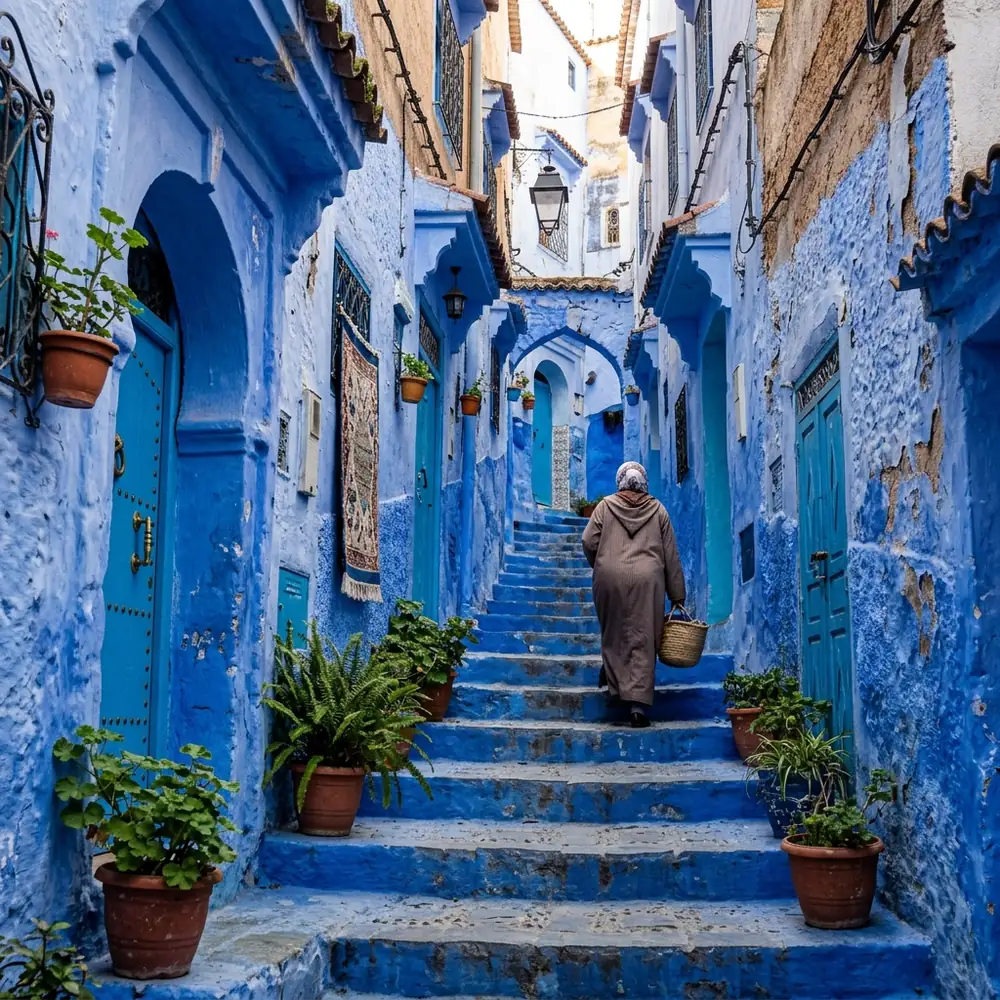
If you have spent more than five minutes researching a trip to Morocco, you have seen the photos. The narrow alleys painted in every conceivable shade of cerulean, cobalt, and indigo. The terracotta pots of geraniums arranged precisely on blue steps. The sleeping kittens positioned as if directed by an art director. Chefchaouen has become one of the most photographed towns on earth, a victim of its own impossible photogenicity.
I have a complicated relationship with Chefchaouen. During the midday hours, when the tour buses from Tangier and Fes deposit thousands of day-trippers into the small medina, the town can feel less like a living community and more like an open-air film set. People line up to take the exact same photograph in the exact same alleyway.
But if you stay the night — if you wait for the buses to leave, if you walk up into the mountains that cradle the town, if you wake up early to hear the dawn call to prayer echo against the peaks — the real Chefchaouen reveals itself. And the real Chefchaouen is far more interesting than the photos suggest.
Why is Chefchaouen Blue?
Let’s address the most common question first, because the answer tells you a lot about the town’s history.
Chefchaouen was founded in 1471 as a small fortress by Moulay Ali Ben Moussa Ben Rached El Alami, to fight against the Portuguese invasions of northern Morocco. Following the Spanish Reconquista in 1492, the town swelled with Muslim and Jewish refugees fleeing Andalusia. They brought with them the architecture of southern Spain — the whitewashed houses, the tiled roofs, the central courtyards.
But the blue? The most reliable historical consensus is that the widespread painting of the town in blue began relatively recently, in the 1930s, introduced by the Jewish refugee community. In Judaism, blue represents the sky and the heavens, serving as a reminder of God. The practice spread, and eventually, the entire medina adopted the palette. (Other local theories suggest the blue repels mosquitoes or keeps the houses cool, but the historical-religious origin is the most credible).
The Geography: A Town Defined by Mountains
The name ‘Chefchaouen’ translates roughly from the Amazigh language as ‘look at the horns.’ The horns are the two dominant peaks of the Rif Mountains — Jbel Tisouka and Jbel Megou — that rise abruptly behind the town.
You cannot understand Chefchaouen without understanding that it is, fundamentally, a mountain town. The air is cooler here than in Fes or Marrakech. The light is different. The water, which flows from the Ras El Maa spring at the top of the medina, is famously pure.
The people of the Rif (the Jbala) have a distinct culture, dialect, and history of fierce independence. For centuries, Chefchaouen was a closed city; Christians were banned under threat of death, and it remained largely isolated until the Spanish arrived in the early 20th century. That legacy of isolation still lingers in the quiet pride of the older residents.
How to Actually Experience the Medina
To see the medina properly, you must disrupt the tourist schedule.
Wake up at 7:00 AM. Walk out of your riad before the shops open. At this hour, the blue walls aren’t backdrops for influencers; they are just the walls of a sleeping town. You will see the local bakers pulling fresh bread from the communal ovens (the faran). You will see the light hit the blue pigment in ways that cameras genuinely struggle to capture.
The main square, Uta el-Hammam, dominated by the red walls of the 15th-century Kasbah and the octagonal minaret of the Grand Mosque, is beautiful but heavily commercialized. Use it for a coffee, then walk upwards.
The further you walk up the hill toward the Ras El Maa spring, the more residential and authentic the medina becomes. Here, the blue paint is sometimes faded, the alleys are steeper, and the rhythm of daily life is visible.
The Hikes: The Best Reason to Visit
The single biggest mistake visitors make in Chefchaouen is not leaving the medina. The Rif Mountains offer some of the most accessible and beautiful hiking in northern Morocco.
The Spanish Mosque (Bouzafar)
This is the mandatory short hike. From the Ras El Maa spring, a clear path leads up the opposite hill to a white mosque built by the Spanish in the 1920s (which was never actually used for worship). The walk takes 30-40 minutes. Go late in the afternoon. The view of Chefchaouen located between the peaks, turning gold and deep blue as the sun sets, is spectacular.
Talassemtane National Park and Akchour
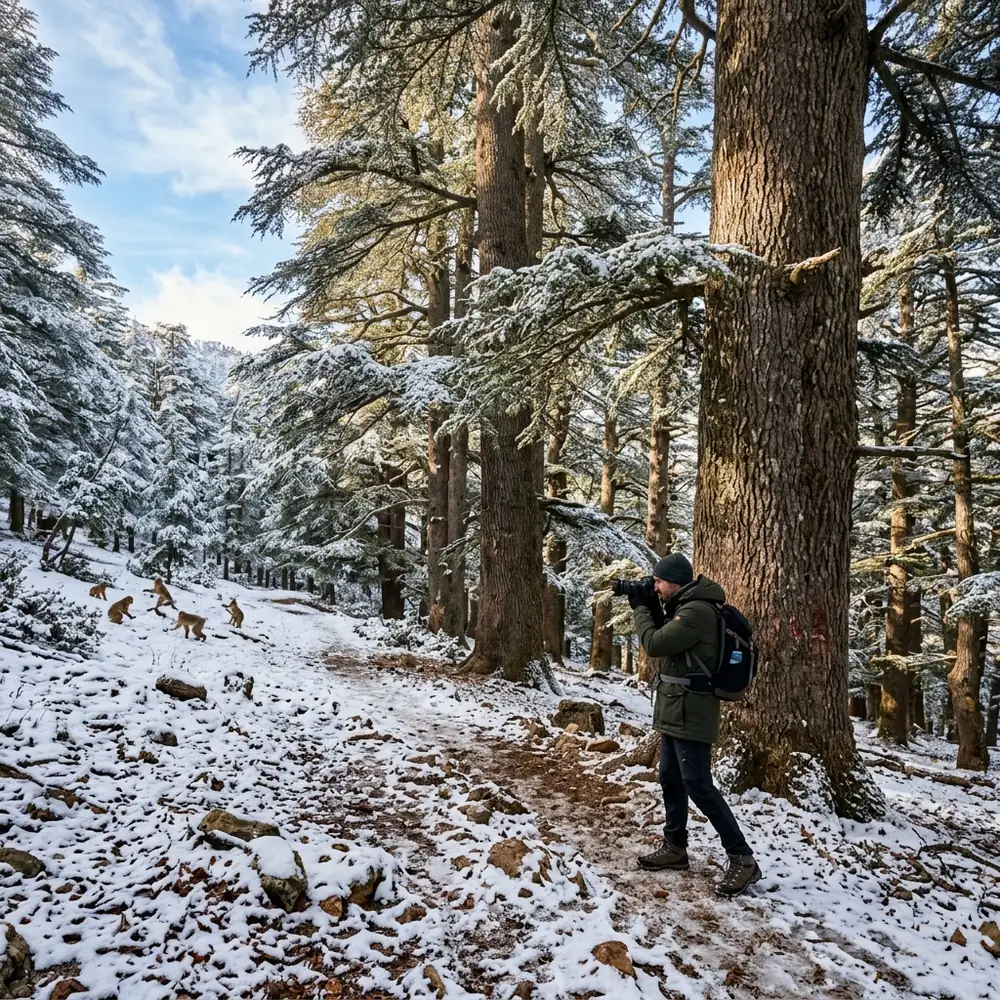
About 45 minutes by shared taxi (grand taxi) from Chefchaouen lies the village of Akchour, the gateway to Talassemtane National Park. This is a genuinely stunning area of deep gorges, cedar and fir forests, and clear mountain rivers.
From Akchour, you have two main hiking options:
- The Waterfalls (Cascades d’Akchour): A relatively easy 2-hour hike along the river (crossing it several times) leads to a stunning 100-meter waterfall. The water is freezing, clear, and beautiful.
- God’s Bridge (Le Pont de Dieu): A shorter but steeper hike in the opposite direction leads to a massive, natural red rock bridge spanning the river gorge at a height of 25 meters.
A note of caution: The Rif Mountains are also the center of Morocco’s cannabis (kif) cultivation. While hiking on established trails like Akchour is perfectly safe and highly trafficked, wandering off-trail deep into the Rif without a local guide is not recommended.
The Food: What Makes the North Different
Northern Moroccan cuisine has distinct Andalusian and Mediterranean influences that you won’t find in the south.
In Chefchaouen, look for Bissara, a thick, incredibly rich soup made from dried fava beans, generously topped with local olive oil and cumin. It is the traditional mountain breakfast and will fuel you for a day of hiking.
The goat cheese of the region, often served fresh with local honey and walnuts, is exceptional. The olives here are famously good. And because you are in the mountains, the mint tea is often brewed with additional herbs like fliou (pennyroyal) or sheba (wormwood) during the winter months, giving it a complex, medicinal warmth.
The Honest Truth About the Blue Pearl
Chefchaouen is beautiful. It is also, in the peak hours of peak season, exhausting. The key to the town is time.
Do not visit as a day trip from Fes (which requires 8 hours of driving for 3 hours of sightseeing). Spend two nights. Hike during the day when the medina is crowded. Walk the blue streets early in the morning and late at night. Sit by the Ras El Maa spring and watch the local women do their laundry in the traditional washhouses.
If you give Chefchaouen time, it stops being a photograph and becomes a place again. And the place is wonderful.
Experience the true heart of Moroccan heritage through its culinary traditions. Join us in preserving and honoring these ancestral recipes.
What People Are Saying
No comments yet. Be the first — we'd love to hear from you.
Omar Kettani
Culturally Verified & Fact-CheckedThe Moroccan Food editorial team brings together native culinary researchers, heritage preservationists, and experienced home cooks across Marrakech, Fes, and Casablanca. Every recipe and cultural guide is reviewed against ancestral oral traditions and authentic regional practices.