Chefchaouen Food Guide: What to Eat in Morocco's Blue City
Chefchaouen Food Guide: What to Eat in Morocco’s Blue City
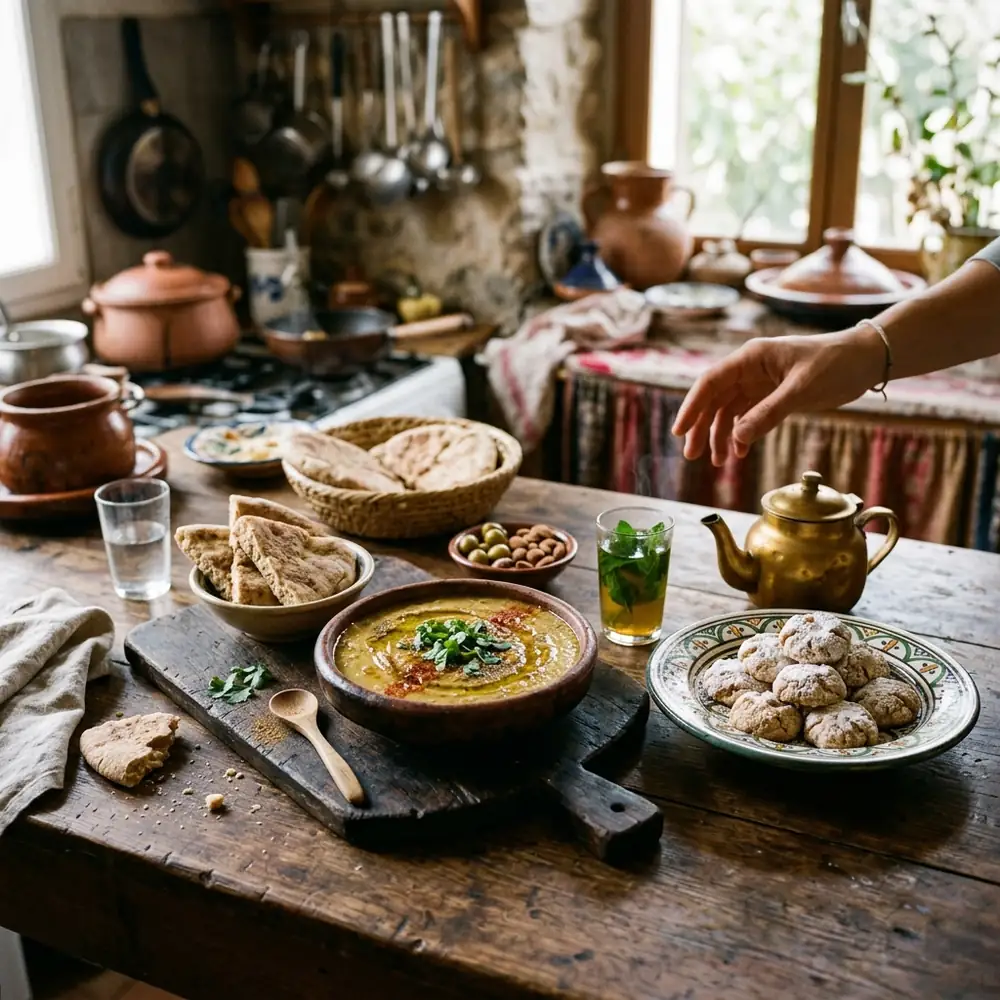
There is a particular moment in Chefchaouen that every serious food traveler remembers. It usually happens in the morning, before the tour groups arrive. You are walking through the medina, the walls genuinely are that shade of blue, and you turn a corner and find a woman sitting outside her front door selling a clay pot of fresh goat cheese wrapped in fig leaves. No sign. No price tag. Just cheese and a nod. You buy some, eat it right there with a piece of bread from the baker next door, and suddenly you understand that this town has been feeding people quietly and well for a very long time.
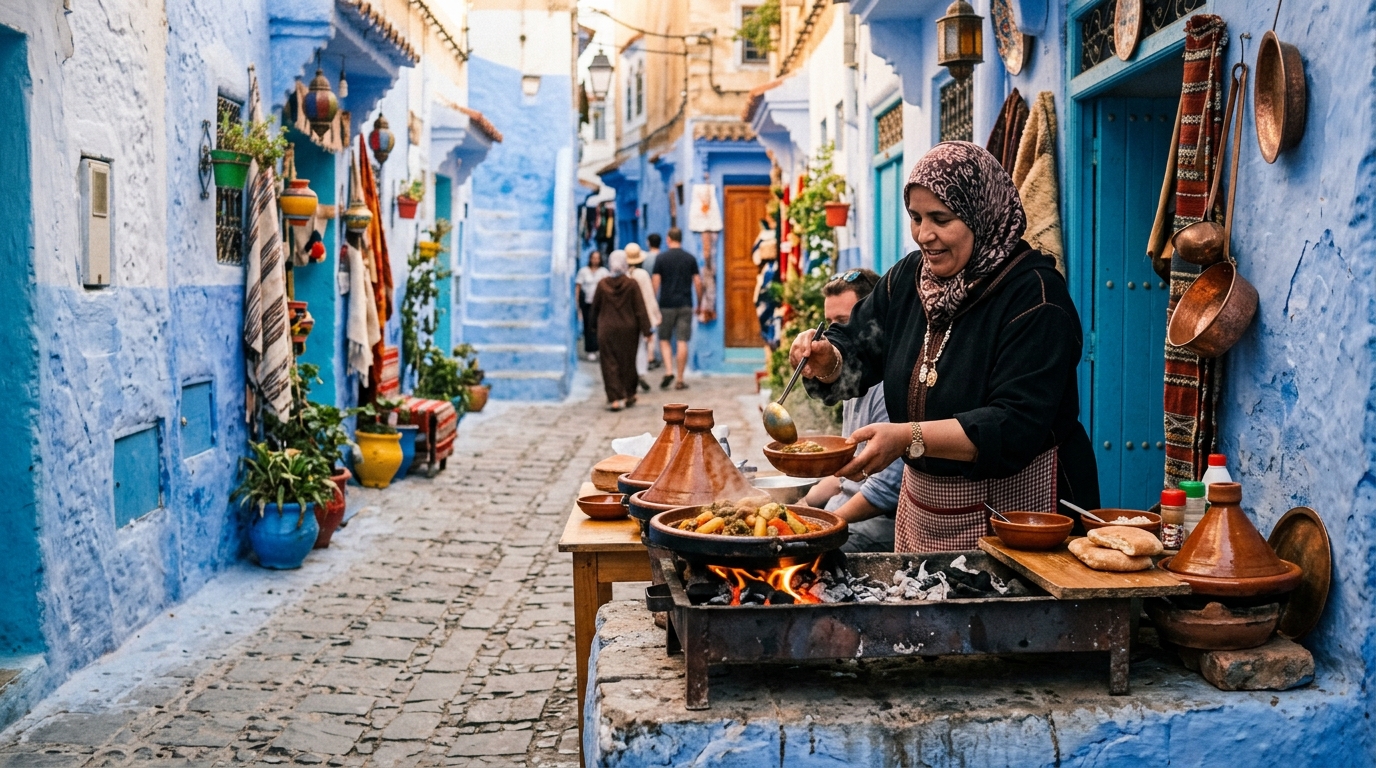
Chefchaouen sits at nearly 600 meters elevation in the Rif Mountains, which is the most important fact about its food. The altitude means a different climate, different soil, different wild herbs growing in the hillsides, and a cooking tradition shaped far more by Berber mountain life than by the Arab urban cooking of Fes or Marrakech. The result is a cuisine that is quieter, earthier, and in many ways more interesting than what you find on the tourist trail below.
The Morning Souk: Where the Day Starts Right
The weekly souk in Chefchaouen draws farmers from the surrounding Rif villages every Thursday and Sunday. Even on other days of the week, the produce section near the main square offers something you rarely see at this quality in Moroccan cities: fresh mountain herbs sold in enormous bundles for almost nothing.
Za’atar grows wild in the hills here — the real Moroccan za’atar, which is closer to wild thyme than the Lebanese blend you may know from elsewhere. Locals use it dried and green, rubbed into meat, stirred into olive oil, and scattered over flatbreads before grilling. A bundle costs about 5 dirhams.
The goat cheese is the other morning essential. The Rif mountain goats produce milk with a particular tang that flat-country goats simply do not, and the cheese made from it — usually sold fresh and unsalted, pressed into small rounds — reflects that. You will also find a firmer, aged version with a yellowish rind that locals eat for breakfast with bread and a glass of sweet tea. Buy from the women who sell directly from baskets; the cheese in the tourist-facing shops is usually older and more expensive.
Honey from local beekeepers appears at the souk in jars with no labels, sometimes identified only by where it came from — “honey from Bni Ahmed” or “honey from the cedar forest.” The cedar-blossom honey from the forests above town is dark and resinous and nothing like commercial honey. It pairs beautifully with the goat cheese.
Kefta with Mountain Herbs: A Different Animal from Marrakech
If you have eaten kefta in Marrakech — those long, spiced ground-meat skewers from the Djemaa el-Fna — you know the Marrakchi version: heavily spiced with cumin, coriander, paprika, and a proprietary ras el hanout blend that leans warm and sweet.
The Chefchaouen kefta is a different thing. Local chefs use mountain herbs — wild thyme, fresh za’atar, dried mountain sage — in place of or alongside the standard spice mix. The result is herbal and slightly wild-tasting. You can find it at small grill restaurants around Uta el-Hammam square and on the streets leading down from the medina toward the old Spanish market.
Ask for it in a batbout (the round, slightly puffed Moroccan pocket bread) rather than on its own. Some places will add a smear of harissa, a few olives, and a squeeze of lemon. This is the local fast food of Chefchaouen, and it beats most of what is served in the fancier tourist restaurants.
Ras el Hanout, Rif Style
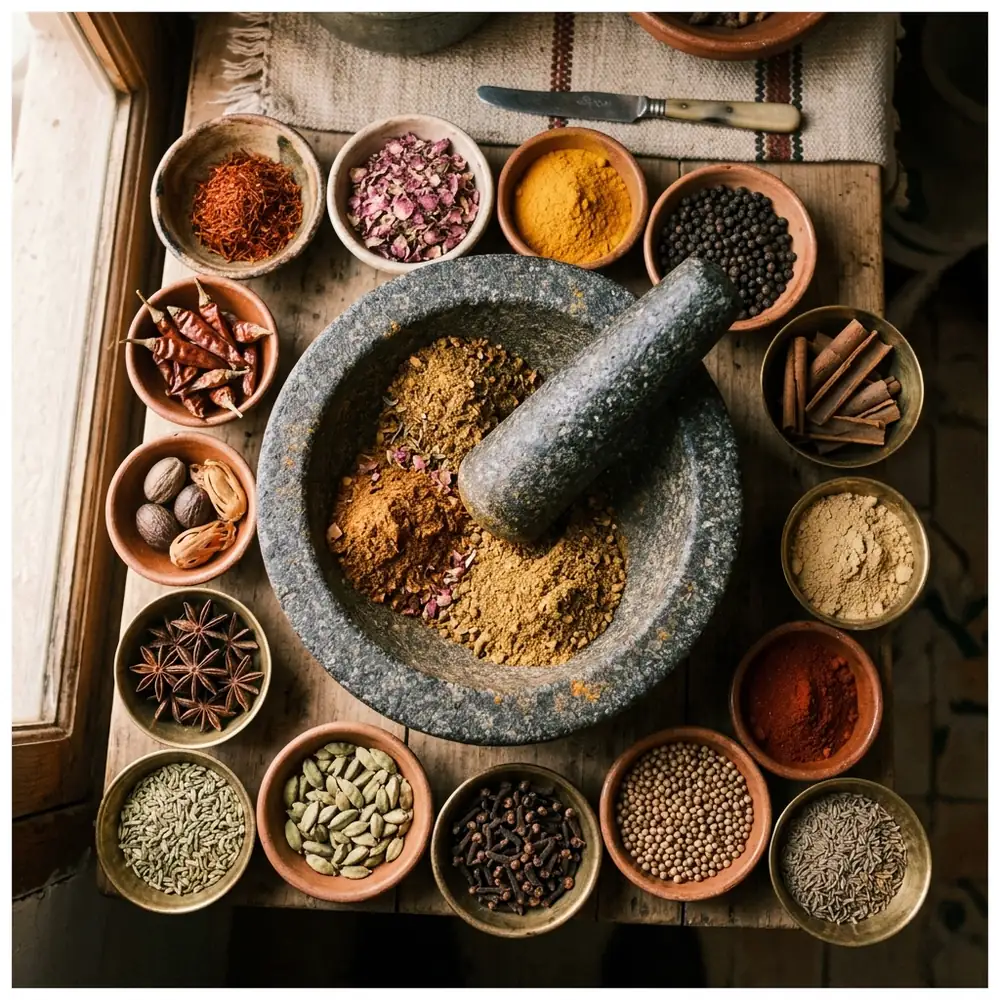
Morocco’s most complex spice blend, ras el hanout, is not a fixed recipe. Every spice merchant, every region, every family has its own version. In Marrakech it often includes dried rose petals, saffron, and a long list of warm spices that can run to 30 or more ingredients. In Chefchaouen, the mountain version tends to be simpler and more herbaceous — heavy on dried thyme, mountain pepper, and what locals call qurqum (a wild turmeric-adjacent root). It smells like a hillside after rain.
Buy your ras el hanout from a small spice shop in the medina — not the large tourist-facing ones near the main gates, but the narrow hole-in-the-wall shops where the owner knows what he is selling. Ask specifically for the local blend and say you are cooking with it rather than taking it as a souvenir. This will get you the real thing rather than a pre-packaged tourist blend.
The Best Places to Eat (Away from the Obvious)
The restaurants on and immediately around Place Uta el-Hammam — Chefchaouen’s central square — are not bad, but they are priced for visitors and the menus rarely change. The better eating is one or two streets off the square.
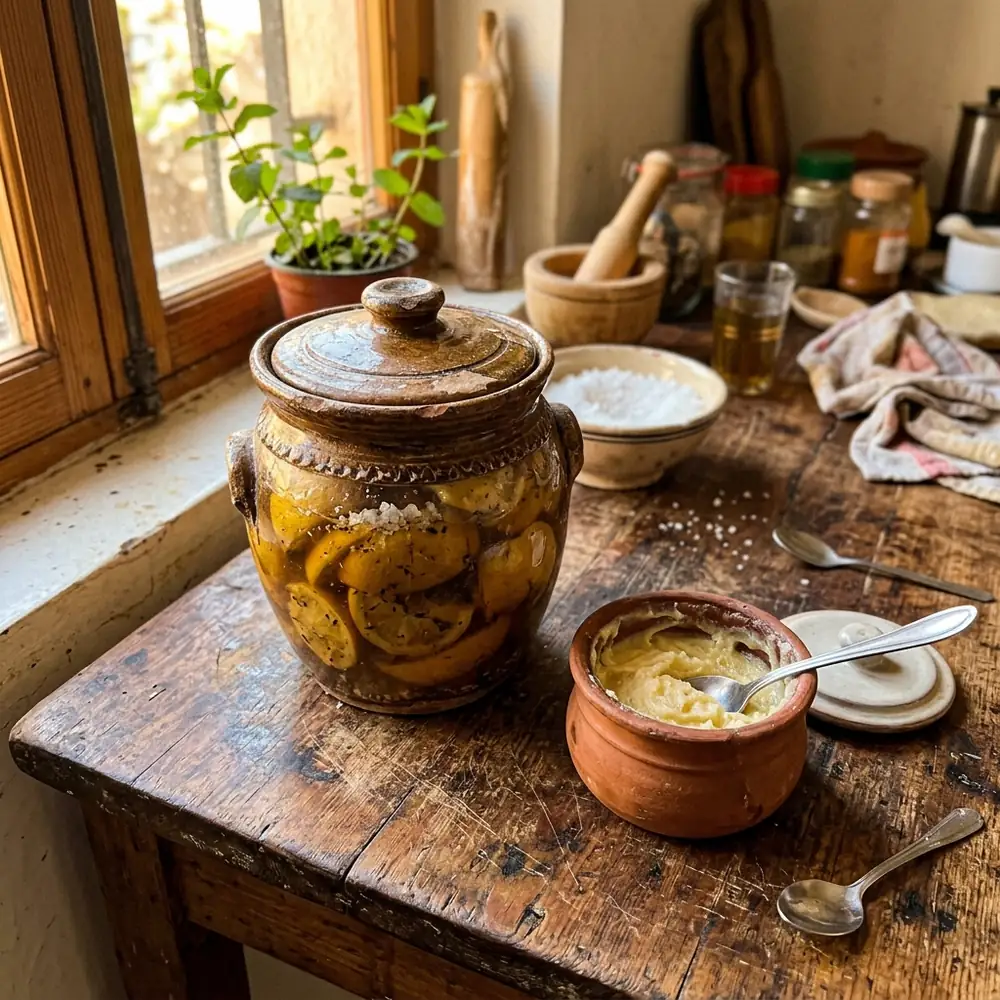
Restaurant Tissekkine: A small family-run place on Rue Targhi, a few minutes’ walk from the central square. The menu changes with what the market has. Tagine of goat with mountain herbs and preserved lemon is the dish to order. No reservations, just show up.
Lala Mesouda: Up in the kasbah area, this rooftop restaurant serves one of the best kefta tagines in the city — ground meat cooked in a clay pot with mountain tomatoes, eggs cracked in at the end, and enough harissa on the side to make your eyes water pleasantly. The view from the roof is also genuinely spectacular at sunset.
The bread from the communal oven: Look for the ferran (community baker) near the upper medina. Locals bring their own dough and pay a few dirhams to have it baked. Many bakers also sell their own loaves — dense, whole-wheat mountain bread with a chewy crust that holds up to dipping, dipping, and more dipping.
Kefta Tagine: The Comfort Dish That Keeps Appearing
If you eat one cooked meal in Chefchaouen, make it the kefta tagine. The version here differs from the standard Moroccan preparation in one key way: the tomato sauce is made with local mountain tomatoes, which are smaller, less watery, and more acidic than the greenhouse tomatoes used in lowland cities. The kefta balls are smaller too, seasoned with the local herb blend, and the whole thing is cooked over charcoal rather than gas, giving it a faint smokiness that the tagine dishes you have had elsewhere probably lacked.
Some restaurants add a preserved lemon to the tagine. Some crack fresh eggs into the sauce in the last five minutes of cooking so they set lightly in the heat. Both versions are correct. Order whichever the house offers; arguing is not useful.
A Word on the Local Cannabis Culture
It would be strange not to mention it. The Rif Mountains are widely known as one of the major cannabis-growing regions of the world, and Chefchaouen is the entry point for many tourists who are curious. Vendors will approach you. Shops display it not-so-subtly. We are not here to promote it or to judge, but we are here to say: it is not legal to buy or consume as a tourist, and the legal risks are real and unpredictable. Focus on the food. The kefta is worth the trip on its own.
Best Cafes with Mountain Views
The terrace cafes above the medina walls offer something that the square-level spots cannot: actual quiet, and views across the tiled rooftops toward the mountains. The café on the path leading up to the Spanish mosque (about a 20-minute walk from the medina center) is basic — mint tea, bottled water, maybe a cookie — but the view from there at golden hour is worth every step. Go light on coffee expectations and heavy on the scenery.
FAQ
Is Chefchaouen food generally good for vegetarians? Very much so. The mountain cuisine relies heavily on vegetable tagines, cheese, eggs, olive oil, and legumes. You can eat extraordinarily well as a vegetarian here without having to hunt for alternatives.
When is the best time to visit the weekly souk? Thursday morning, arriving before 9am. The best produce, freshest cheese, and most variety are available in the first few hours. By midday much of the market has packed up.
How spicy is the food in Chefchaouen? Milder than in Marrakech or Fes as a general rule. The mountain cooking tradition uses herbs more than chiles. Harissa is available on the side if you want heat, but it is never mandatory.
Is it safe to drink local spring water in the restaurants? Most restaurants serve filtered or bottled water. The town has mountain spring water piped in, which is generally good quality, but stick to bottled water if you have a sensitive stomach, especially in the first day or two.
Experience the true heart of Moroccan heritage through its traditions. Join us in preserving these ancestral rituals.
What People Are Saying
No comments yet. Be the first — we'd love to hear from you.
The Moroccan Food
A Moroccan cultural writer dedicated to documenting the authentic voice, history, and heritage of the Kingdom. Writing from within — to share what truly makes Morocco extraordinary.
Our Mission →