Chermoula: The Zesty Marinade That Rules Moroccan Seafood
Chermoula: The Zesty Marinade That Rules Moroccan Seafood
Wondering what gives Moroccan fish its unmistakable, lively red color and explosive flavor? Chermoula is a fiercely pungent, raw marinade made from crushed garlic, fresh herbs, and toasted spices that dictates the flavor of our entire coastline. Discover the zesty, acidic paste that elevates simple sardines to absolute culinary royalty.
In our Kingdom, with the Atlantic crashing on one side and the Mediterranean on the other, our relationship with the sea is deep. Walk through the blue-washed alleys of Essaouira, and the scent of roasting cumin and searing fish will pull you directly to the port. Our grandmothers passed down a master marinade that tenderizes and flavors the catch of the day in mere minutes. Chermoula is not just a sauce; it is the raw, core of the Moroccan coastal kitchen.
What goes into an authentic Chermoula paste?
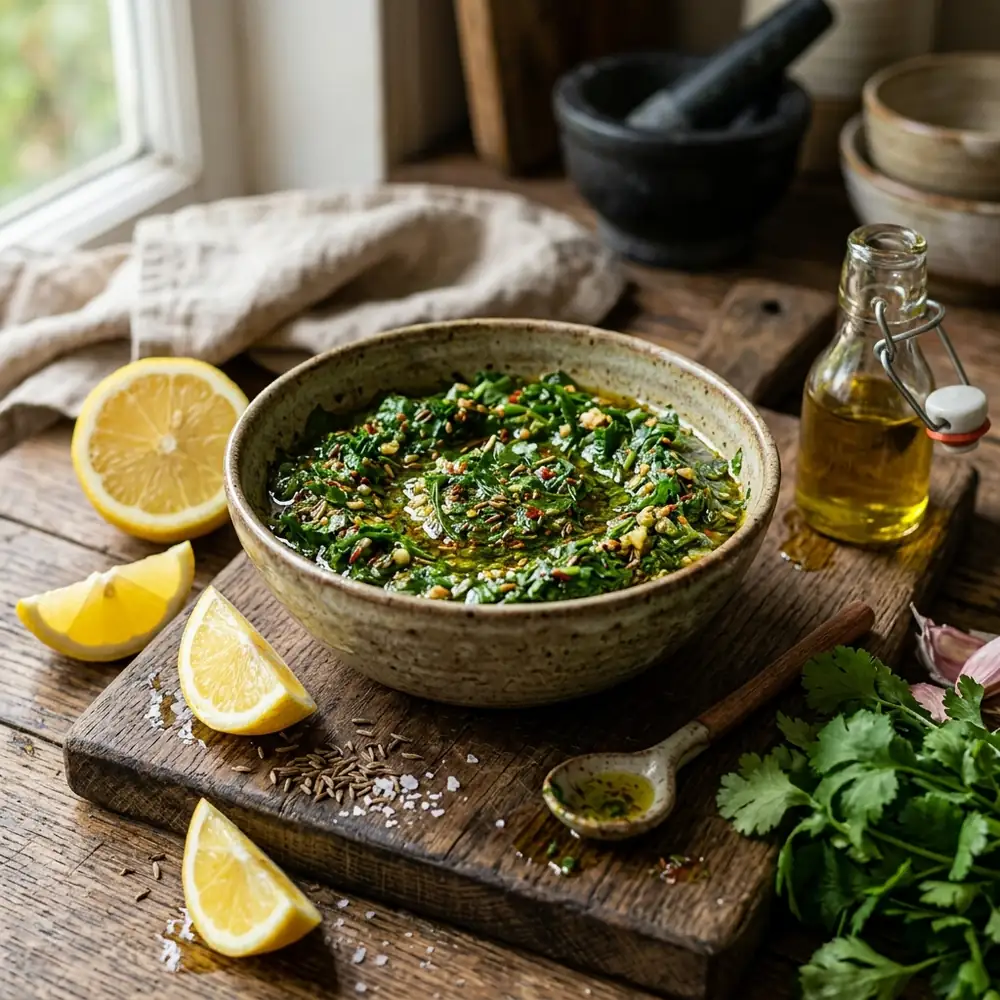
A true Chermoula is never bought in a jar; it is pounded by hand in a brass mortar to release the essential oils of the herbs.
- The green base: Massive, equal handfuls of fresh, flat-leaf parsley and pungent cilantro are chopped incredibly fine.
- The red fire: Generous scoops of sweet red paprika and toasted cumin provide the iconic earthy, red hue, often spiked with a dash of fiery chili.
- The acidic bite: Freshly squeezed lemon juice and a heavy pour of raw extra-virgin olive oil bind the spices into a thick, glossy paste.
How is Chermoula used in Moroccan cooking?
While it is primarily known as a seafood marinade, this brilliant paste acts as a versatile flavor bomb across the entire kitchen.
- The stuffed sardines: The paste is smeared thickly between two butterflied sardines, which are then dusted in flour and fried to a blazing crunch.
- The baking base: Whole white fish are slashed deeply, rubbed with the paste, and baked over a bed of sliced potatoes and tomatoes.
- The vegetable toss: A spoonful of leftover Chermoula is often tossed with boiled carrots or roast <truncated 52768 bytes> se is an ancient, rustic process relying entirely on the natural environment and immediate consumption.
- The raw milk: It is traditionally made from the rich, raw milk of goats or cows that graze on wild mountain herbs, giving the milk a deeply floral, grassy note.
- The natural curd: The milk is curdled gently, often using the natural enzymes found in wild artichoke thistles rather than commercial rennet.
- The palm leaf press: The fresh curds are scooped into small, hand-woven baskets made from dwarf palm leaves (doum), which drain the whey and leave a beautiful, woven imprint on the white cheese.
How do Moroccans eat this fresh mountain cheese?
Because Jben is entirely unaged, it is highly acidic, slightly salty, and possesses a crumbly texture similar to a dry ricotta or fresh feta.
- The sweet contrast: It is most famously smeared thickly onto hot, flaky Msemmen flatbreads and drowned in dark mountain honey, creating a flawless sweet and sour balance.
- The savory stuffing: In the north, it is aggressively mixed with chopped mint and wild thyme, then stuffed inside crispy, deep-fried Briouat pastries.
- The olive oil bath: It is often served simply on a plate, drenched in raw, peppery extra-virgin olive oil and scooped up with hot wedges of crusty Khobz.
Imagine sitting on a terrace overlooking the blue-washed town of Chefchaouen, the morning mist still clinging to the green peaks. A wooden board arrives bearing a fresh, white disc of Jben, still carrying the imprint of its woven basket. You smear it on warm bread, the sharp, tangy cheese melting beautifully under a heavy pour of local honey. Our mountains are wild, and our cheese is pure; come taste the morning.
Meta Description: Explore Jben, the traditional fresh mountain cheese of Morocco. Discover how this crumbly, tangy goat cheese is drained in palm baskets and served with warm honey.
Experience the true heart of Moroccan heritage through its culinary traditions. Join us in preserving and honoring these ancestral recipes.
What People Are Saying
No comments yet. Be the first — we'd love to hear from you.
Diafa Editor
Culturally Verified & Fact-CheckedThe Moroccan Food editorial team brings together native culinary researchers, heritage preservationists, and experienced home cooks across Marrakech, Fes, and Casablanca. Every recipe and cultural guide is reviewed against ancestral oral traditions and authentic regional practices.