Cubeb Pepper (Kebbeba): The Ancient Tail Pepper of Moroccan Apothecaries
archived: false
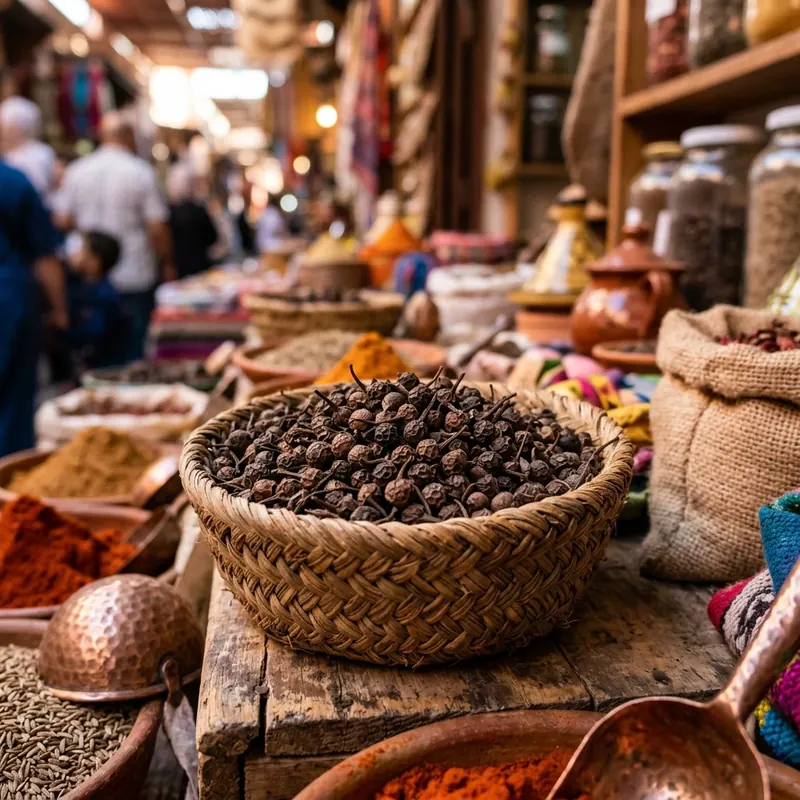
Among the dozens of aromatic roots, dried flower buds, and seeds that compose the legendary Moroccan master spice blend Ras el Hanout, one peppercorn stands apart with a curious physical feature: attached to each spherical berry is a small, rigid stem resembling a tail. In Moroccan Darija, this is known as Kebbeba (or Hab el-Arous, literally “Grain of the Bridegroom”). In European historical texts, it is recorded as Cubeb Pepper or Tailed Pepper (Piper cubeba).
While common black pepper (Piper nigrum) provides immediate burning heat, Kebbeba delivers an entirely different sensory profile: a warm, woody allspice fruitiness followed by a cooling, eucalyptus-like menthol sensation and a pleasant slight pine-bitter finish. It is the secret ingredient that gives imperial Moroccan braises their haunting aromatic complexity.
The Maritime Spice Route: From Java to Medieval Fez
Piper cubeba is native to the lush volcanic rainforests of Java and Sumatra in the Indonesian archipelago. Long before modern maritime trade, Arab and Persian merchants controlled the trans-oceanic spice lanes of the Indian Ocean, sailing dhows loaded with cloves, nutmeg, and cubeb to the ports of the Red Sea and the Persian Gulf.
From there, camel caravans transported the precious berries across North Africa to the imperial capital of Fez. By the thirteenth century, cubeb pepper was an indispensable component of elite Andalusian and Maghrebi gastronomy, praised in medieval Arabic culinary manuscripts like the Kitab al-Tabikh for its ability to perfume meat and ease digestive heaviness.
During the Middle Ages, European monarchs also consumed cubeb pepper as a status symbol. However, when Portuguese traders began importing cheaper black pepper around the African Cape in the sixteenth century, cubeb vanished from European kitchens, surviving almost exclusively in the sophisticated spice tradition of Morocco.
The Chemistry of Flavor: Why Chefs Value Cubeb
The unique organoleptic profile of Kebbeba is explained by its essential oil chemistry:
- Cubebin: A unique lignan compound that provides gentle, sustained warming without scorched sharpness.
- Cineole and Pinene: Terpene compounds that create the crisp, refreshing eucalyptus-pine note on the back of the palate.
- Caryophyllene: The woody, peppery terpene shared with cloves and black pepper.
Because cubeb is much less aggressive than fiery black or cayenne pepper, it allows the cook to add deep spice character to a tagine without overwhelming delicate poultry, squab, or lamb fibers.
Culinary Applications in Moroccan Cooking
In Moroccan master cuisine, Kebbeba is used strategically:
1. The Heart of Authentic Ras el Hanout
No genuine thirty-spice Ras el Hanout blend is complete without whole toasted cubeb berries. The spice bridges the sweetness of Ceylon cinnamon and nutmeg with the pungent heat of ginger and black pepper, producing a seamless aromatic curve.
2. Game Birds and Pigeon Pastilla
In Fez, master pastilla cooks always grind a pinch of Kebbeba into the spiced onion and saffron reduction used to braise young squab pigeons (Hmam). The eucalyptus-camphor note cuts effortlessly through the gamey richness of the dark meat.
3. Merguez Sausage Seasoning
Artisanal butchers in the north include freshly ground Kebbeba in their hand-minced lamb and beef merguez sausages, pairing it with cumin, garlic, and hot harissa to create an intensely aromatic street sausage.
Sourcing and Identifying Authentic Kebbeba in the Souk
When shopping in Moroccan spice markets such as Fez’s Souk el-Attarine or Marrakech’s Rahba Kedima, knowing how to verify genuine cubeb is essential:
- Inspect the Pedicel (Tail): Genuine Piper cubeba always retains a small, firm tail attached to the base of the spherical berry. If the berry is smooth without an attached stem, it is ordinary black pepper or allspice berries (Pimenta dioica).
- Check the Surface Texture: True cubeb berries have a distinctive wrinkled, dark brown-to-black reticulated pericarp. They are slightly larger than standard tellicherry peppercorns and feel relatively light in the palm.
- Crush and Smell: Pinch a whole berry between your thumbnails and crush it firmly. The immediate aroma must be clean, resinous, and cooling, recalling eucalyptus, allspice, and cedar shavings, without any rancid or oily stale odor.
Store whole dried Kebbeba berries in a tightly sealed glass jar in a dark pantry away from heat and stove steam. Whole berries retain their volatile oils for up to three years, ready to be ground fresh whenever an authentic royal braise or winter broth is prepared.
Frequently Asked Questions
Can I substitute regular black pepper for cubeb pepper?
Not directly. Black pepper provides sharp, burning heat from piperine, whereas cubeb provides allspice-eucalyptus warmth with gentle peppery notes. If a recipe calls for cubeb and you have none, substitute a mixture of two parts allspice berries (Pimenta dioica) and one part cracked black pepper.
What does the small “tail” on the cubeb peppercorn signify?
The distinctive tail (pedicel) is the natural stem that attached the berry to the creeping vine. It is an immediate botanical identifier that distinguishes genuine Piper cubeba from ordinary black pepper or allspice berries.
How should whole Kebbeba be ground?
Whole cubeb peppercorns should be toasted lightly in a dry skillet for sixty seconds until fragrant, then ground in a stone mortar or electric spice mill. Like all volatile spices, grind only what you need for the dish at hand to preserve its delicate eucalyptus-camphor oils.
Does cubeb pepper have traditional medicinal uses?
Yes. Moroccan traditional herbalists (Aattarine) frequently recommend chewing two or three whole cubeb peppercorns to freshen breath, soothe throat irritation, and ease mild vocal hoarseness before communal singing or reciting poetry.
Experience the true heart of Moroccan heritage through its culinary traditions. Join us in preserving and honoring these ancestral recipes.
What People Are Saying
No comments yet. Be the first — we'd love to hear from you.
Sara
Culturally Verified & Fact-CheckedSara studies the nutritional and functional science of Moroccan ingredients, from pure argan oil and Taliouine saffron to wild medicinal herbs.