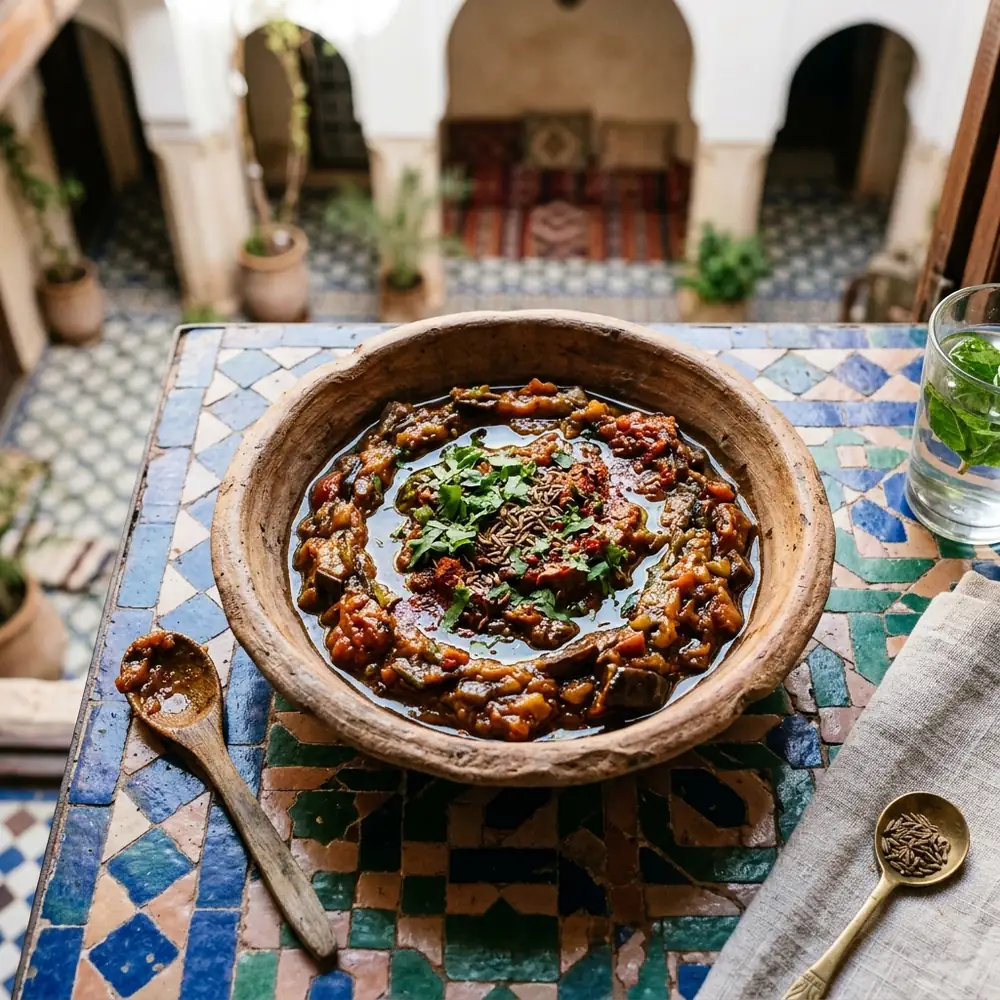
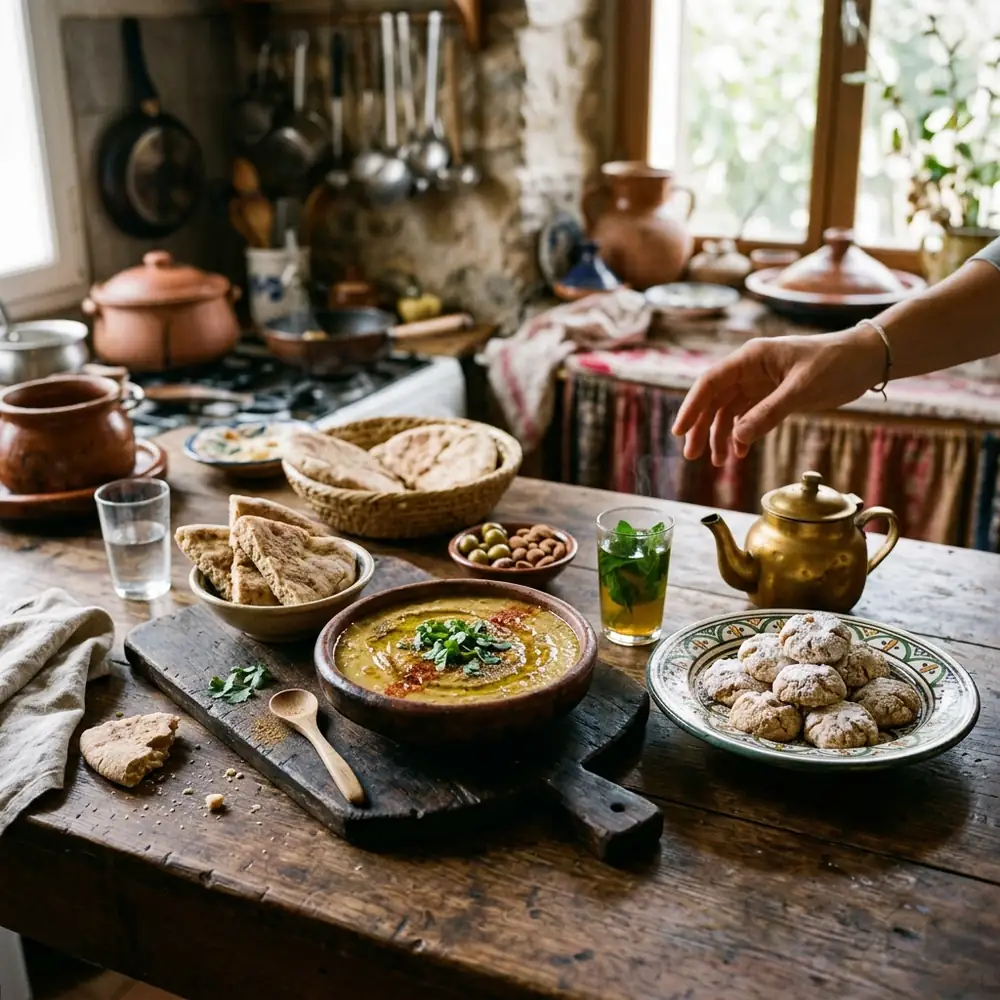
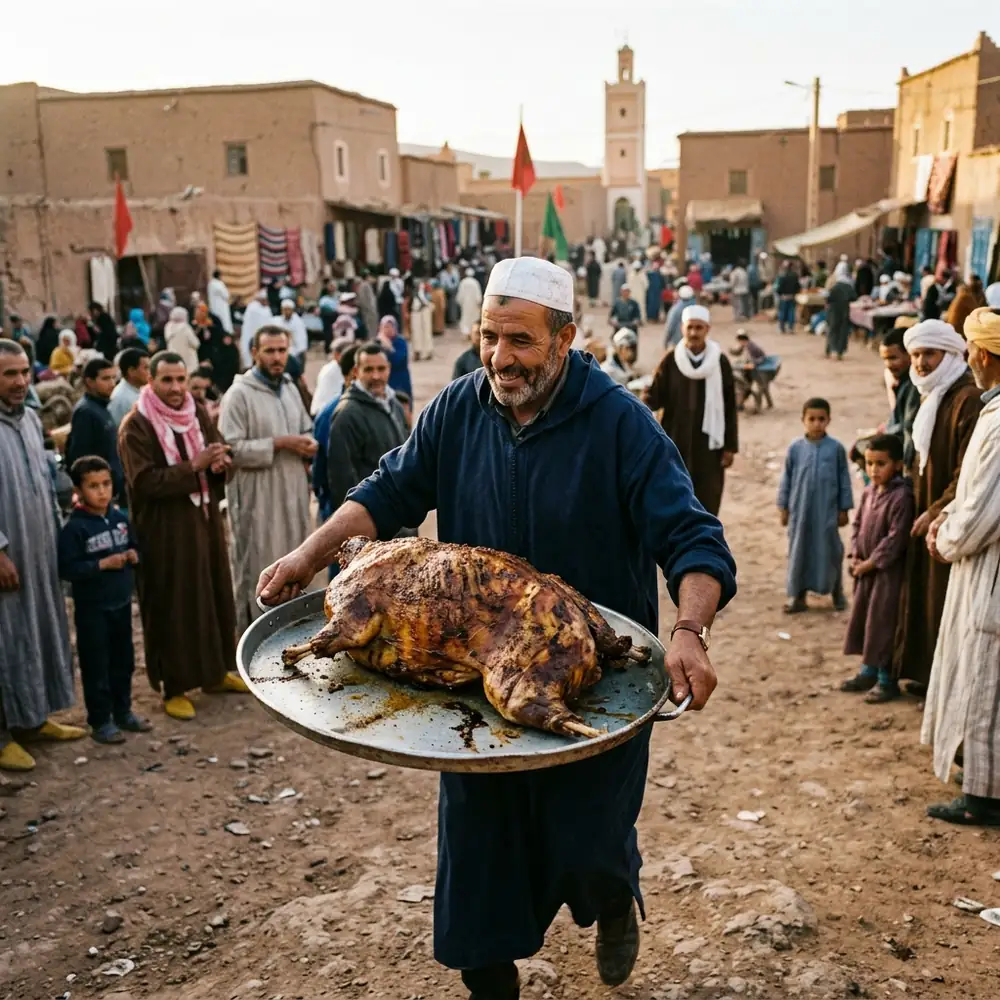
Cuisine Morocco: The Seven Pillars of a Kitchen That Has Fed the World for 12 Centuries
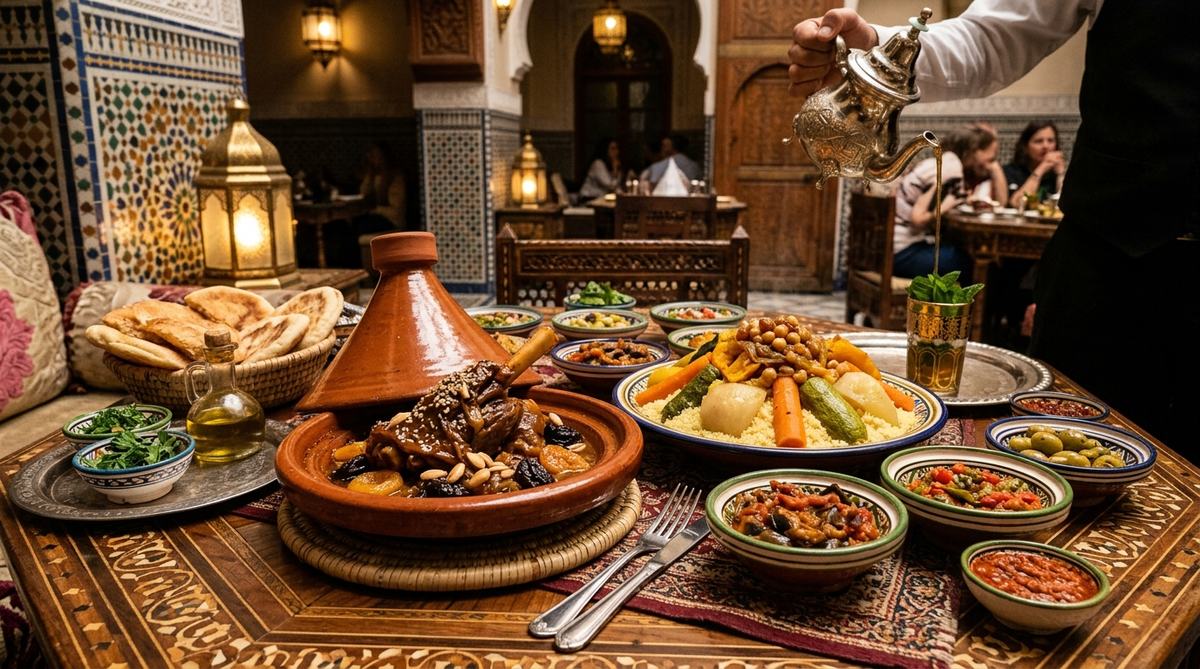
Cuisine Morocco: The Seven Pillars of a Kitchen That Has Fed the World for 12 Centuries
My grandmother—jadda Fatima—never used a recipe. She measured spices by pouring them into the groove of her curved palm, tasted by pressing the tip of her index finger to her tongue, and knew a tagine was ready not by a timer but by a particular low bubble she recognized the way you recognize a familiar voice in a crowd. She learned this from her mother, who learned it from hers, in an unbroken chain that runs backward past the Saadian dynasty, past the Almoravid empire, past the Arab conquest, to Amazigh Berber women cooking in the foothills of the Atlas Mountains before any of those kingdoms were a dream.
Moroccan cuisine is not a trend, not a fusion concept, not recently discovered. It is one of the oldest continuous culinary traditions on earth—twelve centuries of accumulated wisdom shaped by the Silk Road, the spice trade, Andalusian exiles, Jewish communities, sub-Saharan caravans, and the patient genius of women who had no cookbooks and needed none. Understanding what makes it genuinely extraordinary requires understanding its seven foundational pillars—not as a list, but as a living system where each element supports all the others.
Pillar One: The Clay Tagine and Its Cooking Chemistry
The tagine (or tajine) is both a vessel and a cooking method, and the two cannot be separated. The conical clay lid is not decorative—it functions as a condensation engine. Steam rising from the food inside hits the cooler upper cone, condenses into droplets, and falls back down onto the ingredients in a continuous cycle of self-basting. This means food cooks in its own moisture, concentrating flavors without losing volume to evaporation. No pressure cooker, Dutch oven, or modern slow cooker replicates this physics exactly.
The qaa (base plate) and cone are traditionally made from local clay fired at lower temperatures than European ceramics, which makes them porous enough to absorb heat slowly and distribute it evenly. A well-seasoned Moroccan clay tagine—rubbed with olive oil and fired repeatedly—develops a cooking surface that is essentially non-stick and infused with decades of flavor. My grandmother’s tagine was forty years old when I first remember eating from it.
Tagine dishes span the full range of Moroccan cooking: tagine bilhout (fish with preserved lemon), tagine djaj (chicken with olives), tagine lahm b’barquq (lamb with prunes), tagine kefta bil bid (meatballs with eggs). What connects them is patience—tagines are not rush-cooked. The low, slow heat is the point.
Regional Tagine Differences
Marrakech tagines tend toward sweet-savory combinations: dried fruit, honey, almonds added to meat. Fes tagines are more austere and spice-forward. Coastal Agadir tagines feature fish and preserved lemons prominently. Each city thinks its version is correct, and each city is right within its own tradition.
Pillar Two: Couscous and the Friday Ritual
Ksksu—couscous in Darija—is the most sacred food in Moroccan culture, and that word is not too strong. It is the dish God intended for Friday, the holy day. In homes across Morocco, from the medinas of Fes to the mountain villages of the Rif, Friday means the whole family gathers to eat couscous together from a communal platter (gsaa). No individual plates. Everyone reaches in from their own section, rolling the couscous into small balls with their right hand, picking up a morsel of vegetable or meat, eating in a particular silence that is also a particular closeness.
Hand-rolled couscous—made by women who sprinkle water and semolina together, rolling in circular motions until perfect tiny spheres form—requires thirty to forty minutes of skilled labor per portion. It is then steamed three times over the cooking broth in a kskkas (couscous steamer), lifted and separated and re-steamed, until each grain is separate, light, and has absorbed flavor without becoming sticky. This three-steam method is the entire secret to Moroccan couscous, and it is why the boxed five-minute version available in supermarkets abroad is a completely different food.
In 2020, UNESCO added Moroccan couscous (along with Algerian, Tunisian, and Mauritanian traditions) to the Representative List of the Intangible Cultural Heritage of Humanity. This is recognition of what Moroccan cooks have always known: couscous is not a side dish. It is a civilization.
Pillar Three: The Moroccan Spice System
Moroccan cooking does not use spices the way many Western cuisines do—as accents applied at the end. Spices are foundational architecture, built into cooking from the first minute, layered, and calibrated with a precision that looks casual but is anything but.
Ras el hanout (literally “head of the shop”—the spice merchant’s best blend) is the most complex Moroccan spice mixture, containing between twelve and forty different components depending on the maker: cumin, coriander, ginger, turmeric, black pepper, cayenne, cinnamon, allspice, cardamom, mace, dried rose petals, lavender, long pepper, and a dozen others. Each good spice merchant in a Moroccan souk has their own formula, and the blend reflects their expertise, their supplier relationships, and sometimes their family secrets.
Chermoula is a wet marinade and sauce base—fresh coriander, parsley, garlic, cumin, paprika, lemon, olive oil—used primarily for fish but also for vegetables and some meats. It is the everyday workhorse of Moroccan flavor.
Qsour refers to the ground spice blends specific to certain dishes: the cinnamon-heavy spicing of pastilla, the white-pepper-and-ginger base of harira, the saffron-and-ginger combination used in wedding chicken dishes. Each dish has its own signature spice logic.
The Moroccan spice system is a complete flavor grammar. You do not apply it; you speak in it.
Pillar Four: The Sweet-Savory Principle
The combination of sweet and savory is not a modern fusion idea in Morocco—it is a medieval Andalusian inheritance that has been embedded in the cooking for six hundred years. When the Muslims were expelled from Al-Andalus (present-day Spain) in 1492, they brought their sophisticated culinary tradition with them across the Strait of Gibraltar into Morocco, and the sweet-savory principle came with them.
This is why lamb is cooked with prunes and honey (tagine lahm b’barquq). Why pastilla wraps pigeon in sugar and cinnamon. Why couscous tfaya layers caramelized onion and raisins over the meat. Why bastila bil hout (seafood pastilla) finishes with powdered sugar. Sweet and savory are not opposites in Moroccan cuisine—they are the same note played in harmony.
Understanding this principle is the key to understanding why Moroccan food tastes the way it does: complete, layered, unexpectedly complex in the finish.
Pillar Five: Preserved Ingredients — The Pantry of Patience
The Moroccan pantry is built around preserved and long-aged ingredients that concentrate flavor and make cooking both more economical and more interesting.
Saffron from Taliouine: The town of Taliouine in the Anti-Atlas Mountains produces some of the world’s finest saffron. Moroccan saffron—steeped in warm water before use—adds not just color but a specific earthy sweetness that distinguishes authentic Moroccan chicken dishes from imitations.
Argan oil from the Sous Valley: Pressed from the nuts of the argan tree (Argania spinosa), which grows only in southwestern Morocco, argan oil has a warm, nutty depth unlike any other oil. Culinary argan oil (roasted nuts) is used on couscous, in amlou (almond-argan-honey paste), and as a finishing oil. Cosmetic argan oil (cold-pressed unroasted) is what fills the beauty products—do not cook with it.
Smen — Aged Fermented Butter: Smen is salted butter fermented in sealed clay pots for months or years, developing a flavor somewhere between blue cheese and Parmesan. It is added to couscous, tagines, and bread dough, where it introduces a funky depth that cannot be replicated by fresh butter.
Preserved Lemons (hamd m’rakad): Lemons packed in coarse salt and left to ferment in their own juice for thirty days until the peel softens and the flavor transforms from sharp citrus to something mellow, slightly fermented, and deeply complex. They are used in chicken tagine, fish dishes, and salads—always the peel, not the pulp.
Pillar Six: Moroccan Bread — The Center of Every Table
No meal in Morocco is eaten without bread. The khobz (round Moroccan flatbread) is baked daily in the communal ferran (wood-fired oven) or at home in the kitchen, and it serves as both utensil and food—used to scoop sauce, wrap meat, and absorb broth.
Beyond plain khobz, Moroccan bread culture includes:
- Msemen: square, layered, griddle-fried flatbread
- Harcha: semolina pan bread, dense and slightly gritty, eaten at breakfast with honey or jam
- Baghrir: spongy, lacy semolina pancakes cooked on one side only, whose thousands of tiny holes fill with butter and honey
Bread is not a side in Morocco. It is the foundation.
Pillar Seven: The Mint Tea Ceremony
Atay bi n’na—Moroccan mint tea—is not a beverage. It is a hospitality ritual, a social grammar, a way of showing respect, slowing time, and marking transitions.
Chinese gunpowder green tea is brewed strong, poured into a silver teapot with a generous fist of fresh n’na (spearmint) and a quantity of sugar that surprises visitors, then poured from a height of thirty to fifty centimeters above the glass. This high pour aerates the tea, creates a small foam on the surface, and cools the liquid slightly. The glass is refilled two or three times—tradition holds that the first glass is mild as gentle life, the second is strong as love, the third is bitter as death.
You do not rush a tea ceremony. To refuse it is a genuine insult. To accept it and gulp it quickly is a near-equal offense. Sit, hold the hot glass by the rim, sip slowly, and understand that you have been welcomed.
Regional Differences: Fes vs. Marrakech vs. Casablanca
Fes is Morocco’s culinary capital in the classical sense—the dishes here are the most refined, the most Andalusian-influenced, the most concerned with layering. Fes is where pastilla was perfected, where couscous receives seven vegetables rather than five, where spicing is complex and restrained rather than generous and direct.
Marrakech cooks sweeter, bolder, and more rustic. The tangia is its own invention. Sweet-savory combinations are more pronounced. The spices are more generous.
Casablanca is Morocco’s cosmopolitan city, and its food reflects that: French bakery culture runs alongside traditional Moroccan cooking; fresh seafood from the Atlantic is grilled simply; the pace is faster and the food slightly more casual.
Recreating Authentic Moroccan Food at Home
The biggest mistake people make when trying to cook Moroccan food abroad is substituting constantly: replacing preserved lemons with fresh lemon zest, using generic curry powder instead of ras el hanout, rushing couscous through a microwave. These substitutions produce food that is vaguely reminiscent of Morocco in the way a postcard is reminiscent of a place. Invest in the correct pantry ingredients—most are available online—and follow the three-steam couscous method at least once. The patience is the point.
Frequently Asked Questions
What makes Moroccan cuisine different from other North African cuisines?
The Andalusian heritage—six centuries of influence from Muslim Spain—gives Moroccan cuisine its sweet-savory complexity, its use of dried fruit in savory dishes, and its refined pastry tradition that sets it apart from Tunisian, Algerian, and Egyptian cooking. The Amazigh Berber foundation adds the slow-cooking clay vessel tradition and mountain spice use. No other North African cuisine carries both of these influences simultaneously.
Is all Moroccan food spicy hot?
No. Moroccan food is aromatic and deeply spiced, but most traditional dishes are not hot-spicy in the chili sense. Heat comes from optional additions: harissa (chili paste), dried chilies, or black pepper used generously. The base of most dishes—saffron, cumin, ginger, cinnamon, coriander—is warming rather than burning.
Is Moroccan food difficult to make at home?
The techniques require patience and some specific ingredients, but the actual method is simple. A basic chicken tagine requires one pot, forty-five minutes, and ingredients available in most cities worldwide. The hardest part is resisting the urge to rush it.
Why is couscous traditionally eaten with the hands from a shared dish?
Eating from the gsaa (communal bowl) with the right hand is a practice that predates cutlery in this part of the world and has deep spiritual significance. Eating together from one vessel is an act of equality, trust, and family intimacy. It is also, practically speaking, the natural way to eat couscous—your fingers give you feedback on temperature and texture that a fork cannot.
Experience the true heart of Moroccan heritage through its culinary traditions. Join us in preserving and honoring these ancestral recipes.
What People Are Saying
No comments yet. Be the first — we'd love to hear from you.
The Moroccan Food
Culturally Verified & Fact-CheckedThe Moroccan Food editorial team brings together native culinary researchers, heritage preservationists, and experienced home cooks across Marrakech, Fes, and Casablanca. Every recipe and cultural guide is reviewed against ancestral oral traditions and authentic regional practices.