Dakhla in 2026: Why the World Is Finally Paying Attention to Morocco's Far South
Dakhla in 2026: Why the World Is Finally Paying Attention to Morocco’s Far South
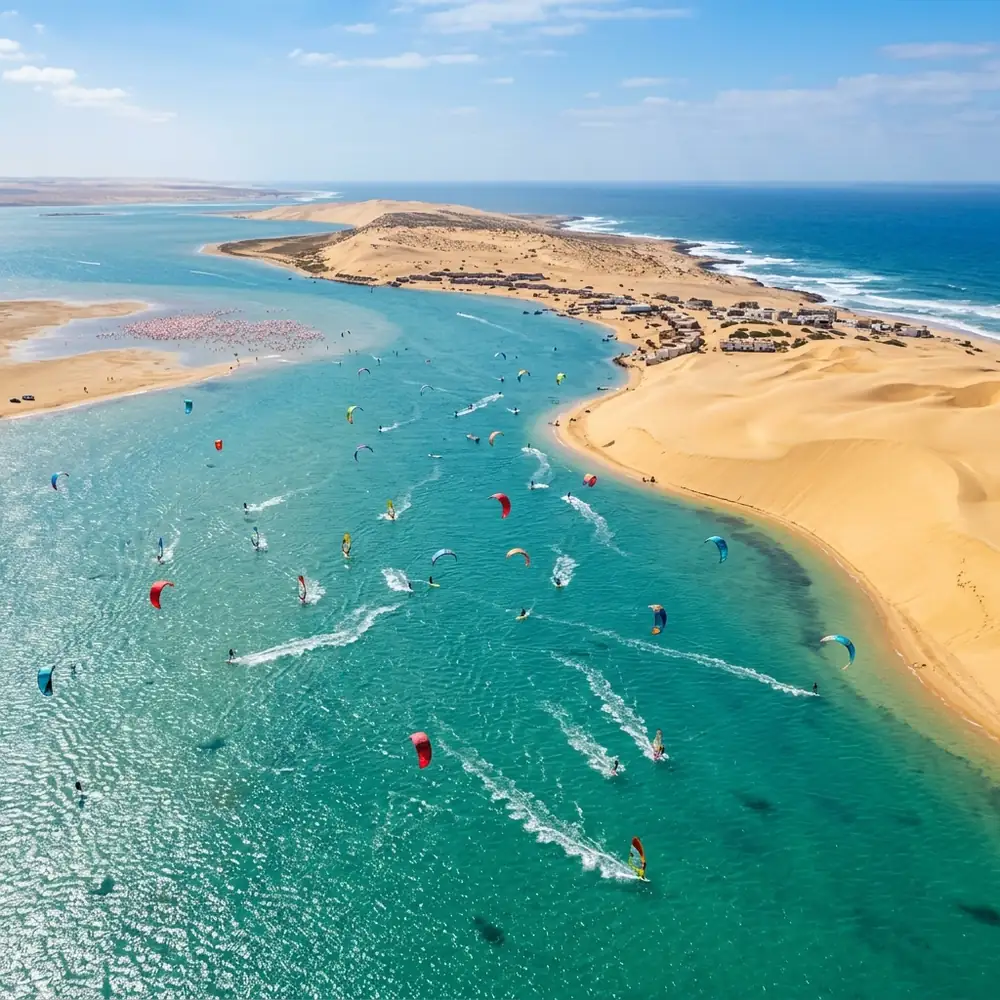
There is a particular quality to the light in Dakhla that is hard to describe accurately. It bounces off the lagoon in a way that makes the water look like hammered silver at noon and molten gold at dusk. Flamingos wade through it. Kites from a dozen nationalities cut across the sky above it.
This is not a hidden secret anymore. But Dakhla is still far enough off the standard Morocco itinerary that most visitors — even experienced ones — have never been.
That is changing quickly.
Where Exactly Is Dakhla?
Geographically, Dakhla is extraordinary. It sits on a 40-kilometre-long peninsula extending into the Atlantic Ocean, connected to the mainland by a thin strip of sand. The result is a natural lagoon — the Dakhla Bay — that is almost perfectly protected from ocean waves.
It is in the far south of Morocco, in what is administered as the Dakhla-Oued Ed-Dahab region and what many maps still label “Western Sahara.” The political context is real and complex; the tourism experience is simply remarkable.
The nearest major Moroccan city is Agadir, approximately 1,500km north. The nearest country is Mauritania, about 600km south.
Dakhla is at the edge of things. That is rather the point.
The Lagoon: Why Kitesurfers Call This Place special
You do not have to be a kitesurfer to visit Dakhla. But it helps to understand why kitesurfers specifically treat this place with near-religious reverence.
Three factors combine here that almost never combine anywhere else:
-
Consistent wind: The trade winds blow across the lagoon at 18–35 knots for approximately 300 days per year, primarily from the northeast, making conditions predictable in a way that most European destinations cannot offer.
-
Flat water: The lagoon is protected. There is no ocean swell. The surface is almost mirror-flat, which is ideal for learning, freestyle, and wave-free speed sailing. The ocean beach, a short distance away, offers waves for those who want them.
-
Sun and warmth: Even in January, daytime temperatures sit comfortably in the high teens to low twenties Celsius. Water temperature year-round is mild.
The result: Dakhla has become the number one kitesurfing destination in Africa and one of the top five globally, attracting professionals for competitions and complete beginners for their first lessons.
Kitesurfing camps here run all year. A week of lessons typically costs between 500–700 EUR at established camps, inclusive of equipment.
Beyond Kitesurfing: What Else Is in Dakhla
Most travel writing about Dakhla is dominated by kites. Here is what is also worth your time.
The lagoon at sunrise:
You do not need a kite to appreciate the water. Kayaking, stand-up paddleboarding, and small sailboats are available for rent. A morning on the lagoon before the wind picks up is genuinely peaceful.
Flamingo watching:
The lagoon is a feeding ground for hundreds of greater flamingos. They gather particularly at the southern end, near the Oued Chbeika estuary. The best viewing is at dusk, when they move in slow, pink clouds.
The dunes:
The peninsula is surrounded by Saharan dunes that reach the water’s edge. A 4WD excursion into the dunes south of the city — particularly at the Dragon Dunes area — is one of those experiences that rewires your sense of scale.
The city itself:
Dakhla city has a particular character. It is a genuine working port town with a fish market that operates at 5am and where the smell of the Atlantic is omnipresent. The medina is small and functional rather than tourist-oriented. The cafés along the seafront serve excellent fish sandwiches.
The Investment Story: Why Business Eyes Are on Dakhla
Dakhla is not just attracting kitesurfers. It is attracting serious economic attention.
Morocco has made the development of its southern regions a national priority. Specifically:
- A new airport (Dakhla Hassan I) opened in 2023, with increased international capacity and direct connections to several European cities
- Dakhla Atlantic port: A massive new deep-water port is under construction south of the city, designed to serve West African trade routes and reduce Morocco’s dependence on the Tangier Med corridor
- Free trade zone: A dedicated economic free zone is being established, with tax advantages for companies operating in logistics, fishing, and tech
- Tourism infrastructure: New hotels, beach clubs, and resort developments are opening annually
For investors interested in Moroccan real estate or business opportunities, Dakhla represents an early-stage market with explicit government support — a combination that is genuinely unusual.
Practical Information for Getting There
By air:
The easiest option. Royal Air Maroc operates regular connections from Casablanca. Several European charter airlines now operate seasonal direct flights from France, Spain, and Germany. adventure time from Casablanca: under 2 hours.
By road:
The N1 highway from Agadir to Dakhla passes through Tiznit, Tan-Tan, Tarfaya, and Laâyoune. It is approximately 1,500km and takes 14–18 hours of driving. The road is fully tarmacked and in reasonable condition. Petrol stations are spaced far apart in places; fill up at every opportunity.
This is an epic drive through raw Saharan desert. Many overlanders do it specifically for the adventure.
Visa and travel considerations:
Foreign nationals visiting Dakhla are subject to the same entry requirements as the rest of Morocco. There are no additional permits or restrictions for tourists. Some nationalities that require a visa for Morocco should verify their specific situation in advance.
Frequently Asked Questions
Do I need to know how to kitesurf to visit Dakhla? Not at all. Dakhla’s lagoon, desert landscapes, flamingo colonies, and fishing culture are worth visiting entirely independently of kitesurfing.
What is the best time of year to visit Dakhla? Year-round, honestly. For kitesurfing, the strong winds peak between November and June. For those sensitive to heat, the Saharan summer (July–August) brings temperatures above 35°C inland, though the sea breeze keeps the coast more moderate.
Is it safe to visit Dakhla? Dakhla is considered a safe destination for tourists. It is administered by Morocco and has a significant Moroccan military and police presence. Standard travel precautions apply.
How far in advance should I book kitesurfing camps? Premium spots at the most popular camps fill up 3–6 months in advance, particularly for winter and spring stays. Budget options are easier to find at shorter notice.
Experience the true heart of Moroccan heritage through its culinary traditions. Join us in preserving and honoring these ancestral recipes.
What People Are Saying
No comments yet. Be the first — we'd love to hear from you.
The Moroccan Editorial Team
Culturally Verified & Fact-CheckedThe Moroccan Food editorial team brings together native culinary researchers, heritage preservationists, and experienced home cooks across Marrakech, Fes, and Casablanca. Every recipe and cultural guide is reviewed against ancestral oral traditions and authentic regional practices.