Eating Gluten-Free in Morocco: A Complete Guide to Safe Dishes, Hidden Risks & Local Tips
If you have celiac disease or a serious gluten intolerance, the idea of traveling to a country you do not know well can feel stressful. New ingredients, unfamiliar dishes, a language barrier, and the constant worry that something hidden in a sauce or marinade will ruin the next three days of your trip.
Here is the honest answer about Morocco: it is actually one of the more manageable destinations for eating gluten free, especially if you stick to traditional home-style cooking. The country’s culinary foundation rests on dishes that have never needed wheat. But there are real risks too, and knowing them in advance makes all the difference.
This guide is written from the perspective of people who know Moroccan food deeply — not from a list of generic safe foods, but from genuine understanding of how Moroccan kitchens work.
The Good News: Most Traditional Moroccan Food Is Naturally Gluten-Free
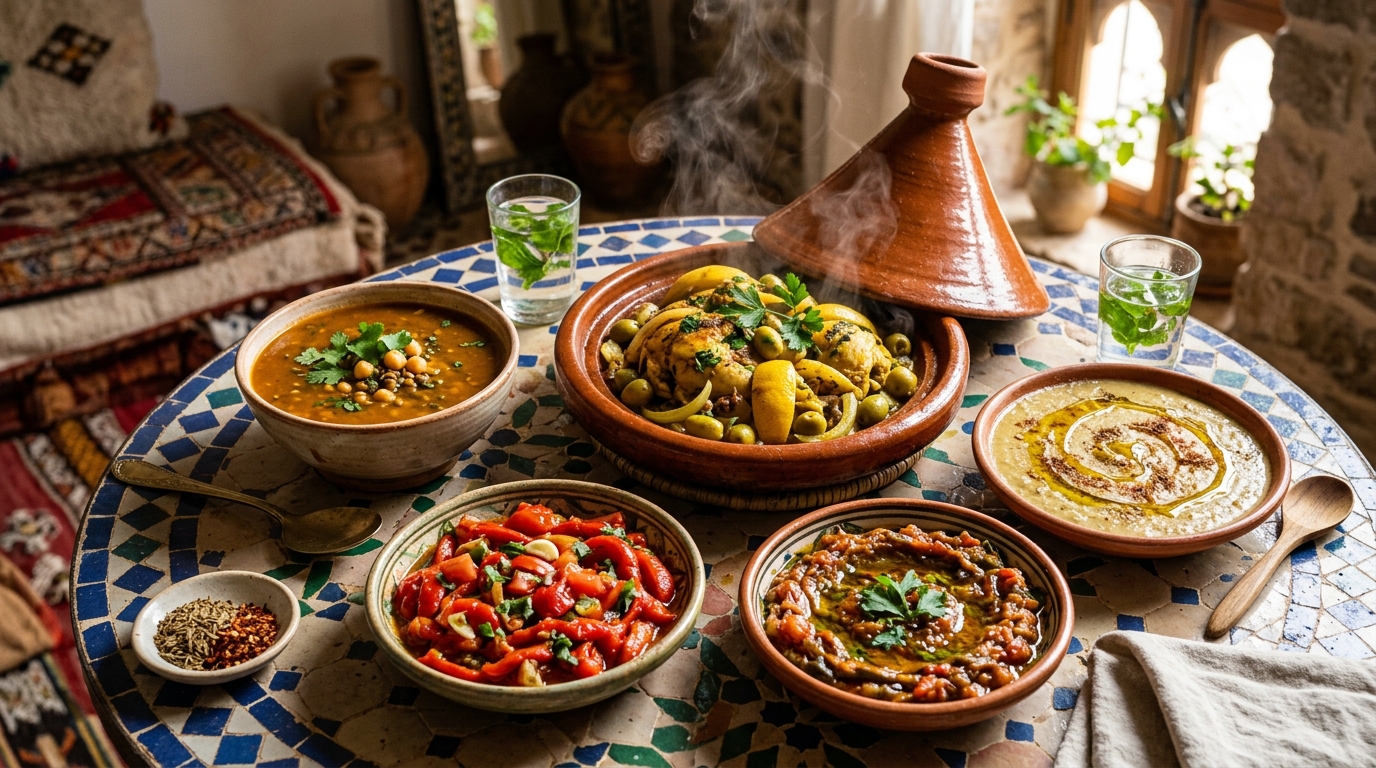
This is true and it matters. The backbone of Moroccan cooking is olive oil, vegetables, legumes, spices, meat, and fish. Most of the country’s beloved dishes contain zero wheat and never have. Tagines are slow-cooked stews. Grilled meats are exactly that — meat on a grill. Salads are cooked or raw vegetables dressed with olive oil, lemon, and herbs.
The reason this matters for celiac Morocco travel is that gluten was never a primary building block of savory Moroccan cooking in the way it is in, say, Italian or French cuisine. Wheat appears in Morocco mainly in bread (khobz), couscous, pastries, and fried doughs. The main dishes — the things Moroccans actually eat day to day — are built on something else entirely.
This means that eating gluten free in Morocco is not about finding a special “gluten-free menu.” It is about understanding which parts of the traditional food landscape naturally work for you, and which to approach carefully.
Safe Dishes to Order with Confidence
Tagines
Tagine is the term for both the clay cooking vessel and the dish cooked in it. A classic chicken tagine with preserved lemon and olives, a lamb tagine with prunes and almonds, a kefta (meatball) tagine with eggs — all of these are made with meat, vegetables, spices, and sometimes dried fruit. No thickeners, no flour, no breading.
The sauce gets its body from the natural juices of the meat and vegetables, concentrated during long, slow cooking. Order tagine with confidence in most traditional restaurants and family-run establishments.
One check: ask whether bread is used as a dipping vessel at the table (it always is) and simply set yours aside. The tagine itself is safe.
Mechoui
Mechoui is slow-roasted whole lamb — typically roasted in a pit or over coals until the meat falls from the bone. It is served with nothing but salt and cumin. No marinade, no sauce, no risk.
Grilled Fish and Seafood
Morocco has a long Atlantic and Mediterranean coastline, and fresh grilled fish is everywhere. In port cities like Essaouira, Agadir, Tangier, or the Casablanca corniche, fish grilled simply with olive oil, herbs, and lemon is a staple. This is safely gluten free morocco food, as long as you confirm the fish is grilled rather than breaded or fried in shared oil.
Zaalouk
Zaalouk is a cooked salad of roasted eggplant and tomatoes, mashed together with garlic, cumin, paprika, olive oil, and a squeeze of lemon. It is served warm or at room temperature, usually as a starter. No gluten, no hidden risk — it is one of the safest and most delicious things you will eat.
Taktouka
Similar to zaalouk but made with roasted peppers and tomatoes instead of eggplant. Cooked down with olive oil and spices until it becomes a thick, intensely flavored salad. Again — naturally gluten free and found everywhere.
Bissara
Bissara is a thick soup made from dried split fava beans or dried peas, blended smooth with garlic, cumin, olive oil, and paprika. It is one of Morocco’s most traditional working-class dishes, sold early in the morning from street stalls. It is hearty, warming, and completely gluten free.
Moroccan Salads (Small Dishes)
A full Moroccan meal often begins with a spread of small salads — roasted beets with cumin, carrot salad with harissa and honey, cooked green pepper salad, marinated olives. Nearly all of these are safe. They are dressed with olive oil and lemon, seasoned with fresh spices, and contain nothing else.
Hidden Risks: Where Gluten Hides in Morocco
Khobz — The Bread That Is Everywhere
Moroccan bread is magnificent. Round, golden-crusted khobz loaves come with almost every meal, along with sometimes msemen (layered flatbread) or harcha (semolina griddle bread). The bread is not the problem in itself — the problem is that Moroccan meals are designed to be eaten with bread. Communal dishes are shared from a central plate and scooped up with pieces of bread.
This means bread is always on the table, often directly touching the shared dish. For someone with celiac disease, this cross-contact is a real risk. Communicate clearly before the meal that you cannot eat bread and cannot eat food that has touched bread.
Couscous Is NOT Gluten-Free
This is the most important thing to know. Couscous is made from semolina — which is wheat. It looks like a grain, and some people assume it is a neutral, naturally gluten-free carbohydrate. It is not. It is one of the most gluten-dense foods in Moroccan cuisine.
Friday couscous — couscous served with meat and vegetables and a rich broth — is a beloved national tradition. It is absolutely off the table for celiac Morocco travelers. Do not order it, do not assume the vegetables on top are safe (they are steamed over the couscous itself), and do not eat it thinking you can pick around it.
Street Food and Shared Fryer Oil
Morocco’s street food scene is lively and wonderful, but it requires caution for gluten-intolerant travelers. Msemen (layered wheat flatbread), sfenj (doughnuts), and various fried pastries share fryer oil with everything else. Even if the food you want to eat is nominally gluten free, it may have been cooked in oil that has been frying wheat-based dough all morning.
Stick to grilled street food — brochettes (skewers), grilled corn, roasted nuts, fresh-squeezed orange juice. These are safe.
Some Spice Blends and Ras El Hanout
Most individual Moroccan spices — cumin, turmeric, paprika, ginger, cinnamon — are naturally gluten free. But pre-mixed spice blends, especially mass-market ras el hanout or industrial harissa in jars, sometimes contain fillers or anti-caking agents derived from wheat starch. This is rare but real.
If you are cooking from a Moroccan market, buy individual whole spices and have them ground fresh. If you are in a restaurant, the risk from spice blends is low but worth noting if you are highly sensitive.
Harcha
Harcha is a griddle flatbread made from semolina. It looks like a thick, slightly crumbly disc and is often sold at street stalls or served with breakfast tea. It is completely wheat-based and not safe for people avoiding gluten.
Useful Phrases for Communicating Your Needs
Language is your best tool. Moroccan locals are genuinely accommodating when they understand a health need — the challenge is communicating it precisely.
In Moroccan Arabic (Darija):
- “Ma kanakoulsh el glutin” — I do not eat gluten.
- “Ma kanakoulsh el khobz wala el frina” — I do not eat bread or wheat flour.
- “Wash had sh-shi fiha dqiq?” — Does this contain flour?
- “Ana mrid men el qamh” — I am sick from wheat.
In French (widely understood in Moroccan cities and restaurants):
- “Je suis allergique au gluten” — I am allergic to gluten.
- “Est-ce que ce plat contient de la farine de blé?” — Does this dish contain wheat flour?
- “Sans gluten, s’il vous plaît” — Gluten-free, please.
- “Je ne peux pas manger le couscous ni le pain” — I cannot eat couscous or bread.
Writing these phrases on a small card to show staff is more reliable than trying to pronounce them perfectly in the moment.
Restaurant Ordering Tips for Gluten-Free Morocco Travel
Choose traditional restaurants over tourist-facing ones. A small family-run restaurant (often called a maâlem or a neighborhood dar) is more likely to cook from scratch with simple ingredients. Tourist restaurants may use shortcuts — packaged sauces, pre-made marinades — that introduce unexpected gluten.
Order separately rather than from set menus. A fixed-price tourist menu often includes bread courses and couscous as standard. Ordering à la carte gives you control.
Be specific about bread. Ask that bread not be brought to your table, or that it be kept away from your portion of any shared dish.
Ask about couscous before Friday. In Morocco, Friday is couscous day — many restaurants only serve it that day, but some serve it all week. Know the risk exists.
Look for restaurants near hotels catering to international guests. They often have staff with some familiarity with dietary restrictions and may be able to accommodate you more readily.
When in doubt, stick to tagine and salads. This combination is safe, delicious, and available everywhere in Morocco. You will not go hungry or feel like you are missing out.
A Final Honest Note for Celiac Travelers
Morocco is genuinely one of the more manageable destinations for moroccan berber food gluten free eating — the traditional diet leans heavily on foods that never contained wheat. But Moroccan kitchens are not designed around allergen awareness the way some Western kitchens are. Cross-contamination is a real risk in places where bread is always present and shared pots are common.
If your sensitivity is severe, communicate clearly and often, carry translation cards, and choose your restaurants thoughtfully. If you are gluten-intolerant rather than celiac, the majority of traditional Moroccan food will be genuinely comfortable and satisfying for you.
FAQ
Is couscous gluten-free? No. Couscous is made from semolina, which is a wheat product. It is one of the most common sources of hidden gluten in Moroccan cuisine and should be avoided entirely by people with celiac disease or gluten intolerance.
Can I eat tagine if I have celiac disease? Yes, traditional tagine is naturally gluten-free — it is slow-cooked meat and vegetables with spices and olive oil. The main risk is cross-contact from bread served alongside the dish. Ask for bread to be kept away from your portion and you should be safe.
Are Moroccan street foods safe for gluten-free travelers? Some are, some are not. Grilled meats on skewers (brochettes), fresh-squeezed juices, roasted nuts, and grilled corn are safe. Msemen, sfenj, harcha, and anything fried in shared oil are not. Approach street food with caution and ask questions.
What is the best way to communicate a gluten allergy in Morocco? Use French if possible — “Je suis allergique au gluten, je ne peux pas manger de farine de blé, de couscous ou de pain” — and carry a written card with the phrase. Staff at restaurants are generally willing to help when they understand it is a health issue, not a preference.
Experience the true heart of Moroccan heritage through its culinary traditions. Join us in preserving and honoring these ancestral recipes.
What People Are Saying
No comments yet. Be the first — we'd love to hear from you.
The Moroccan Food
Culturally Verified & Fact-CheckedThe Moroccan Food editorial team brings together native culinary researchers, heritage preservationists, and experienced home cooks across Marrakech, Fes, and Casablanca. Every recipe and cultural guide is reviewed against ancestral oral traditions and authentic regional practices.