Eco-Friendly Travel in Morocco: Responsible Operators, Conservation Projects, and How to Give Back
Eco-Friendly Travel in Morocco: Responsible Operators, Conservation Projects, and How to Give Back
Morocco is on the front lines of the climate crisis. The reality is undeniable: the Sahara is creeping slowly northward, the High Atlas snowpack is visibly thinner than it was twenty years ago, and ancient underground aquifers in the south are being depleted at unsustainable rates.
Against this backdrop, the arrival of 15 million tourists a year presents a deep challenge. Mass tourism demands water, generates plastic waste, and puts pressure on fragile ecosystems.
But there is a counter-narrative emerging. Across the country, a powerful movement of eco-friendly tourism is proving that travel, when managed correctly, can be a tool for conservation and community empowerment rather than destruction. Here is how you can ensure your visit to Morocco is part of the solution.
The Water Question: Choosing the Right Accommodation
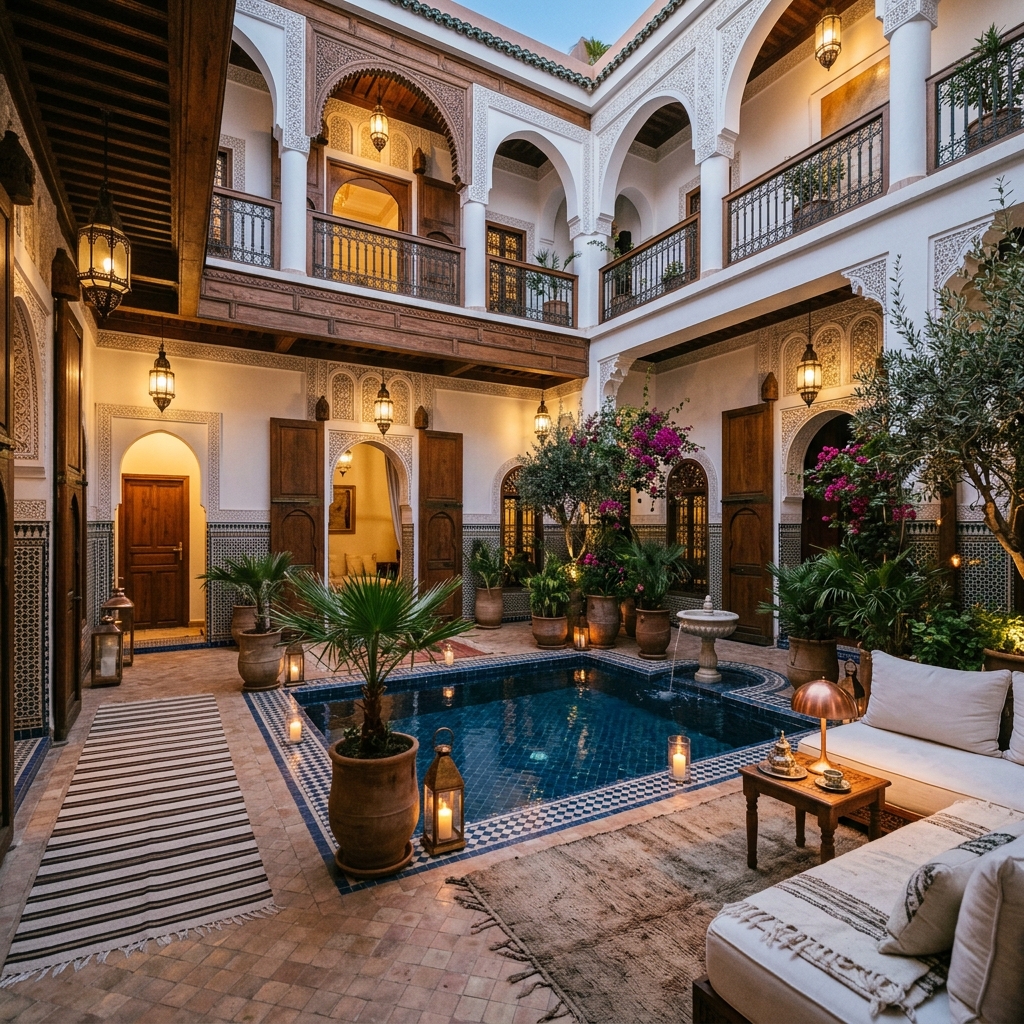
Water is Morocco’s most precious resource. The traditional Moroccan courtyard house (the riad) was designed for passive cooling and water conservation, utilizing a single central fountain. Today, many modern luxury properties have added massive swimming pools and irrigated lawns that draw heavily on local water tables.
When booking accommodation, look beyond the ‘please reuse your towels’ sign.
- Ask hard questions: Does the property use greywater recycling for its gardens? Do they have a rainwater harvesting system? Are they reliant on a private well in a drought-prone area?
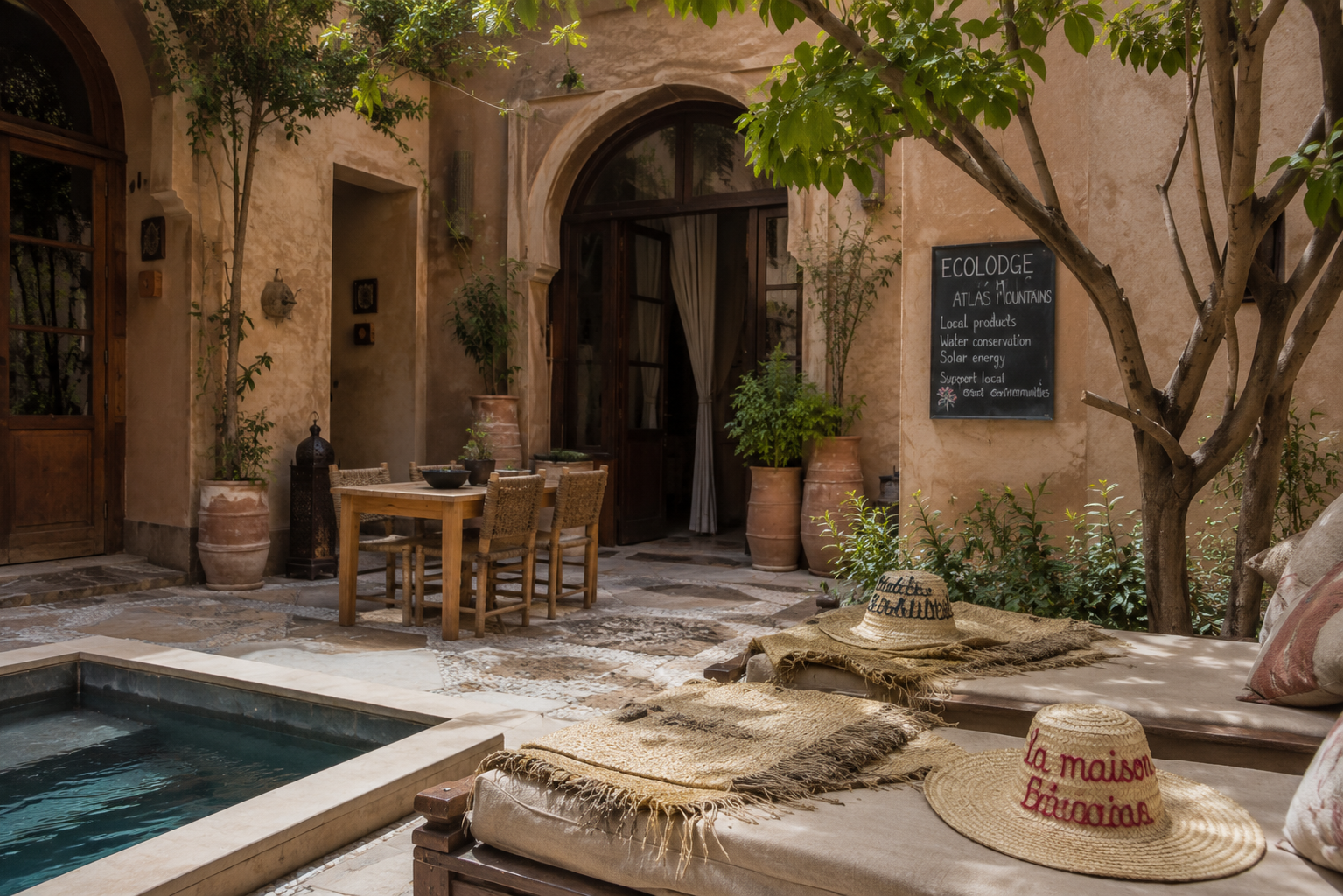
- Eco-Lodges in the Atlas: The High Atlas has become a hub for genuinely sustainable accommodation. Properties like the Kasbah du Toubkal in Imlil or the Ouirgane Eco-Lodge have integrated deeply with their local Amazigh communities. They utilize solar power, compost organic waste, and crucially, they funnel a percentage of their profits directly into local infrastructure (funding schools, clinics, and clean water access for the surrounding villages).
Supporting Conservation: The Moroccan Primate and the Argan Tree
If you want your travel to have a positive impact, direct your money toward the projects protecting Morocco’s unique biodiversity.
The Barbary Macaque: In the Middle Atlas cedar forests (around Azrou), the endangered Barbary macaque faces severe pressure from habitat loss and the illegal pet trade. Do not feed the monkeys by the side of the road (this encourages aggressive behavior and dependency). Instead, support organizations like the Moroccan Primate Conservation Foundation, which works with local shepherds to protect the macaques’ natural habitat.
The Argan Biosphere: The Argan tree is endemic to southwestern Morocco and acts as a crucial barrier against desertification. The boom in global demand for Argan oil has created both opportunities and risks. To support this ecosystem responsibly, only buy Argan oil from certified, fair-trade women’s cooperatives (such as those belonging to the UCFA - Union des Coopératives des Femmes de l’Arganeraie). This ensures the women who actually do the labor-intensive work of cracking the nuts receive a fair wage, which in turn incentivizes the local community to protect the trees from being cut down for firewood or cleared for intensive agriculture.
Responsible Desert Tourism
The Sahara is often treated as a playground, but it is a delicate ecosystem. The explosion of luxury desert camps near Merzouga has led to issues with waste management and light pollution.
How to do the desert responsibly:
- Choose a small camp: Look for camps that limit their capacity (under 15 tents), run entirely on solar power, and have explicit policies on waste removal (bringing all waste back to the city for processing).
- Avoid dune bashing: Renting ATVs or 4x4s to race up and down the dunes destroys the fragile surface ecology and disturbs the wildlife that lives beneath the sand. Stick to camel trekking or walking.
- Go further afield: Instead of the crowded Erg Chebbi dunes at Merzouga, consider the more remote Erg Chigaga dunes near M’Hamid. Because they are harder to reach, the footprint is naturally lighter, and the camps tend to be more integrated with the local nomadic communities.
Giving Back: Community-Based Tourism
The most sustainable form of travel is one where the economic benefit stays in the hands of the local community.
Instead of booking a multi-day tour with a massive international agency based in Europe, use local Moroccan operators. Hire independent, licensed mountain guides from the villages you are trekking through. Eat at small, family-run restaurants rather than large buffet establishments designed for tour buses.
If you want to actively volunteer, research carefully. The ‘voluntourism’ industry can sometimes do more harm than good. Look for established, long-term NGOs. The High Atlas Foundation, for example, does extraordinary work planting millions of fruit and nut trees in rural communities, combining environmental conservation with economic development.
The Final Footprint
Sustainable travel in Morocco is not about deprivation. It is not about staying in a dark room and refusing to wash.
It is about mindfulness. It is about recognizing that this extraordinary landscape is vulnerable. When you choose to stay in a solar-powered eco-lodge, when you buy directly from a women’s cooperative, when you say no to a plastic water bottle (bring a filtered bottle like a LifeStraw or Grayl), you are participating in the preservation of Morocco.
You are ensuring that the beauty you came to see will still be there for the generation that follows.
Experience the true heart of Moroccan heritage through its culinary traditions. Join us in preserving and honoring these ancestral recipes.
What People Are Saying
No comments yet. Be the first — we'd love to hear from you.
Nadia Chraibi
Culturally Verified & Fact-CheckedThe Moroccan Food editorial team brings together native culinary researchers, heritage preservationists, and experienced home cooks across Marrakech, Fes, and Casablanca. Every recipe and cultural guide is reviewed against ancestral oral traditions and authentic regional practices.