Eco Tourism in the Atlas Mountains: Sustainable Travel, Berber Villages, and Hidden Valleys
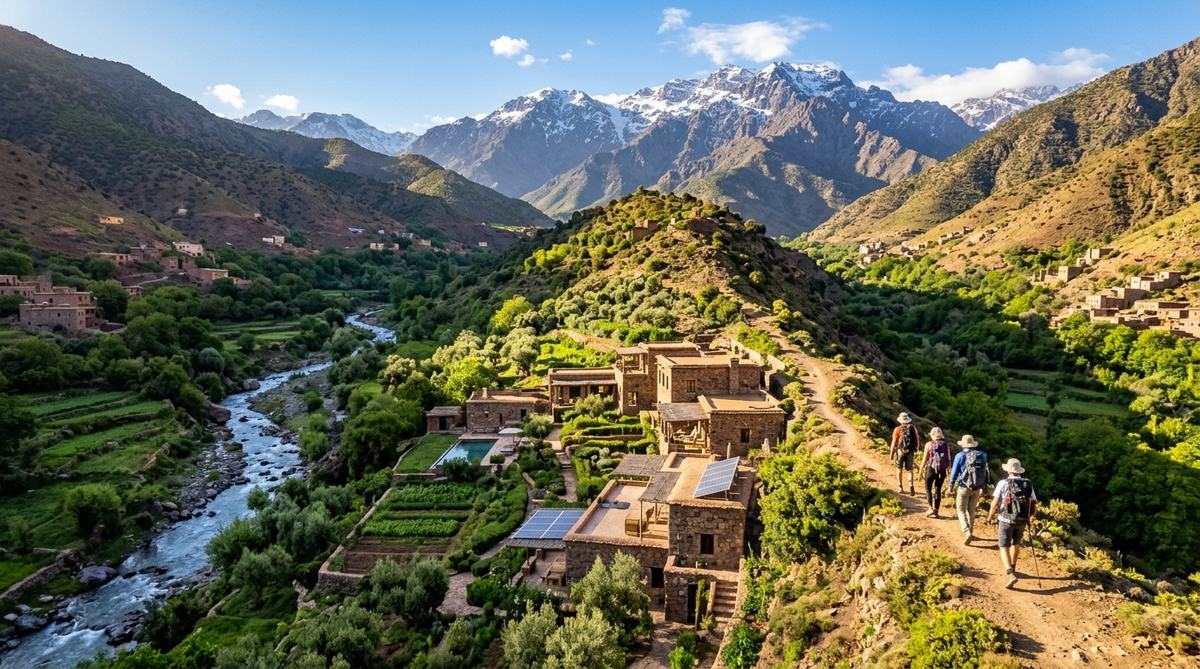
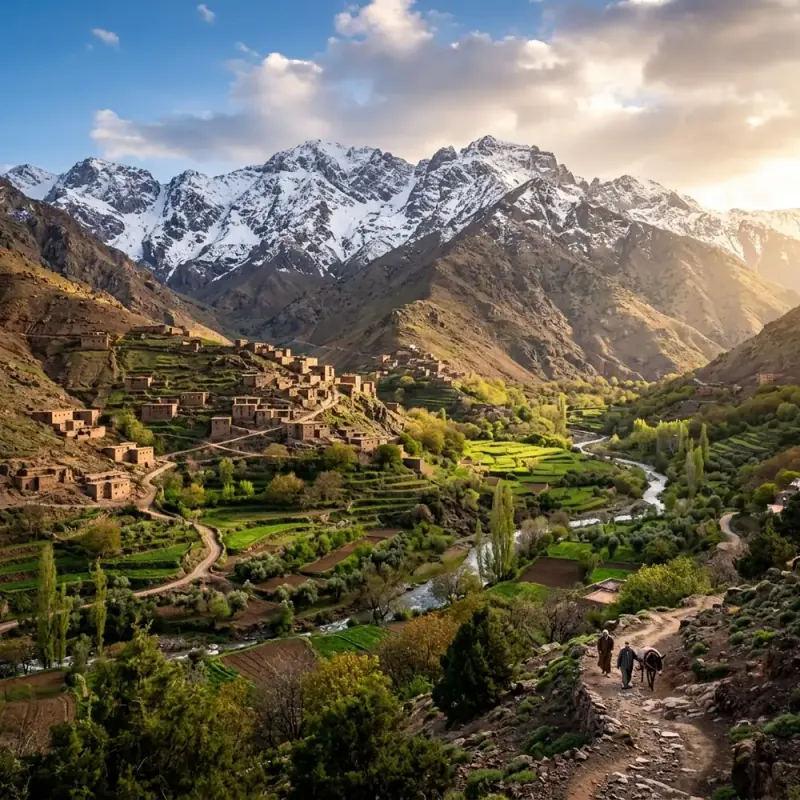
There is a particular kind of silence that you find only in the Atlas Mountains — not the flat, empty silence of a room, but the layered quiet of altitude, where the wind moves through juniper and cedar without urgency, a distant mule bell carries for a kilometre before fading, and the terraced fields below you seem to exist outside of any clock. This is where eco-tourism in Morocco is not a marketing label but a genuine way of life, practised daily by communities who have stewarded these landscapes for generations before that word existed.
The Atlas Mountains constitute one of Africa’s most significant mountain ecosystems. Stretching roughly 2,500 kilometres from the Atlantic coast of Morocco through Algeria and into Tunisia, the Moroccan section alone encompasses three distinct ranges with dramatically different characters, altitudes, and communities. For a traveller who wants to engage honestly with place rather than just pass through it, the Atlas offers an experience that no beach resort or imperial city can replicate.
The Three Ranges: Understanding What You Are Visiting
The High Atlas (Idraren Draren in Tamazight)
The High Atlas is the dramatic, snow-capped backbone of Morocco, home to Jebel Toubkal (4,167 m), the highest peak in North Africa. Its southern slopes spill into the pre-Sahara, while the northern face catches Atlantic rain and supports an extraordinary range of ecosystems within a single day’s walk. The Ourika Valley, Oukaïmeden plateau, and Aït Benhaddou environs fall within or immediately adjacent to this range. This is where most organised trekking takes place and where eco-lodges have developed most significantly.
The Middle Atlas (Azaghar)
Less visited than its high-altitude cousin, the Middle Atlas is a world of cedar forests, mountain lakes, and the last strongholds of wild Barbary macaques (macacus sylvanus — known locally as maymun al-atlas). The plateau around Ifrane and Azrou offers a completely different experience: cooler, more forested, and surprisingly reminiscent of rural France in autumn. Responsible travellers here have the rare opportunity to observe genuinely wild primates in their native forest habitat.
The Anti-Atlas (Ighil n’Wadrar)
Geologically the oldest of the three ranges, the Anti-Atlas in the south extends towards the Sahara and is characterised by extraordinary mineral landscapes — iron-red rock strata, dry gorges, and tiny Berber villages perched on hillsides that seem to grow organically from the stone itself. This is saffron country: the Taliouine region, nestled in the Anti-Atlas foothills, produces some of the world’s finest saffron (za’faran), harvested by hand each autumn during a window of barely three weeks.
Why These Mountains Are an Eco-Tourism Priority
The Atlas eco-system is under genuine pressure. Overgrazing, deforestation from fuel wood collection, water stress driven by climate change, and the economic migration of young people from mountain villages to Marrakech and Casablanca all threaten the ecological and cultural integrity of the range. Responsible tourism directly counteracts these pressures by creating economic value in the villages themselves, funding conservation projects, and giving the next generation a reason to stay.
A 2019 study by the Moroccan Ministry of Tourism found that communities in the Ourika Valley where tourist spending was distributed through local cooperatives and family guesthouses retained three times more income locally than those served by externally-owned tour operators. That statistic matters. Every decision you make about where to book, eat, and buy directly shapes whether mountain communities can continue to live on the land that has sustained them.
Where to Stay: Eco-Lodges and Berber Guesthouses
Ourika Valley (Wadi Ourika)
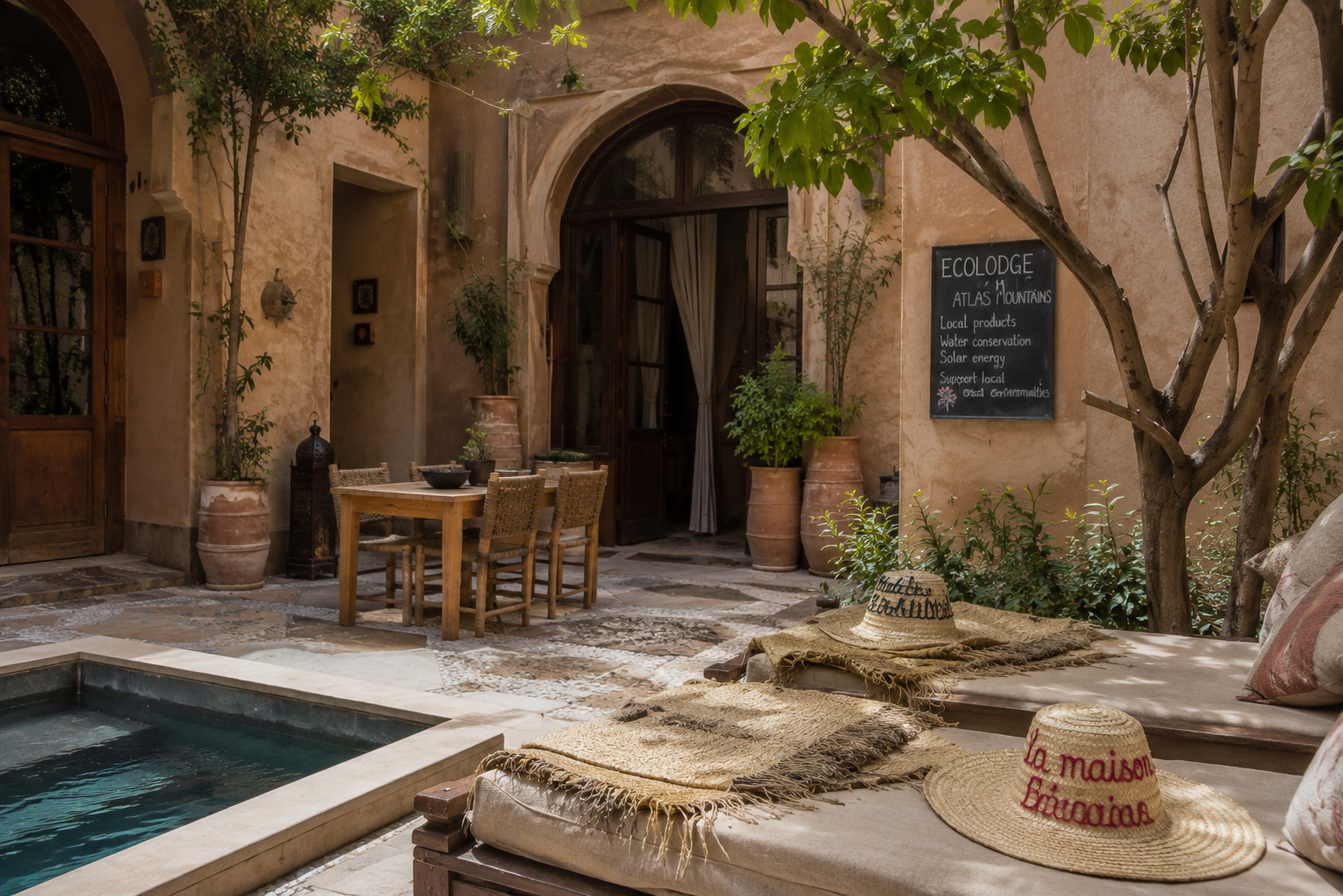
Just 30 kilometres south of Marrakech, the Ourika Valley is the most accessible introduction to Atlas mountain life. The valley floor is fertile and intensively farmed; the upper reaches above Setti Fadma become wilder and more dramatic. Look for small family-run maisons d’hôtes — traditional stone or pisé (rammed earth) guesthouses — rather than the resort-style hotels that have proliferated at the valley entrance. The best of these will cook you a dinner sourced almost entirely from their own garden or the neighbouring farms: roasted root vegetables, fresh-baked khobz (bread), mountain honey, and the wildly fragrant thym sauvage (wild thyme) that grows on every hillside above 1,500 metres.
Aït Benhaddou Surrounds
The ksar (fortified village) of Aït Benhaddou is a UNESCO World Heritage site and one of the most photographed places in Morocco. What most travellers miss is the extraordinary landscape immediately surrounding it — the Draa and Ounila valleys, where small eco-lodges offer trekking routes through oasis palm groves and pre-Saharan desert edge landscapes. Stay a night in a guesthouse in the village of Taddert or Ighrem n’Ougdal rather than day-tripping from Marrakech, and you will experience a completely different pace of life.
Setti Fadma and the Upper Ourika
The village of Setti Fadma at the head of the Ourika Valley is the departure point for a series of waterfalls — shallal in Arabic — that draw local visitors throughout summer. In the quieter months of late autumn and early spring, you can trek beyond the tourist waterfall route into genuinely remote terrain. A handful of Amazigh (Berber) families here have converted their homes into simple, warm guesthouses where you will sleep under heavy wool blankets, eat breakfast of olive oil and amlou (an argan, honey, and almond paste that is extraordinary on fresh bread), and wake to the sound of the river.
Wildlife of the Atlas
The ecological richness of the Atlas is often underestimated by travellers expecting arid scrubland. The reality is far more complex:
- Barbary macaques (maymun al-atlas) in the cedar forests of the Middle Atlas — the only wild primate species in Africa north of the Sahara. Sadly often used as props for tourist photographs near Azrou; observe them at a respectful distance and never feed them.
- Migratory birds pass through the Atlas in enormous numbers during spring and autumn. The mountain passes act as funnels for European raptors, storks, and songbirds heading to and from sub-Saharan wintering grounds.
- Wild herbs and plants including za’atar (thyme), romieh (rosemary), na’na (mint), amarar (wormwood), and dozens of endemic species. The seasonal wildcrafting of these plants is an important part of the local economy and pharmacopeia.
- Atlas honey (asel n-Idraren) is produced by bees that forage on wild thyme, lavender, and mountain wildflowers. It is darker and more complex than lowland honey, with a slightly bitter, herbal finish. Buying it directly from mountain beekeepers is one of the most worthwhile purchases you can make.
Trekking Without Damage: Practical Principles
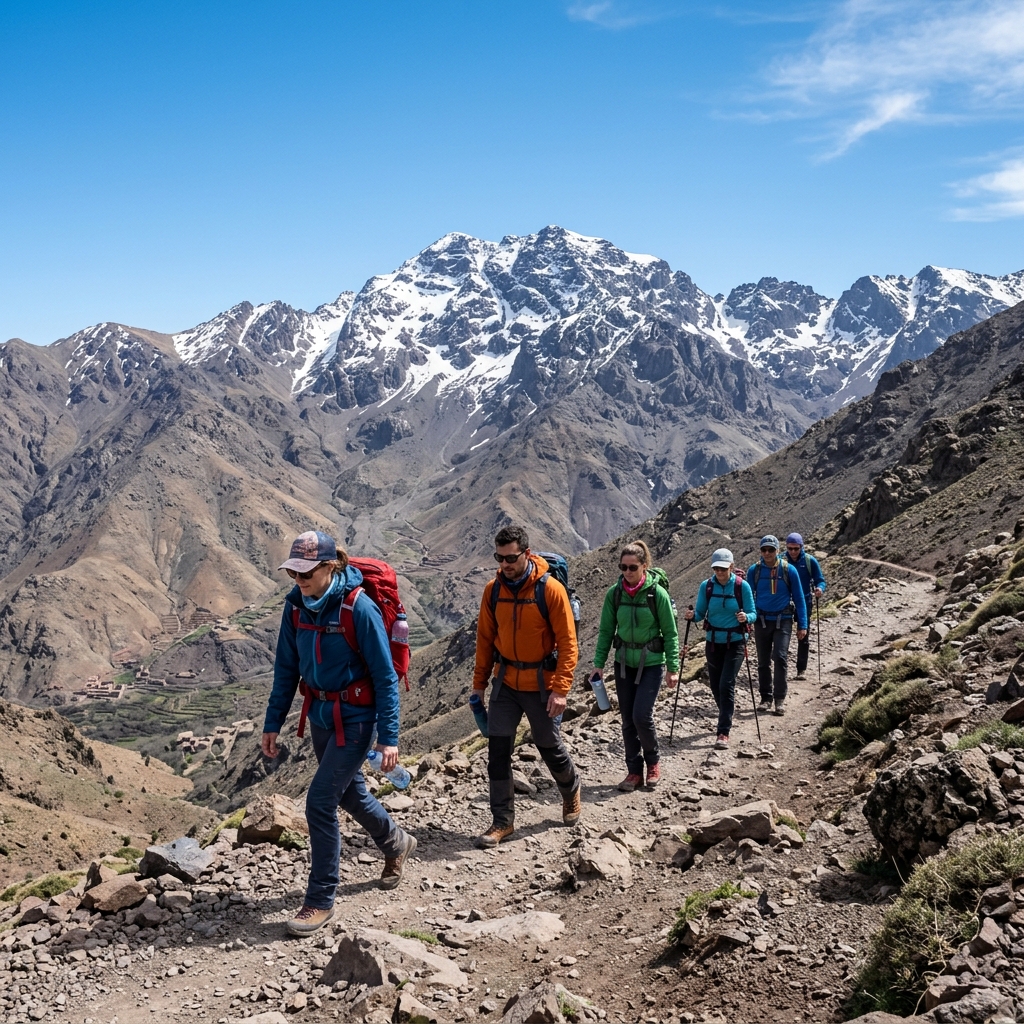
The fragility of mountain ecosystems is easy to underestimate when you are standing in what appears to be empty space. These principles apply to the Atlas specifically:
Stay on marked paths. The Atlas has a growing network of marked trails, including the GR R7 long-distance route. Off-trail walking causes erosion on the steep, thin-soiled slopes that can take decades to recover.
Hire a local guide (murshed). This is not just ethical — it is practically superior. Local guides know where water sources are, which trails are safe after rain, which villages welcome visitors, and how to read weather that changes fast above 2,500 metres. Book through village cooperatives rather than city agencies whenever possible.
Carry out all waste. There is no waste collection infrastructure in remote mountain areas. What you carry in, you carry out, including fruit peels, which take months to decompose at altitude.
Respect jmaa (village council) decisions. Some trails, areas, and seasonal events are restricted. The jmaa is the traditional village governance structure and its authority is legitimate. Accept restrictions with grace.
Berber Women’s Cooperatives: Where to Buy and Why It Matters
The women’s cooperatives of the Atlas are among the most genuinely impactful institutions in rural Morocco. Organised under names like ta’awuniya (cooperative), these groups produce and sell argan oil, saffron, hand-woven wool carpets (zrabi), essential oils, and herbal products directly to visitors at honest prices, with the proceeds distributed among members.
Notable cooperatives include those in the Taliouine region for saffron, the Arganeraie biosphere reserve cooperatives south of Essaouira for argan oil, and weaving cooperatives in the Aït Benhaddou and Ouarzazate areas. Buying from these cooperatives is categorically different from buying the same products through a souk middleman or a city boutique — a larger share of the money reaches the women who did the work.
The Khettara: Ancient Water Wisdom
One of the most extraordinary — and least-known — aspects of Atlas mountain communities is their traditional water management system. The khettara (also called foggara) is an ancient network of underground channels that carries water from high-altitude aquifers down to fields and villages, sometimes over distances of several kilometres, without any mechanical pumping. Some khettara systems in the Draa Valley are believed to be over a thousand years old.
Walking through a village where a khettara still functions — watching water appear in a dry field as if by quiet magic — is one of those travel moments that stays with you for years. Conservation NGOs working with communities to maintain and restore khettara systems deserve both awareness and financial support.
Oukaimeden: Stargazing at 2,600 Metres
The Oukaimeden plateau, site of Morocco’s only ski resort, transforms in the off-season into one of the country’s finest stargazing locations. At 2,600 metres, with minimal light pollution and the clear, dry air of the High Atlas, the Milky Way is visible on most clear nights as a solid band of light rather than a faint smear. Several eco-lodges in the area offer astronomy evenings with telescope access. Bring warm layers regardless of the season — the temperature drops dramatically after dark at altitude.
Practical Booking Tips for Responsible Atlas Eco-Tourism
- Book directly with guesthouses via email or phone rather than through large booking platforms that take significant commission cuts.
- Travel in shoulder seasons (April–May and September–October) to avoid peak pressure on trails and villages while still enjoying good weather.
- Ask your accommodation where the food comes from before you book. A genuine eco-lodge sources from local farms; a conventional hotel imports everything from Marrakech.
- Avoid single-use plastic. Bring a reusable water bottle and water purification tablets or a filter. Tap water in mountain villages is generally safe if filtered.
- Learn ten words of Tamazight (the Berber language). Azul means hello. Tanmirt means thank you. The effort is never forgotten.
Frequently Asked Questions
Do I need to be an experienced hiker to do Atlas eco-tourism? No. The Atlas range offers experiences across the entire spectrum of physical ability, from gentle valley walks between villages to technical summit ascents requiring crampons and rope. The Ourika Valley and Aït Benhaddou surrounds are accessible on foot for anyone in reasonable health. For higher-altitude routes above 3,000 metres, a basic level of hiking fitness and appropriate footwear are important. Always consult with a local guide about current trail conditions before setting out.
Is it safe to drink water from streams in the Atlas Mountains? Mountain water in the Atlas generally runs clean at higher altitudes, but should always be treated or filtered before drinking. Even pristine-looking streams can carry Giardia or other pathogens from upstream grazing. Carry a portable filter or iodine tablets and use them consistently. Buying bottled water generates significant plastic waste in areas without recycling infrastructure, so bring a good reusable bottle.
How do I find and book genuine Berber guesthouses rather than tourist hotels? The best approach is to contact local mountain guides through village associations rather than city tour operators. The Association Nationale des Guides et Accompagnateurs en Montagne du Maroc (ANGAM) maintains a register of certified mountain guides. Many guesthouses also have Facebook pages that you can find by searching village names. Websites like Atlas Rural and the Moroccan ecotourism portal Ecotravel Maroc list verified community accommodation.
What is the best time of year to visit the Atlas Mountains for eco-tourism? Late spring (April to early June) and early autumn (September to October) offer the best combination of comfortable temperatures, clear skies, and natural beauty. Spring brings wildflowers and snowmelt streams; autumn brings harvest season, saffron flowering in the Anti-Atlas, and extraordinarily clear air for trekking. Summer is warm in the valleys but can be crowded; winter above 2,000 metres can involve serious snow and cold. The cedar forests of the Middle Atlas are particularly beautiful after autumn rain.
Experience the true heart of Moroccan heritage through its culinary traditions. Join us in preserving and honoring these ancestral recipes.
What People Are Saying
No comments yet. Be the first — we'd love to hear from you.
The Moroccan Food
Culturally Verified & Fact-CheckedThe Moroccan Food editorial team brings together native culinary researchers, heritage preservationists, and experienced home cooks across Marrakech, Fes, and Casablanca. Every recipe and cultural guide is reviewed against ancestral oral traditions and authentic regional practices.