Fish Tagine of Essaouira: A Coastal Atlantic Culinary Journey
archived: false
Along the windswept Atlantic ramparts of Essaouira (historically known as Mogador), the daily culinary rhythm is dictated entirely by ocean tides and fishing fleets. Every morning, wooden blue trawlers and artisanal longline dories chug through the fortified sea gate of Bab el-Marsa, unloading gleaming crates of Atlantic sea bass, sea bream, red mullet, sardines, and thick steaks of conger eel.
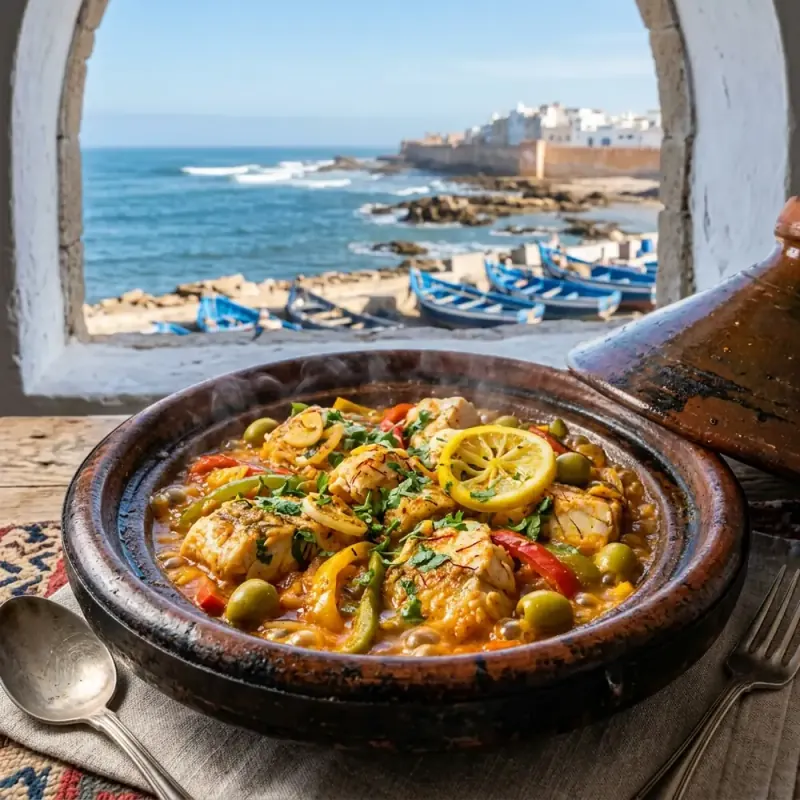
While interior imperial cities like Fez and Marrakech celebrate lamb, beef, and squab, the Atlantic coast between Safi, Essaouira, and Agadir is the domain of Tagine d’Hout (Moroccan Fish Tagine). Far from a simple fish stew, an authentic coastal fish tagine is an architectural marvel of layered vegetables, fragrant herb marinades (Chermoula), preserved lemons, and cured purple olives, slow-simmered inside a heavy earthenware cone until the vegetables turn meltingly tender and the fish reaches flaky perfection.
The Heart of Coastal Cooking: Chermoula Marinade
No Moroccan seafood preparation exists without Chermoula. This ancient herb-and-spice marinade serves as both the curing brine for the raw fish and the flavor foundation for the simmering vegetables:
- Fresh Flat-Leaf Parsley and Cilantro: Minced finely in equal proportions, providing bright green herbaceous perfume.
- Pounded Fresh Garlic: Cloves crushed into a fine paste with coarse sea salt.
- Sweet Moroccan Paprika (Tahmira): Gives the sauce its warm brick-red color and sweet pepper undertones.
- Toasted Ground Cumin (Kamoun): The essential seafood spice that grounds the sauce with earthy warmth.
- Fresh Lemon Juice and Olive Oil: Acid from freshly squeezed lemons begins tenderizing the fish fibers, while extra virgin olive oil emulsifies the spices into a glossy coating.
- A Whisper of Cayenne (Sudaniya): Ground chili or a spoonful of artisan Harissa to awaken the palate.
The raw fish steaks or fillets are turned thoroughly in the Chermoula and left to marinate in a cool larder for an hour before assembling the tagine.
Vegetable Architecture: The Layered Shield Technique
Cooking delicate ocean fish inside an earthen clay tagine requires engineering. Because fish fillets cook through in fifteen to twenty minutes while dense root vegetables require forty minutes, traditional Moroccan cooks developed the protective trivet technique:
- The Celery and Carrot Base: Thinly sliced rounds of sweet carrots and whole celery stalks or fresh fennel fronds are arranged in a crisscross pattern across the flat base of the clay tagine. This bed of firm vegetables shields the delicate fish flesh from direct heat, preventing scorching while infusing the sauce with sweet vegetable aromatics.
- The Potato Trivet: Peeled rounds of waxy yellow potatoes are layered over the carrots, seasoned with spoonfuls of residual Chermoula.
- The Fish Tier: The marinated fish steaks (such as firm white Sea Bass, Corvina, or Conger Eel) are placed gently atop the potato layer.
- The Crown of Summer Produce: Sliced rounds of ripe summer tomatoes and rings of sweet green and red bell peppers are arranged artfully over the fish.
- The Jewels: Thin strips of aged preserved lemon rind (Lhamd Mssayer) and plump, pit-in purple olives (Zitoun Meslalla) crown the assembly. A single whole, unbroken red chili pepper (Felfla Harra) is rested on top for decorative fragrance without releasing burning heat.
Slow Simmering on Charcoal Embers
The tagine is covered with its conical clay lid and placed over a small portable clay brazier (Majmar) glowing with gentle oak charcoal embers, or over a low gas flame using a heavy cast-iron heat diffuser ring.
As heat rises within the conical lid, moisture condenses against the cool upper clay walls and trickles continuously down the sides, basting the fish and vegetables in an unbroken cycle of aromatic steam. Because the vegetables release their own natural juices, little to no additional water is added.
After thirty to thirty-five minutes, the conical lid is lifted. The cook inspects the sauce: it should be reduced into a thick, glossy, concentrated emulsion (Dghmira), not a watery broth. The fish flakes easily with a gentle touch, imbued with the citrusy, garlicky perfume of coastal Morocco.
Frequently Asked Questions
What types of fish work best for an authentic Moroccan Fish Tagine?
Firm-fleshed white ocean fish with good oil content are ideal because they hold their shape during braising. Excellent choices include Wild Sea Bass (Loup de Mer), Sea Bream (Dorade), Conger Eel (Asnouss), Halibut, Grouper, or Monkfish (Baudroie). Lean, delicate fish like sole or flounder should be avoided as they break apart easily.
Can I make Fish Tagine in a standard skillet if I don’t own a clay tagine?
Yes. A heavy-bottomed Dutch oven, cast-iron braiser, or deep stainless steel skillet with a tight-fitting lid works very well. Follow the same vegetable layering sequence to protect the fish from direct heat and keep the lid sealed tightly over low heat to retain steam.
Why is whole, unbroken chili used in Moroccan tagines?
Placing a whole chili pepper on top of the simmering vegetables allows its aromatic essential oils to perfume the steam without puncturing the skin. Diners who prefer fiery spice can pierce the chili on their own individual plate, while others can enjoy the delicate, sweet aromatic broth without burning heat.
What should be served with Moroccan Fish Tagine?
Authentic Fish Tagine is a complete one-pot meal. It is enjoyed traditionally with freshly baked rounds of crusty Moroccan bread (Khobz) used to scoop up the tender vegetables, fish, and rich sauce, accompanied by chilled Moroccan spring water and a sweet glass of mint tea after the meal.
Experience the true heart of Moroccan heritage through its culinary traditions. Join us in preserving and honoring these ancestral recipes.
What People Are Saying
No comments yet. Be the first — we'd love to hear from you.
Chef Rachid
Culturally Verified & Fact-CheckedChef Rachid is a Moroccan culinary specialist with decades of kitchen experience across coastal Morocco, specializing in Atlantic seafood, tagines, and traditional charcoal braising.