Ghassoul: The Volcanic Clay of the Moroccan Hammam
Ghassoul: The Volcanic Clay of the Moroccan Hammam
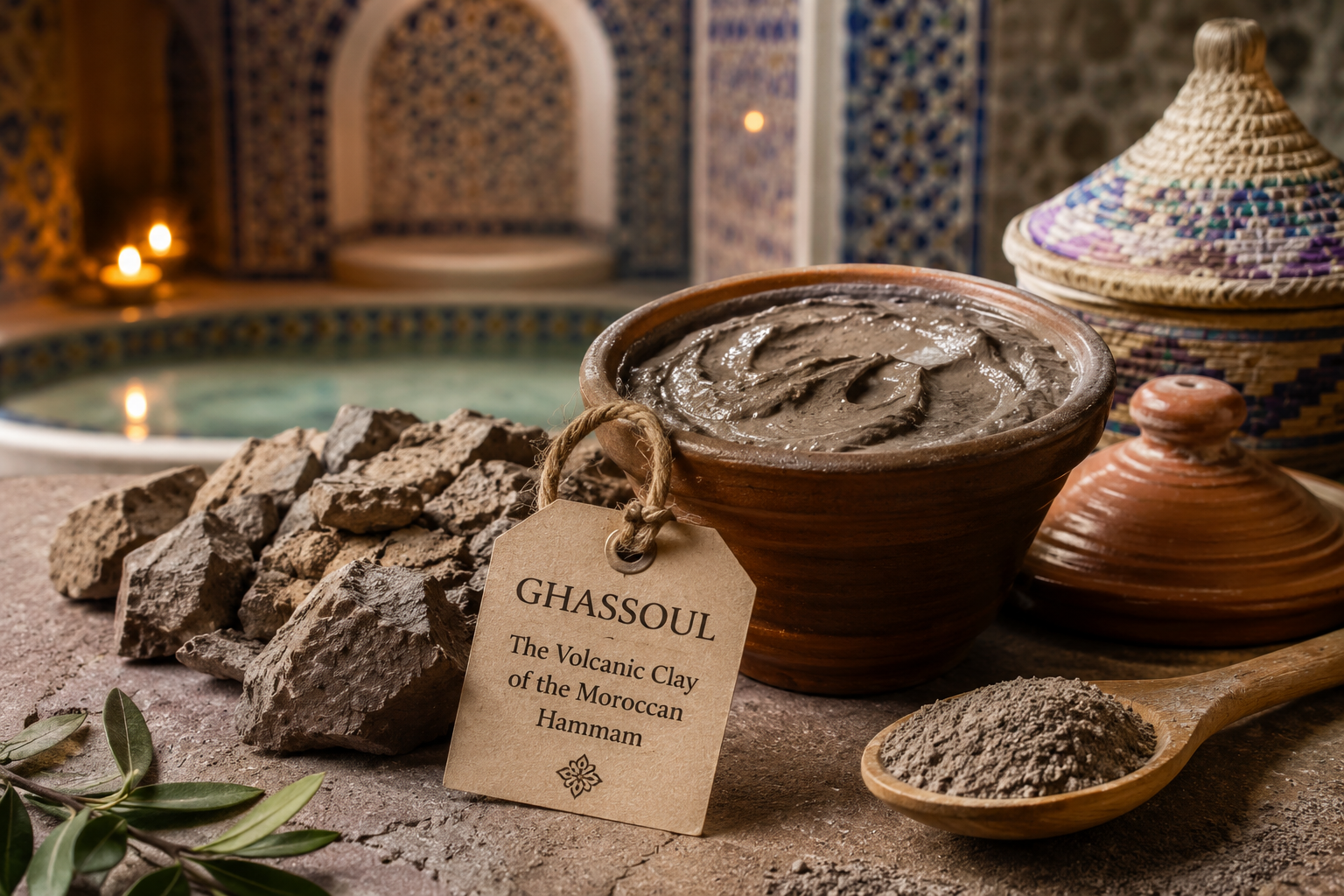
Deep beneath the jagged peaks of the Middle Atlas Mountains lies the only known deposit of Ghassoul in the world. This extraordinary, saponiferous (soap-like) volcanic clay is the absolute cornerstone of traditional Moroccan herbalism and the hammam ritual. For centuries, our ancestors have descended into the subterranean mines of the Moulouya valley to extract this purifying brown earth, which possesses an unparalleled ability to cleanse without stripping the body’s natural oils.
What are the healing benefits of Moroccan Ghassoul?
The power of this clay lies in its unique, naturally occurring mineral composition, heavily favored by medina apothecaries.
- Magnetic Purification: Ghassoul carries a negative molecular charge, acting as a magnet to draw out positively charged toxins, blackheads, and heavy metals from deep within the pores.
- Silica and Magnesium: It is exceptionally rich in these two minerals, which are scientifically proven to improve skin elasticity and reduce severe inflammation.
- Natural Shampoo: Unlike harsh modern soaps, it cleanses the scalp gently, leaving hair incredibly voluminous, shiny, and free of chemical residue.
The ancient apothecary’s preparation
As a specialist in our wellness rituals, I must tell you that raw Ghassoul is rarely used alone. True North African imperial history is revealed in how the clay is mixed. Moroccan women purchase the dried, rock-like shards from the souk and perform a fragrant alchemy at home. They dissolve the clay not in plain water, but in hot rose water or orange blossom water, infusing the mud with deep floral notes. For dry hair, a few drops of pure argan oil are folded into the warm paste before application.
How to prepare a traditional Ghassoul mask
- Never use a metal spoon or metal bowl to mix the clay; metal disrupts the negative ionic charge of the Ghassoul, rendering it medically useless. Always use wood, glass, or ceramic.
- Allow the warm paste to sit on your skin or hair for no more than fifteen minutes, rinsing it off just before it dries completely to prevent dehydration.
The Invisible Invitation
The steam of the ancient hammam is rising, and the scent of rose-infused earth fills the warm, humid air. Step into the sanctuary of our ancestors, wash away the weight of the world, and let the mountains purify your skin.
Experience the true heart of Moroccan heritage through its culinary traditions. Join us in preserving and honoring these ancestral recipes.
What People Are Saying
No comments yet. Be the first — we'd love to hear from you.
Ghina Mrabet
Culturally Verified & Fact-CheckedThe Moroccan Food editorial team brings together native culinary researchers, heritage preservationists, and experienced home cooks across Marrakech, Fes, and Casablanca. Every recipe and cultural guide is reviewed against ancestral oral traditions and authentic regional practices.