The Gluten-Free Traveler's Guide to Morocco: What to Eat, What to Avoid, and the Surprises Waiting for You
Eating Gluten-Free in Morocco: A Practical and Honest Guide
Let me start with the thing nobody says in the gluten-free travel content I've read about Morocco: the bread is everywhere. Khobz — the round, flat, wheat flour bread — is the utensil at most Moroccan meals. It is used to scoop, to dip, to carry. Refusing it, or replacing it with nothing, is noticeable. And many traditional dishes are served with the implicit assumption that bread is present.
That said — and I mean this — Morocco might be one of the most naturally gluten-free-friendly traditional food cultures I've encountered. The foundational ingredients of the Moroccan kitchen are largely wheat-free: meat, vegetables, legumes, olives, argan oil, spices, preserved citrus. The dishes that make Moroccan food great are, in most cases, perfectly gluten-free without modification.
You just need to know which ones.
What Is Naturally Gluten-Free in the Moroccan Kitchen?
The list is longer than you'd expect:
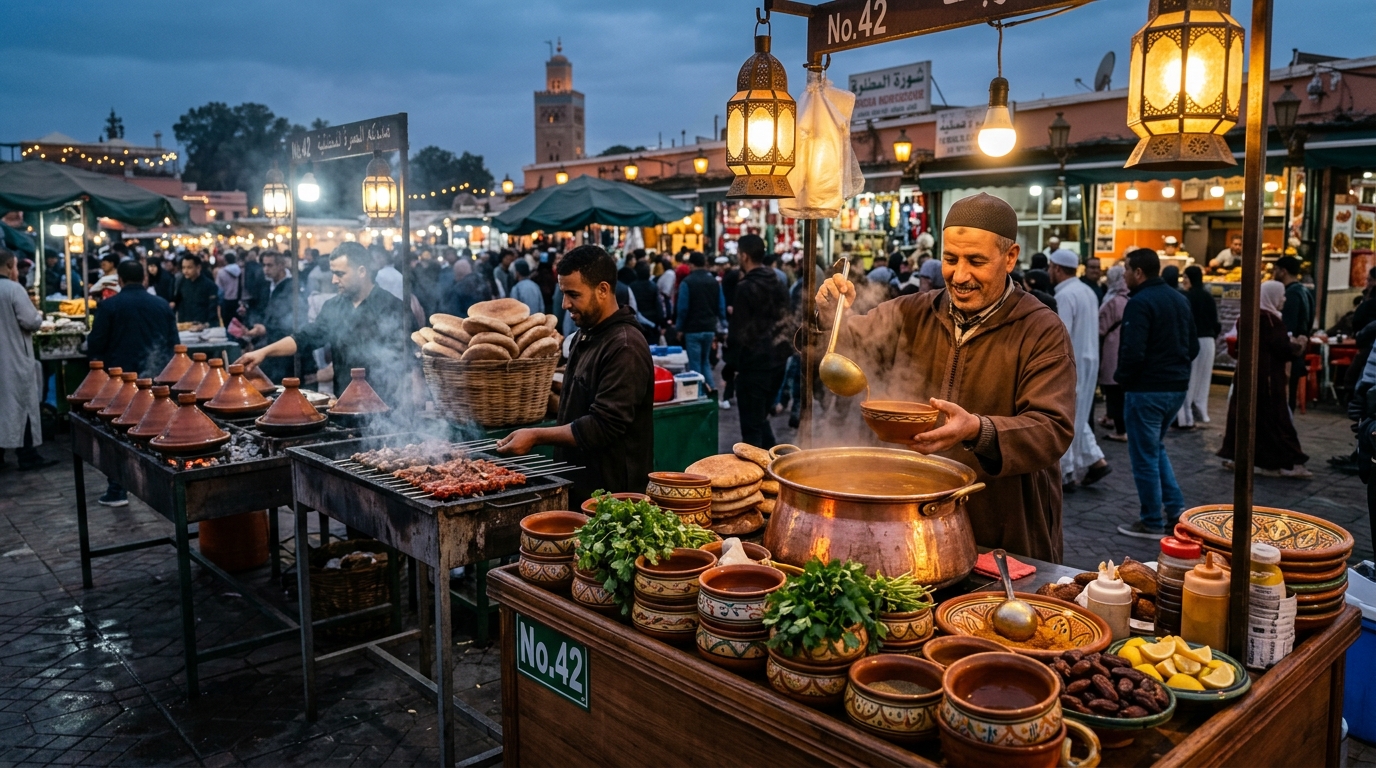
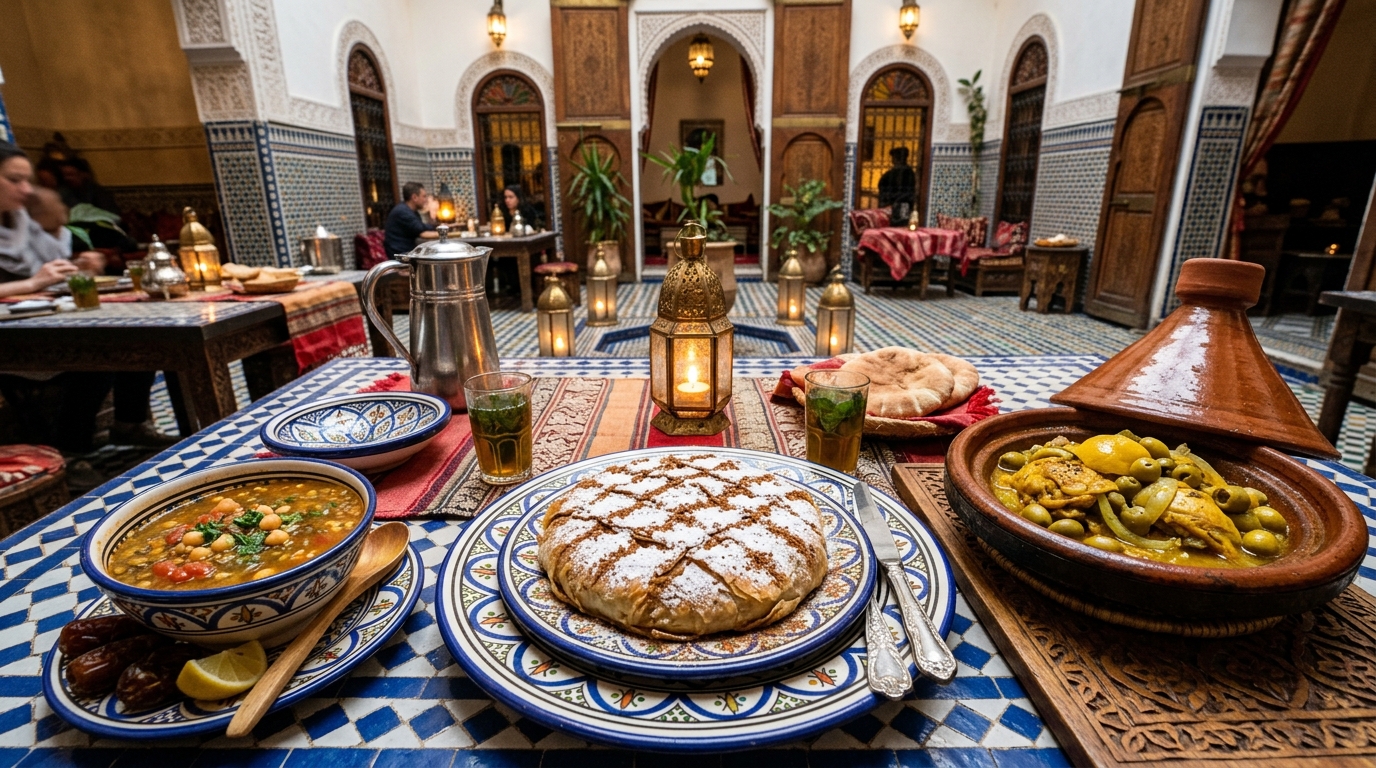
- All tagines — the slow-cooked meat, fish, or vegetable dishes are thickened with their own cooking juices, not flour
- Harira without the pasta — the classic tomato, lentil, and herb soup sometimes contains a small amount of vermicelli; ask for it without (be specific: "bila sha'iriya" in Moroccan Arabic)
- Zaalouk, Taktouka, Méchouia — all the cooked vegetable salads served as starters
- Bissara — fava bean soup, entirely gluten-free
- Grilled meats and fish — mechoui, kebabs, grilled sardines
- Couscous — made from semolina, which is wheat-derived. This is the primary exception. Traditional couscous contains gluten.
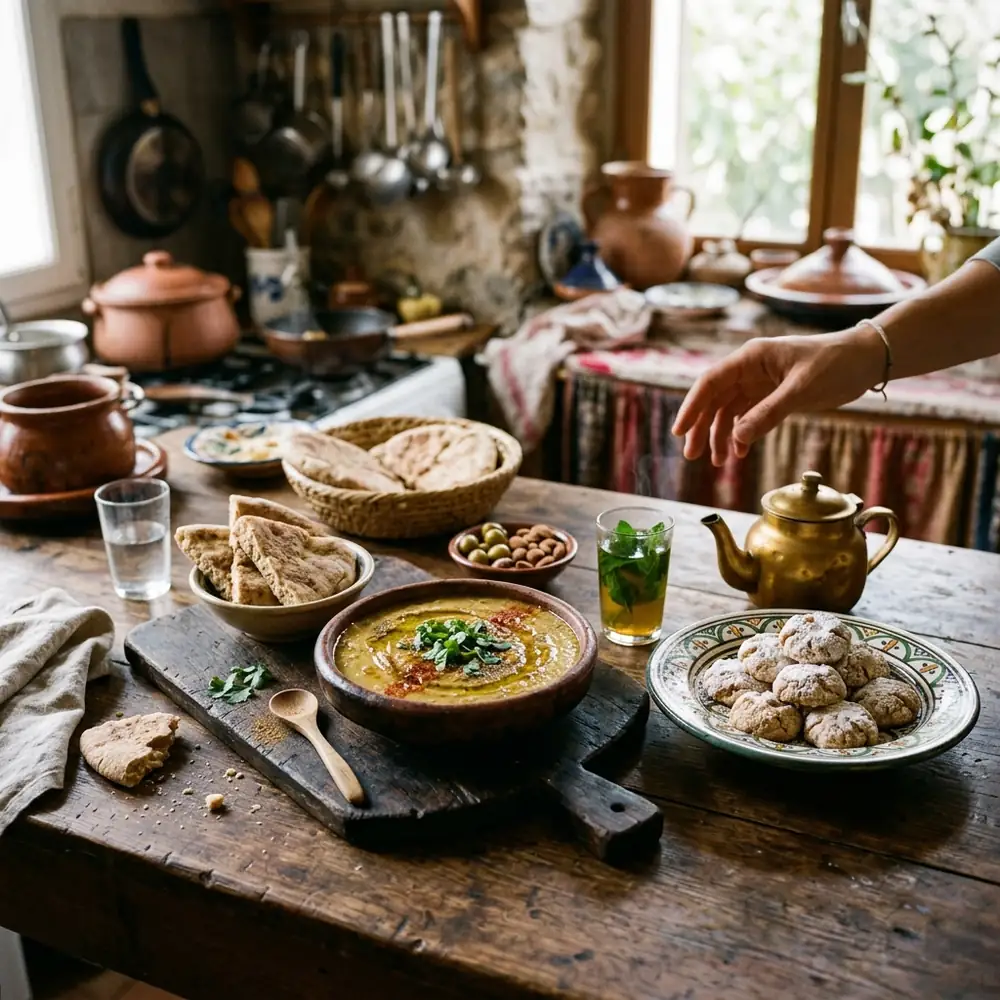
- Ghoriba almond cookies — the traditional version made purely with almond flour, sugar, and egg is naturally gluten-free. Ask if the version you're being served is the almond-only version
- Rice dishes — rice-based preparations exist in certain regional traditions
The Regional Alternatives Worth Knowing About
The Amazigh (Berber) food traditions of the Atlas Mountains and the south have historically relied heavily on ingredients other than wheat:
Corn flour flatbread is common in certain High Atlas communities — aghroum n-winden, a cornmeal flatbread that is made on a flat griddle and has a slightly gritty, rustic texture that some people find more satisfying than wheat bread. It is naturally gluten-free.
Chickpea flour appears in several traditional preparations, including some types of soup and certain festival foods. The large, flat chickpea crêpes sold in some medina markets — karantika or similar preparations depending on region — are made entirely from chickpea flour and are both filling and gluten-free.
Barley flour exists in traditional Atlas cooking but contains gluten, so is not useful here.
Amlou — the almond, argan oil, and honey paste eaten as breakfast in the Souss region — is naturally gluten-free and extraordinary. Find it. Eat it with anything you can scoop it with that isn't wheat-based.
How to Communicate the Allergy Clearly
The concept of celiac disease is not universally understood in Morocco, particularly in smaller towns and traditional restaurants. "Gluten-free" as a term may draw a blank. More effective approaches:
- Learn to say: "Ma kan-akul la heta khobz, wala daqiq, wala pasta" — "I don't eat bread, flour, or pasta"
- In French (widely spoken in cities): "Je ne peux pas manger de blé, de farine ou de pain — je suis allergique"
- Be specific about what you CAN eat — this is often more productive than listing prohibitions in unfamiliar food contexts
- In upscale restaurants and riads with international clientele, allergy awareness is typically better; in traditional market restaurants, it is less reliable
The Restaurants Most Likely to Accommodate You
Riads with in-house restaurants and advance notice — email ahead, explain the situation, and most good riads will adapt the menu without much difficulty since the base ingredients are already largely gluten-free. The kitchen will just serve the tagine without the bread accompaniment and adjust any dishes that might otherwise include a flour-based component.
Grill restaurants — meat-focused places serving brochettes, mechoui, and grilled fish — are naturally easier territory. The food is inherently simple and grain-free.
Your main vulnerability is cross-contamination in environments where bread is made in the same kitchen, and hidden flour in some prepared spice mixes or sauces. For people with full celiac disease rather than a preference, this cross-contamination risk is real and should be taken seriously.
Experience the true heart of Moroccan heritage through its culinary traditions. Join us in preserving and honoring these ancestral recipes.
What People Are Saying
No comments yet. Be the first — we'd love to hear from you.
Leila Cherkaoui
Culturally Verified & Fact-CheckedThe Moroccan Food editorial team brings together native culinary researchers, heritage preservationists, and experienced home cooks across Marrakech, Fes, and Casablanca. Every recipe and cultural guide is reviewed against ancestral oral traditions and authentic regional practices.