High Atlas Mountains Territorial Guide: Amazigh Valleys, Toubkal Trails, and Mountain Terroir
archived: false
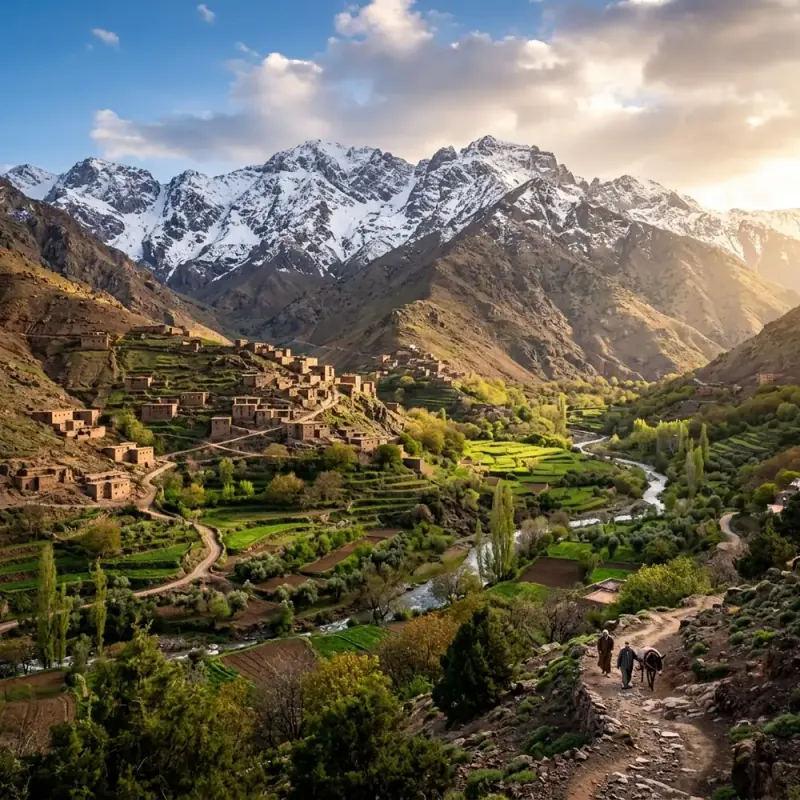
Rising abruptly from the plains of Marrakech, the High Atlas (Adrar n Dern in the Tamazight language) forms the formidable spine of Morocco, stretching over seven hundred kilometers from the Atlantic coast near Agadir to the Algerian border. Anchored by Mount Toubkal, North Africa’s highest summit at 4,167 meters, this mountain ecosystem serves as the climatic barrier between moist Mediterranean weather systems and the arid Saharan interior.
For centuries, the High Atlas has been the ancestral stronghold of the Amazigh (Berber) people. Here, life is carved into steep valley walls through stone-and-mud villages, gravity-fed terraced orchards, and communal agricultural cooperatives. Exploring the High Atlas reveals a world of alpine grandeur, deep hospitality, and rich mountain gastronomy.
Major Valleys of the High Atlas
Travelers exploring the mountains from Marrakech encounter distinct river valleys, each possessing its own ecological niche and community rhythm:
1. The Imlil Valley and Toubkal National Park
Located ninety minutes south of Marrakech at seventeen hundred meters elevation, Imlil serves as the premier trailhead for trekking into Toubkal National Park. Surrounded by walnut groves and rushing glacial meltwater streams, the village is filled with mountain outfitters, muleteers, and traditional stone guesthouses (Gîtes d’Étape).
2. The Ourika Valley
Carved by the Ourika River, this verdant valley ascends past riverside cafes where dining tables sit directly in shallow mountain waters. Higher up, the trail reaches the seven waterfalls of Setti Fatma, a popular hiking destination framed by towering red granite cliffs.
3. The Ouirgane and Azzaden Valleys
Southwest of Asni lies the tranquil valley of Ouirgane, characterized by ancient salt mines, red sandstone hills, and olive orchards. It offers gentle lower-altitude walks and boutique eco-lodges with panoramic mountain vistas. The adjacent Azzaden Valley preserves remote, untouched traditional villages like Tighza and Aït Aïssa, accessible via mule trails.
4. The Zat Valley and Tichka Pass
Farther east, the road climbs through the dramatic Tizi n’Tichka pass (2,260 meters), crossing over the mountain spine toward Ouarzazate. Side valleys like Zat harbor traditional pottery workshops and wild walnut forests largely untouched by mass tourism.
Summiting Mount Toubkal (4,167 Meters)
Climbing Mount Toubkal is one of the premier trekking accomplishments in Africa. While the standard summer ascent is non-technical, requiring no technical mountaineering gear, its high altitude, loose scree slopes, and significant vertical elevation gain demand serious cardiovascular fitness and proper acclimatization.
The Standard Two-Day Trek Profile:
- Day 1: Imlil (1,740m) to Toubkal Refuges (3,207m) Trekkers ascend along the Mizane Valley, passing the holy shrine of Sidi Chamharouch with its white boulder and riverside tea stalls. The hike covers approximately eleven kilometers over five to six hours, gaining fifteen hundred meters of elevation to reach the CAF (Club Alpin Français) Refuge or Les Mouflons Refuge.
- Day 2: Refuge to Summit (4,167m) and Descent to Imlil Departing before dawn around 4:30 AM with headlamps, climbers tackle the South Col (Ikhibi Sud). The trail climbs steep scree and switchbacks for three to four hours before topping out at the pyramid-shaped iron summit marker. On clear mornings, the summit offers an awe-inspiring 360-degree view spanning the Anti-Atlas mountains to the south and the hazy plains of Marrakech to the north. Trekkers descend back to the refuge for lunch, then continue all the way down to Imlil.
Essential Safety Rule: Moroccan regulations require all trekkers in Toubkal National Park to be accompanied by a licensed mountain guide. Guides certified by the Centre d’Enseignement et de Formation aux Métiers de la Montagne (CFAMM) in Tabant ensure route safety, handle refuge bookings, and provide invaluable regional context.
Amazigh Mountain Architecture and Rural Life
High Atlas villages demonstrate extraordinary architectural adaptation to harsh mountain climates. Built from rammed earth (Pisé), river stones, and heavy Atlas cedar or walnut beams, houses are stacked directly against steep canyon slopes:
- Thermal Mass Efficiency: Thick earthen walls absorb heat during sunny alpine days and release warmth slowly into interior living spaces during freezing mountain nights.
- Terraced Rooftops: Flat roofs made from compacted clay over reed ceilings serve multiple functions: drying walnuts, corn, and wild herbs in autumn, threshing barley, and providing communal outdoor space.
- The Agadir (Granary Fortress): In historic valleys, fortified collective granaries housed grain reserves, silver jewelry, and property deeds safely against rival tribes or winter sieges.
High Atlas Terroir: The Mountain Table
Mountain cuisine in the Atlas is hearty, nutrient-dense, and deeply seasonal, built around ingredients cultivated on small terraced plots:
- Amlou: The legendary Amazigh energy spread made from stone-ground toasted almonds, wild orange blossom honey, and pure extra-virgin argan oil. Eaten warm with fresh barley flatbread (Aghroum), it provides sustained energy for mountain farming.
- Tagine of Wild Turnips and Mountain Rooster: Free-range mountain chickens (Djej Beldi) slow-cooked in earthenware tagines with tiny sweet mountain turnips (Lft Hammadi), purple olives, wild thyme, and ginger.
- Fresh Mountain Goat Cheese (Jben): Produced by nomadic shepherds grazing herds on alpine pastures above twenty-five hundred meters, seasoned simply with coarse sea salt and olive oil.
- Fresh Walnuts and Dried Figs: Autumn brings walnut harvests along the Imlil riverbanks. Families crack fresh walnuts alongside sweet dried mountain figs (Chriha) paired with afternoon mint and absinthe tea (Chiba).
Responsible Trekking and Community Respect
Visiting fragile mountain communities requires mindful traveler etiquette:
- Support Local Economies Directly: Hire local muleteers, stay at family-owned village guesthouses (Gîtes), and purchase hand-woven rugs directly from village women’s cooperatives.
- Pack Out All Waste: Solid waste disposal in remote mountain valleys is a significant challenge. Carry a reusable water bottle with a purification filter, and carry all personal plastic trash back down to Marrakech.
- Respect Village Privacy: Always ask polite permission before photographing local residents, especially women and elders working in fields or communal ovens.
- Dress Conservatively: While trekking clothing is standard on hiking trails, cover your shoulders and wear knee-length shorts or pants when walking through traditional villages.
Frequently Asked Questions
What is the best season for trekking in the High Atlas?
Late spring (April to June) and early autumn (September to November) are ideal. During these months, daytime temperatures are comfortable (18°C to 24°C), skies are generally clear, and mountain passes are free of heavy snow. Winter (December to March) brings beautiful snow conditions but requires crampons, ice axes, and winter mountaineering experience.
Can beginners hike Mount Toubkal?
Yes, provided you are in good cardiovascular health, have prepared with regular hiking, and hike with a licensed guide. The main challenge is altitude sickness and steep loose scree rather than technical climbing. Pace yourself steadily, stay thoroughly hydrated, and allow an extra acclimatization day if you are sensitive to altitude.
How do I get to Imlil from Marrakech?
Imlil is sixty-five kilometers south of Marrakech. Grand Taxis depart regularly from the Bab Doukkala or Bab er-Rob taxi stands in Marrakech, taking passengers to Asni where connecting local taxis run up to Imlil. Alternatively, private transfers or rental cars reach Imlil via the paved R203 road in approximately ninety minutes.
What kind of footwear is needed for Atlas hiking?
Sturdy, broken-in hiking boots with good ankle support and grippy Vibram-style soles are essential for High Atlas trails, which are frequently strewn with loose stones and steep gravel. Lightweight sneakers or running shoes are insufficient for multi-day hikes or Toubkal summit attempts.
Experience the true heart of Moroccan heritage through its culinary traditions. Join us in preserving and honoring these ancestral recipes.
What People Are Saying
No comments yet. Be the first — we'd love to hear from you.
Houssam Elmrabet
Culturally Verified & Fact-CheckedHoussam Elmrabet is a Moroccan researcher in territorial marketing and cultural heritage preservation. His work documents regional gastronomic identities, local agricultural heritage, and how ancestral culinary traditions define authentic territorial branding across the Kingdom.