Rabat: The Capital Nobody Bothers to Visit (But Should)
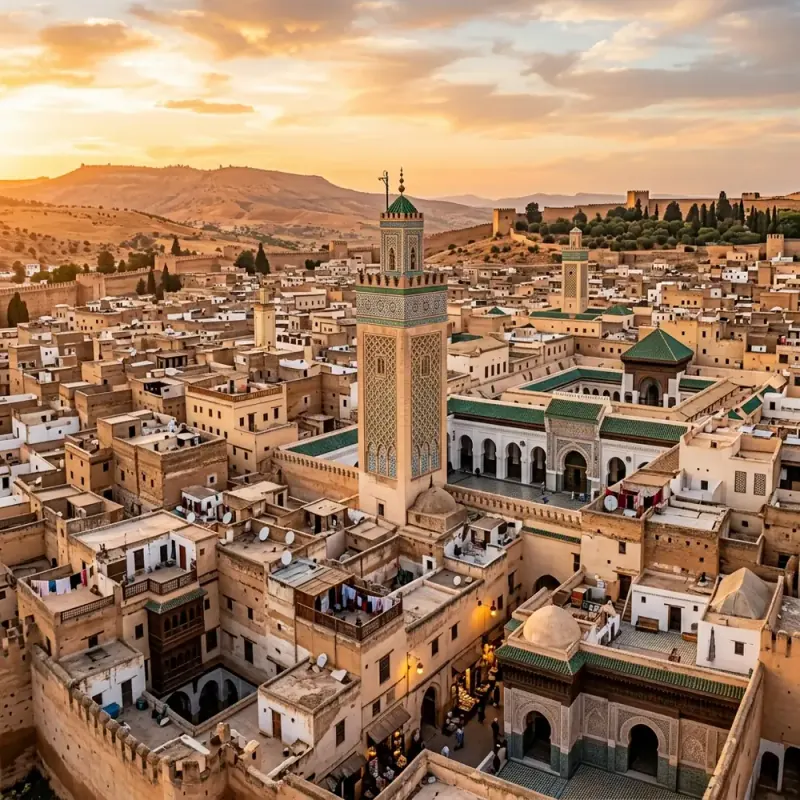
When foreign travelers map out their two-week Moroccan itineraries, the routing almost always follows a predictable triangle: they land in Casablanca, rush immediately south toward the sensory carnival of Marrakech, cross the High Atlas dunes to the desert, and circle north through the maze of Fes before flying home. In this race between tourist hotspots, Morocco’s political capital is quietly bypassed.
As a researcher in territorial marketing and cultural heritage, I have watched this oversight with fascination. Many assume that because Rabat is the administrative seat of government, the royal residence of King Mohammed VI, and home to foreign embassies, it must be bureaucratic, sterile, and boring.
Nothing could be further from the truth.
Rabat is one of the most sophisticated, liveable, and historically layered coastal cities in the Mediterranean basin. In 2012, UNESCO inscribed Rabat as a World Heritage site under the rare designation “Modern Capital and Historic City: A Shared Heritage”, recognizing its seamless dialogue between twelfth-century Almohad imperial monuments, seventeenth-century Andalusian fortress walls, and innovative early twentieth-century green urbanism.
Here is why Rabat deserves a central place on your Moroccan journey, how to navigate its sovereign landmarks, and where to taste its regal culinary traditions.
The Geography of Power: Where River Meets Ocean
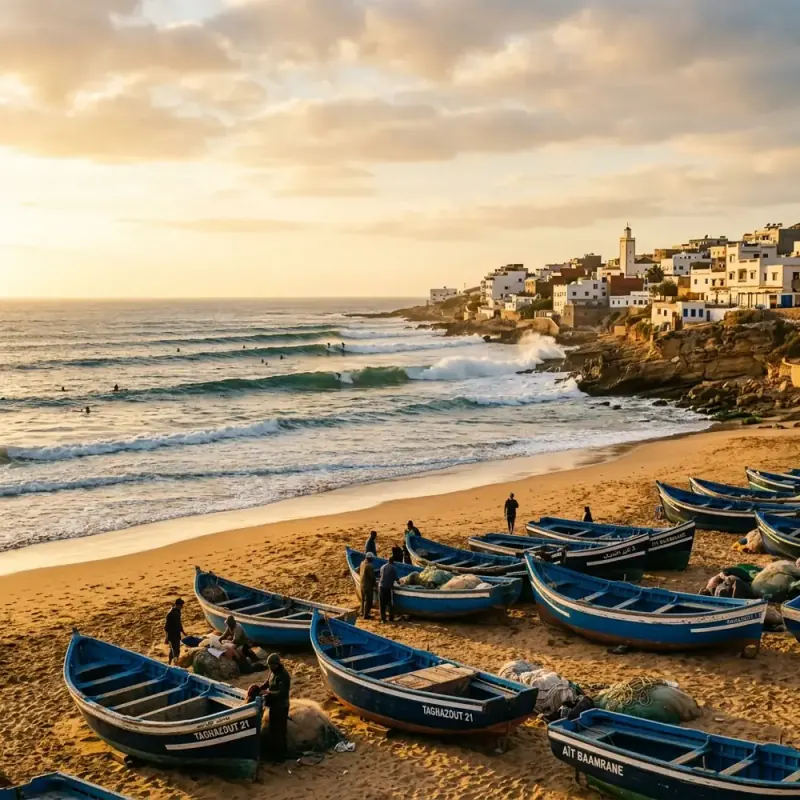
Rabat sits on the Atlantic coastline at the mouth of the Bou Regreg River, directly facing its historic sister city, Salé, on the opposite northern bank. For centuries, this twin-city estuary formed a natural deep-water haven for Phoenician merchants, Roman galleys, and the infamous seventeenth-century corsairs known across Europe as the “Sallee Rovers.”
Unlike the landlocked heat of Marrakech or the crowded canyon-like alleys of Fes, Rabat breathes with the rhythm of the ocean. Salt spray drifts across wide, palm-lined boulevards, Atlantic breezes keep summer temperatures pleasant, and coastal parks frame historic ramparts. It is a city designed with space, light, and monumental dignity.
The Four Historic Anchors of Rabat
To understand Rabat’s historic weight, you must explore its four foundational eras, each visible within a twenty-minute tram ride of the city center:
1. The Kasbah of the Udayas (12th Century)
Perched on a sheer cliff face overlooking the river mouth and the crashing Atlantic surf, the Kasbah des Oudayas is an architectural marvel. Entered through the monumental stone arch of Bab Oudaia, carved in 1195 with intricate Almohad arabesques, the fortress opens into a tranquil, whitewashed residential neighborhood reminiscent of a Greek island village.
Cobblestone lanes painted in crisp white and ocean-blue lime wind between residential riads with heavy carved cedar doors. At the edge of the cliff lies the famous Café Maure, an open-air stone terrace where travelers sit on woven reed mats beneath climbing jasmine, sipping mint tea and eating fresh almond pastries while watching Atlantic fishing dhows navigate the tidal bar below.
At the base of the fortress walls, enclosed within protective stone bastions, lies the Andalusian Garden. Planted in the early twentieth century on the site of historic palace orchards, it is filled with sweet Seville orange trees, trickling stone fountains, flowering datura, and climbing purple bougainvillea that perfume the sea air.
2. The Hassan Tower and the Unfinished Dream (1199)
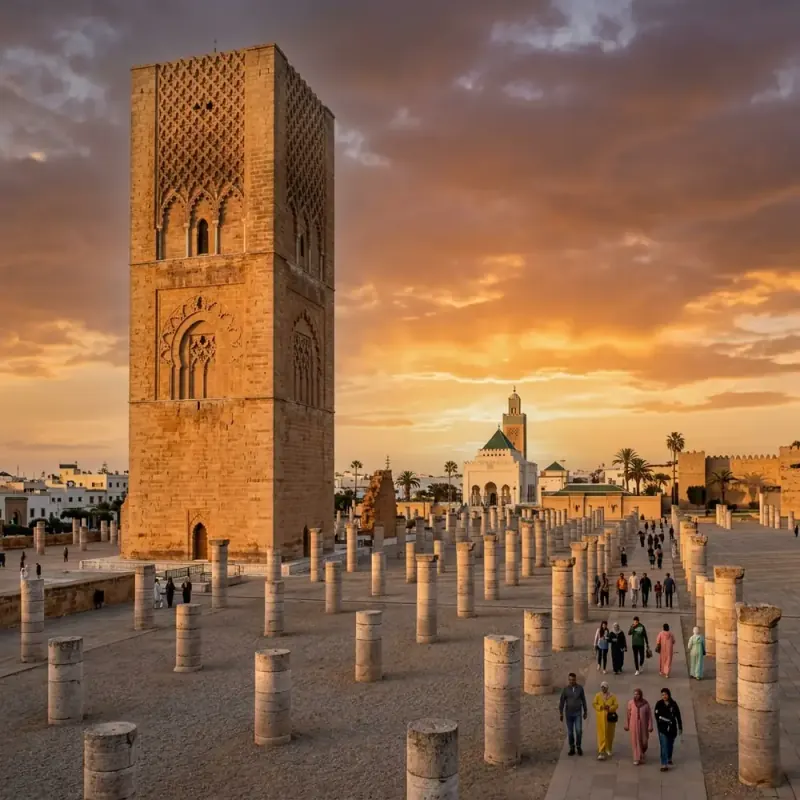
Standing on a high bluff overlooking the Bou Regreg river basin, the Tour Hassan represents one of the most ambitious architectural projects in world history.
In 1195, the great Almohad Caliph Yacoub el-Mansour set out to construct the largest mosque in the Islamic world, vast enough to hold his entire imperial army in communal Friday prayer. When the sultan died suddenly in 1199, construction halted.
Today, the red sandstone minaret stands at 44 meters (intended to reach 86 meters), flanked by an eerie, majestic forest of over 300 stone columns marking the perimeter of the ancient hypostyle prayer hall. Standing directly opposite the tower is the modern Mausoleum of Mohammed V, an exquisite white Italian marble sanctuary crowned with emerald-green tiles, where Moroccan master craftsmen spent a decade carving intricate cedar ceilings, gilded calligraphy, and zellige mosaics to honor the father of modern Moroccan independence.
3. Chellah: Roman Outpost to Royal Necropolis
A fifteen-minute drive south along the river brings you to Chellah, perhaps the most enchanting historical site in Morocco.
First settled as the Roman river port of Sala Colonia in the second century BC, the site was transformed in the fourteenth century by the Marinid sultans into a fortified royal necropolis. Today, monumental Marinid stone gatehouses enclose Roman triumphal arches, public baths, and ancient stone streets tangled in wild fig trees and blackberry brambles.
Dozens of wild white storks nest year-round atop ruined stone minarets, clattering their bills against the sky. Mineral springs feed deep stone pools home to sacred eels, where local women traditionally come to feed eggs to the eels in ancient pre-Islamic fertility rituals.
4. The Ville Nouvelle: Masterclass in Green Urbanism
While the modern colonial quarters of Casablanca were built rapidly for commercial speculation, Rabat’s Ville Nouvelle (New Town), designed in the 1920s by French urbanist Henri Prost, was conceived as a garden city.
Wide stone avenues like Avenue Mohammed V are lined with graceful Art Deco and Neo-Moorish administrative palaces, arcaded walkways, and double rows of royal date palms. Public parks, botanical gardens (Jardin d’Essais), and the clean modern tramway make Rabat the most pedestrian-friendly metropolis in North Africa.
The Modern Cultural Renaissance
Over the past decade, Rabat has undergone an intentional, state-led cultural transformation under the royal initiative “Rabat, City of Light, Moroccan Capital of Culture.”
Today, ancient monuments stand alongside cutting-edge global architecture:
- The Grand Theatre of Rabat: Designed by the legendary Iraqi-British architect Zaha Hadid, this sweeping, futuristic white structure sits on the banks of the Bou Regreg like a wave shaped by water, housing a 1,800-seat opera hall.
- Mohammed VI Museum of Modern and Contemporary Art (MMVI): Morocco’s premier modern art institution, hosting world-class exhibitions of modern Moroccan masters alongside works by Picasso, Giacometti, and Delacroix.
- Al Boraq High-Speed Rail Hub: Rabat’s sleek Agdal station connects the capital to Tangier in just 80 minutes aboard Africa’s first high-speed train (TGV).
Royal Gastronomy: What to Taste in the Capital
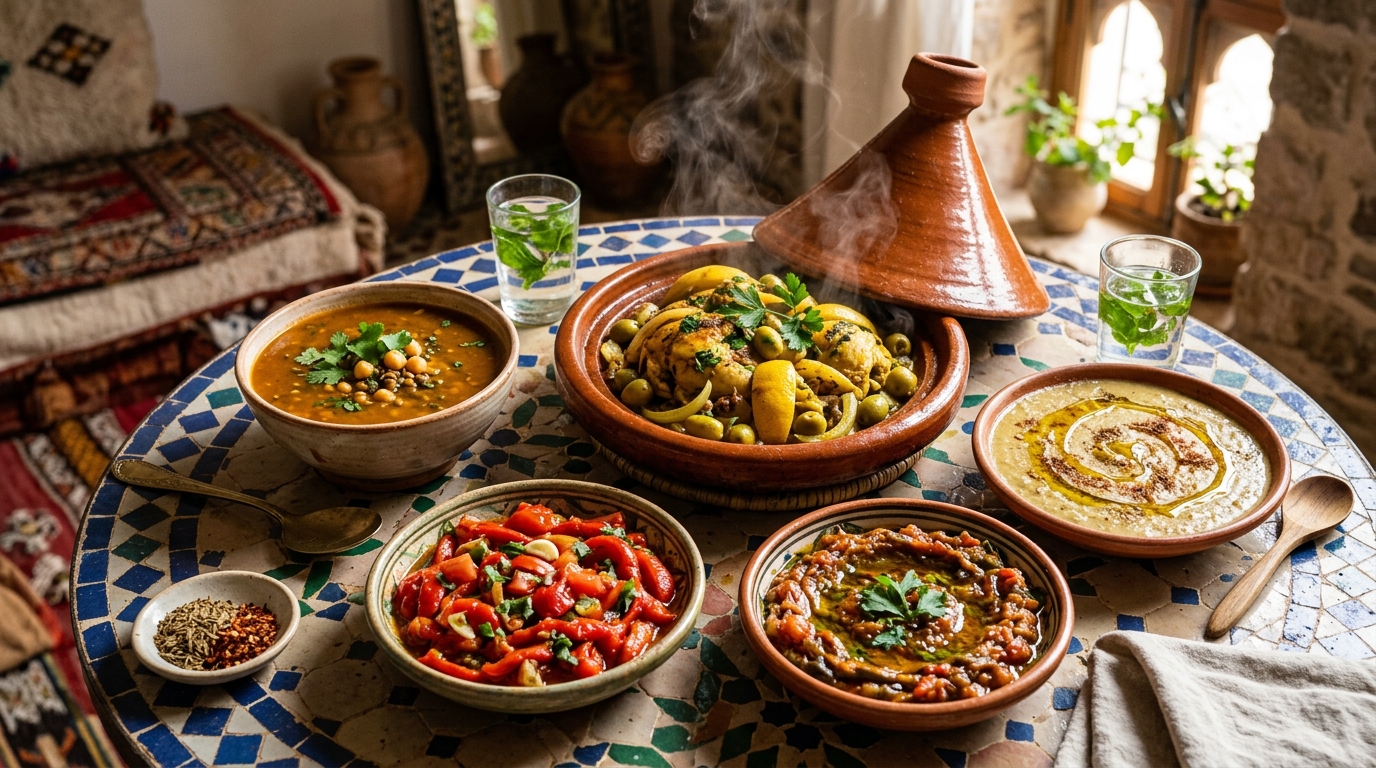
Rabat’s culinary landscape reflects its aristocratic and diplomatic history. While street food stalls in the medina serve quick favorites like bocadillos (stuffed baguettes) and snail soup, the domestic cooking of long-established Rabati families is renowned for delicacy, courtly etiquette, and balanced sweet-savory notes.
Couscous aux Sept Légumes (Royal Seven-Vegetable Couscous)
On Fridays, families gather around a steaming gasaa of fine semolina steamed three times over rich beef or chicken broth, topped with sweet pumpkin, carrots, zucchini, turnips, cabbage, tomatoes, and chickpeas, finished with a caramelized onion and raisin compote (tfaya) perfumed with cinnamon and orange blossom water.
Salé Seafood Pastilla
Drawing on the deep fishing heritage of neighboring Salé, local cooks prepare an aristocratic seafood pastilla: delicate layers of paper-thin warqa pastry filled with Atlantic monkfish, pink shrimp, and tender calamari tossed in a spicy, garlicky herb marinade (chermoula) with Chinese vermicelli and salted preserved lemon.
Almond Cornes de Gazelle and Briouates
Because Rabat was shaped by Andalusian court traditions, medina patisseries specialize in small, delicate almond sweets. Look for tiny, crispy triangular briouates filled with almond paste and soaked in wild honey, and pale gazelle horns scented with spring orange blossom water.
Practical Tips for Your Visit
- How to Get Around: Rabat is exceptionally easy to navigate. The modern tramway system connects the historic Kasbah, the modern downtown avenue, the train stations, and the sister city of Salé for only 6 dirhams (about $0.60).
- Ideal Duration: Allocate at least two full days to explore the Kasbah, Chellah, Hassan Tower, the museums, and take an evening stroll along the newly developed riverfront marina.
- Atmosphere: Rabat has virtually no aggressive street touts or faux guides. You can stroll through the historic medina on Rue des Consuls, famous for handmade wool carpets and leather goods, without being pressured to buy.
Rabat is a city of quiet power, cultural depth, and graceful coastal light. It proves that modern progress and deep ancient roots can live together in perfect balance.
Frequently Asked Questions
Is Rabat worth visiting compared to Marrakech or Fes?
Yes, absolutely. Rabat offers a completely different Moroccan experience: calm, clean, coastal, and deeply cultured without the overwhelming noise and high-pressure sales tactics found in more tourist-heavy cities. Its combination of twelve centuries of UNESCO monuments and modern art museums makes it essential for cultural travelers.
Is Rabat safe for foreign travelers?
Rabat is widely considered the safest major city in Morocco. Because it is the seat of the King, the royal government, and international embassies, civic infrastructure is well maintained, street lighting is comprehensive, and security presence is visible yet discreet. Standard travel common sense applies.
Can you walk between Rabat and Salé?
Yes. You can walk across the modern Hassan II Bridge spanning the Bou Regreg river, take the inexpensive modern tramway across the water, or pay a local boatman 2 dirhams to ferry you across the river in a traditional wooden rowboat (flouka), one of the most charming short journeys in the capital.
What is the best time of year to visit Rabat?
Thanks to its oceanfront Atlantic location, Rabat enjoys a mild Mediterranean climate year-round. The best months are April to June and September to November, when daytime temperatures hover around a pleasant 22°C to 26°C (72°F to 79°F) and coastal rainfall is minimal.
Experience the true heart of Moroccan heritage through its culinary traditions. Join us in preserving and honoring these ancestral recipes.
What People Are Saying
No comments yet. Be the first — we'd love to hear from you.
Houssam Elmrabet
Culturally Verified & Fact-CheckedHoussam Elmrabet is a Moroccan researcher in territorial marketing and cultural heritage preservation. His work documents regional gastronomic identities, local agricultural heritage, and how ancestral culinary traditions define authentic territorial branding across the Kingdom.