Tangier: Where Africa and Europe Shake Hands
Stand on the sun-bleached stone ramparts of the Tangier Kasbah at Bab el-Bahr (the Gate of the Sea), and look out across the azure expanse of the Strait of Gibraltar. On a clear morning, you can see the white houses of Tarifa and the jagged limestone cliffs of Andalusia rising sharply on the European horizon, barely fourteen kilometers (nine miles) away.
Tangier occupies one of the most strategically significant geographic positions on earth. Here, the rolling swells of the Atlantic Ocean collide with the calmer waters of the Mediterranean Sea. For millennia, Phoenicians, Romans, Vandals, Arabs, Portuguese, English, and Spanish have fought to control this maritime choke point.
As a researcher in territorial marketing and regional development, I have watched Tangier’s evolution with admiration. In the mid-twentieth century, Tangier was famous as a decadent, bohemian “International Zone” populated by writers, artists, smugglers, and spies.
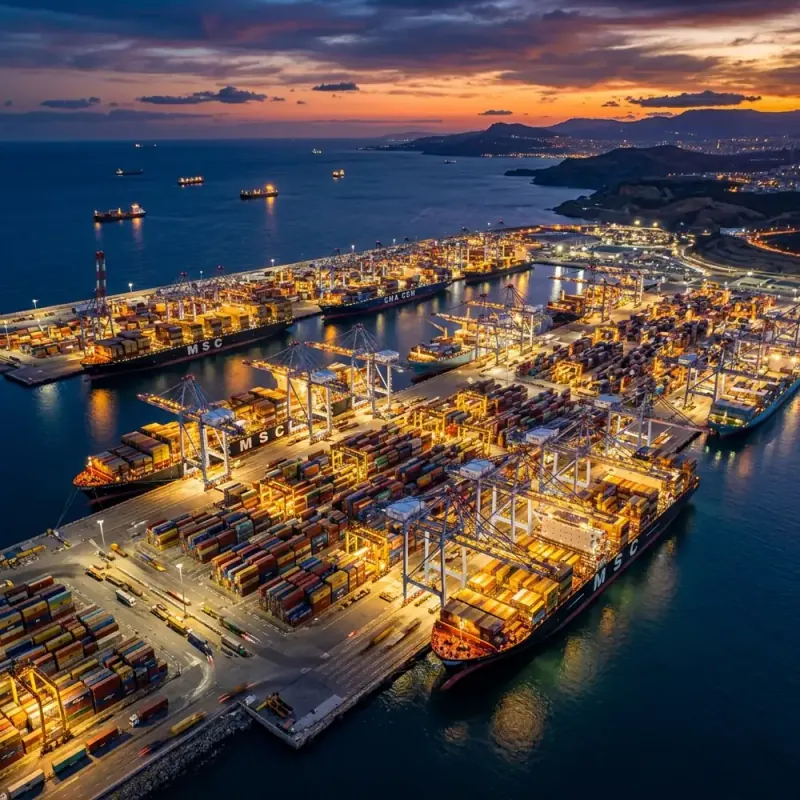
Today, while retaining its romantic literary aura, Tangier has reinvented itself as modern Africa’s most formidable industrial and maritime powerhouse. The city anchors Tanger Med, the largest container port on the Mediterranean and across the entire African continent, alongside high-speed rail lines, sleek beach promenades, and restored historical quarters.
Here is an authentic territorial guide to understanding Tangier’s split soul: where legendary literary cafes meet cutting-edge infrastructure, and where Spanish, French, and Moroccan foodways blend at the water’s edge.
The International Zone Legacy: A City of No Flag
To understand Tangier’s unique atmosphere, you must understand its political past. Between 1923 and 1956, Tangier was designated an International Zone, a unique diplomatic condominium administered collectively by eight foreign powers (including France, Spain, Britain, Portugal, Italy, Belgium, the Netherlands, and later the United States).
Because the city was exempt from normal national taxation, customs duties, and currency restrictions, it became an international playground for financiers, eccentric aristocrats, and tax exiles. It also became a magnet for avant-garde Western artists and writers seeking personal freedom outside conservative postwar Europe and America.
Paul Bowles lived and wrote here for over fifty years. William S. Burroughs wrote Naked Lunch in the back rooms of the medina’s Hotel El-Muniria. Henri Matisse painted the light filtering through the archways of Bab el-Assa. The Rolling Stones, Tennessee Williams, and Truman Capote gathered in smoke-filled cafes along the cliffs.
When Morocco regained full national sovereignty under King Mohammed V in 1956, the International Zone was peacefully dissolved and reintegrated into the unified Moroccan Kingdom. Today, that bohemian nostalgia lingers in the tiled interiors of its grand cafes and the cosmopolitan multilingual speech of its residents, who easily shift between Moroccan Darija, Spanish, French, and English within a single sentence.
The Modern Renaissance: Tanger Med and Al Boraq
Over the past two decades, Tangier has undergone the most ambitious territorial transformation in modern North African history:
- Tanger Med Port: Located forty kilometers east of the city along the strait, Tanger Med now handles more container volume than Valencia, Algeciras, or Genoa. It connects Morocco directly to 180 global ports across 70 countries and serves as a continental export platform for automotive giants and aerospace manufacturers.
- Al Boraq High-Speed Rail: Inaugurated in 2018 as Africa’s first bullet train, Al Boraq whisks travelers from Tangier’s sleek Ville Nouvelle to Rabat in just 1 hour and 20 minutes, and to downtown Casablanca in 2 hours and 10 minutes, cutting historic travel times by more than half.
- The Revitalized Corniche and Marina Bay: The historic urban beachfront has been transformed into a landscaped coastal promenade featuring modern pedestrian plazas, palm-lined cycling lanes, and superyacht slips that look across to the lights of Spain at night.
Essential Quarters to Explore
Tangier is best explored on foot, transitioning between ancient fortified citadels and broad early twentieth-century boulevards:
1. The Kasbah and Dar el-Makhzen
The highest point of the medina is the fortified Kasbah quarter. Wander through tranquil cobblestone residential lanes until you reach the Kasbah Museum of Mediterranean Cultures, housed inside the seventeenth-century sultan’s palace of Dar el-Makhzen. The palace features a serene marble courtyard, carved plaster arabesques, and historical Roman mosaics excavated from ancient Volubilis and Lixus.
2. The Grand Socco and Petit Socco
The medina is anchored by two historic plazas:
- The Grand Socco (Place du 9 Avril 1947): The busy gateway between the ancient medina and the modern Ville Nouvelle. It was on this very square on April 9, 1947, that the late King Mohammed V delivered his historic speech demanding Moroccan independence, sovereignty, and national territorial unity. Shaded by towering ficus trees, the square is centered around a marble fountain and the historic Art Deco Cinema Rif.
- The Petit Socco (Souq Dakhli): Deep inside the medina alleys lies this intimate, paved square. Once the notorious hub of smugglers, money changers, and literary icons in the 1940s, it is now a peaceful spot to sit outside at Café Central with a mint tea and watch medina life pass by.
3. Cap Spartel and the Caves of Hercules
A short fifteen-minute coastal drive west of the city brings you to Cap Spartel, the dramatic northwestern tip of the African continent. Standing beside the nineteenth-century yellow stone lighthouse, you gaze directly at the physical boundary where the dark blue waters of the Atlantic merge into the turquoise Mediterranean.
Just below the cape lie the legendary Caves of Hercules (Grottes d’Hercule). Greek mythology tells that Hercules rested in these sea caves before completing his eleventh labor (stealing the golden apples of the Hesperides). The cave’s dramatic sea-facing opening is shaped almost exactly like an inverted map of the African continent, framing the Atlantic breakers crashing through the natural stone aperture.
Historic Literary Cafes: Where Time Stands Still
In Tangier, conversation is an art form, and the traditional café is its stage. Three historic establishments are essential cultural stops:
- Café Hafa (Established 1921): Carved into terraced limestone cliffs high above the Bay of Tangier in the Marshan district. Visitors sit on simple concrete steps and low plastic chairs lined with blue-and-white tiles. Sip sweet mint tea perfumed with wild mountain herbs (flio and sheeba) while watching massive cargo ships glide silently through the strait beneath you.
- Gran Café de Paris (Place de France): Built in 1927 in the heart of the modern French quarter. With its cracked brown leather banquettes, brass luggage racks, and elderly waiters dressed in black bowties, this café was the preferred daytime office of spies, diplomats, and Paul Bowles.
- Café Baba (The Kasbah): A tiny, incense-scented hideaway operating since 1943 in the upper Kasbah alleys. Famous for hosting everyone from Keith Richards and Jimi Hendrix to the King of Spain, it remains completely unpretentious, serving mint tea on mismatched wooden tables beneath yellowed photographs of its famous guests.
Tangier’s Gastronomic Identity: Ocean and Street
Because of its geography and historic Spanish protectorate connections, Tangier’s palate is unlike anywhere else in Morocco:
1. Caliente (Street Chickpea Cake)
Tangier’s undisputed street food obsession. Originating from the Spanish-Jewish dish calentita, it is a thick, golden, savory batter made from ground chickpea flour, water, oil, and eggs, baked in giant circular metal trays in neighborhood ovens. Sold by street vendors on paper squares, it is dusted liberally with cumin and red chili pepper (soudaniya). Eaten hot from the pan, it is creamy inside with a crisp, caramelized top crust.
2. Atlantic and Mediterranean Seafood
The city’s central fish market (Marché Central) overflows daily with fresh catch: Mediterranean red mullet (rouget), sea bream (dorade), giant Atlantic swordfish, and small sweet pink shrimp. At simple fry-shops near the fishing port, freshly caught sardines are dredged in spiced cornmeal and fried to a crisp in seconds, served with a fiery tomato dip and warm bread.
3. Bocadillos Tangerinos
The ultimate northern Moroccan lunch. A crusty French baguette is hollowed out and layered with spiced grilled meats or flaked tuna, boiled potatoes, chopped tomatoes, olives, fried eggs, and spicy homemade harissa or mayonnaise. It is portable, hearty, and costs less than 20 dirhams ($2).
Practical Advice for Traveling to Tangier
- Arriving by Ferry from Spain: If crossing the Strait of Gibraltar from Tarifa, take the fast passenger catamaran directly into Tangier City Port (Tanger Ville), which docks directly at the foot of the historic medina, allowing you to walk straight into the old quarter without needing a taxi.
- Safety and Atmosphere: The old reputation of Tangier as a chaotic city of aggressive touts is twenty years out of date. Major civic investments, tourist police patrols, and medina restoration projects have made Tangier one of the most accessible and hospitable entry points in Africa.
- Language: While French and Moroccan Darija are universal, Spanish is spoken fluently by almost every shopkeeper, taxi driver, and restaurant owner throughout northern Morocco.
Tangier is a city that captures the imagination. It stands proud on its cliffs, looking out across the sea to Europe while remaining rooted in the rich soil of Morocco.
Frequently Asked Questions
Can you take a day trip to Tangier from Spain?
Yes. The fast catamaran ferry from Tarifa (Spain) to Tangier Ville port takes only 60 minutes to cross the Strait of Gibraltar. However, a single day trip barely scratches the surface. To truly experience the Kasbah, Cap Spartel, the literary cafes, and the sunset over the strait, staying at least two full nights in a restored medina riad is highly recommended.
How do you get from Tangier to Casablanca or Marrakech?
The high-speed Al Boraq bullet train runs multiple times daily between Tangier and Casablanca, stopping in Kenitra and Rabat. The journey from Tangier to Rabat takes only 1 hour 20 minutes, and to Casablanca just 2 hours 10 minutes. For Marrakech, you take the high-speed train to Casablanca and connect seamlessly to the conventional train southward (approximately 5 hours total).
What is the best month to visit Tangier?
The most pleasant months are May to June and September to October. During late spring and early autumn, Atlantic breezes keep the air crisp and sunny with daytime temperatures around 24°C to 27°C (75°F to 81°F), avoiding the crowded domestic beach holidays of July and August.
What is the difference between Tangier City Port and Tanger Med?
This is a critical distinction for travelers. Tanger Ville is the historic passenger ferry port located downtown at the edge of the medina, serving passenger catamarans to and from Tarifa, Spain. Tanger Med is the massive deep-sea commercial and cargo port located 45 kilometers east along the coast, handling container shipping and long-distance vehicle ferries to Algeciras, Barcelona, and Genoa.
Experience the true heart of Moroccan heritage through its culinary traditions. Join us in preserving and honoring these ancestral recipes.
What People Are Saying
No comments yet. Be the first — we'd love to hear from you.
Houssam Elmrabet
Culturally Verified & Fact-CheckedHoussam Elmrabet is a Moroccan researcher in territorial marketing and cultural heritage preservation. His work documents regional gastronomic identities, local agricultural heritage, and how ancestral culinary traditions define authentic territorial branding across the Kingdom.