Hamouss Kamoun: The Steaming Winter Paper Cones of the Moroccan Medina
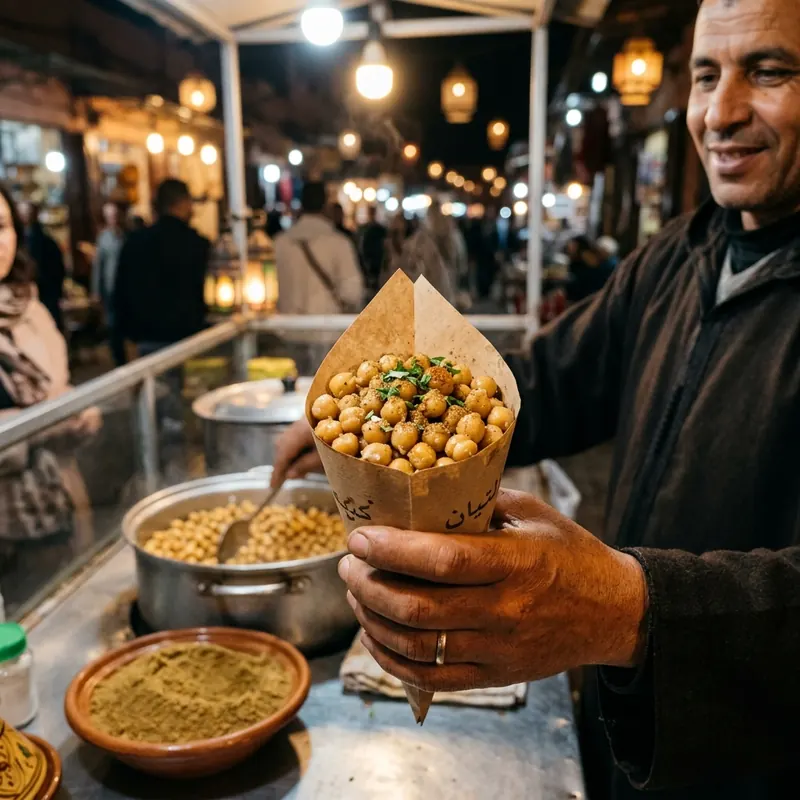
When November dampness settles over the cobblestones of Fes, Meknes, or Tangier, an evening transformation takes place across open plazas. As shopkeepers pull down iron shutters, the chill cuts straight through wool djellabas. That is when you look for plumes of white steam rising under the hiss of portable butane lanterns.
Beneath that steam sits a wooden handcart anchored by an aluminum cauldron murmuring over a blue flame. Inside, tens of thousands of plump chickpeas roll lazily in an aromatic broth seasoned with garlic heads, bay leaves, and sea salt. This is Hamouss Kamoun—often called simply El-Hamouss Skhoun (hot chickpeas). For generations, this humble street food has provided warmth, dignity, and comfort for the price of three small coins.
       +-------------------------------------------------------------+
       |               THE ANATOMY OF A STREET CART CONE             |
       +-------------------------------------------------------------+
       | [ The Vehicle ] Thick brown craft paper twisted into cone   |
       | [ The Core ]    Plump, slow-simmered chickpeas (soft crumb) |
       | [ The Broth ]   Light ladle drizzle carrying garlic & bay   |
       | [ The Crown ]   Heaped roasted wild cumin & coarse sea salt |
       | [ The Tool ]    Single wooden toothpick for spearing pearls |
       +-------------------------------------------------------------+
The Night Medinas and Cart Culture
The chickpea cart vendor (moul el-hamouss) belongs to a lineage of nighttime purveyors who appear precisely when daytime merchants depart. You find them stationed at strategic crossroads: outside Bab Boujloud in Fes, near Bab Doukkala in Marrakech, at Tangier’s Grand Socco, and along windy Atlantic seawalls.
The cart itself is an engineering marvel of efficiency. It holds the gas bottle underneath, shelves for paper cones, spice jars, and the insulated cauldron.
As customers approach, the vendor lifts the lid. A fragrant cloud billows outward, carrying the scent of legumes, bay laurel, and softened garlic. In Moroccan street life, the chickpea cauldron is an open hearth where social divisions fade. Students, dock workers, grandmothers walking home from prayers, and clerks all gather around the cart, waiting for steaming cones.
The Secret of the Overnight Cauldron
Boiling dried chickpeas over aggressive heat causes skins to split while centers remain chalky. The medina vendor relies on patience and ancestral culinary logic.
The ritual begins the night before. Vendors purchase dried Moroccan chickpeas (hummus beldi), which are smaller and more wrinkled than imported varieties, but possess a nuttier flavor. The legumes soak in cool water for twelve to fourteen hours with a spoonful of baking soda. This alkaline soak softens tough pectin in the seed coats, allowing water to penetrate deep into starches.
At dawn, the soaked legumes are rinsed and loaded into fresh water. The seasoning is restrained: whole garlic heads sliced crosswise, dried bay leaves (wreq sidna moussa), coarse sea salt, and a dried chili pepper for subtle warmth. The pot simmers gently for three hours over low flame. The chickpeas swell, absorbing aromatics until each legume turns tender as custard while remaining intact.
The Ritual of El-Qortas: The Paper Cone
The traditional vessel is el-qortas—a sheet of unbleached brown paper twisted with a flick of the wrist into a sturdy cone.
The vendor grasps the cone in one hand. With the other, he dips a perforated brass ladle into the cauldron, scooping a generous portion of steaming chickpeas. He shakes the ladle once over the pot so excess broth drains away, leaving just enough moisture to coat the legumes, then slides them into the cone.
Next comes the seasoning flourish. From jars on his shelf, the vendor dusts the crown of chickpeas with freshly roasted, ground cumin seeds (kamoun beldi) and crunchy sea salt. If you request it spicy (harr), he adds a pinch of dried cayenne pepper (soudaniya). He skewers a wooden toothpick into the top and hands the cone over.
On a freezing night, the paper becomes an immediate hand-warmer, radiating heat into cold palms. As you walk through dark alleys, you spear one tender chickpea after another. The exterior is coated in fragrant cumin and sharp salt; the interior collapses on your tongue like warm velvet.
The Biological Wisdom: Why Cumin Rules
The pairing of chickpeas and cumin is not merely an accident of flavor; it is a masterclass in traditional nutritional medicine passed down through generations.
Chickpeas contain complex starches that the human stomach cannot break down easily. When these starches pass into the large intestine, bacteria ferment them, producing uncomfortable gas and bloating. In Moroccan folk wisdom, legumes are described as tqeel (heavy on the belly).
Cumin (Cuminum cyminum) is nature’s antidote. The essential oils in freshly ground cumin seeds—chiefly cuminaldehyde and terpenes—act as potent carminative agents. They stimulate digestive enzymes, accelerate digestion, and relax the intestinal tract, neutralizing gas formation before it begins.
Moroccan grandmothers never cook chickpeas or lentils without cumin. In Hamouss Kamoun, the spice is applied raw and fresh at the very end, rather than boiled away into the broth. This preserves volatile aromatic oils, ensuring that every mouthful delivers peak flavor and digestive ease.
The Working-Class Hearth: Three Dirhams of Warmth
In modern Morocco, Hamouss Kamoun remains fiercely accessible. For three to five dirhams, anyone can step up to the cart and walk away with a nourishing, protein-dense meal that sustains them for hours.
For schoolboys running home from afternoon classes, the chickpea cone is an affordable luxury. For night guards watching construction sites in winter rain, it is life-saving fuel. For older men gathering near the mosque after evening prayer, the chickpea cart serves as an informal community club where neighbors trade town news and discuss soccer while steam warms their faces.
       +-------------------------------------------------------------+
       |               AUTHENTIC HOMESTYLE HAMOUSS KAMOUN            |
       +-------------------------------------------------------------+
       | * 500 g dried Moroccan chickpeas                            |
       | * 1 teaspoon baking soda (for soaking)                      |
       | * 1 whole head of garlic, unpeeled and cut crosswise        |
       | * 3 dried bay leaves (wreq sidna moussa)                    |
       | * 1 small whole dried red chili pepper                      |
       | * 1 tablespoon coarse sea salt                              |
       | * 2 tablespoons ground roasted cumin (kamoun beldi)         |
       | * 1 teaspoon hot cayenne pepper (soudaniya), optional       |
       +-------------------------------------------------------------+
Preparation Method:
- Soak chickpeas in water with baking soda for 12 hours. Drain and rinse.
- Place in a heavy pot, covering with fresh water by four inches.
- Add garlic, bay leaves, and dried chili. Bring to a boil, skimming off foam.
- Simmer gently over low heat for 2 to 2.5 hours until buttery soft.
- Stir in sea salt during final 20 minutes. Keep pot simmering on low.
- Ladle hot chickpeas into paper cones or bowls, retaining a splash of broth.
- Dust heavily with roasted ground cumin, sea salt, and cayenne. Serve hot.
Grandmother’s Rules for Boiling Chickpeas
- Salt at the End: Never salt cooking water early. Early salt tightens legume cell walls, keeping skins tough.
- Skim the Foam: When the pot first boils, skim grey foam with a wide spoon for a clean broth.
- Keep Water Warm: If liquid drops during cooking, add only boiling water. Cold water shocks legumes.
- Grind Cumin Fresh: Whole cumin seeds toasted in a dry pan and ground immediately yield far superior aroma.
Frequently Asked Questions
Why shouldn’t you boil cumin directly in the pot with chickpeas?
Boiling ground cumin for hours destroys volatile essential oils and turns broth bitter and dark. Street vendors cook chickpeas in a clean broth seasoned only with garlic and bay leaves. Cumin is dusted raw onto the steaming chickpeas at serving time, allowing its sweet, nutty aromatics to bloom under the rising heat.
How do street vendors get chickpeas tender without breaking them?
The secret is an extended soak with a pinch of baking soda, followed by slow simmering over low heat. The alkaline soak softens pectin in the skins, allowing water to hydrate starches evenly. A gentle simmer prevents legumes from colliding violently, keeping outer skins intact while interiors turn creamy.
Is Hamouss Kamoun eaten with bread or a toothpick?
Hamouss Kamoun is primarily enjoyed as a handheld street snack eaten plain with a wooden toothpick. You spear the spiced chickpeas while holding the warm paper cone. However, some customers request a bowl (zlafa) with extra broth, tearing pieces of crusty Moroccan bread (khobz) to dip into the broth.
Can canned chickpeas be used for a quick version?
While canned chickpeas offer a shortcut, they lack the velvety mouthfeel of dried legumes simmered slowly. In a pinch, rinse canned chickpeas, simmer in water with garlic and bay leaves for twenty minutes, and season generously with toasted cumin and sea salt before serving.
Experience the true heart of Moroccan heritage through its culinary traditions. Join us in preserving and honoring these ancestral recipes.
What People Are Saying
No comments yet. Be the first — we'd love to hear from you.
The Moroccan Food
Culturally Verified & Fact-CheckedThe Moroccan Food editorial team brings together native culinary researchers, heritage preservationists, and experienced home cooks across Marrakech, Fes, and Casablanca. Every recipe and cultural guide is reviewed against ancestral oral traditions and authentic regional practices.