Healthy Moroccan Grilled Squid: Tender Atlantic Calamari with Chermoula & Charred Lemon
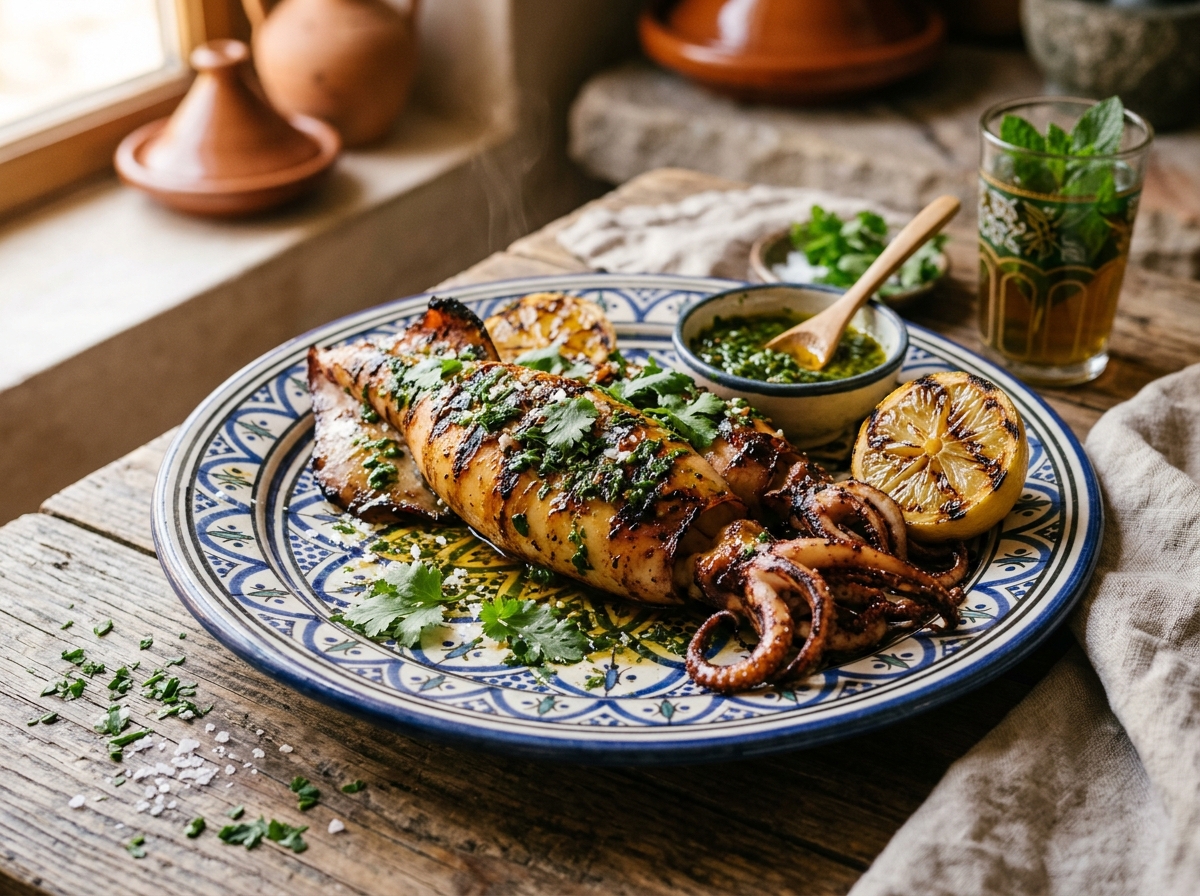
Healthy Moroccan Grilled Squid: Tender Atlantic Calamari with Chermoula & Charred Lemon
Along Morocco’s windswept Atlantic coastline, where the cold Canary Current collides with sun-warmed dunes, seafood is not a luxury dining experience. It is a way of life. In coastal ports like Essaouira with its blue wooden dhows, Safi with its ancient pottery quarters, and Agadir with its deep ocean docks, fishermen unload gleaming crates of Atlantic squid (Loligo vulgaris) every morning as mist burns off the water.
While Western restaurants frequently bury delicate calamari in heavy flour batter and submerge it in bubbling fryers, Moroccan coastal cooks take an entirely different approach. They celebrate the fresh sweetness of the squid by keeping it whole, scoring the flesh, marinating it briefly in herb-packed green chermoula, and searing it over fiercely hot charcoal for mere minutes. The result is a clean, tender, and deeply nutritious Mediterranean classic.
Nutritional Powerhouse: Why Grilled Squid Belongs in a Healthy Diet
Squid is one of the most nutrient-dense proteins in the ocean, yet it remains widely misunderstood due to deep-fried bar snacks. When prepared over a clean grill without batter, calamari provides exceptional nutritional benefits:
- Ultra-Lean Protein: A 100-gram serving of grilled squid delivers approximately 16 to 18 grams of complete protein with less than 2 grams of fat and under 90 calories.
- Rich in Vitamin B12 and B2: Critical for energy production, neurological health, and red blood cell formation.
- Packed with Minerals: Squid is an extraordinary natural source of selenium (a powerful antioxidant supporting thyroid function) and copper (essential for iron absorption).
- Omega-3 Fatty Acids: Contains beneficial EPA and DHA fatty acids that support heart health and lower inflammation.
- Zero Heavy Carbs: Flash-grilling whole squid eliminates flour coatings, keeping the dish naturally gluten-free and keto-friendly.
When paired with cold-pressed olive oil, fresh lemon juice, garlic, and herbs, Moroccan grilled squid represents the Mediterranean diet at its purest.
The Atlantic Heritage: Essaouira, Safi, and Agadir
The Atlantic waters off southern Morocco are among the richest marine ecosystems on earth. The Canary Current brings nutrient-dense upwellings that sustain robust schools of fish and mollusks. Atlantic squid from this coastline have thick, succulent mantle walls that hold up beautifully over wood embers.
In Essaouira, wooden harbor stalls grill the morning catch directly over charcoal troughs filled with sea gravel and embers. There are no intricate plating rules. The fishermen rely on two principles: absolute freshness and rapid, high-temperature cooking. The sea salt in the air, the crackle of wood charcoal, and the bright acidity of local lemons are all the seasoning fresh squid needs.
The Master’s Secret: How to Keep Squid Tender, Never Rubbery
The greatest fear home cooks face when preparing squid is ending up with tough, rubbery rings. Squid meat consists of tightly wound, cross-hatched collagen and muscle fibers. If cooked incorrectly, those fibers contract into hard knots.
To guarantee meltingly tender grilled squid, follow these rules:
1. The Diamond Scoring Technique
The single most effective secret used by Moroccan dockside grillers is scoring the mantle:
- Lay the cleaned, hollow squid tube flat on a cutting board.
- Using a sharp chef’s knife, slice down one side to open the tube flat like an open book.
- Place the squid skin-side down (the shiny inside surface facing up).
- Make shallow diagonal incisions about 1/4 inch apart across the entire surface, taking care not to cut all the way through the flesh.
- Rotate the squid 90 degrees and repeat, creating a delicate criss-cross diamond pattern.
This scoring severs the dense surface collagen fibers, allowing heat and marinade to penetrate instantly. When it hits the grill, the scored squid curls into attractive, caramelized ripples with crisp edges while remaining soft and tender throughout.
2. Flash-Grilling: The Two-Minute Rule
Squid follows a strict culinary rule: it must be cooked either for less than 3 minutes over searing heat, or braised for over 45 minutes in a slow stew. Anything in between results in tough meat. For grilling, heat your barbecue or cast-iron grill pan until it smokes. Place the squid on the grate and leave it undisturbed for 90 seconds, flip once for another 60 to 90 seconds, and remove it immediately to a warm platter.
Authentic Green Chermoula: The Heart of Moroccan Seafood
Chermoula is Morocco’s legendary herb marinade, used across the country to season everything from whole baked fish to grilled prawns. Unlike heavy commercial sauces, an authentic green chermoula is bright, raw, and pungent with fresh herbs and warming spices.
Ingredients for Coastal Green Chermoula:
- Fresh Flat-Leaf Cilantro (Kousbor) and Parsley (Maâqdous): Finely minced, forming the aromatic green base.
- Fresh Garlic: Crushed into a smooth paste with coarse sea salt using a brass mortar (mahraz).
- Roasted Moroccan Cumin (Kamoun Beldi): Toasted whole seeds, freshly ground, delivering an earthy aroma without bitterness.
- Sweet Paprika (Felfla Hemra): Adds gentle sweetness and a subtle reddish tint.
- Pinch of Cayenne or Harissa: For faint warmth on the palate.
- Fresh Lemon Juice: Freshly squeezed, providing crisp acidity.
- Extra Virgin Olive Oil: First cold-pressed oil to bind the herbs and coat the seafood.
Kitchen Tip: Do not marinate squid for hours. Because lemon juice contains citric acid that denatures delicate seafood proteins, marinate the squid for just 15 to 20 minutes before grilling.
The Complete Recipe: Moroccan Grilled Calamari
- Prep Time: 20 minutes
- Marinating Time: 15 minutes
- Cook Time: 3 minutes
- Servings: 4
Ingredients:
- 1.5 lbs (700g) fresh whole Atlantic squid, cleaned, tubes opened flat and tentacles reserved
- 1 cup fresh cilantro leaves, finely minced
- 1/2 cup fresh flat-leaf parsley, finely minced
- 4 cloves garlic, crushed to a smooth paste with 1 teaspoon sea salt
- 1.5 tablespoons ground roasted cumin
- 1 tablespoon sweet paprika
- 1/2 teaspoon cayenne pepper or homemade harissa paste
- 1/4 cup freshly squeezed lemon juice
- 1/3 cup cold-pressed extra virgin olive oil
- 2 fresh lemons, halved (for grilling)
- Coarse sea salt and cracked black pepper to taste
Instructions:
- Prepare the Chermoula: In a ceramic bowl, whisk together minced cilantro, parsley, crushed garlic paste, ground cumin, paprika, cayenne, fresh lemon juice, and olive oil until an aromatic emulsion forms. Season with a pinch of sea salt.
- Score the Squid: Pat the cleaned squid tubes thoroughly dry with paper towels. Open flat and score the inner surface in a diamond grid pattern.
- Marinate: Place the scored squid tubes and whole tentacles into the chermoula, tossing gently with your hands to coat every surface. Let stand at room temperature for 15 to 20 minutes.
- Fire Up the Grill: Prepare a charcoal fire with white-hot coals, or heat a heavy ridged cast-iron grill pan over high heat until smoking hot. Lightly oil the grates.
- Flash-Grill: Place the squid pieces onto the hot grill, scored side down. They will immediately sizzle and begin curling. Grill undisturbed for 90 seconds. Flip the tubes and tentacles using tongs and grill for an additional 60 to 90 seconds until opaque with caramelized grill marks.
- Char the Lemons: Place the lemon halves cut-side down directly over the hottest part of the grill for 2 minutes until blackened and caramelized.
- Serve Immediately: Transfer the grilled squid to a warm platter. Squeeze the warm, caramelized lemon juice over the top, drizzle with any remaining fresh chermoula, and sprinkle with sea salt flakes.
Coastal Accompaniments
Serve this grilled calamari straight from the fire alongside simple Moroccan sides:
- Chlada Maghribiya: Diced peeled ripe tomatoes, crisp Persian cucumbers, and finely minced red onion dressed with lemon juice, parsley, and olive oil.
- Zaalouk: Warm roasted eggplant and tomato dip mashed with garlic, cumin, and coriander.
- Crusty Whole Wheat Khobz: For scooping up every drop of charred herb oil.
Enjoying freshly grilled Atlantic squid with fragrant chermoula connects you directly to the salty breeze of Morocco’s ancient harbors.
Frequently Asked Questions
Why does grilled squid turn tough and rubbery?
Squid turns rubbery when cooked over low heat or left on the fire for too long. Its dense muscle fibers contract into tough bands when overcooked. To keep squid tender, flash-grill it over intense, smoking-hot heat for no more than 2 to 3 minutes total, or score the flesh in a diamond pattern to sever surface fibers before cooking.
Should I use fresh or frozen squid for this recipe?
Both work well. Fresh Atlantic squid from a reputable fishmonger has superior sweetness and texture. However, high-quality flash-frozen whole squid is an excellent alternative, as commercial freezing can actually help tenderize the meat fibers. Thaw frozen squid slowly in the refrigerator overnight and pat completely dry before marinating.
Can I prepare this recipe on an indoor stovetop?
Yes. A heavy ridged cast-iron grill pan or flat griddle works exceptionally well. Heat the pan over high heat until smoking hot before adding the squid. Avoid crowding the pan, which causes the squid to steam in its own juices rather than sear; cook in batches if necessary.
What is the difference between green and red Chermoula?
Green chermoula uses an abundance of fresh green herbs (cilantro and flat parsley), garlic, lemon juice, cumin, and olive oil, making it ideal for lighter grilled seafood. Red chermoula incorporates a higher proportion of sweet paprika, roasted red bell pepper paste, tomato paste, and sometimes preserved lemon rind, providing a deeper flavor traditionally used in hearty baked fish tagines.
Experience the true heart of Moroccan heritage through its culinary traditions. Join us in preserving and honoring these ancestral recipes.
What People Are Saying
No comments yet. Be the first — we'd love to hear from you.
The Moroccan Food
Culturally Verified & Fact-CheckedThe Moroccan Food editorial team brings together native culinary researchers, heritage preservationists, and experienced home cooks across Marrakech, Fes, and Casablanca. Every recipe and cultural guide is reviewed against ancestral oral traditions and authentic regional practices.