Henna: The Sacred Plant of Celebration, Blessing, and Botanical Healing in Morocco
archived: false
In every traditional Moroccan life milestone, from the joyous baptism of a newborn child (Sebou) and a boy’s circumcision to religious holidays and the emotional climax of a traditional wedding, the unmistakable earthy, freshly mown hay aroma of Henna (Lawsonia inermis) fills the air. Known in Moroccan culture as the plant of Baraka (spiritual grace and divine blessing), Henna represents far more than temporary skin decoration; it is a sacred talisman of joy, protection, and cooling botanical medicine woven into the fabric of Maghrebi identity.
While modern tourists admire intricate geometric henna tattoos drawn across the hands of Medina brides, elder Amazigh women across the Atlas Mountains and southern desert oases understand henna in its purest ancestral form: a full-palm wash of rich copper pigment applied to bring cooling relief to tired feet, condition thick hair, and sanctify life passages.
The Botany of Lawsonia inermis and Lawsone Chemistry
Lawsonia inermis is a tall desert-loving flowering shrub belonging to the Lythraceae family:
- The Southern Terroir: In Morocco, the finest henna is cultivated in the warm, sun-drenched oases of the Draa Valley around Zagora and Alnif. The intense desert heat, combined with mineral-rich soils irrigated by ancient river channels, forces the shrub to synthesize high concentrations of its active pigment molecule.
- The Lawsone Molecule: The active coloring compound in henna leaves is lawsone (2-hydroxy-1,4-naphthoquinone). Lawsone has a natural chemical affinity for keratin, the structural protein composing human skin, hair, and fingernails.
- The Staining Mechanism: When dry, pulverized henna leaves are mixed with a mildly acidic liquid (such as warm tea, lemon juice, or orange blossom water), the cell walls break down, releasing lawsone aglycones. When applied to the skin, these molecules migrate into the keratin layers, oxidizing upon contact with atmospheric oxygen from light orange into a deep, rich, mahogany-burgundy stain over forty-eight hours.
The Moroccan Bridal Henna Ceremony (Laylat el-Henna)
The wedding henna ceremony is an intimate ritual held on the eve of the nuptials. Surrounded by female relatives, lifelong friends, and elder matriarchs singing ancestral polyphonic chants (Aâroubi), the bride sits draped in pure white silk or emerald green velvet:
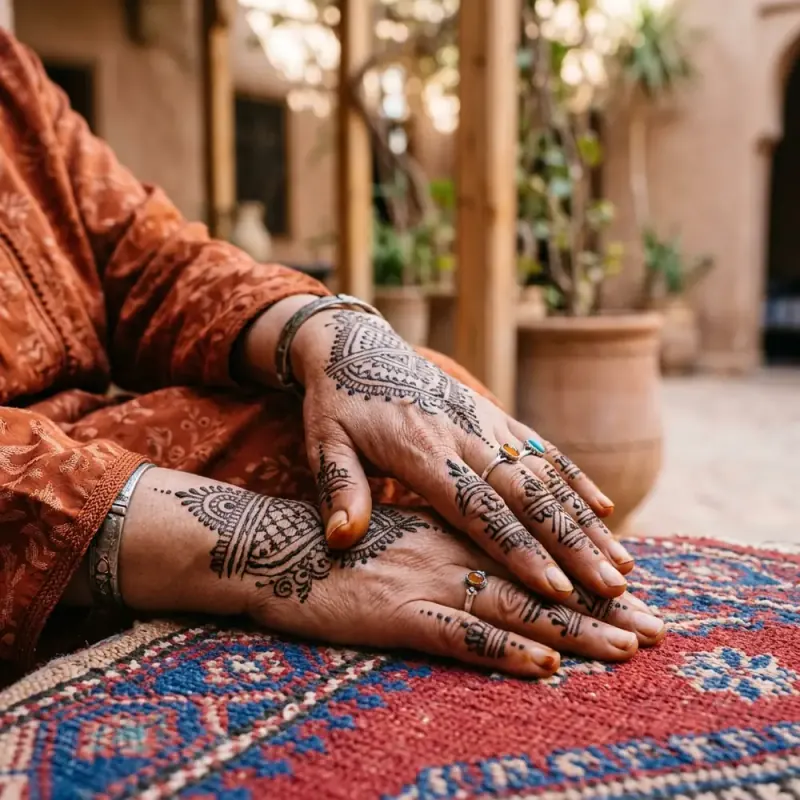
- The Henna Artisan (Neqqasha): A master henna artist applies the freshly mixed paste using a traditional fine glass syringe or hollow reed pen, drawing intricate Amazigh symbols and Andalusian arabesques across the bride’s palms, fingers, and feet.
- The Symbolic Language: In Amazigh cosmology, henna motifs are not merely decorative. Geometric triangles, diamond lozenges (Ain), and chevron zigzags represent fertility, ward off the evil eye, protect the bride during her transition into married life, and invoke marital prosperity.
- The Natural Setting: The moist paste is left to dry on the skin for several hours, basted gently with a syrup of lemon juice and sugar to keep the paste supple and prevent cracking. Once scraped away, the stain is rubbed with sweet almond oil, deepening into rich mahogany.
Botanical Medicine: The Cooling Antiseptic Leaf
Beyond celebratory ornamentation, henna functions as an indispensable staple of Moroccan folk medicine:
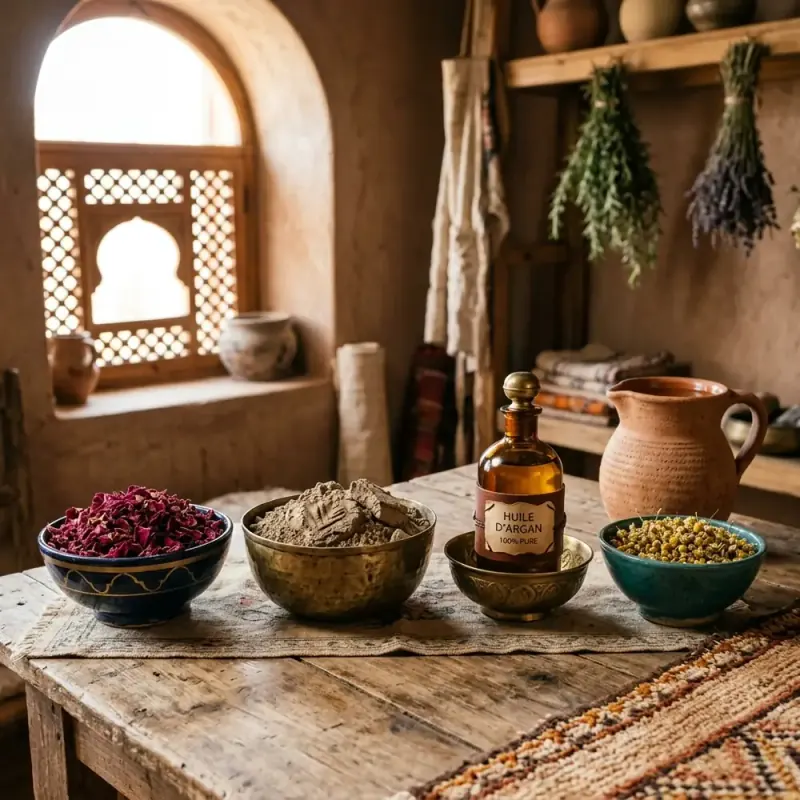
- Natural Hair Conditioner: Mixed with warm water and a tablespoon of extra-virgin argan oil, green henna paste applied to the scalp cleanses excess sebum, eliminates fungal dandruff (Malassezia), strengthens the hair cuticle, and imparts a glossy chestnut-copper sheen.
- Thermal Foot Baths (Tazrfa): Rural farmers and mountain hikers coat the soles of their feet in thick henna paste. Henna contains natural antimicrobial tannins that soothe blistered skin, prevent athlete’s foot, and produce a long-lasting physiological cooling sensation across the lower extremities under desert heat.
- Natural Wound Astringent: Finely sifted henna powder dusted onto minor burns, blisters, or skin abrasions forms a protective antimicrobial crust that accelerates natural wound healing.
The Critical Warning: Avoid Chemical “Black Henna”
Travelers exploring public squares like Jemaa el-Fna must be vigilant regarding toxic counterfeit pastes labeled as “Black Henna”:
- Pure Natural Henna: Is olive-green in powder form, smells like dried hay or tea, requires hours to develop color, and stains skin exclusively in shades of orange, rust, red, and mahogany brown.
- Toxic “Black Henna”: Contains hazardous industrial coal-tar dyes, specifically para-phenylenediamine (PPD), added to produce an instant black stain. PPD is a potent transdermal allergen that can cause severe chemical burns, permanent scarring, and lifelong autoimmune sensitization. Never accept black henna on your skin.
Frequently Asked Questions
How long does an authentic Moroccan henna tattoo last?
A natural henna stain typically lasts between one to three weeks. The longevity depends on skin thickness and exfoliation rates: stains on palms and soles, where keratin is thickest, remain visible longest, gradually fading as outer epidermal cells naturally shed.
How do I make my henna stain darker naturally?
To achieve a deep mahogany stain without synthetic chemicals, leave the natural paste on the skin for at least four to six hours, keep the skin warm, baste the dry paste with lemon-sugar syrup, and avoid washing the area with water and chemical soaps for the first twenty-four hours after removing the crust, applying pure argan oil instead.
Can men use henna in Moroccan tradition?
Yes. During weddings and Eid celebrations, Moroccan men traditionally receive a circular coin-sized dab of pure henna placed in the center of their right palm as a sign of blessing, joy, and spiritual purification, without elaborate decorative tattooing.
Does henna dry out hair?
When used alone, henna’s high tannin content can make hair feel temporarily stiff. Moroccan women always counteract this by folding two tablespoons of pure argan oil, olive oil, or rich goat’s milk yogurt into their henna hair masks to ensure deep moisture and silky softness.
Experience the true heart of Moroccan heritage through its culinary traditions. Join us in preserving and honoring these ancestral recipes.
What People Are Saying
No comments yet. Be the first — we'd love to hear from you.
Samira
Culturally Verified & Fact-CheckedSamira researches rural foodways and wild mountain herbs across the High Atlas and Rif, championing local farmers and small-scale cooperatives.