Ifrane in Winter: Why Morocco Has a Town That Looks Like Switzerland (and What to Do There)
Ifrane in Winter: Why Morocco Has a Town That Looks Like Switzerland (and What to Do There)
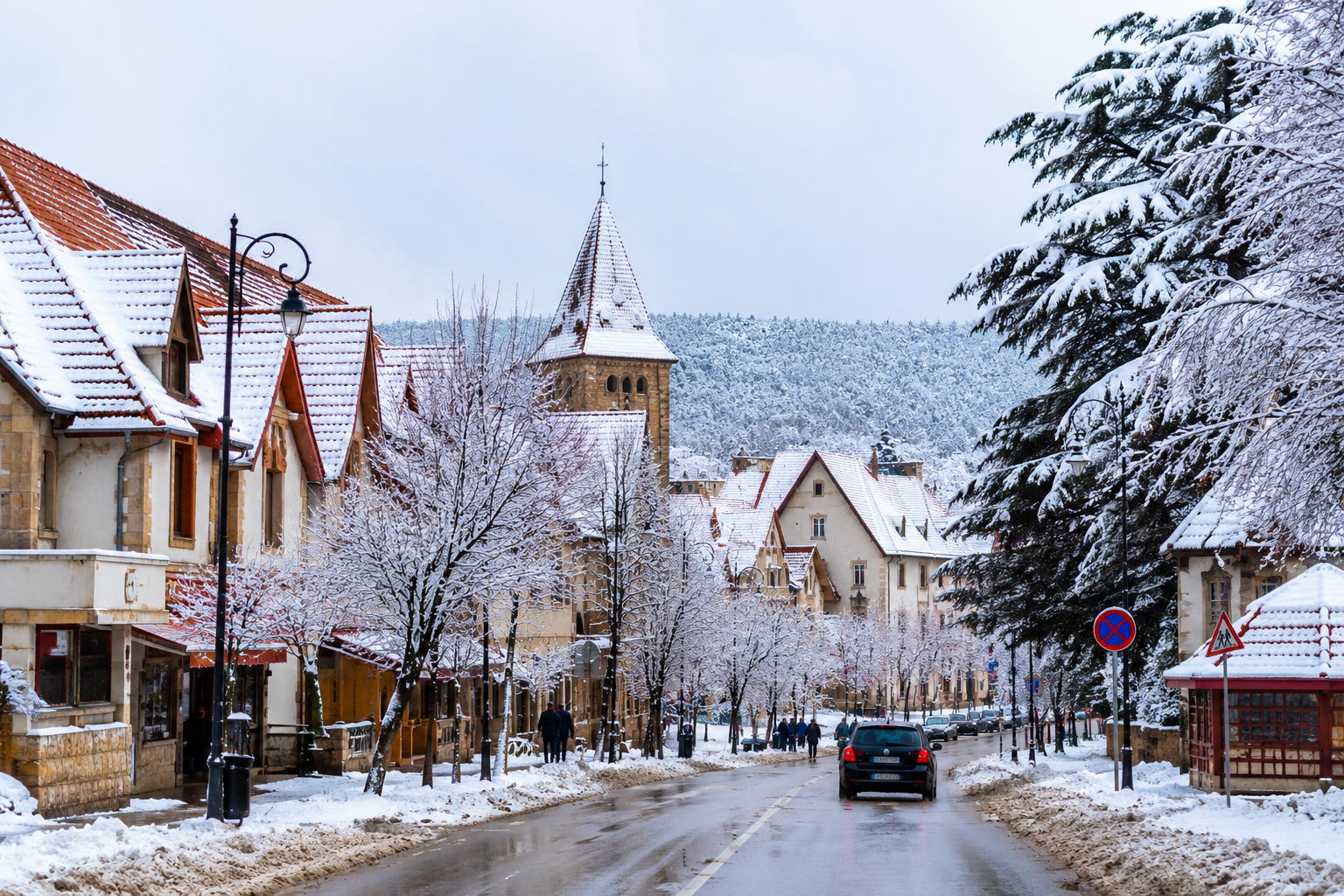
If you showed someone a photograph of Ifrane’s town centre in December — the snow-covered stone chalets, the conical roofs, the lion sculpture in the public park, the neat streetlamps — and asked them to guess the country, Morocco would be very low on the list.
That is the whole point of Ifrane, and also the source of its considerable charm.
The Peculiar History of a European Town in North Africa
Ifrane was built by the French Protectorate administration in the 1930s as a retreat from the heat of the Moroccan lowlands. The architects — who were designing French colonial infrastructure across Morocco — decided to build it in the style of a French Alpine resort village.
So they did. Stone chalets. Pitched roofs to handle snow. Wide boulevards with trees. A town plan that makes geometrical sense. No medina, no kasbah, no winding alleys.
The result is a planned town of about 30,000 inhabitants sitting at 1,650 metres altitude in the Middle Atlas Mountains, surrounded by cedar forests, that genuinely looks like it was airlifted from the Alps.
Moroccan university students (Al Akhawayn University, one of Morocco’s most prestigious English-language institutions, is based here) call it “Switzerland.” Foreign visitors who come expecting the Morocco of their imagination are baffled. Visitors who come specifically for its absurd incongruity are delighted.
The Climate: What Ifrane’s Winter Actually Looks Like
The Middle Atlas receives more precipitation than almost anywhere else in Morocco. In winter, this comes as snow.
Average snowfall: December through February, Ifrane receives regular snow, and the surrounding mountains can hold significant snow cover through March. The town itself sees snowfall events most winters — some years dramatic, some modest.
The record: Ifrane recorded -23.9°C in 1935 — the lowest temperature ever recorded in Africa. This is not a typical winter day (average January temperatures hover around 0°C overnight, 8°C daytime), but it illustrates the seriousness of the climate.
For visitors: Pack for genuine cold. Not Moroccan cold (a light jacket), but European mountain winter cold. Proper coat, hat, gloves.
The Cedar Forest: Morocco’s Most Beautiful Drive
The N8 road between Ifrane and Azrou (20km south) passes through one of the most beautiful sections of Morocco’s cedrus atlantica forest. These are not small decorative trees. Atlantic cedar grows to 40+ metres in height, with trunks 2–3 metres in diameter, and individual trees here are several hundred years old.
In winter, the forest is snow-covered and quiet. You drive through cathedral-like columns of ancient timber with the road entirely to yourself in the early morning.
The other famous inhabitants of this forest: Barbary macaques (Macaca sylvanus), the only wild primate population in Africa north of the Sahara. There is a population of several hundred in the Azrou cedar forest, accustomed to human presence. You can watch them from the road or walk the forest trails.
Important note on the macaques: Do not feed them, despite what local vendors selling monkey treats will tell you. Feeding has disrupted their natural behaviour and diet. Watch from a respectful distance.
Skiing Near Ifrane: What Exists and What to Expect
Morocco has two ski resorts that function in good snow years. Neither would satisfy a serious European skier. Both are charming in their own way.
Michlifen Ski Resort (20km from Ifrane)
What it is: A small resort with 3 ski runs, 2 drag lifts, and equipment rental. The infrastructure is basic. The runs are short (the longest is under 2km). The crowd is almost entirely Moroccan — families and young people from Fes and Casablanca coming for the novelty and the snow.
When it opens: Only when there is sufficient snow — typically January through March, and only in years with adequate precipitation. A dry winter means no skiing.
The vibe: Festive chaos. Queues for rental equipment. Families having snowball fights. Hot merguez sandwiches from a stall at the base. Nothing like a French resort, entirely like Morocco having the most fun it can with a mountain and some snow.
Cost: Equipment rental approximately 150–250 MAD/day. Lift pass approximately 100–150 MAD/day.
Oukaïmeden (120km from Marrakech, High Atlas)
The larger and more developed of Morocco’s two resorts, with 8 runs and more reliable snow at higher altitude (2,600m base). Still modest by Alpine standards. Worth a day trip from Marrakech in good snow conditions.
What to Do in Ifrane Beyond Skiing
Walk the town
Ifrane is a genuinely pleasant place to walk. The residential streets with their European architecture, the public park with the famous lion sculpture (carved from a single stone by a German prisoner of war during World War II, according to local tradition), the lakeside walk in the Ifrane Nature Reserve.
The Ifrane National Park
The broader Ifrane National Park covers 125,000 hectares of Middle Atlas forest. It contains several small lakes (the largest being Dayet Aoua) that are important bird habitats — home to migratory species in winter including northern pintail, teal, and occasionally flamingos.
A half-day walk around Dayet Aoua in winter is one of Morocco’s more peaceful outdoor experiences.
Al Akhawayn University
Worth visiting as an architectural curiosity if nothing else. The campus, built in the 1990s with Saudi funding, is designed in traditional Moroccan courtyard style and sits incongruously well in the European-style town. The university library and main buildings are open to visitors during daytime hours.
Getting to Ifrane
From Fes: 65km on the N8 motorway, approximately 1 hour. The most convenient connection — Fes is the natural base for exploring the Middle Atlas.
From Marrakech: Approximately 350km, 4–5 hours. A long drive, but doable as part of a northern Morocco circuit.
By CTM bus: Fes to Ifrane approximately 1.5 hours, with daily departures. The bus station is at the edge of town.
By grand taxi: From Fes, shared grand taxis run to Ifrane regularly, leaving from the Fes bus station area. About 1.5 hours and 35–50 MAD per person.
Frequently Asked Questions
Is Ifrane worth visiting in summer? Yes, though differently. In summer, Ifrane is pleasantly cool compared to Fes and Marrakech (daytime temperatures around 25–30°C) and serves as a retreat for Moroccans escaping the heat. The forests are accessible for hiking. It lacks the winter magic but is very comfortable.
Where should I stay in Ifrane? Ifrane has several hotels ranging from the modest to the upscale. The Michlifen Resort and Golf (associated with the ski area) is the highest-end option. In town, smaller hotels and guesthouses offer comfortable rooms for 400–800 MAD/night.
Can I combine Ifrane and Fes in one trip? Easily. Ifrane makes an excellent day trip from Fes, or a one-night extension to a Fes visit. Many travellers combine: Fes → Ifrane overnight → Azrou cedar forest → back to Fes or continue to Meknes.
Is the road to Ifrane safe in winter snow? The N8 from Fes to Ifrane is generally kept clear by road maintenance crews. But in heavy snowfall events, the road can become slippery. Check conditions before departing. Snow chains are available for rental in Ifrane if needed. A 4WD is not required for the town itself but helps for unpaved forest roads.
Experience the true heart of Moroccan heritage through its culinary traditions. Join us in preserving and honoring these ancestral recipes.
What People Are Saying
No comments yet. Be the first — we'd love to hear from you.
The Moroccan Editorial Team
Culturally Verified & Fact-CheckedThe Moroccan Food editorial team brings together native culinary researchers, heritage preservationists, and experienced home cooks across Marrakech, Fes, and Casablanca. Every recipe and cultural guide is reviewed against ancestral oral traditions and authentic regional practices.