The Damask Rose of Kelâat M'Gouna: Valley of the Roses, Traditional Steam Hydro-Distillation & Luxury Perfumery
The Damask Rose of Kelâat M’Gouna: Valley of the Roses, Traditional Steam Hydro-Distillation & Luxury Perfumery
Each spring, as snowmelt from the towering 4,000-meter peaks of Mount M’Goun rushes down through the dramatic canyons of the High Atlas, one of the world’s most fragrant botanical transformations sweeps through southern Morocco. The Dadès River basin, centering around the desert oasis citadel of Kelâat M’Gouna, erupts into millions of intoxicating pink blossoms, transforming this arid canyon landscape into the celebrated Valley of the Roses (Vallée des Roses).
The flower cultivated here is no ordinary garden ornament: it is the noble Damask Rose (Rosa damascena trigintipetala), brought across the Mediterranean centuries ago by returning pilgrims from Damascus. Today, awarded Morocco’s Appellation d’Origine Protégée (AOP Rose de Kelâat M’Gouna), this delicate, thirty-petaled desert rose supplies the world’s most prestigious perfume houses in Paris, Grasse, and Milan with pure rose essential oil (Attar de Rose), while providing Moroccan gastronomy and apothecary art with its most refined aromatic elixir: pure distilled rosewater (Ma’ Ward).
This definitive agricultural and sensory report examines the river terrace microclimate of the Dadès Valley, official harvest and distillation metrics from ORMVA Ouarzazate and MAPMDREF, the chemistry of volatile rose alcohols, and the revered role of distilled rose petals in Moroccan imperial confectionery.
The Oasis Microclimate: Living Hedgerows of the M’Goun Basin
The unique potency of the Kelâat M’Gouna Damask rose is inseparable from its geographic and agricultural environment:
- The Living Hedgerow Architecture (Haies Vives): In Kelâat M’Gouna, roses are not planted in open, monoculture industrial fields. Instead, for centuries, local Amazigh farmers planted dense, spiny rose bushes as living defensive boundaries along the borders of their terraced plots. These thorny fences protect inner food crops (alfalfa, barley, broad beans, and fruit orchards) from desert winds and roaming sheep, while creating an interconnected network of over 4,000 kilometers of blooming hedges.
- High-Altitude Alpine Solar Intensity: Situated at elevations between 1,400 and 1,600 meters above sea level, the valley combines intense, clear mountain ultraviolet radiation with crisp, dry desert air. This solar intensity forces the rose petals to synthesize exceptionally high concentrations of volatile monoterpene alcohols to shield their reproductive pollen.
- Snowmelt Mineral Irrigation: The bushes are irrigated via ancestral gravity channels (Targa) carrying mineral-rich spring and snowmelt water descending directly from the limestone gorges of the Central High Atlas.
- The Ephemeral Four-Week Harvest: The blooming window is fleeting, opening in mid-April and closing by mid-May.
Official Harvest & Distillation Statistics (ORMVA/O & MAPMDREF)
The economic governance of the rose sector is steered by the Regional Office of Agricultural Development of Ouarzazate (ORMVA/O) alongside the Federation of Rose Producers (FIMAROSE) and the Ministry of Agriculture, Maritime Fisheries, Rural Development, Water and Forests (MAPMDREF).
The table below compiles certified multi-year audits from official regional agricultural registries:
| Strategic Sector Indicator | Official Quantitative Value | Regulatory & Institutional Source |
|---|---|---|
| Total Rose Hedgerow Length | 4,250 Linear Kilometers of Continuous Hedges | ORMVA Ouarzazate Agricultural Cadastre |
| Annual Fresh Petal Harvest | 3,800 to 4,500 Metric Tons of Fresh Blossoms | MAPMDREF National Terroir Directorate |
| Petals Required per 1 Liter of Oil | 4,000 to 5,000 Kilograms of Fresh Petals | FIMAROSE Distillation Extraction Standard |
| Annual Pure Rose Essential Oil | 800 to 1,000 Liters (Ultra-Concentrated Attar) | Maison de la Rose de Kelâat M’Gouna |
| Annual Distilled Rosewater | 1,400 to 1,800 Metric Tons of Food-Grade Hydrosol | Regional Processing & Distillery Census |
| Certified Geographical Label | AOP Rose de Kelâat M’Gouna (Awarded 2011) | Official Bulletin of the Kingdom of Morocco |
| Active Female Cooperatives | 38 Certified Cooperatives (>2,400 Harvesters) | Office for the Development of Cooperation (ODCO) |
| Annual Cultural Celebration | International Festival of the Rose (Moussem des Roses) | Province of Tinghir & Ministry of Tourism |
Because it requires approximately four metric tons of hand-picked petals to yield a single liter of pure, unadulterated rose essential oil, authentic Moroccan Attar de Rose is among the most expensive natural botanical substances in the international luxury fragrance market, commanding up to 100,000 MAD ($10,000 USD) per kilogram.
The Dawn Harvest & Copper Steam Distillation
The harvest of the Damask rose is an ethereal yet physically grueling dawn ritual:
- The 5:00 AM Plucking: Petals must be gathered between dawn and 8:30 AM before the sun’s heat evaporates the volatile essential oils trapped within the cellular glands of the petals. Amazigh women move with astonishing dexterity along the thorny hedgerows, plucking each fully opened blossom at the calyx with a swift flick of the thumb and forefinger, filling large woven reed baskets (Tasallat).
- Immediate Transport: Petals are brought to the cooperative distilleries within hours of plucking. If left sitting in heaps, internal bacterial fermentation begins rapidly, destroying the delicate floral top notes.
- The Steam Distillation (Al-Taqteer): In traditional artisanal distilleries, fresh petals are loaded into massive hammered copper alembics (Al-Qattara). Water heated beneath the perforated basket turns to steam, rising through the dense bed of petals and bursting the microscopic oil glands. The aromatic steam travels through a cooled coiled pipe (Al-Qalb), condensing into two distinct phases:
- The Essential Oil (Attar): The lighter, golden-green concentrated oil floats to the surface and is skimmed off with micropipettes.
- The Hydrosol (Pure Rosewater): The aromatic condensed water, holding water-soluble floral compounds, is decanted into dark glass demijohns, creating 100% natural pure Ma’ Ward.
The Chemistry of Scent: Geraniol, Citronellol & Nerol
Under gas chromatography-mass spectrometry (GC-MS) laboratory analysis, authentic Kelâat M’Gouna rose extract reveals an extraordinarily sophisticated biochemical profile:
- Citronellol (35 to 45%): A natural monoterpenoid alcohol responsible for the fresh, clean, lingering green-citrus rose note.
- Geraniol (18 to 26%): Delivers the deep, velvety, sweet floral heart of the fragrance, celebrated for its natural antimicrobial and antioxidant properties.
- Nerol (8 to 12%): Imparts crisp, slightly spicy, aquatic freshness that prevents the floral scent from becoming heavy or cloying.
- Phenylethyl Alcohol (PEA): The warm, honeyed aromatic compound naturally retained in high concentrations in pure distilled rosewater (Ma’ Ward), famous for its natural mood-elevating and calming neuro-receptive effects.
Imperial Gastronomy: The Scented Court of Morocco
While industrial European manufacturers use synthetic artificial rose flavors in candy, authentic Moroccan cuisine uses strictly natural, double-distilled Ma’ Ward:
- The Imperial M’rch Ritual: Before and after royal feasts, palace servants circulate among guests carrying tall, slender silver sprinkler bottles with long fluted necks, known as M’rch. Guests hold out their palms as cool, fragrant rosewater is sprinkled over their hands, refreshing the senses and scenting the room with wild mountain petals.
- Kaab el Ghazal Perfuming: In the imperial confectioneries of Fes and Tetouan, master pastry chefs knead whole blanched almond paste with pure butter, fine sugar, and a few drops of Kelâat M’Gouna rosewater. The gentle floral aroma balances the dense richness of the sweet almond fat.
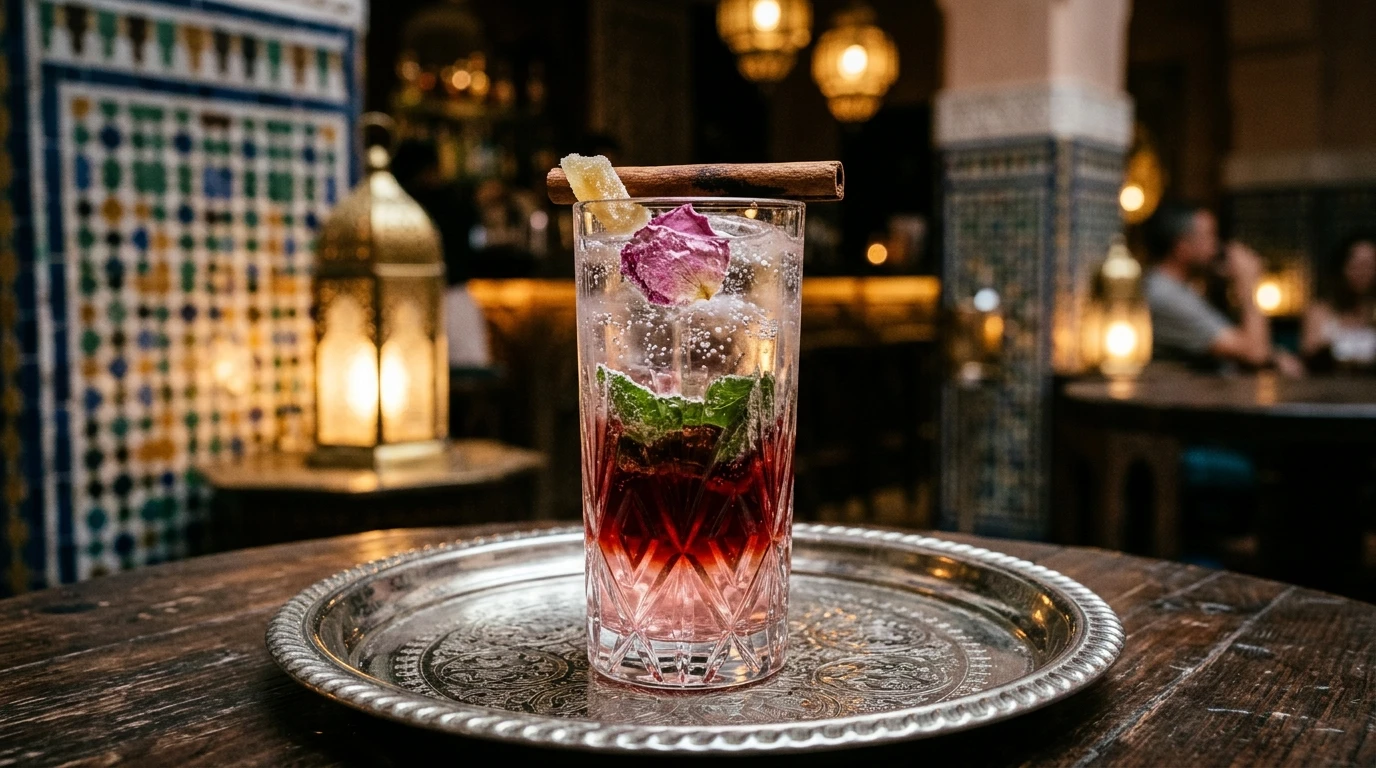
- Almond Milk with Rosewater (Sharbat b’Louz): The quintessential beverage of Moroccan weddings and royal receptions. Chilled, freshly pressed almond milk sweetened with light syrup and perfumed with pure rosewater, served in crystalline glasses garnished with whole roasted pine nuts.
- Fruit Salades & Milk Desserts: Strawberries, fresh figs, and crisp apples sliced paper-thin and drizzled with raw mountain honey, a splash of rosewater, and a dusting of green pistachio powder.
Frequently Asked Questions (FAQ)
How can I distinguish pure natural rosewater from synthetic commercial water?
Pure, natural AOP rosewater is produced exclusively through the steam distillation of real Rosa damascena petals, contains zero synthetic fragrance chemicals, zero alcohol, and zero chemical preservatives. Its aroma is subtle, fresh, slightly earthy, and smells of fresh petals and morning green tea. Synthetic supermarket water is made of water mixed with chemical rose perfume and emulsifiers, smelling overwhelmingly artificial and sweet like industrial soap.
Why does true Kelâat M’Gouna rose essential oil solidify in cool weather?
Authentic pure rose essential oil (Attar) naturally contains natural plant waxes (stearoptenes). At room temperatures below 20°C, these natural waxes cause the oil to crystallize into delicate, pale green crystals. Warming the glass bottle gently between your palms returns the oil to a completely clear, fluid golden state in seconds. This natural crystallization is proof of 100% purity without chemical solvents!
What are the cosmetic benefits of pure Kelâat M’Gouna rosewater?
Natural rosewater is a phenomenal dermatological tonic. With a natural skin-friendly pH of 5.5, it soothes facial redness, tightens pores, balances sebum production in oily and dry skin, and delivers immediate, refreshing hydration to tired or sun-exposed skin.
Experience the true heart of Moroccan heritage through its culinary traditions. Join us in preserving and honoring these ancestral recipes.
What People Are Saying
No comments yet. Be the first — we'd love to hear from you.
Houssam Elmrabet
Culturally Verified & Fact-CheckedHoussam Elmrabet is a Moroccan researcher in territorial marketing and cultural heritage preservation. His work documents regional gastronomic identities, local agricultural heritage, and how ancestral culinary traditions define authentic territorial branding across the Kingdom.