Kalinti: How Tangier and Tetouan Turned Chickpea Flour into Street Gold
If you stand near the Grand Socco in Tangier as afternoon fog drifts off the Atlantic, your nose catches a singular scent before your eyes find its source: nutty chickpea flour baking under intense heat, mingled with earthy cumin and Atlantic sea salt.
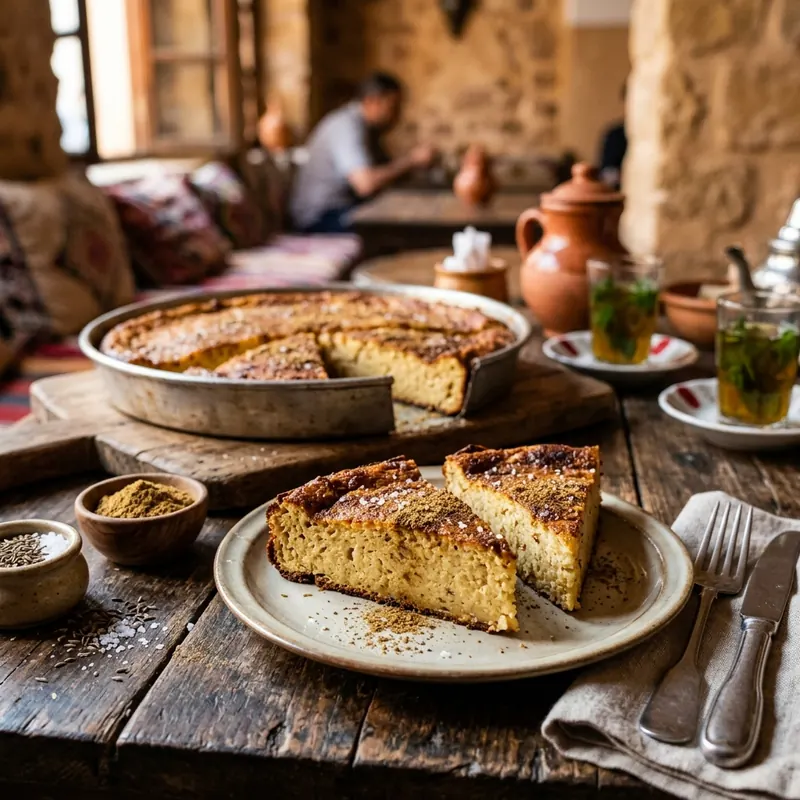
Follow that aroma toward the medina gates, and you will spot a wooden cart parked on the cobblestones. At its center rests a circular baking tray of tin-plated copper, roughly a meter wide, gleaming beneath an amber street lamp. Inside sits Kalinti: a golden, savory pie with a deeply browned, blistered crust that crackles under the vendor’s knife.
“Skhoun! Skhoun ya Kalinti!” the vendor calls across the plaza. Hot! Hot Kalinti!
For over a century, Kalinti has fed northern Morocco. Schoolchildren clutching two-dirham coins, port laborers finishing long shifts, and grandmothers heading home gather around the cart. It is the great equalizer of Tangier and Tetouan—humble peasant staples transformed into street gold.
The Cross-Strait Story: From Spanish Garrisons to Moroccan Souks
The name Kalinti carries centuries of seafaring history, stemming directly from the Spanish adjective caliente, meaning “hot.” In earlier days, Spanish-speaking hawkers pushed braziers through the alleys calling out “¡Caliente! ¡Caliente!” to announce their chickpea slabs had emerged blazing from the oven. Over generations, the phrase settled into local Darija as Kalinti in Tangier and Tetouan, or Calentica further east.
The roots of this dish reach back to the sixteenth century, during the Spanish naval presence in Santa Cruz (modern Oran) and along the Strait of Gibraltar. Faced with prolonged sieges and scarce food supplies, garrison cooks turned to non-perishable cargo staples: dry chickpea flour, water, and olive oil. Whisking these into a thin batter and baking it in heavy pans produced a warm, filling bread substitute.
The dish evolved into its modern form within northern Morocco’s multicultural neighborhoods. During Tangier’s International Zone era, Spanish merchants, Sephardic Jewish families, and Moroccan Muslims shared the same stone corridors. Sephardic home bakers played a decisive role in refining the recipe. Foods that could be prepared ahead or kept warm in communal bread ovens were prized for Sabbath gatherings. The Sephardic calentita traveled across the Strait between Gibraltar, Tangier, and Tetouan. In Gibraltar it stayed thin and firm; in Tangier, Moroccan cooks enriched the batter with farm eggs and milk for a silkier crumb, crowning it with mountain cumin and fiery red pepper paste.
The Chemistry of the Golden Batter
Kalinti looks deceptively simple, requiring only five basic staples:
- Finely milled chickpea flour (t’hin d-hummus)
- Cold water and a splash of milk
- Good vegetable oil or mild olive oil
- Fresh farm eggs
- Sea salt and a pinch of ground cumin
The magic lies in starch behavior and thermal shock. Chickpea flour contains no gluten, forming a suspension rather than an elastic dough. Because the liquid ratio is high—roughly four parts liquid to one part flour—the raw mixture looks as runny as crêpe batter.
When this liquid encounters high oven heat, two physical changes happen at once. First, chickpea starches absorb moisture, swell, and trap fat droplets from oil and egg yolks. This creates an interior texture mimicking a delicate flan—creamy, tender, and soft enough to spread with a spoon.
Second, the natural sugars present in the chickpeas, paired with oil rising to the surface, undergo intense browning under direct top heat. This forms the dark brown, blistered crust known in Darija as el-qshra. If an impatient cook bakes at too low a temperature, the flour sinks like wet sand, leaving watery broth on top. A seasoned cook lets the batter rest for thirty minutes so the flour hydrates evenly before meeting the fire.
The Communal Ferran: The Wood Oven Secret
Ask any veteran cook in Tangier’s Marshan quarter, and they will tell you the same truth: you can bake Kalinti at home, but you will never match the flavor of the communal ferran.
The neighborhood ferran is a traditional wood-fired public oven run by a master baker (moul el-ferran). For generations, households prepared dishes at home, then sent children balancing heavy baking pans on their heads to be finished in the communal hearth.
The ferran burns seasoned olive wood, oak, or eucalyptus, holding temperatures above 300°C across firebrick floors. When the street vendor brings his giant tin pan, the baker slides it deep into the cavern using a long wooden paddle. Inside that chamber, Kalinti cooks under roaring heat. The bottom sets firm against the hot stone floor, while rising embers scorch the surface, lending a subtle kiss of woodsmoke that no domestic oven can reproduce.
Street Ritual: The Bread Clamp, Cumin, and Harissa
Eating Kalinti on a breezy street corner follows strict tradition. You never eat it with a fork, and you never let it cool down. Cold chickpea pie turns pasty; Kalinti must be eaten scorching hot, directly from the pan.
The vendor holds a flat metal spatula in one hand and a serrated knife in the other. When you order, he asks: “F-el-khobz wlla f-el-kaghét?”—Inside bread, or on wrapping paper?
Most locals choose bread. The vendor slices open a crisp baguette or a warm quarter-round of semolina khobz. With a practiced stroke, he carves a steaming slab from the tray, glides his spatula beneath, and tucks it into the bread without breaking the fragile crust.
Next comes the seasoning ritual. Sitting on the cart are two worn metal shakers: coarse Atlantic sea salt and freshly pulverized cumin seeds (kamoun beldi). He showers both over the molten slice. If you like heat, he dips a wooden paddle into crushed chili paste (harissa) and paints a bright red streak down the middle.
You take the sandwich in two hands. Steam rises into the cool air, carrying the aroma of toasted cumin. The crusty bread crackles, the custard melts instantly against your palate like savory velvet, and the cumin cuts through the earthy richness of the chickpeas.
Grandmother’s Rules for Home Bakers
If you cannot visit Tangier today, you can recreate this street treasure at home with four rules from Moroccan grandmothers:
- Hydrate Patiently: Whisk chickpea flour, water, milk, eggs, and oil until silky, then leave the bowl alone for thirty minutes. This allows dry flour cells to swell, preventing any chalky texture.
- Skim the Foam: Whisking introduces air bubbles. Skim off the white foam on top before baking so it forms a glossy mahogany skin instead of papery bubbles.
- Preheat the Baking Pan: Professional street trays conduct heat instantly. At home, place your metal baking dish inside the oven while it preheats to 220°C. Pouring batter into a hot, oiled pan sets the bottom immediately and prevents sticking.
- Finish with Fierce Broiler Heat: The hallmark of authentic Kalinti is its dark, blistered crust. Bake on your lowest oven shelf until the center is almost set, then turn on the broiler at full blast for the final six minutes.
Frequently Asked Questions
What is the difference between Tangier’s Kalinti and Algerian Karantika or Gibraltarian Calentita?
Gibraltar’s Calentita is baked thinner and firmer, resembling Italian farinata and eaten plain. Algerian Karantika often blends cumin directly into the raw batter before baking. Tangier and Tetouan Kalinti stands out for its high egg-to-liquid ratio, creating a softer custard interior, and dusting cumin and spooning harissa on top only at the moment of serving.
Can you prepare authentic Kalinti without eggs?
Yes. The original working-class formula used only chickpea flour, water, and oil. Many traditional street carts still bake egg-free batches (Kalinti bla beid). However, omitting eggs produces a denser slice that lacks the luxurious mouthfeel of modern Tangier recipes. Adding eggs helps emulsify the cooking oil and creates that beloved custard consistency.
Why does the surface of Kalinti look almost burnt?
The dark mahogany blisters across the top define the dish. Chickpea flour is packed with natural starches and proteins that caramelize under high overhead heat alongside oil rising to the surface. This dark crust (el-qshra) delivers a pleasant roasted edge that balances the mild creaminess underneath.
What is the best way to reheat leftover Kalinti?
Kalinti is always best within fifteen minutes of leaving the oven. Avoid the microwave, which turns the custard rubbery. Instead, place slices on a baking tray, brush lightly with olive oil, and slide them under a hot oven broiler for four to five minutes until the top sizzles and the center warms through. Dust with fresh cumin before eating.
Experience the true heart of Moroccan heritage through its culinary traditions. Join us in preserving and honoring these ancestral recipes.
What People Are Saying
No comments yet. Be the first — we'd love to hear from you.
The Moroccan Food
Culturally Verified & Fact-CheckedThe Moroccan Food editorial team brings together native culinary researchers, heritage preservationists, and experienced home cooks across Marrakech, Fes, and Casablanca. Every recipe and cultural guide is reviewed against ancestral oral traditions and authentic regional practices.