The Kasbah of the Udayas: Rabat's Oldest Quarter and the View Nobody Plans For
The Kasbah of the Udayas: Rabat's Most Beautiful Neighborhood and Why You Rush Through It
The Kasbah of the Udayas is listed in every guidebook covering Rabat, which is one of the reasons it tends to receive the compressed forty-five-minute treatment from visitors who have a list of things to see in the city and are working through it efficiently. The Hassan Tower in the morning, the Chellah in the afternoon, the Kasbah in between. Forty-five minutes.
This is the wrong way to do it. The Kasbah is not a monument to photograph — it is a neighborhood to inhabit for a few hours, and its pleasures are the kind that require slowing down enough to encounter them.
Let me be specific about what I mean.
What Is the Kasbah of the Udayas and When Was It Built?
The Kasbah sits on a promontory of land at the point where the Oued Bou Regreg — the river that separates Rabat from its twin city Salé — meets the Atlantic Ocean. The site has been fortified since at least the 12th century, when the Almohad Sultan Abd al-Mumin built a ribat (a fortified monastery serving as a base for holy war) on this strategic position. The name Rabat derives from this Almohad origin: Ribat al-Fath, the Ribat of Victory.
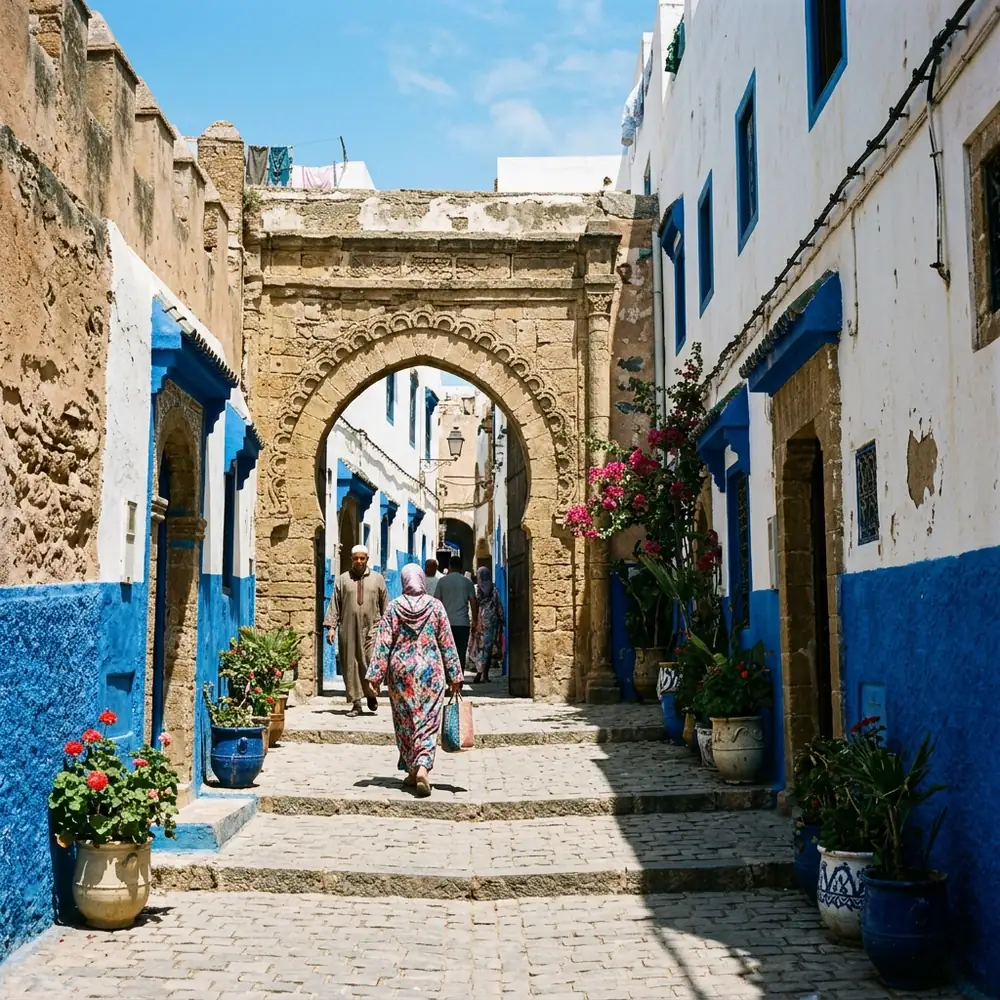
The current Kasbah walls and the Bab Udayas gate — the main entrance, one of the finest surviving examples of Almohad gateway architecture, comparable in quality if smaller in scale than the gates of Marrakech and Meknès — date primarily from the 12th-century Almohad construction period, with subsequent additions and modifications by the Merinid and Alaouite dynasties.
The "Udayas" in the name refers to the Udaya tribe — an Arab tribe settled in the Kasbah by the Alaouite Sultan Moulay Ismail in the 17th century as a military garrison controlling the Bou Regreg river mouth, which was then an important pirate base. The Moroccan corsairs operating from the Bou Regreg had been such a consistent threat to European Atlantic shipping that the whole region was known to European sailors as the "Barbary Coast," and the Udaya garrison was part of the Alaouite administration's attempt to control and eventually suppress the corsair activity.
What Does the Kasbah Look Like and What Is There to Do Inside?
The Kasbah is a small neighborhood — about five minutes to walk across in any direction — of white and blue painted houses on very narrow lanes, built within the original Almohad walls. The houses are inhabited and functioning as residences; this is not a preserved historical zone separate from contemporary life, but a living neighborhood that happens to be eight centuries old.
The Andalusian garden — a small formal garden in the classic Moroccan style, with a central fountain, symmetrical plantings of orange and lemon trees, rose hedges, and jasmine on the walls — is inside the Kasbah at its center and is open to visitors. It was created in the early 20th century during the French protectorate period on the site of an older garden, using the Andalusian garden design vocabulary that came to Morocco with the 15th-century refugees. It is not large but it is quietly beautiful and usually uncrowded, particularly in the morning.
The Café Maure — the café built into the ramparts overlooking the Bou Regreg river and the Atlantic — is one of the better places to sit in Rabat on any given afternoon. The terrace looks directly across the river to the white medina of Salé, with the Atlantic visible where the river meets the ocean, and the light in the late afternoon at this specific vantage point is the thing that stops people mid-sentence. The mint tea is good. The chebakia and other pastries that appear on the café's small plates without being ordered are there because this is how this café has always operated.
What Is the Platform at the End of the Kasbah and Why Does It Matter?
At the far end of the Kasbah — past the café, past the last houses, through a gate in the outer wall — is a platform on the cliff's edge directly above the point where the Bou Regreg meets the Atlantic. This is not on most visitors' routes because it requires finding it rather than simply following the main path.
From the platform, the view is: the Atlantic to the west, the Bou Regreg to the east, the medina of Salé directly across the river, the Rabat city beach to the south below the cliff, the Hassan Tower visible in the middle distance to the south across the rooftops of the medina. It is a 270-degree view that contains the entirety of Rabat and Salé's geography in a single panorama. It is the view that explains why the Almohads built a ribat on this specific spot in the 12th century — the strategic command of the river mouth and the ocean approach is immediately obvious — and it is the view that makes an afternoon in the Kasbah feel complete in a way that the garden and the café alone don't quite achieve.
The wind at the platform is usually significant. This is also part of the experience.
The Invisible Invitation
Go to the Kasbah at three in the afternoon on a day when the light is good — a clear day in autumn or winter, when the Atlantic light has a clarity and a warmth that summer haze removes. Walk directly through the main gate and straight to the café terrace. Order tea. Stay for thirty minutes watching the river. Then walk to the platform at the end of the walls. Stay there for another twenty minutes. Then walk back through the lanes slowly, not going anywhere, just looking at what is on the walls and in the doorways and at the cats who own this neighborhood in the way that cats own old medinas. By the time you leave you will have been there for ninety minutes and will not have felt rushed. This is the correct duration.
SEO Meta Description: What is the Kasbah of the Udayas in Rabat? The 12th-century Almohad fortress — Bab Udayas gate, Andalusian garden, Café Maure terrace, and the Atlantic-river view platform.
Experience the true heart of Moroccan heritage through its culinary traditions. Join us in preserving and honoring these ancestral recipes.
What People Are Saying
No comments yet. Be the first — we'd love to hear from you.
Omar Idrissi
Culturally Verified & Fact-CheckedThe Moroccan Food editorial team brings together native culinary researchers, heritage preservationists, and experienced home cooks across Marrakech, Fes, and Casablanca. Every recipe and cultural guide is reviewed against ancestral oral traditions and authentic regional practices.