Kefta Mkaouara: The Legendary Moroccan Meatball Tagine with Runny Poached Eggs
Kefta Mkaouara: The Legendary Moroccan Meatball Tagine with Runny Poached Eggs
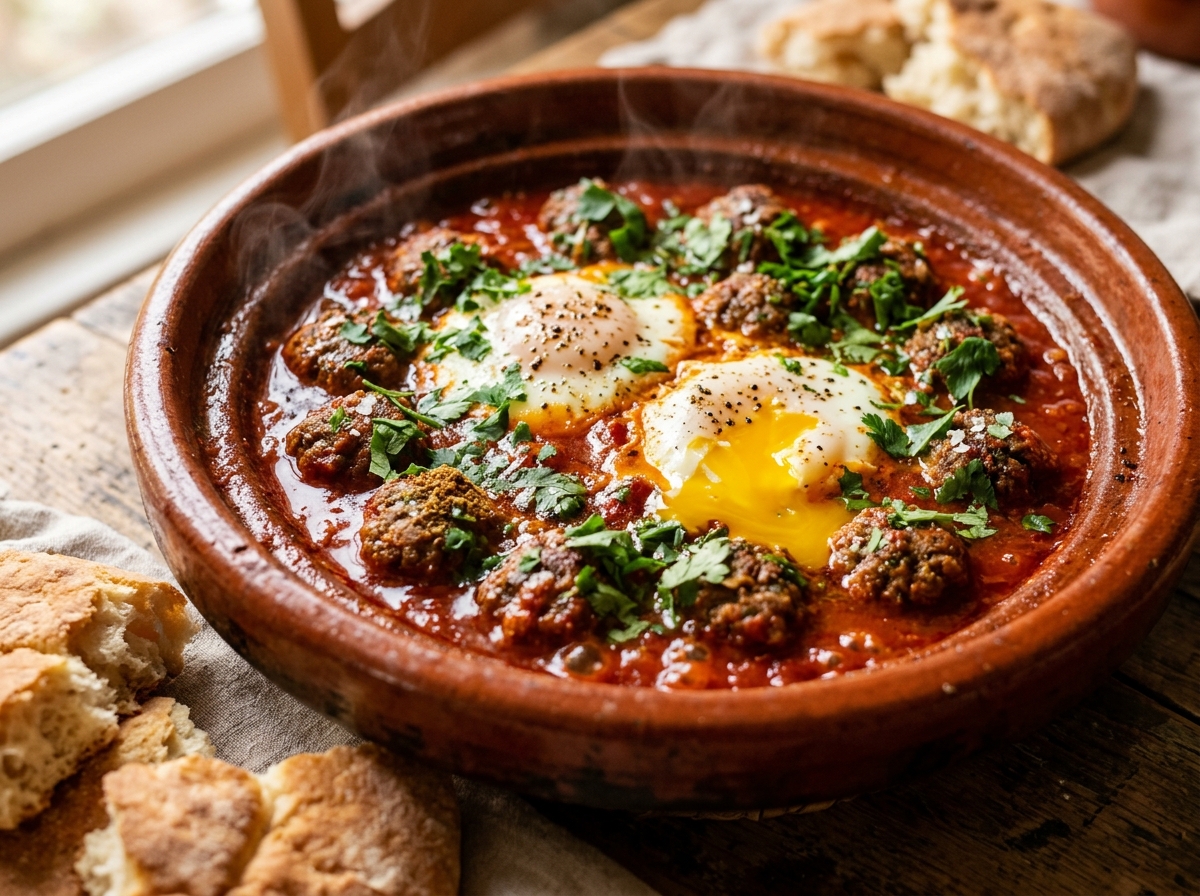
Few sounds in Moroccan cooking are as welcoming as the deep, rhythmic bubbling of a clay tagine when its conical lid is lifted at the lunch table. A fragrant cloud of steam escapes, carrying the scent of sweet reduced tomatoes, crushed garlic, and freshly roasted cumin. But when the dish is Kefta Mkaouara, there is an extra visual drama: nestled among dozens of bite-sized, spiced meatballs sit whole farm eggs, their whites set like porcelain clouds while their golden yolks tremble, completely runny and glossy.
In homes across Morocco, from the old alleys of Fes to the Atlantic coast of Casablanca, Kefta Mkaouara is considered the ultimate weeknight feast. It is quick to prepare, yet luxurious to eat. The combination of savory spiced meatballs, concentrated tomato reduction, and rich, liquid egg yolk creates an unmatched dipping experience for freshly baked Moroccan bread.
What Does “Mkaouara” Actually Mean?
To understand this dish, one must turn to Moroccan Darija (our local Arabic dialect). The word mkaouara comes from the Arabic root kwer, which means to shape or roll into a ball. In the kitchen, kefta mkaouara translates directly to “spherical meatballs” or “ball-shaped minced meat.”
This name distinguishes it from other Moroccan kefta preparations, such as kefta mashwiya (seasoned minced meat molded onto long flat skewers and grilled over hot charcoal) or kefta mhamra (meat cooked in a flat pan). In Mkaouara, the meat is rolled by hand into uniform spheres roughly the size of a walnut.
Historically, this dish emerged from the busy working districts of Moroccan imperial cities. Street-side tagine cooks (moul tagine) in medina souks set unglazed earthenware vessels over small charcoal braziers (majmar). Workers on midday breaks wanted something hot, filling, and fast. By simmering small meatballs in a pre-reduced tomato sauce and cracking eggs on top minutes before serving, cooks created a complete meal in under twenty minutes. Over the decades, it became a beloved centerpiece of Moroccan home cooking.
The Alchemy of the Poached Egg: Why It Changes Everything
An ordinary kefta tagine is delicious, but adding whole eggs transforms the meal entirely. The magic lies in the contrast of flavors and textures.
When you crack fresh eggs directly into the bubbling tomato sauce, the egg whites poach gently in the savory liquid, soaking up the garlic and cumin aromas. Meanwhile, the whole yolks remain warm and liquid.
When you tear a piece of warm, crusty bread (khobz) and pierce a yolk, the rich liquid gold spills out and mingles with the concentrated, acidic tomato reduction and the fat of the meatballs. This interaction softens the sharp acidity of the tomatoes and creates an instant, silky sauce on your bread. It is an unpretentious culinary triumph born purely of good ingredients and sensible timing.
The Egg Timing Secret: Setting Whites While Keeping Yolks Liquid
The difference between a legendary Kefta Mkaouara and an ordinary one comes down to thirty seconds of heat management. Overcooked, rubbery hard-boiled eggs ruin the dipping ritual; undercooked, watery egg whites are unpleasant.
Follow this grandmother method to achieve set whites and runny yolks every single time:
Step 1: Reduce the Sauce First
Never add eggs to a watery tomato sauce. Your tomato base must already be reduced to the m’gemmar stage—thick, jammy, with olive oil beading around the edges. If the sauce is too watery, the egg whites will dilute into the sauce rather than setting into clean mounds.
Step 2: Make the Nests
Once your small meatballs have simmered in the covered tagine for eight minutes and are cooked through, remove the conical lid. Use the back of a large soup spoon to press three or four shallow indentations into the sauce, pushing a few meatballs aside to create little wells.
Step 3: Crack Individually
Do not crack eggs directly from the shell over the bubbling tagine; if a piece of eggshell falls in or a yolk breaks, it is nearly impossible to fish out of the boiling sauce. Crack each egg into a small teacup or ramekin first, then gently slide it into its prepared well.
Step 4: The Closed Cone Finish
Immediately replace the conical lid and lower the flame to a whisper. The conical shape collects steam and circulates gentle radiant heat across the top of the eggs. Leave undisturbed for three to four minutes.
Step 5: Account for Residual Clay Heat
Unglazed clay retains heat long after leaving the fire. Remove the lid when the egg whites are just opaque and set, but the yolks still jiggle when you gently shake the vessel. Take the tagine off the heat immediately. By the time you carry it to the table, the residual heat will finish setting the whites while leaving the yolks warm, liquid, and glossy.
Heat and Contrast: Fiery Harissa and Pickled Chilies
While traditional Moroccan home food focuses on aromatic warmth rather than tongue-numbing heat, Kefta Mkaouara is one dish that welcomes a kick of chili. The rich egg yolk and savory meat fat tame fiery spice, creating a balanced bite.
Adding Authentic Harissa
Moroccan home cooks often stir a spoonful of homemade red pepper harissa directly into the olive oil before adding the grated tomatoes. Made from dried red baklouti peppers, crushed garlic, cumin, coriander seeds, and olive oil, true harissa adds smoky depth and a lingering warm glow rather than sharp vinegar heat.
Whole Pickled Chilies (Felfla Soudaniya)
For those who prefer controlled spice, tuck two or three whole pickled hot red or green peppers (felfla harra) into the sauce alongside the meatballs. As the peppers simmer, they perfume the tomato sauce with gentle warmth. Diners who enjoy real fire can burst the chili on their side of the tagine, mashing it into their corner of the sauce.
Communal Table Etiquette: Eating from the Clay Vessel
Kefta Mkaouara is built for sharing. It is placed in the center of the table on a round woven palm mat (tebq), flanked by bread baskets and small plates of Moroccan cured olives.
To eat Kefta Mkaouara like a Moroccan:
- Respect Your Section: Every diner eats exclusively from the triangular wedge of the round tagine directly in front of them. Never reach your hand across the center of the vessel to claim a meatball on the opposite side.
- The Egg Territory: When preparing the tagine, a considerate cook places one egg directly facing each seated person. That egg belongs to your section.
- The Khobz Pinch: Tear a bite-sized piece of warm crusty bread using only your right hand. Use your thumb, index finger, and middle finger to form a scoop. First, puncture your egg yolk so it pools into the surrounding tomato sauce. Then, pinch a tender meatball together with a spoonful of yolk and sauce.
- Finishing the Sauce: In Moroccan homes, leaving sauce behind in a tagine is considered wasteful. Once the meatballs and eggs are eaten, crusts of bread are dragged around the clay perimeter until the earthenware pot is wiped clean.
Frequently Asked Questions
Can I make Kefta Mkaouara in an ordinary frying pan?
Yes. A heavy cast-iron skillet, stainless steel frying pan, or shallow braiser works well. Use a tight-fitting lid during the final minutes to trap steam so the egg whites cook through from above while the yolks stay runny.
What kind of meat works best for Kefta Mkaouara?
A blend of ground beef chuck and lamb shoulder with twenty percent fat is ideal. The lamb provides tenderness and deep flavor, while the beef provides savory substance. Avoid lean ground beef, which turns dry and crumbly in the sauce.
How do I prevent the egg yolks from breaking when adding them?
Crack each egg into a small cup or bowl first. Gently lower the cup close to the surface of the sauce and slide the egg into a pocket created with the back of a spoon.
Can I reheat leftovers of Kefta Mkaouara?
While the meatballs and tomato sauce reheat well, the poached eggs do not; reheating hardens the yolks and turns the whites rubbery. If you anticipate having leftovers, cook only as many eggs as you plan to eat immediately. You can simmer fresh eggs into the remaining sauce the next day.
Experience the true heart of Moroccan heritage through its culinary traditions. Join us in preserving and honoring these ancestral recipes.
What People Are Saying
No comments yet. Be the first — we'd love to hear from you.
The Moroccan Food
Culturally Verified & Fact-CheckedThe Moroccan Food editorial team brings together native culinary researchers, heritage preservationists, and experienced home cooks across Marrakech, Fes, and Casablanca. Every recipe and cultural guide is reviewed against ancestral oral traditions and authentic regional practices.