The Kessa Glove: The Exfoliation Science of the Moroccan Hammam
archived: false
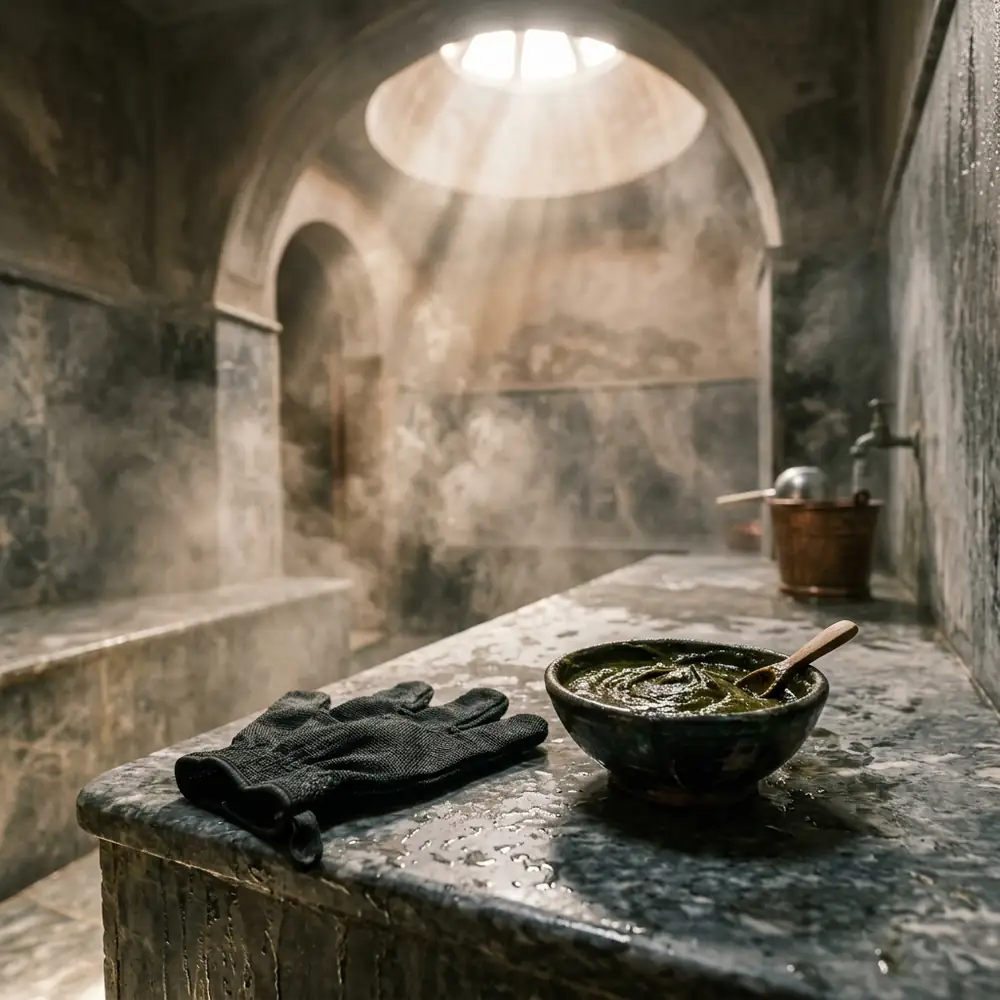
Descend into the moist, vaulted steam chambers of a traditional Moroccan neighborhood hammam, and you will hear a rhythmic, steady sound echoing against wet zellige tiles: the firm, sweeping strokes of the Kessa Glove (Kess or Lket in Moroccan Darija) moving across warm skin.
For first-time visitors, the sight is astonishing: long, gray, noodle-like rolls of dead keratin and accumulated cellular debris (El-Wassakh) peel effortlessly away from the body, leaving behind skin that feels impossibly soft, clean, and renewed. The Kessa glove is not a gentle bath sponge or a modern synthetic loofah; it is a precision instrument of mechanical dermatology that has formed the foundation of Maghrebi communal hygiene for centuries.
The Technical Design of the Crepe Glove
Unlike smooth cotton washcloths or scratchy abrasive plastic puffs, an authentic Moroccan Kessa is woven from a specialized, tightly twisted textile:
- The Granular Crepe Weave: Authentic Kessa gloves are woven using tightly twisted viscose, silk, or plant cellulose yarns woven in an irregular micro-ribbed pattern.
- The Friction Mechanism: When moistened, the crepe fabric fibers swell slightly, creating microscopic ridges that grip dry, dead surface skin cells without cutting or abrading living epidermal tissue beneath.
- The Ergonomic Mitten: Tailored as a flat mitten with an elasticized wrist cuff, the Kessa allows the bather or professional bath attendant (Kiyassa or Tayaba) to apply broad, uniform, directional pressure across large muscle groups.
The Two-Step Hammam Protocol: Soap and Steam
The magic of the Kessa glove does not work in isolation; it requires the preparatory chemical action of Savon Noir (Moroccan Black Soap, Sabon Beldi) and warm steam:
Step 1: The Chemical Softening (Sabon Beldi)
Bathers sit in the warmest steam room for fifteen to twenty minutes until sweat glands open and skin softens. A generous layer of Sabon Beldi, a rich, viscous, amber-black paste made from saponified olive oil, crushed macerated black olives, and natural potash, is massaged over the entire body.
- High in natural vitamin E and alkaline in pH, black soap dissolves stubborn oxidized sebum and weakens the intercellular lipid bridges (corneodesmosomes) that bind dead keratin cells to the skin surface.
- After ten minutes, the soap is rinsed away completely with warm water. This rinsing is critical: if any oily soap film remains on the skin, the Kessa glove will slip across the surface rather than gripping and rolling dead cells.
Step 2: The Mechanical Roll (Al-Hakk)
Now, the moist Kessa glove is slipped onto the hand. Without adding any soap, the attendant uses long, firm, sweeping strokes along the limbs and back:
- The textured crepe weave catches the loosened stratum corneum.
- Instantly, rolls of dead skin cells and impurities gather like tiny ribbons along the glove surface.
- The bather experiences immediate circulatory stimulation, lymphatic drainage, and cellular oxygenation as warm blood rushes to the skin surface.
Dermatological Benefits Beyond Surface Cleanliness
Regular weekly exfoliation with the Kessa glove provides documented physiological benefits:
- Accelerates Cellular Turnover: Stimulates the basal epidermal layer to generate fresh keratinocytes, brightening dull skin tone.
- Prevents Ingrown Hairs (Folliculitis): Clears clogged hair follicles, ensuring hairs grow outward smoothly.
- Enhances Botanical Absorption: Removing the barrier of dead keratin allows subsequent applications of pure argan oil or Ghassoul clay to penetrate deeply into the dermis.
- Promotes Microcirculation: The firm mechanical pressure functions as a therapeutic deep-tissue lymphatic massage, easing muscle tension and fluid retention.
Essential Rules for Safe Hammam Exfoliation
To enjoy the benefits of the Kessa without irritating your skin, follow three fundamental guidelines:
- Never Use on Dry Skin: The Kessa must only be used on warm, steamed, thoroughly soaked skin that has been pre-softened with black soap and rinsed.
- Avoid the Face: The body Kessa is too coarse for delicate facial capillaries. Use a specialized ultra-soft silk facial Kessa or gentle Ghassoul clay on facial skin.
- Moderate Frequency: Perform a deep Kessa scrub no more than once a week (or every ten days for sensitive skin). Over-exfoliating damages the delicate acid mantle of the skin barrier.
Frequently Asked Questions
Does the Kessa exfoliation process hurt?
When performed properly on thoroughly steamed and softened skin, a Kessa scrub is invigorating, deeply satisfying, and completely painless. If you feel sharp pain or excessive scratching, ask the bath attendant to soften their pressure by saying “Bchwiya” (gently).
How do I clean and sanitize my Kessa glove after use?
After your hammam, rinse the Kessa glove thoroughly with hot water to wash away all dead skin cells, hang it in a well-ventilated dry area, and allow it to air-dry completely. Do not leave damp gloves crumpled inside closed plastic bath bags, which encourages mildew. Replace your personal glove every three to four months.
What should be applied to the skin immediately after a Kessa scrub?
Following a Kessa scrub and final cool rinse, gently pat the skin dry with a clean towel and massage pure, cold-pressed cosmetic Argan Oil or sweet almond oil into the warm, damp skin. The fresh epidermal layer will absorb the nourishing fatty acids rapidly, leaving skin soft and glowing for days.
Can I do an authentic Kessa scrub at home in a standard shower?
Yes. Take a hot shower for ten to fifteen minutes with the bathroom door closed to build steam. Turn off the water, apply Moroccan black soap over your body for five minutes, rinse thoroughly until your skin feels squeaky clean, then scrub firmly with your damp Kessa glove using long vertical strokes.
Experience the true heart of Moroccan heritage through its culinary traditions. Join us in preserving and honoring these ancestral recipes.
What People Are Saying
No comments yet. Be the first — we'd love to hear from you.
Samira
Culturally Verified & Fact-CheckedSamira researches rural foodways and wild mountain herbs across the High Atlas and Rif, championing local farmers and small-scale cooperatives.