Khobz b'Chehma: The Stuffed Spiced Flatbread of Desert Nomads
archived: false
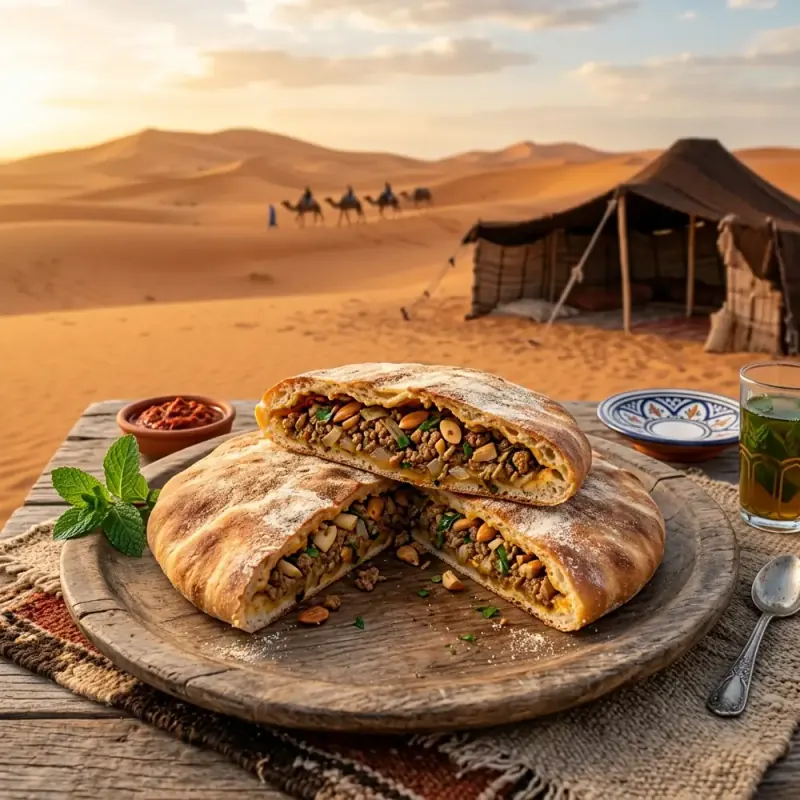
Across the pre-Saharan desert borderlands of Errachidia, Rissani, Zagora, and Tinghir, afternoon tea is incomplete without a hot, fragrant wedge of Khobz b’Chehma (literally “Bread with Fat”). While Western dietary trends spent decades demonizing animal fats, desert communities understood for generations that clean, grass-fed ruminant suet provided essential caloric density, fat-soluble vitamins, and unparalleled culinary comfort needed to endure harsh desert winters and intense physical labor.
Unlike Medfouna, which is a thick, double-crusted banquet pie packed with whole cuts of steak and almonds baked in wood ovens or hot sand, Khobz b’Chehma is an everyday domestic flatbread. Rolled thin and cooked quickly across a heavy cast-iron griddle (Frah), it features a molten filling of finely rendered suet, sweet white onions, sweet paprika, ground cumin, and spicy cayenne pepper that stains the semolina crust a rich, appetizing sunset orange.
The Nomadic Heritage of Preserved Suet
In traditional pastoral nomad culture, refrigeration was nonexistent. When a sheep or camel was butchered, the prime muscle meat was eaten fresh or sun-dried into jerky (Gueddid). The dense, pure kidney suet (Chehma Beldia) was carefully salvaged, finely diced, salted, and stored in earthenware crocks.
This rendered suet possessed extraordinary culinary virtues:
- High Smoke Point: It could withstand high dry heat without scorching or turning acrid.
- Flavor Carrier: Fat is the ultimate solvent for volatile aromatic spice molecules, carrying the flavors of cumin, coriander, and dried chili deep into the wheat dough.
- Melting Tenderness: As the flatbread cooks on the cast iron pan, the solid suet liquefies, frying the raw onions from within and crisping the interior semolina layers into delicate, flaky pastry.
The Anatomy of the Spiced Filling
A proper filling for Khobz b’Chehma balances rich animal fat with aromatic spices and sweet alliums:
- The Suet: Kidney suet from pasture lamb or young beef, chilled until firm, then grated or hand-minced into tiny grains the size of couscous.
- Sweet White Onions: Finely minced sweet onions provide natural moisture and sugar. As the bread cooks, the onions steam and caramelize in the hot suet.
- Moroccan Sweet Paprika (Tahmira): Added generously, giving the filling its signature fiery red color and roasted pepper aroma.
- Toasted Ground Cumin (Kamoun): Provides earthy balance that prevents the fat from feeling heavy on the tongue.
- Finely Minced Parsley and Cilantro: Fresh green herbs cut through the richness.
- Cayenne Pepper or Harissa: Desert flatbread demands heat. A healthy pinch of dried red chili powder (Sudaniya) awakens the palate and promotes circulation.
Rolling and Griddle-Cooking the Flatbread
The preparation of Khobz b’Chehma requires light, confident hand work:
- The Semolina Dough: Fine durum wheat semolina (Smida Rqiga) is blended with hard wheat flour, sea salt, yeast, and warm water. Kneaded until silky and pliable, the dough is divided into small balls and coated lightly in olive oil.
- The Thin Stretch: Using oiled fingertips, the cook flattens a ball of dough across a smooth work surface until it stretches into a translucent, paper-thin round.
- Spreading the Filling: A generous handful of the raw, seasoned onion-and-suet mixture is spread evenly across the dough disc.
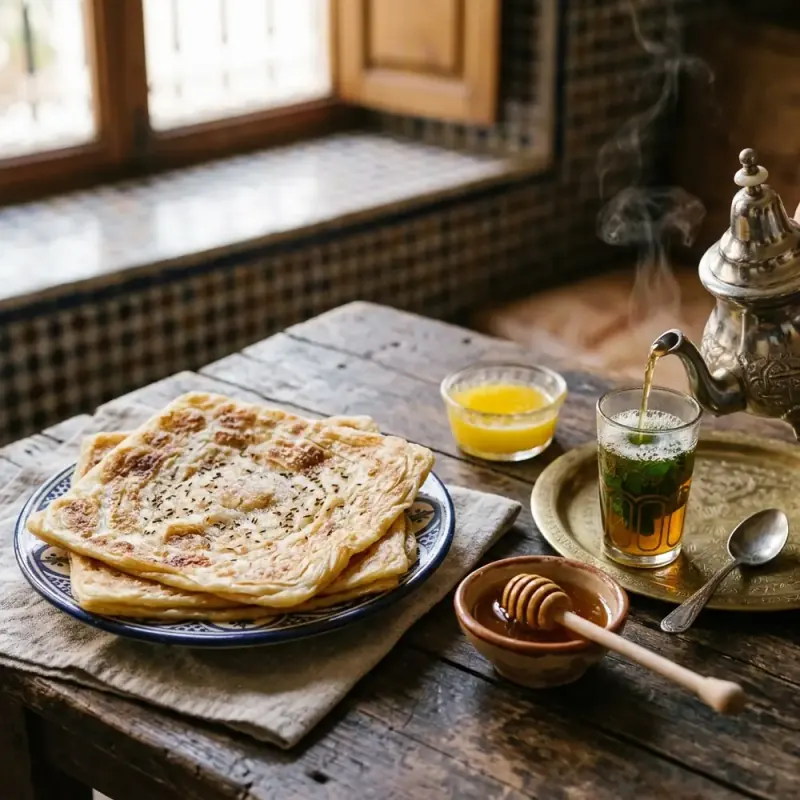
- The Envelope Fold: The dough is folded in from four sides into a neat square package (similar to standard Msemen), trapping the filling inside multiple thin laminated layers.
- The Pan Fry: The square package is patted flat with fingertips and placed onto a blistering-hot, ungreased cast-iron griddle (Frah).
- The Crisp Sizzle: As heat penetrates, the suet inside melts into golden oil, bubbling up through the dough pores. The cook flips the bread every sixty seconds until both sides display blistered brown spots and shatteringly crisp edges.
Serving Etiquette and Afternoon Tea
Khobz b’Chehma must be eaten piping hot, directly from the griddle. As the bread cools, the rendered suet solidifies, losing its molten, flaky magic.
In desert homes, guests gather around the low table as the cook slides hot flatbreads directly onto round wicker trays (Tabaq). The bread is cut into four triangular quarters and eaten with bare fingers, accompanied by scalding-hot glasses of strong gunpowder green tea brewed with fresh spearmint or bitter wormwood (Chiba). The hot tea cuts through the savory fat, leaving the palate clean, satisfied, and energized.
Frequently Asked Questions
Can Khobz b’Chehma be prepared with olive oil instead of animal suet?
While the authentic flavor and layered flakiness come uniquely from animal suet, a modern vegetarian variation can be made by slowly caramelizing sweet onions in extra virgin olive oil with paprika, cumin, garlic, and harissa before spreading the cooled mixture over the dough.
What is the best pan for cooking Khobz b’Chehma?
A heavy, seasoned cast-iron skillet, a flat crepe griddle, or a traditional Moroccan unglazed terracotta pan (Frah) provides the even, sustained heat needed to crisp the semolina crust without burning before the onions cook through.
How spicy is traditional Khobz b’Chehma?
Heat levels vary by family, but authentic southern desert recipes generally carry a noticeable spicy kick from cayenne pepper or artisanal harissa. You can easily adjust the amount of chili powder to suit your personal heat tolerance.
Can leftover Khobz b’Chehma be reheated?
Yes. Never reheat it in a microwave, which turns the crust rubbery and soggy. Reheat leftover flatbread in a dry, hot cast-iron skillet over medium heat for two minutes on each side until the exterior crisps and the interior filling melts again.
Experience the true heart of Moroccan heritage through its culinary traditions. Join us in preserving and honoring these ancestral recipes.
What People Are Saying
No comments yet. Be the first — we'd love to hear from you.
Omar
Culturally Verified & Fact-CheckedOmar documents traditional market cookery, communal ovens (ferran), and medina tea culture through firsthand field reporting in Moroccan souks.