LGBTQ+ Travel in Morocco: Legal Realities, Safety Considerations, and Respectful Experiences
LGBTQ+ Travel in Morocco: Legal Realities, Safety Considerations, and Respectful Experiences
This article is going to be honest, because the subject demands it. Anything less would be irresponsible.
Morocco is a country I love deeply and know well. It is also a country where same-sex sexual relations between adults are criminalized under Article 489 of the Penal Code, which provides for imprisonment of six months to three years and a fine. This is the legal reality. It is not symbolic — arrests do occur, typically affecting Moroccans rather than foreign tourists, but the law applies to everyone on Moroccan territory.
I’m telling you this upfront because some travel guides to Morocco minimize or omit this information, which is both irresponsible and disrespectful — to the Moroccan LGBTQ+ community, whose lives are genuinely constrained by this law, and to international travelers who deserve to make informed decisions.
The Legal Situation in Detail
Article 489 of the Moroccan Penal Code criminalizes ‘lewd or unnatural acts with an individual of the same sex.’ The law is enforced inconsistently, but enforcement does happen. High-profile cases include a 2016 incident in Beni Mellal where two men were prosecuted and sentenced after being reported by neighbors, and a 2015 case in which a gay magazine editor was briefly detained.
Transgender identity is similarly unrecognized legally, and transgender individuals — both Moroccan and foreign — face additional risks of harassment and legal complexity.
The important context: the practical experience of LGBTQ+ tourists in Morocco is generally very different from these worst-case scenarios. Foreign tourists are rarely targeted by police for sexual orientation. The arrests that do occur tend to involve public displays of affection, complaints from neighbors, entrapment in dating apps, or other circumstances that create specific legal exposure. The vast majority of the hundreds of thousands of LGBTQ+ travelers who visit Morocco annually have no negative encounters with law enforcement.
But ‘usually fine’ is not the same as ‘safe by legal standard,’ and each person must assess this for themselves.
The Social Reality: Nuance, Not a Simple Narrative
Moroccan social reality around sexuality is complex enough that simple narratives — ‘it’s dangerous’ or ‘it’s fine’ — both fail to capture it accurately.
On one hand, Morocco is a largely conservative Muslim society where homosexuality is publicly condemned by most religious institutions and where the social pressure on LGBTQ+ Moroccans — particularly those from traditional families and communities — is intense and often painful. The Moroccan LGBTQ+ rights organization ASWAT has documented extensive discrimination, family rejection, and mental health crises within the community.
On the other hand, Morocco has a long and complex history with gender and sexuality that doesn’t map neatly onto a simple conservative/liberal binary. Hammams have historically been spaces of same-sex sociality. Sufi traditions have complex relationships with gender-bending performance. In cities like Casablanca, Marrakech, and Tangier, social spaces exist — quietly, carefully — where LGBTQ+ Moroccans find community. Tangier, in particular, has a long international reputation as a relatively tolerant city for its history with writers like Paul Bowles, William Burroughs, and Truman Capote.
Practical Guidance for LGBTQ+ Travelers
If you decide to visit Morocco:
Discretion matters. The practical experience of most LGBTQ+ travelers in Morocco is positive precisely because they navigate the country with the same cultural awareness that any respectful traveler applies — not performing their identity in ways that would attract hostile attention, while fully being who they are in private.
Avoid public displays of affection that would attract attention in any context. This applies to same-sex couples but also, honestly, to heterosexual couples — Morocco is not a country where public physical affection is normalized, regardless of sexual orientation.
Be careful with dating apps. There have been documented cases of entrapment in Morocco via apps like Grindr. This doesn’t mean never use them, but be aware of the risk, meet initially in public places, and trust your instincts about individual situations.
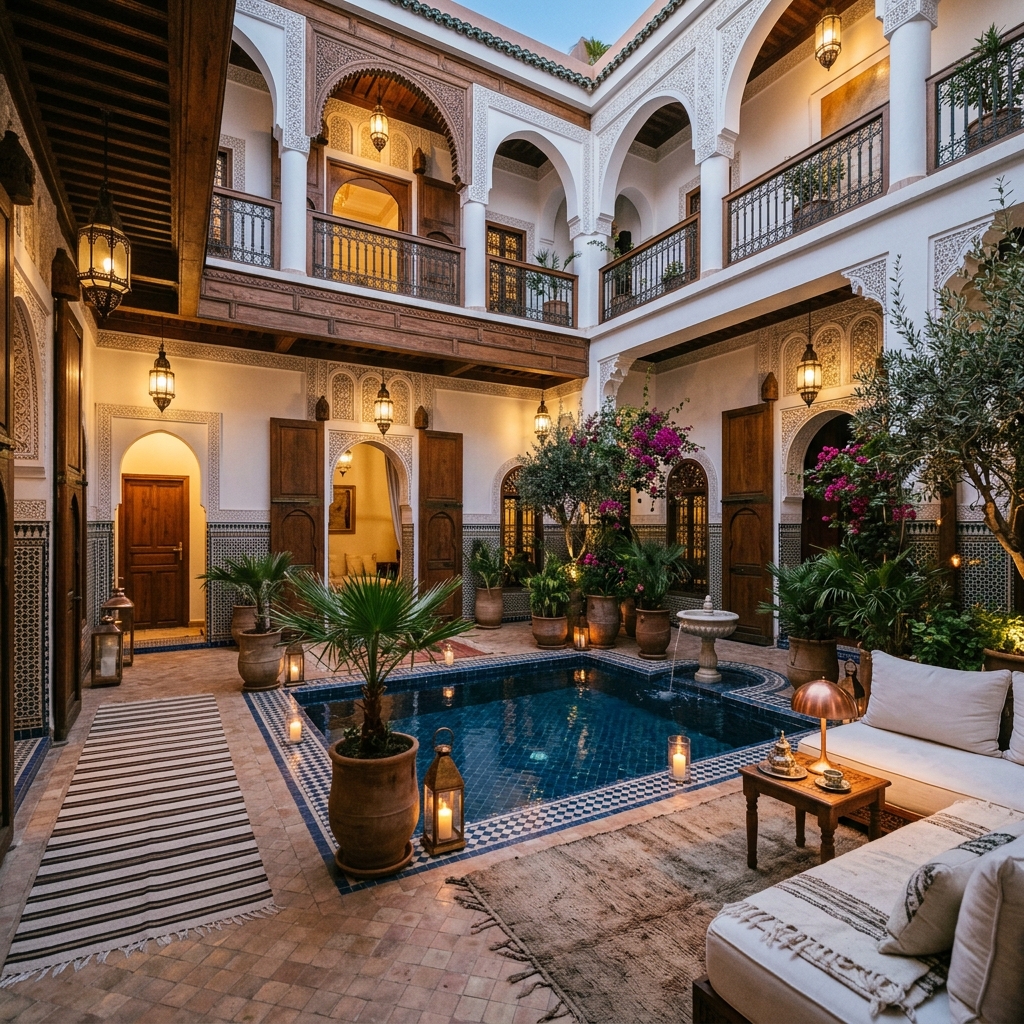
Know your accommodation options. Established, reputable riads and international hotels are generally safe and professional. The question of whether to book a room as a same-sex couple at a more conservative local guesthouse requires individual judgment about the specific context.
Be aware of your legal exposure while present. The risk to foreign tourists is lower than the risk to Moroccan citizens, but it exists. This is not a reason not to go; it is information that should shape how you navigate your visit.
Support the Moroccan LGBTQ+ community
One of the most meaningful things international visitors can do is to be aware of the organizations working for LGBTQ+ rights in Morocco and to support them where possible. ASWAT (Moroccan LGBTQ+ advocacy organization) and Nassawiyat (feminist organization with significant engagement with LGBTQ+ issues) are doing important work under difficult conditions.
Whether to visit Morocco as an LGBTQ+ traveler is a genuinely personal decision, and I wouldn’t presume to make it for you. What I can say is: if you go, go with full awareness. Stay safe. And notice, while you’re there, the courage and resilience of the Moroccan LGBTQ+ community navigating these constraints every day — not occasionally, as a tourist might, but as the permanent condition of their lives.
Experience the true heart of Moroccan heritage through its culinary traditions. Join us in preserving and honoring these ancestral recipes.
What People Are Saying
No comments yet. Be the first — we'd love to hear from you.
Editorial Team
Culturally Verified & Fact-CheckedThe Moroccan Food editorial team brings together native culinary researchers, heritage preservationists, and experienced home cooks across Marrakech, Fes, and Casablanca. Every recipe and cultural guide is reviewed against ancestral oral traditions and authentic regional practices.