Maakouda: The Crispy Potato Fritter That Conquered the Moroccan Street
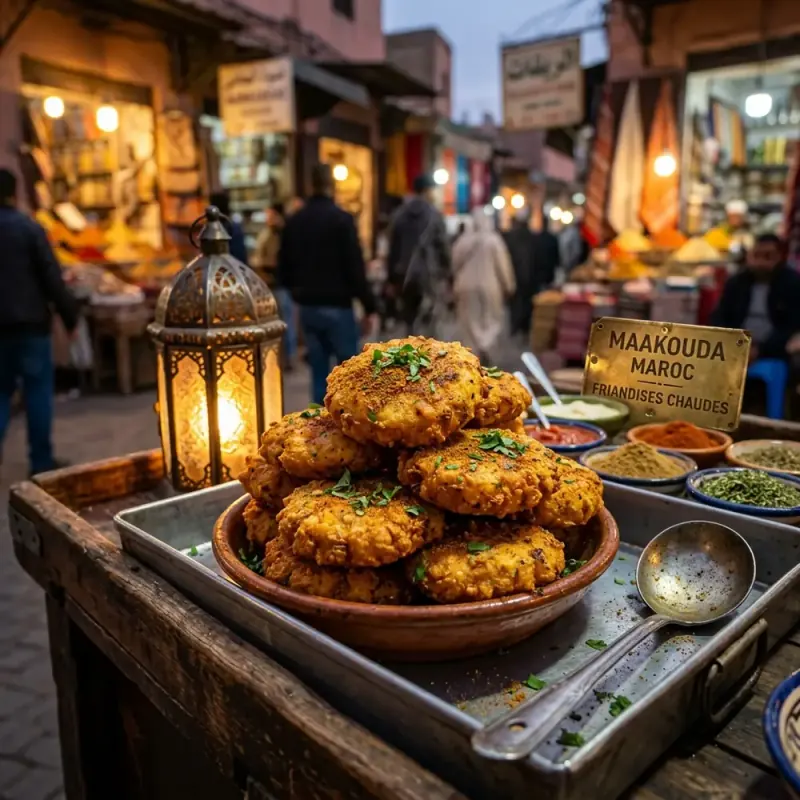
If you walk through the student districts and medina gates of Fez, Marrakech, or Casablanca at midday, your nose will guide you straight to the bubbling oil cauldrons of the maâlem maakouda.
Few street foods in the kingdom command the fierce, generational loyalty of Maakouda (معقودة). These round, golden patties of boiled, mashed potatoes seasoned with cumin, garlic, and fresh parsley are dipped in a light batter and fried until crisp. Slipped into crusty French-style baguettes or traditional round khobz, crushed slightly with the back of a spoon, and drenched in fiery homemade harissa, Maakouda is the ultimate comfort food for workers, students, and night wanderers alike.
The Humble Origins: From Home Kitchens to Street Icons
While potatoes were introduced to North Africa in the nineteenth century, it was during the mid-twentieth century that Maakouda evolved from a resourceful family side dish into a dominant street-food staple.
Moroccan home cooks originally created Maakouda as a clever way to stretch simple pantry staples into a satisfying meal. During lean times, combining inexpensive potatoes with the aromatic staples of the Moroccan spice drawer—cumin, garlic, turmeric, and fresh herbs—yielded a dish rich in flavor and high in sustenance.
As urban centers expanded in the 1960s and 1970s, street vendors set up large cast-iron frying pans near bus stations, medina arches, and bustling craft souks. They realized that stuffing these hot, savory patties into fresh bread with raw onion, chopped tomato, olives, and harissa created a complete, handheld lunch that could be eaten on the move for pennies.
The Alchemy of the Perfect Maakouda
To the untrained eye, Maakouda might look like a simple potato croquette. But any Moroccan grandmother will tell you that frying potatoes without them disintegrating into hot oil requires precise culinary discipline.
1. The Right Potato and the Drying Secret
Traditional cooks insist on using starchy, floury yellow potatoes rather than waxy varieties. The potatoes are boiled whole in their jackets with a generous pinch of sea salt. Boiling them skin-on prevents the flesh from absorbing excessive water.
Once peeled while still hot, the potatoes are mashed immediately with a fork—never in a food processor, which would make the starches gummy and elastic. The secret trick is letting the mashed potato spread out on a flat wooden board to cool completely, allowing all excess steam and moisture to evaporate. A dry potato mash is the only guarantee of a patty that holds its shape.
2. The Spices of the Soul
The seasoning in a proper Maakouda is bold and earthy:
- Toasted ground cumin (Kamoun): Provides warm, digestive aromatics.
- Turmeric and Sweet Paprika: Impart that signature golden-orange hue.
- Finely minced garlic: Infuses deep savory depth.
- Chopped fresh coriander and parsley: Adds vibrancy and freshness.
- A pinch of chili flakes or cayenne: Wakes up the palate.
3. The Street Vendor’s Coating
Some families bind the mash with a raw egg and dust it lightly in flour before frying. However, medina street vendors use a thin batter made of flour, water, a pinch of baking powder or yeast, and turmeric. When the chilled potato patty is submerged in this batter and dropped into bubbling vegetable oil, the coating expands instantly, sealing the potato inside and creating an impossibly light, crackling outer shell.
The Sandwish Maakouda Ritual
Eating Maakouda on its own is delightful, but eating it as a street sandwich—a Sandwish Maakouda—is a cultural experience:
- The Bread: A freshly baked mini-baguette or half a round khobz is sliced open along one side.
- The Base: A fiery crimson layer of homemade harissa (or spicy grated tomato sauce mixed with garlic and cumin) is painted into the bread.
- The Patties: Three piping-hot Maakoudas are nested inside, and the vendor presses down firmly with the flat of a knife, crushing the patties so the fluffy interior melds with the bread.
- The Garnishes: Customers can customize their sandwich with boiled egg slices, chopped purple olives, pickled cucumbers, thinly sliced raw onions, and a sprinkle of roasted cumin.
Frequently Asked Questions
Why do my homemade Maakoudas break apart in the oil?
The most common cause is excess moisture in the potatoes or oil that is not hot enough. Always boil potatoes with their skins on, let the mashed mixture cool completely in the refrigerator before shaping, and ensure your oil is heated to roughly 180°C (350°F).
Is Maakouda naturally vegetarian?
Yes! Traditional Moroccan Maakouda consists purely of potatoes, herbs, spices, and a simple flour-and-water batter. When ordered at street stalls, it is 100% vegetarian, though always ensure the fryer is dedicated to vegetable items.
Can Maakouda be baked instead of fried?
While traditional street Maakouda owes its texture to deep-frying, home cooks often bake shaped patties on parchment paper brushed generously with olive oil at 200°C (400°F) for 20-25 minutes until golden and crisp.
Experience the true heart of Moroccan heritage through its culinary traditions. Join us in preserving and honoring these ancestral recipes.
What People Are Saying
No comments yet. Be the first — we'd love to hear from you.
The Moroccan Food
Culturally Verified & Fact-CheckedThe Moroccan Food editorial team brings together native culinary researchers, heritage preservationists, and experienced home cooks across Marrakech, Fes, and Casablanca. Every recipe and cultural guide is reviewed against ancestral oral traditions and authentic regional practices.