Macis (Bsibisa): The Delicate Lace of the Nutmeg
Macis (Bsibisa): The Delicate Lace of the Nutmeg
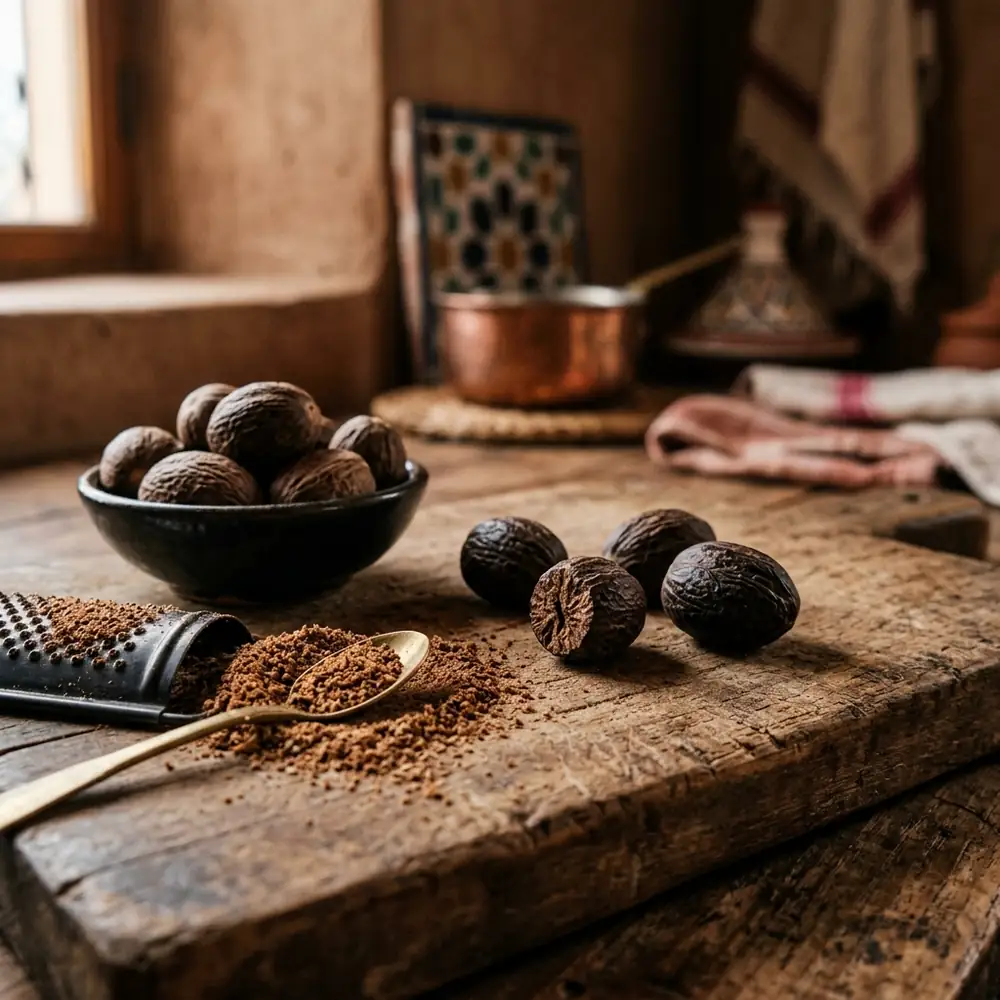
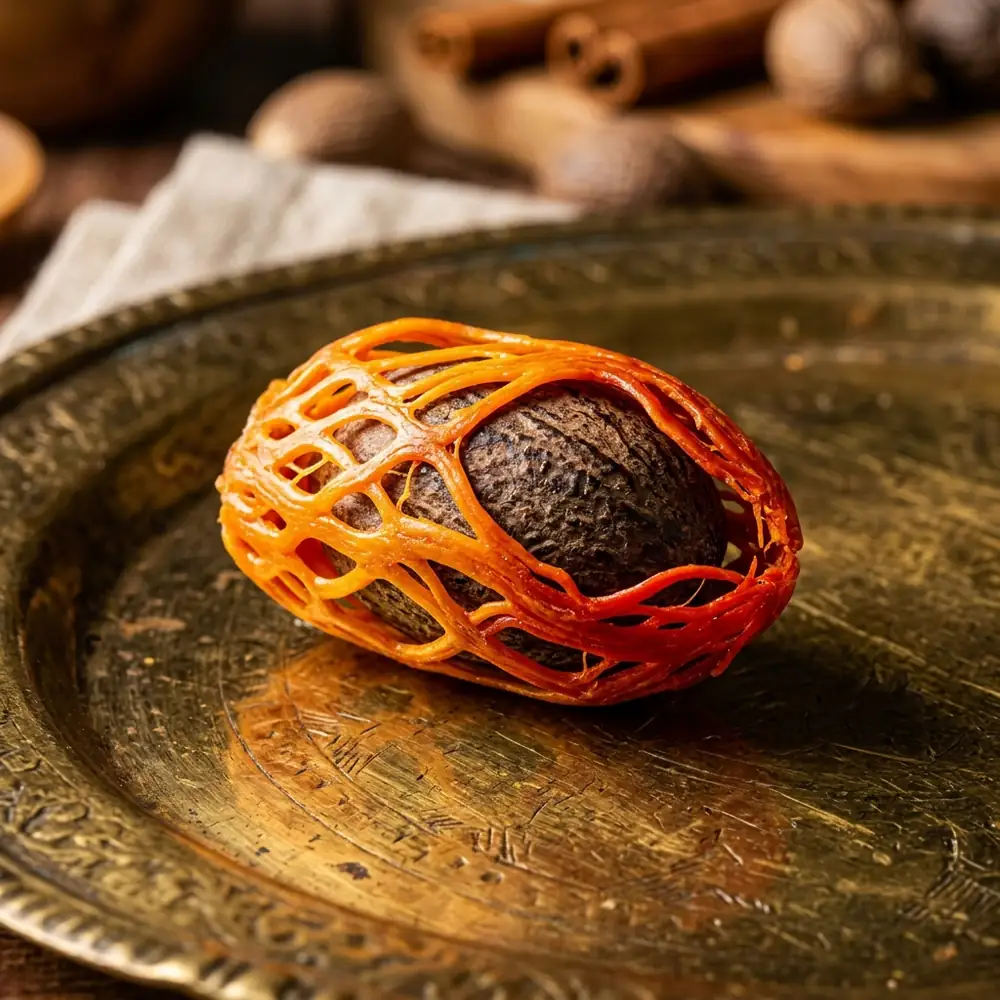
When navigating the intricate glass jars of the Moroccan apothecary, you might spot what appears to be fragile, dried orange-red flowers. This is Bsibisa, known globally as Mace. It is not a flower at all, but the delicate, aril lace that naturally encases the hard nutmeg seed. In our Kingdom, this fragile spice commands a price far higher than the nutmeg itself, revered for both its delicate culinary perfume and its gentle medicinal warmth.
Why is Bsibisa preferred over Nutmeg in Moroccan alchemy?
While nutmeg (Gouza) is heavy and intensely pungent, Bsibisa offers a much more refined, sophisticated profile.
- A Lighter Fragrance: Mace possesses the warm, sweet notes of nutmeg but carries a distinct, bright citrus and coriander-like high note.
- Digestive Elegance: In traditional Moroccan herbalism, it is used as a gentle carminative for children and the elderly, soothing nausea without the overwhelming intensity of the whole nutmeg seed.
- Visual Beauty: When left whole, the bright orange blades of mace dissolve into light broths, imparting a beautiful golden hue similar to saffron.
The secret of the Fassi kitchen
The imperial city of Fes, known for its aristocratic, complex gastronomy, relies heavily on Bsibisa. It is an absolute requirement in the authentic recipe for Ras El Hanout, providing the delicate bridge between the heavy cumin and the sweet cinnamon. also, it is the invisible, warming perfume hidden inside the almond paste of the legendary Pastilla, ensuring the dessert-like crust does not clash with the savory poultry filling.
The herbalist’s method for using Mace
- Because the essential oils in mace are incredibly volatile, never buy it pre-ground; purchase the whole orange blades (blades of mace) and crush them lightly in a mortar just before use.
- To treat a mild winter cold, steep a single blade of Bsibisa in hot milk with a spoonful of honey before bed to warm the chest and induce sleep.
The Invisible Invitation
The apothecary has carefully weighed the fragile orange lace, and its sweet, citrus-pine aroma fills the air. We are preparing a royal broth tonight, and the table is set. Come discover the subtle elegance of North African imperial history.
Experience the true heart of Moroccan heritage through its culinary traditions. Join us in preserving and honoring these ancestral recipes.
What People Are Saying
No comments yet. Be the first — we'd love to hear from you.
Ghina Mrabet
Culturally Verified & Fact-CheckedThe Moroccan Food editorial team brings together native culinary researchers, heritage preservationists, and experienced home cooks across Marrakech, Fes, and Casablanca. Every recipe and cultural guide is reviewed against ancestral oral traditions and authentic regional practices.