Makrout: The Date-Filled Semolina Pastry of Mediterranean Heritage
archived: false
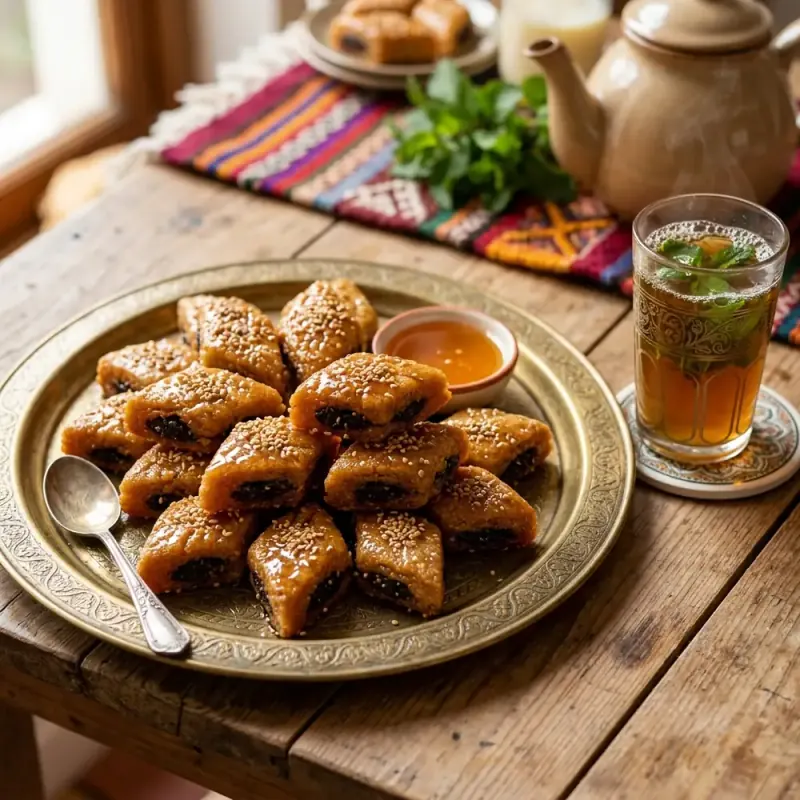
Among the refined pantheon of Moroccan sweet pastries, few confections evoke ancient Mediterranean heritage quite like Makrout (also spelled Maqroudh). Shaped into polished, honey-glazed diamond lozenges, Makrout represents the harmonious marriage of hard desert durum wheat semolina and sweet date pastes harvested from the date palm oases of the pre-Sahara.
Found across North Africa with regional variations from Oujda and Fez to Tunisia and eastern Algeria, authentic Moroccan Makrout is revered for its astonishing textural duality: a crisp, crumbly, sandy exterior crust (Mbesbes) yielding to an unctuous, aromatic core of spiced Medjool date paste perfumed with cinnamon, nutmeg, and distilled orange blossom water.
The Historic Route: Oases of Date Palms and Andalusian Refinement
The origins of Makrout are deeply rooted in the agricultural reality of North African oases. In regions like Tafilalet, Figuig, and the Draa Valley, dates were harvested in abundance every autumn. To preserve this bounty for travel and winter consumption, families pounded ripe dates into smooth, dense fruit pastes (Gherss).
When combined with coarse durum semolina, the staple cereal grain of the Maghreb, and preserved under an impermeable glaze of wild mountain honey, Makrout was born as an energy-dense, shelf-stable sweet confection carried by pilgrims traveling on the Hajj caravan and desert traders crossing trade routes.
Over centuries, imperial palace confectioners in Fez, Tetouan, and Rabat refined the rustic desert sweet into a high art, carving intricate geometric diamond stamps (Taba’a) into the dough surface and steeping the hot fried pastries in pure orange blossom honey.
The Sacred Components of Makrout
Creating the benchmark melt-in-the-mouth texture of Makrout requires precise ingredient chemistry:
1. The Semolina Duo
Authentic Makrout dough uses zero white flour. It relies on a balanced blend of coarse semolina (Smida Ghlida) and medium semolina (Smida Mwassata). Coarse semolina provides the signature crunchy, sandy texture, while medium semolina provides structural cohesion.
2. The Fat Sablage (El-Bess)
The raw semolina is rubbed vigorously between open palms with melted clarified butter (Smen) or unsalted butter and extra virgin olive oil. This French-style sablage coats every single semolina grain in fat, preventing gluten development when water is introduced and guaranteeing a tender, crumbly crust.
3. The Date Paste (El-Gherss)
The filling uses natural date paste made from soft, dark, sweet desert dates. Pitted and steamed until tender, the date paste is kneaded with:
- Ground Ceylon cinnamon for warming spice.
- A pinch of freshly grated nutmeg and clove.
- Toasted sesame seeds (Zenjlan) for nutty crunch.
- A tablespoon of clarified butter to keep the paste soft and pliable even after baking or frying.
- Distilled orange blossom water (Ma Zhar) for floral elegance.
Shaping the Iconic Diamond Lozenge
The construction of Makrout is an artisan skill passed through generations of Moroccan grandmothers:
- The Log of Dough: A portion of rested semolina dough is moistened with orange blossom water, gently pressed together without heavy kneading, and rolled into a long cylinder roughly three centimeters in diameter.
- The Trench: The baker presses a deep lengthwise groove down the center of the dough cylinder using the side of her hand.
- The Date Rope: A thin snake of date paste is nestled snugly into the trough.
- The Enclosure: The sides of the semolina dough are folded up and pinched tightly over the date filling, rolling the cylinder smooth once more so the date paste is sealed completely inside the semolina sleeve.
- The Wooden Stamp: A carved wooden Makrout stamp (Taba’a Makrout) made of olive wood or boxwood is pressed firmly onto the top surface of the log, flattening it into a neat trapezoid while embossing intricate diamond, herringbone, or chevron motifs onto the dough.
- The Diagonal Cut: Using a sharp brass pastry knife, the baker cuts diagonally along the stamp impressions, creating individual diamond-shaped pastries with exposed date ends.
Frying vs. Baking: The Two Traditions
Moroccan tradition accommodates two distinct cooking methods:
- Fried Makrout (Makrout Meqli): The traditional festive method. The diamond lozenges are submerged into medium-hot vegetable oil until they develop a rich, uniform golden-copper color. Frying crisps the coarse semolina granules into a shatteringly delicate crust.
- Oven-Baked Makrout (Makrout fil-Ferran): Popular in the northern cities of Tetouan and Tangier. The diamonds are arranged tightly on heavy baking sheets and baked in a moderate oven until pale gold. This produces a lighter, slightly drier pastry with lower oil content.
The Honey Bath (At-Ta’ssil)
The final and most crucial transformation occurs the second the hot Makrout leave the frying oil or oven.
They are immediately plunged while sizzling hot into a deep pot of warm, aromatic honey diluted with two tablespoons of orange blossom water. The thermal contrast causes the porous semolina crust to drink in the honey like a sponge.
The pastries soak in the honey bath for at least fifteen to twenty minutes, allowing the liquid sweetness to penetrate deep into the center. Lifted gently with slotted brass skimmers, they drain on wire racks before being arranged on silver trays, dusted lightly with toasted sesame seeds or crushed blanched almonds.
Frequently Asked Questions
Why did my Makrout fall apart or dissolve in the frying oil?
Makrout dissolves in frying oil for two primary reasons: either the semolina dough was kneaded too heavily, breaking the grains, or too much water was added to the dough. Always handle semolina dough gently with fingertips, use just enough water to bind, and ensure your frying oil is at proper medium-high heat (175°C / 350°F) before adding the pastries.
How long does Moroccan Makrout keep fresh?
Because Makrout contains no fresh eggs or dairy milk and is protected by a natural honey seal, it has an exceptional shelf life. Stored in an airtight container between sheets of parchment paper in a cool pantry, Makrout stays crisp and succulent for up to six weeks.
Can Makrout be filled with nuts instead of date paste?
Yes. A celebrated regional variation is Makrout Louz (Almond Makrout), where the date filling is replaced with a marzipan paste of finely ground blanched almonds, sugar, cinnamon, and orange blossom water. In the north, walnut paste (Makrout el-Guerga’a) is also prepared for wedding banquets.
What is the best tea pairing for Makrout?
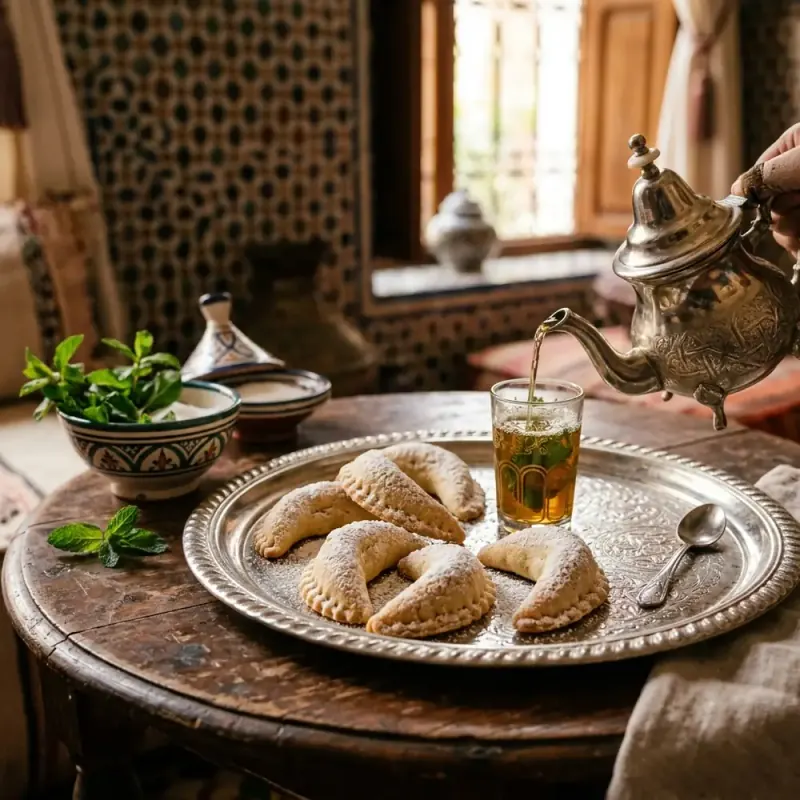
Makrout is best paired with a hot, unsweetened or lightly sweetened glass of Moroccan gunpowder mint tea or black tea infused with lemon verbena (Louiza). The brisk astringency of the tea balances the intense, floral sweetness of the date and honey pastry.
Experience the true heart of Moroccan heritage through its culinary traditions. Join us in preserving and honoring these ancestral recipes.
What People Are Saying
No comments yet. Be the first — we'd love to hear from you.
Khadija
Culturally Verified & Fact-CheckedKhadija is an artisanal pastry baker focused on the heritage of Moroccan confectionery, from hand-shaped almond gazelle horns to honey-soaked Ramadan pastries.