Mastic Gum (Meska Horra): The Golden Tears of the Ancients in Moroccan Pastries
archived: false
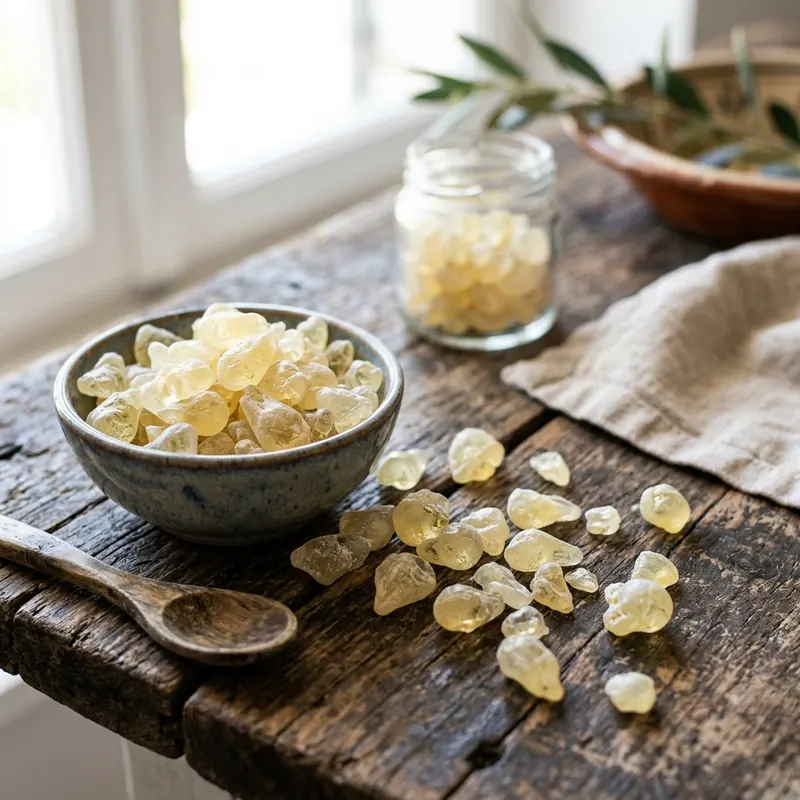
In every traditional Moroccan bakery and bridal kitchen, you will observe a curious baking ritual: a grandmother takes two or three translucent, pale-yellow crystalline pebbles, places them into a small brass mortar with a sugar cube, and pounds them with rhythmic taps into a fine white powder before folding them into almond paste or sweet bread dough. This precious crystalline resin is Meska Horra (Pure Mastic Gum, Pistacia lentiscus var. Chia).
Known historically across the Mediterranean as “the tears of Chios,” mastic is one of the oldest natural chewing gums and aromatic resin binders known to human civilization. While Western pastry chefs rely almost exclusively on vanilla extract to perfume desserts, Moroccan pastry masters understand that Meska Horra provides something vanilla can never deliver: a haunting pine-cedar aroma, gentle herbal sweetness, and a unique structural elasticity that binds ground nuts into supple, long-lasting confections.
The Botanical Origins: The Weeping Trees of Chios
True mastic gum is an extraordinary natural product with an intensely localized terroir. It is harvested almost exclusively from the southern region of the Greek island of Chios in the Aegean Sea:
- The Lentisk Shrub (Pistacia lentiscus): While the wild mastic bush (Drou) grows abundantly across the hillsides of Morocco and North Africa, only the cultivated variety in southern Chios secretes substantial amounts of the precious aromatic resin when its bark is incised.
- The Harvest of Tears: During July and August, farmers sweep the soil beneath the trees clean and dust it with white medicinal clay. They carve shallow horizontal incisions (Kentima) into the trunk and main branches.
- The Solidification: Clear, sap-like droplets weep slowly from the cuts, falling onto the limestone clay base. Exposed to Mediterranean heat and sea breezes, the resin tears harden over two to three weeks into translucent, pale-yellow crystals that are harvested by hand and cleaned with tiny knives.
Recognized by UNESCO as Intangible Cultural Heritage and protected under European Protected Designation of Origin (PDO), true Meska Horra is a luxury botanical prized across the Mediterranean basin.
The Secret Technique: Pounding with Sugar Crystals
Meska Horra possesses a unique physical chemistry: it is a pure plant resin with an exceptionally low melting point. If you attempt to grind pure mastic tears alone in an electric spice grinder or warm food processor, the mechanical friction heats the resin, turning it instantly into a sticky, unmanageable glue that gums up blades and sticks permanently to container walls.
Moroccan bakers solve this problem through ancestral physics:
- The Mortar and Pestle: Place three to four cold mastic tears into a small, dry stone or brass mortar.
- The Abrasive Sugar: Add one sugar cube or half a teaspoon of coarse granulated sugar.
- The Pounding: Crush the crystals firmly with the pestle. The sharp, hard sugar crystals act as a natural abrasive, fracturing the brittle mastic tears into microscopic dust before friction heat can melt the resin. The resulting powdery mixture can be dispersed evenly throughout almond flour, warm dough, or sweet creams without clumping.
Essential Roles in Moroccan Pastry Mastery
In Moroccan confectionery, Meska Horra is indispensable:
- Cornes de Gazelle (Kaab el Ghazal): The quintessential almond paste filling (Oqda) requires blanched, twice-ground almonds, orange blossom water, unsalted butter, a whisper of cinnamon, and finely pounded Meska Horra. The mastic resin gives the almond paste its iconic chewy, fondant-like elasticity, preventing it from drying into crumbly flour during baking.
- Chebakia (Ramadan Honey Cookies): The fragrant fried sesame dough owes its aromatic depth and crisp, melt-in-the-mouth texture to a precise balance of aniseed, cinnamon, saffron, and pounded mastic gum.
- Krachel (Sweet Medina Brioches): Folded into warm semolina yeast dough, mastic releases a warm, balsamic, cedar-pine aroma that defines morning bakeries across Fez.
How to Distinguish Real Meska Horra from Cheap Frankincense
Because authentic Chios mastic commands high prices, tourist markets frequently sell cheaper frankincense (Louban Dakar) or synthetic industrial resin as “Meska”:
| Feature | Authentic Meska Horra | Cheap Substitute (Frankincense / Louban) | | : - | : - | : - | | Appearance | Translucent, pale-yellow crystalline teardrops; glassy and clean. | Chalky, cloudy, brownish-white rough lumps. | | Chewing | Hard at first, softens within thirty seconds into smooth, elastic white gum that never breaks apart. | Remains crumbly, sandy, and bitter in the mouth; does not form clean gum. | | Aroma | Fresh, light pine-cedar fragrance with mild herbal sweetness. | Pungent, heavy church incense aroma with harsh bitterness. |
Frequently Asked Questions
Can I use vanilla extract as a substitute for Meska Horra?
While vanilla adds sweetness, it is not an equivalent substitute. Meska Horra provides a refreshing pine-balsamic herbal aroma and acts as a structural binding gum that keeps almond pastes supple. If you cannot find mastic gum, omit it rather than adding heavy vanilla, which masks the authentic flavor of Moroccan almonds and orange blossom water.
Can whole Meska Horra crystals be chewed like modern chewing gum?
Yes. Chewing mastic tears is the ancient origin of modern chewing gum (the English word “masticate” derives directly from mastic). Chewing a teardrop of Meska Horra exercises jaw muscles, naturally stimulates saliva production, cleans teeth, and freshens breath with antimicrobial pine terpenes.
How much Meska Horra should I use in an almond pastry recipe?
Meska Horra is extremely potent. For one kilogram of ground almonds, three to four small tears (roughly 1/4 teaspoon when pounded with sugar) are sufficient. Using too much mastic can impart an overly resinous, bitter pine taste to delicate confections.
What are the digestive benefits of Meska Horra?
Modern gastrointestinal clinical trials have confirmed that mastic gum inhibits Helicobacter pylori, the primary bacterium responsible for stomach ulcers, while soothing heartburn, acid reflux, and chronic gastritis.
Experience the true heart of Moroccan heritage through its culinary traditions. Join us in preserving and honoring these ancestral recipes.
What People Are Saying
No comments yet. Be the first — we'd love to hear from you.
Sara
Culturally Verified & Fact-CheckedSara studies the nutritional and functional science of Moroccan ingredients, from pure argan oil and Taliouine saffron to wild medicinal herbs.