Mechoui: The Slow-Roasted Whole Lamb Tradition of Moroccan Feasts
archived: false
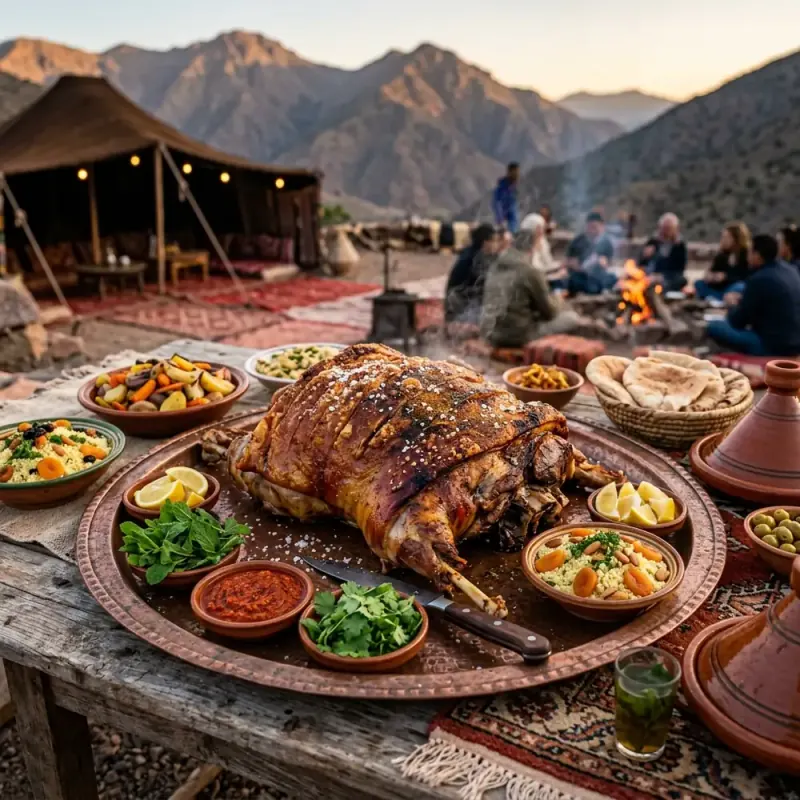
Across the rural plains and mountain plateaus of Morocco, no banquet, wedding celebration, or honoring of an esteemed guest reaches its true ceremonial climax without Mechoui. The term derives from the Arabic verb Chawa, meaning to roast or barbecue over fire. Unlike Western spit roasts basted with sticky sweet glazes or smoked with barbecue rubs, authentic Moroccan Mechoui celebrates the pure, unadorned flavor of grass-fed pasture lamb, slow-roasted whole inside an underground clay pit oven until the meat becomes so tender it can be pulled apart between thumb and forefinger.
In the old city of Marrakech, a dedicated alley near Jemaa el-Fna is known simply as Souk Mechoui. Here, master roasters (Al-Chawaya) have tended underground pit ovens for over two centuries, lowering whole lambs into the glowing depths at dawn so that medina workers and visiting dignitaries can feast on meltingly tender, mahogany-crusted roast meat by noon.
The Underground Clay Pit Oven: Architectural Magic
The secret to Mechoui’s extraordinary texture lies in the physics of the Tannour or pit oven. This is not an open barbecue grill; it is a sealed thermal chamber constructed underground:
- The Pit Construction: A vertical pit approximately two to two-and-a-half meters deep is dug into the earth and lined with local firebrick and clay mortar.
- The Hardwood Fire: Early in the morning, the pit is filled with dense logs of wild olive wood, holm oak, or citrus roots. The wood is ignited and allowed to burn down vigorously for three to four hours until the pit walls glow red with stored radiant heat and the wood collapses into a bed of white-hot embers.
- The Lamb Suspension: The lamb is prepared whole, rubbed on the interior cavity with coarse sea salt, fermented butter (Smen), and pounded garlic. The carcass is trussed onto an iron crossbar and suspended vertically into the center of the pit, suspended directly above, but not touching, the glowing coals.
- The Clay Hermetic Seal: A heavy iron lid is placed over the opening, sealed completely around the edges with wet mud, clay mortar, and damp burlap sacks. This airtight seal prevents oxygen from feeding flames, ensuring the meat roasts through indirect radiant heat and convection without burning.
- The Confit Bake: The lamb roasts undisturbed in its sealed steam chamber for four to five hours. As fat renders from the carcass, it drips down onto the embers, sending up aromatic plumes of woodsmoke that perfume the meat from within.
When the clay seal is cracked open at midday, an intoxicating cloud of roasted lamb and woodsmoke fills the alleyway. The master roasters hoist the steaming, mahogany-brown carcass out of the earth, glistening with rendered natural juices.
The Spartan Seasoning Philosophy
Novice cooks are often shocked to learn that authentic Moroccan Mechoui uses virtually no wet marinades or complex spice blends. The culinary philosophy of Mechoui is rooted in absolute simplicity:
- Coarse Mountain Sea Salt (Milha Hraya): Hand-harvested from coastal salt marshes or Atlas mountain brine pans.
- Freshly Ground Beldi Cumin (Kamoun Beldi): Sourced from the arid plains of Alnif or Rissani, freshly toasted and crushed in stone mortars immediately before eating.
As diners gather around the communal wooden carving board or heavy ceramic platter, they tear tender shreds of golden crispy skin and succulent muscle meat with their right hands, dipping each morsel lightly into individual mounds of cumin and salt. The cumin cuts through the natural fattiness of the lamb, while the sea salt enhances its rich, caramelized sweetness.
Mechoui at Home: Oven-Roasting Method
While an underground pit is irreplaceable for communal banquets, Moroccan families regularly prepare an exceptional home version using a whole bone-in shoulder (Ketf) or leg of lamb (Fkhed):
- The Puncturing: Make deep incisions into the thickest parts of the lamb meat with the tip of a sharp knife.
- The Herb and Smen Rub: Mash softened smen (or good unsalted butter) with crushed garlic, a pinch of saffron threads, salt, black pepper, and ground coriander. Rub the seasoned butter deep into the meat crevices.
- The Steam-Roast Chamber: Place the lamb into a roasting pan with a splash of water, cover tightly with parchment paper, and seal completely with double layers of heavy aluminum foil so zero steam can escape.
- Low and Slow: Roast at 150°C (300°F) for four hours.
- The Final Crisp: Uncover the lamb, brush with melted butter, and place under a hot grill for ten minutes until the surface sizzles and develops a shatteringly crisp mahogany crust.
Frequently Asked Questions
What cut of lamb is best for preparing home Mechoui?
The bone-in lamb shoulder (Ketf) is universally preferred by Moroccan butchers and chefs for home Mechoui. It contains the ideal ratio of intramuscular fat, collagen, and tender meat, which keeps the roast remarkably moist during low-and-slow roasting.
What is typically served alongside Mechoui at a Moroccan feast?
Mechoui is traditionally served with fresh, warm rounds of crusty round bread (Khobz Beldi), small bowls of freshly ground cumin and sea salt, accompanied by light cooked salads like Taktouka (roasted peppers) and Zaalouk (eggplant), followed by a hot pot of fresh mint tea to aid digestion.
Is Mechoui made with sheep, goat, or beef?
Traditional Mechoui is almost exclusively prepared using young grass-fed lamb (under one year of age). In the southern Anti-Atlas valleys, young kid goat (Jaddi) is occasionally pit-roasted in identical fashion, producing a leaner meat with an earthy, herbal flavor.
Why is cumin always served on the side instead of rubbed on the meat before roasting?
Cumin burns and turns unpleasantly bitter when exposed to high, prolonged roasting temperatures. By serving freshly ground, toasted cumin at the table, diners enjoy the bright, aromatic, digestive benefits of the spice without any scorched bitterness.
Experience the true heart of Moroccan heritage through its culinary traditions. Join us in preserving and honoring these ancestral recipes.
What People Are Saying
No comments yet. Be the first — we'd love to hear from you.
Chef Rachid
Culturally Verified & Fact-CheckedChef Rachid is a Moroccan culinary specialist with decades of kitchen experience across coastal Morocco, specializing in Atlantic seafood, tagines, and traditional charcoal braising.