Medfouna: The Ancient Art of Saharan Stuffed Bread and Desert Sand Ovens
archived: false
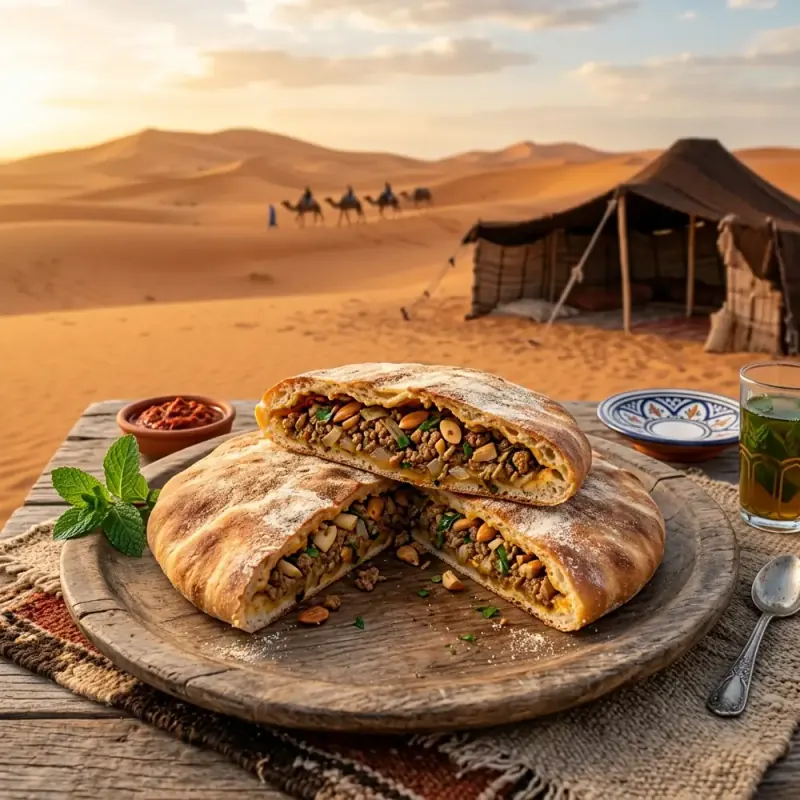
Deep in the southeastern desert province of Tafilalet, where the Ziz Valley empties into the sunbaked palm oases of Rissani and Merzouga, culinary tradition takes the form of an extraordinary golden disc: Medfouna. Often described by visitors as “Berber Pizza,” this ancient preparation bears little resemblance to Italian flatbreads. Medfouna is a double-crusted, leavened wheat flatbread stuffed to bursting with finely seasoned meat, rendered suet, sweet onions, hard-boiled eggs, and roasted almonds, then baked until the crust turns paper-crisp and the interior melts into savory richness.
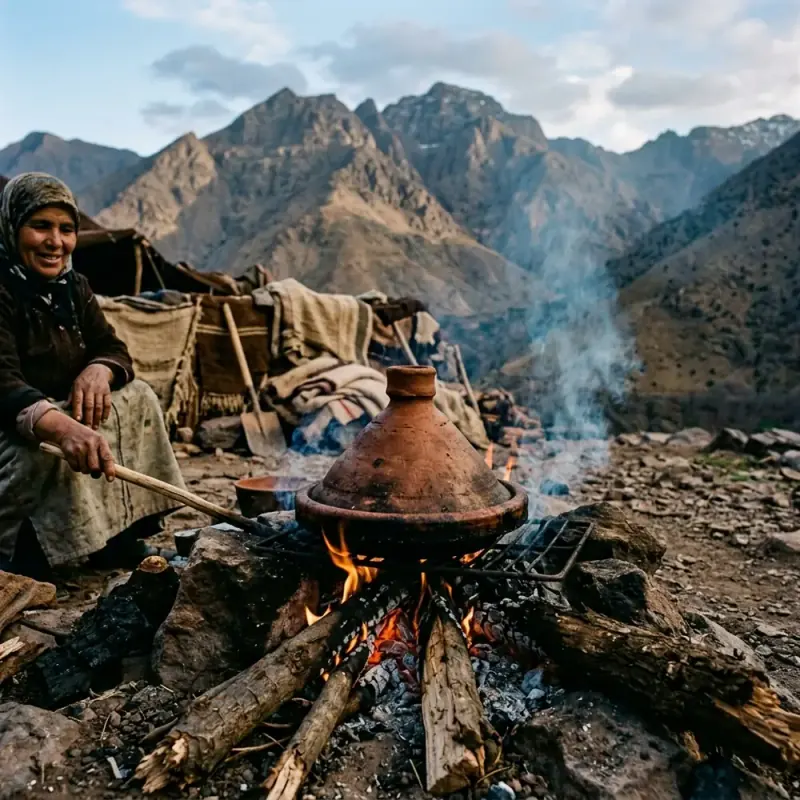
The word Medfouna derives from the Arabic root Dafana, meaning “buried” or “interred.” For nomadic caravan traders and Berber pastoralists traversing the Sahara, this name carried literal meaning: Medfouna was baked by burying the prepared dough disc directly into clean desert sand heated by glowing coals of desert scrub and wild acacia wood.
Nomadic Origin and Desert Survival Engineering
To appreciate Medfouna, one must understand the survival challenges of the pre-Saharan desert. On long seasonal migrations across stony plains (Regs) and dune seas (Ergs), shepherds had neither heavy iron cookware nor brick ovens. What they carried was portable: a sack of durum wheat semolina, water skins, dried spices, suet, and dried or fresh meat from butchered sheep or camels.
The desert sand itself functioned as a thermal masonry oven:
- The Fire Pit: A shallow depression was dug into fine sand and filled with twigs of desert tamarisk (Athel) and acacia.
- The Sand Hearth: Once the fire burned down to glowing embers, the red-hot coals were pushed aside, and the hot sand swept clean of heavy debris.
- The Burial: The stuffed dough round was placed directly onto the scorching sand, covered with a thin protective layer of hot ash and fine sand, and allowed to bake for thirty minutes.
- The Reveal: Unearthed with wooden sticks, the baked loaf was dusted clean of surface ash with a clean cloth. The intense dry heat created a blistered, golden crust impermeable to sand, locking in all moisture and savory meat juices.
While modern bakeries in Rissani bake Medfouna in wood-fired brick masonry ovens, the structural composition of the dish remains unchanged from nomadic antiquity.
The Anatomy of the Authentic Tafilalet Filling
An authentic Rissani Medfouna is defined by the quality and layering of its filling. Shortcuts like pre-cooking the meat or using generic ground mince result in a dry, lackluster filling. The meat must cook raw inside the dough package, bathing in its own rendered juices during the bake:
- Tender Beef or Camel Fillet: High-quality lean beef tenderloin or young camel meat is hand-diced into pea-sized cubes rather than pushed through industrial meat grinder dies. This creates a distinct, juicy steak bite.
- Rennet Suet (Chehma Beldia): The secret to Medfouna’s melting texture is finely shredded beef kidney fat or lamb tail fat. As the bread bakes, this clean suet liquefies completely, basting the lean meat, onions, and dough from within and carrying spices into every pocket.
- Sweet White Onions: Finely minced sweet onions melt into sweet compote during baking, providing essential moisture and natural sweetness.
- Hard-Boiled Eggs: Thinly sliced rounds of farm eggs are layered across the meat, absorbing juices and adding rich, velvety density.
- Blanched Toasted Almonds: Whole almonds, peeled and fried golden in olive oil, are scattered throughout the filling, providing a delightful textural crunch that contrasts with tender meat.
The Spice Palette of the Desert
The seasoning of Medfouna reflects Tafilalet’s history as the northern terminus of the trans-Saharan spice routes:
- Freshly Ground Cumin (Kamoun Beldi): Earthy and aromatic, aiding the digestion of rich meats.
- Moroccan Sweet Paprika (Tahmira): Imparts rich red color and gentle roasted pepper fruitiness.
- Ground Ginger and Coriander: Adds bright warmth and herbal fragrance.
- Saffron Strands: Dissolved in warm water and rubbed into the meat.
- Fresh Flat-Leaf Parsley and Coriander: Minced herbs brighten the savory richness.
- A Whisper of Chili (Sudaniya): Just enough dried cayenne pepper to leave a gentle prickle of warmth on the tongue.
The Dough: Durum Wheat Semolina Mastery
The casing of Medfouna must be both tender and robust enough to seal liquid juices without leaking or turning soggy:
Cooks blend fine durum wheat semolina (Smida Rqiga) with hard unbleached bread flour, sea salt, yeast, and warm water. Kneaded vigorously for fifteen minutes until elastic, smooth, and supple, the dough rests under a clean cloth until doubled in volume.
The baker divides the dough into two balls, one slightly larger than the other:
- The Bottom Crust: The larger dough ball is rolled out on a semolina-dusted wooden peel into a thin circle roughly thirty-five centimeters in diameter.
- The Layering: The spiced raw meat, onions, suet, hard-boiled eggs, and almonds are distributed evenly across the base, leaving a two-centimeter clean margin around the edge.
- The Top Seal: The smaller dough ball is rolled out equally thin and draped gently over the filling.
- The Braided Edge (Dfra): The baker pinches the bottom and top dough margins together, folding and twisting the dough along the perimeter into a decorative, airtight rope braid.
- The Steam Vent: The top surface is pricked lightly with a fork or pierced in the center with a single vent hole to prevent ballooning and steam rupture in the oven.
How to Order and Experience Medfouna in Rissani
If you visit Rissani, the traditional way to enjoy Medfouna is through the medina’s artisanal butcher-baker cooperative system:
Walk into the covered souk of Rissani to visit a traditional butcher (Gazzar). Select your fresh cut of beef or camel meat and ask him to prepare the filling (Laqama) with fresh onions, suet, almonds, and spices right before your eyes.
Carrying your seasoned bowl of filling, walk thirty paces to a neighborhood communal wood-fired bakery (Ferran). The baker rolls out the dough, encases your customized filling, and slides the heavy round peel into the fiery depths of the wood oven. Twenty-five minutes later, you receive a blistering, mahogany-crusted Medfouna wrapped in brown butcher paper.
Carry the piping-hot bread to an adjacent open-air café, order a silver pot of sweet gunpowder mint tea, and carve the bread into generous triangular wedges. As steam rises, the golden aroma of spiced meat, roasted almonds, and woodsmoke offers an authentic taste of Saharan hospitality.
Frequently Asked Questions
Can I bake Medfouna at home in a standard kitchen oven?
Yes. Preheat your home oven to its highest setting (at least 230°C, 250°C) with a heavy pizza stone or cast-iron baking sheet placed on the lowest rack for forty-five minutes. Slide the assembled Medfouna directly onto the hot stone. Bake for twenty to twenty-five minutes until the crust is deeply golden and blistered on both sides.
Is Medfouna heavy or greasy to eat?
When properly prepared using clean kidney suet (Chehma) and lean hand-cut beef or camel, Medfouna is surprisingly balanced. The hot suet melts into the onions and meat rather than pooling, creating a succulent filling. Pairing the meal with hot, bitter-sweet mint tea helps break down fats and promotes comfortable digestion.
Are there vegetarian versions of Medfouna?
While meat is traditional, contemporary desert families occasionally prepare vegetarian Medfouna filled with caramelized onions, stewed tomatoes, sweet peppers, toasted almonds, hard-boiled eggs, and local goat cheese, heavily spiced with cumin, paprika, and wild mountain herbs.
What is the difference between Medfouna and Khobz b’Chehma?
While both are stuffed Moroccan breads, Khobz b’Chehma is typically a thinner, everyday griddle-cooked bread (Msemen or Batbout style) filled simply with suet, onions, and paprika. Medfouna is a much larger, substantial double-crusted banquet pie packed with whole cuts of meat, nuts, and eggs, traditionally baked in deep ovens or hot sand.
Experience the true heart of Moroccan heritage through its culinary traditions. Join us in preserving and honoring these ancestral recipes.
What People Are Saying
No comments yet. Be the first — we'd love to hear from you.
Khadija
Culturally Verified & Fact-CheckedKhadija is an artisanal pastry baker focused on the heritage of Moroccan confectionery, from hand-shaped almond gazelle horns to honey-soaked Ramadan pastries.