Moroccan Mint Varieties: Na'na, Fliou, and Timija Explained
archived: false
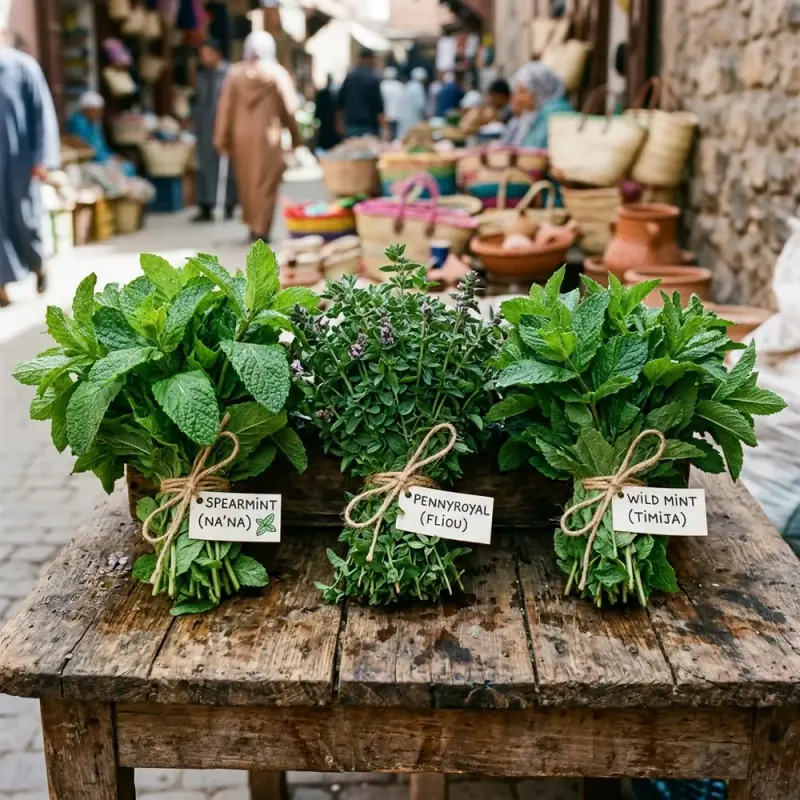
Walk into any morning vegetable souk in Tangier, Fez, or Marrakech, and the first scent that greets your nostrils is a cool, fragrant green wave drifting from the stalls of the herb vendors (Al-Khaddara). Freshly harvested bunches of aromatic herbs, their stems still wet with morning irrigation mist, are piled high on wooden carts.
While international visitors are familiar with the sweet spearmint used to brew classic Moroccan tea, Moroccan botanical culture recognizes a rich family of distinct mint varieties, each possessing its own terroir, essential oil profile, seasonal rhythm, and culinary or medicinal role: Na’na Beldia, Fliou, and Timija.
Understanding these three distinct mints reveals the true depth of Moroccan tea culture and herbal medicine.
1. Na’na Beldia (Moroccan Spearmint - Mentha spicata)
Na’na Beldia (Heritage Spearmint) is the undisputed aristocrat of the Moroccan tea tray:
- Botanical Characteristics: Unlike dark green, broad-leaved commercial peppermint (Mentha piperita), authentic Moroccan Na’na Beldia features pale-green, slender, crinkled leaves with serrated edges and reddish-purple stems.
- The Chemical Profile: Its essential oil is dominated by carvone (giving it a clean, intensely sweet, fruity herbaceous aroma) and limonene, with virtually zero menthol. This absence of harsh, medicinal menthol is what allows Moroccan tea to taste refreshing and sweet without burning the throat or overpowering green gunpowder tea leaves.
- The Premier Terroir: The most prized spearmint in the Kingdom comes from the river valleys around Meknes and the fertile plains of Tadla, where sunny days and deep alluvial soils produce high concentrations of sweet aromatic oils.
2. Fliou (Wild Pennyroyal - Mentha pulegium)
When autumn rains arrive and winter mountain winds descend from the Atlas, spearmint stalls make room for dense, leafy bunches of Fliou (Pennyroyal):
- Botanical Characteristics: Fliou is a low-growing, creeping wild mint with small, dark oval leaves and tiny lilac-purple flower whorls that grows along marshy stream banks and damp mountain irrigation canals.
- The Chemical Profile: Fliou contains high levels of pulegone and menthol, giving it an intense, warming, camphorous, and sharply medicinal punch that clears nasal passages instantly upon crushing.
- The Winter Medicine: Fliou is rarely brewed with everyday green tea. Instead, Moroccan grandmothers brew Fliou in simmering milk or hot water with a teaspoon of mountain honey to soothe acute bronchial colds, quiet chest coughs, dispel winter shivers (Al-Bard), and settle stomach gas.
3. Timija (Wild Water Mint - Mentha aquatica / Mentha suaveolens)
Higher up in the alpine valleys of the High Atlas and the mist-laden forests of the Rif grows Timija, an ancient wild mint deeply cherished by Amazigh mountain communities:
- Botanical Characteristics: Timija features rounded, fuzzy, pale-green leaves covered in soft, velvety hairs, producing pale-pink flower spikes along mountain springheads.
- The Sensory Experience: Timija has a subtle, complex flavor profile that bridges wild thyme, sweet mint, and green apple, completely devoid of aggressive menthol sharpness.
- Culinary and Ritual Role: Mountain shepherds harvest wild Timija in early summer and dry it on shaded verandas. It is crushed into warm barley broths, infused into morning herbal teas without sugar, and used in rural Amazigh wedding ceremonies as an auspicious herb of peace and blessing.
Botanical Comparison at a Glance
| Feature | Na’na Beldia (Mentha spicata) | Fliou (Mentha pulegium) | Timija (Mentha suaveolens) | | : - | : - | : - | : - | | Primary Scent | Sweet, fruity, fresh herb (carvone). | Sharp, camphorous, medicinal (pulegone). | Earthy, apple-like, herbal (piperitenone). | | Primary Use | Daily hospitality green tea (Atay). | Cold-weather medicinal respiratory tea. | Mountain herbal infusions and savory broths. | | Season | Spring and warm summer. | Autumn and cold winter. | Harvested summer; dried for winter. | | Taste Note | Sweet, refreshing, delicate. | Warm, spicy, chest-opening. | Earthy, subtle, grounding. |
Frequently Asked Questions
Can I substitute Western grocery store peppermint for Na’na Beldia?
Western peppermint (Mentha piperita) contains high levels of menthol that produce an aggressive, icy, medicinal flavor reminiscent of toothpaste. If authentic Moroccan spearmint (Mentha spicata) is unavailable, look for sweet spearmint or sweet garden mint at local farmers’ markets rather than peppermint.
Is Fliou (Pennyroyal) safe to drink in large quantities?
In traditional Moroccan culinary and folk practice, a few fresh sprigs of Fliou infused in a pot of hot water or warm milk is a safe, time-tested home remedy for minor colds. However, concentrated pure essential oil of pennyroyal should never be consumed internally, as pure pulegone in high industrial doses is toxic to the liver.
How should fresh Moroccan mint be stored at home?
Never store fresh mint in a sealed plastic bag in the refrigerator crisper drawer, which turns the leaves slimy and black within forty-eight hours. Treat fresh mint like cut flowers: trim half a centimeter from the bottom of the stems and place the bunch upright in a glass of water on your kitchen counter, changing the water every two days. It will remain crisp and fragrant for over a week.
What is “Chiba” and is it a type of mint?
No. Chiba is Absinthe or Tree Wormwood (Artemisia absinthium), an intensely bitter, silvery-gray shrub belonging to the Asteraceae family. Moroccan tea makers add a single sprig of Chiba to their mint tea during cold winter months to add warmth and support digestion, but it is botanically unrelated to mint.
Experience the true heart of Moroccan heritage through its culinary traditions. Join us in preserving and honoring these ancestral recipes.
What People Are Saying
No comments yet. Be the first — we'd love to hear from you.
Sara
Culturally Verified & Fact-CheckedSara studies the nutritional and functional science of Moroccan ingredients, from pure argan oil and Taliouine saffron to wild medicinal herbs.