Moroccan Alcoholic Beverages: The Historic Culture of Mahia, Guerrouane Wines, and Medina Spirits
Moroccan Alcoholic Beverages: The Historic Culture of Mahia, Guerrouane Wines, and Medina Spirits
To speak of alcoholic drinks in Morocco is to explore an ancient conversation between soil, sacred traditions, and changing dynasties. Outside observers often picture North Africa as completely dry, imagining that wine and spirits exist solely for foreign visitors. The reality is far older, rooted in the hillsides, and shaped by communities that shared this soil for thousands of years.
Berber kingdoms traded fermented beverages across Mediterranean routes long before modern borders. Roman colonists planted extensive vineyards across the fertile plains beneath Mount Zerhoun. For centuries, Moroccan Jewish artisans maintained an unbroken tradition of distilling eau-de-vie from late-summer figs and aniseed inside fortified historic quarters. Today, Morocco stands as one of the primary wine producers in North Africa, crafting pale gris wines that mirror the Atlantic coast and rustic reds nurtured by the Meknes sun.
Understanding this beverage culture means looking past surface assumptions. It means listening to the quiet clink of copper stills in mountain villages, studying ancient stone presses, and respecting the social boundaries that guide daily life in modern Morocco.
The Sacred Spirit: Mahia and the Jewish Mellahs
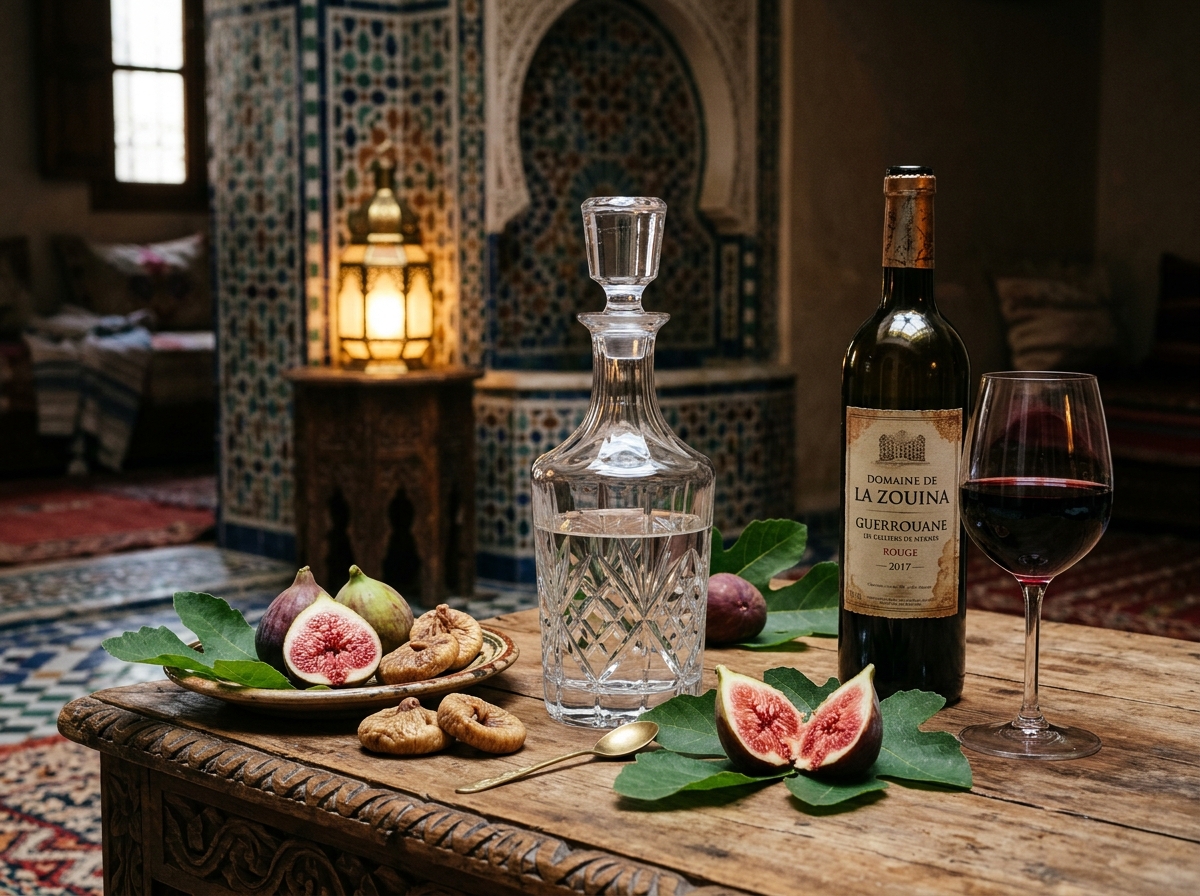
No exploration of Moroccan spirits can begin anywhere other than mahia, which translates from Moroccan Arabic as “water of life” (mâ el-hayat). Mahia is an eau-de-vie distilled primarily from dried figs (chriha), though dates and grapes were occasionally chosen depending on regional harvests. Its defining aromatic signature is wild aniseed (habbt hlaoua), which gives the spirit a fragrant, herbal finish.
For centuries, the distillation of mahia belonged almost exclusively to Morocco’s Jewish communities. Under historic Islamic legal custom, the production and sale of spirits were permitted within the mellah—the designated Jewish quarter. In cities like Fes, Marrakech, Meknes, and the eastern frontier town of Debdou, home distillation was both a trade and an intimate household craft.
Making traditional mahia followed the agricultural calendar:
- The Fruit: In late summer, black and golden figs from the Chaouia plains or Souss orchards were dried in the sun until natural sugars concentrated into dense pastes.
- The Fermentation: The dried fruit was crushed in vats, mixed with well water, and allowed to ferment naturally with wild airborne yeasts. No sugar was added; the alcohol came entirely from sun-cured fruit.
- The Distillation: Using hand-hammered copper alembics (qattara), families distilled the mash once or twice. Toward the end of the run, wild aniseed was added to the pot, scenting the vapor with sweet licorice notes.
- The Proof: The spirit emerged crystal clear, typically between 40% and 50% alcohol by volume, carrying a smooth warmth across the tongue.
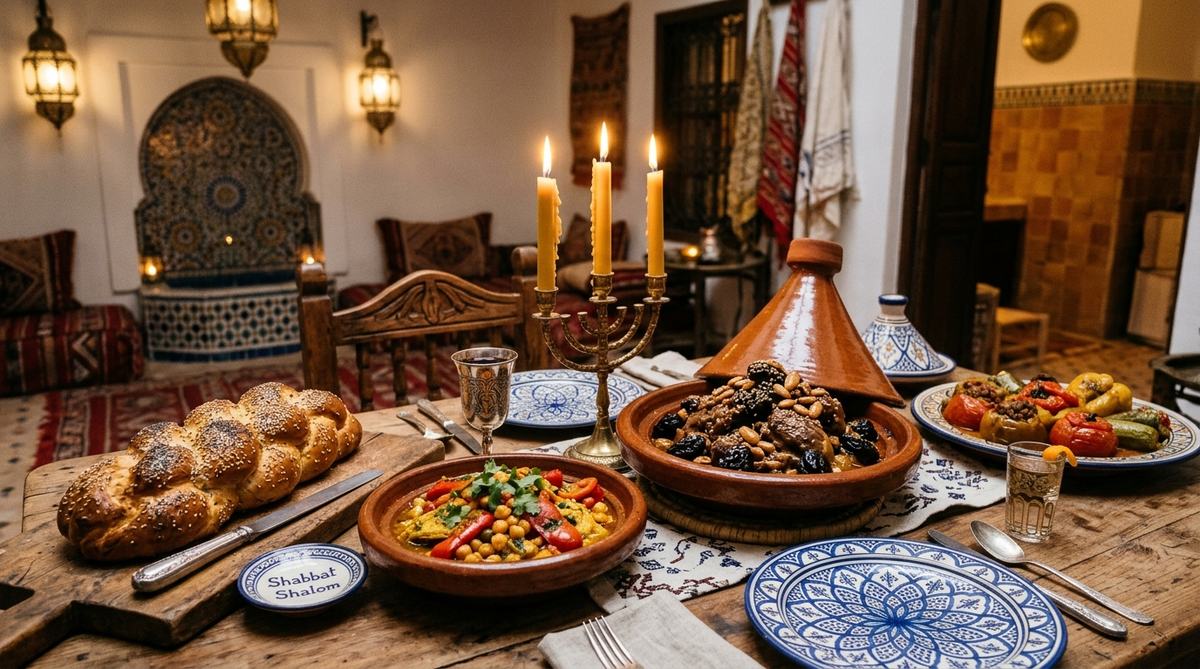
Mahia was woven into Moroccan Jewish life. It filled small glasses to toast Shabbat prayers, sat beside plates of salted fava beans and roasted almonds during Mimouna, and welcomed guests at weddings. Distillers guarded family recipes closely, passing heirloom copper pots down through generations. While twentieth-century migrations dispersed many distilling families, artisanal revivals have introduced authentic Moroccan-style mahia to modern cocktail lists worldwide.
The Roman Footprint: Ancient Viticulture in Volubilis
Long before the French protectorate planted industrial vineyards in the twentieth century, the grape vine had formed deep roots in Moroccan soil. In the ancient Mauretanian capital and Roman provincial city of Volubilis (Walili), resting at the foot of Mount Zerhoun near Meknes, stone wine presses, fermentation vats, and storage basins from the first and second centuries AD remain visible today.
Roman chroniclers admired northern Morocco’s agricultural wealth, praising the balance of winter rainfall, warm sunshine, and cool mountain drafts. Settlers filled clay amphorae with local wine for provincial soldiers and export across the empire.
While large-scale wine production declined after the arrival of Islam in the eighth century, indigenous table grapes continued to be cultivated across the country. Grapes like Doukkali, Muscat d’Alexandrie, and wild mountain vines provided fresh fruit, raisins, and concentrated grape molasses (robb) used in home baking and traditional medicine. The earth never forgot how to sustain the vine.
The Great Terroirs: Guerrouane, Beni M’tir, and Les Celliers de Meknès
Modern Moroccan winemaking took root during the French protectorate (1912–1956), when growers sought fertile ground away from the phylloxera epidemic in Europe. They recognized that the high plateau of Meknes offered exceptional viticultural conditions.
Today, Meknes remains the center of Moroccan wine, producing roughly sixty percent of the country’s bottles. Vineyards sit at altitudes between 500 and 700 meters above sea level, sheltered by Mount Zerhoun and nourished by mountain aquifers. The soil combines limestone, gravel, and clay, draining well while retaining moisture through dry summer weeks. Hot sunny afternoons followed by cold mountain nights preserve natural acidity in the grapes, yielding balanced wines rather than heavy, overripe profiles.
Notable wine designations include:
- AOG Guerrouane: Morocco’s most widespread Appellation d’Origine Garantie. Situated between Meknes and Fes, Guerrouane produces balanced red wines and crisp, refreshing pinks.
- AOG Beni M’tir: Positioned higher on the Middle Atlas foothills near El Hajeb, this cooler area produces wines with deeper color, structured tannins, and dark fruit notes.
- AOC Côteaux de l’Atlas & Château Roslane: Managed by Les Celliers de Meknès, this represents Morocco’s premier Appellation d’Origine Contrôlée, with strict limits on yields, oak barrel aging, and estate bottling.
- Gris de Boulaouane & Sidi Brahim: Historic names long served in neighborhood bistros, recognized for reliable table quality and easy drinkability.
Red varieties planted here include Carignan, Cinsault, Grenache, Syrah, and Cabernet Sauvignon; whites focus on Clairette, Sauvignon Blanc, and Chardonnay.
The Character of Moroccan Vin Gris
Take a seat at any seafood stall in Casablanca, Tangier, or Essaouira, and you will notice bottles filled with a liquid that looks neither red nor white, but a pale, glistening onion-skin gray. This is Vin Gris (“gray wine”), Morocco’s signature table wine.
Vin Gris is a pressing method rather than a separate grape. Winemakers harvest red grapes—chiefly Cinsault and Grenache—and press them immediately without letting the juice macerate with the red skins. The quick contact releases just a faint blush of salmon-gray hue alongside delicate aromas of white peach, wild strawberry, and citrus rind.
Because Vin Gris possesses low tannins and crisp mineral acidity, it pairs naturally with Moroccan home cooking. Where a heavy red wine fights against ground cinnamon, saffron, and cumin, a chilled Guerrouane Gris cuts through the fat of a slow-cooked lamb tagine, balances the salt of cured lemons, and cools the tongue after spicy harissa.
Local Beer Heritage: Flag Spéciale and Casablanca
Moroccan beer culture developed around working-class brasseries and port neighborhoods. Industrial brewing began in 1919 with the establishment of the Société des Brasseries du Maroc.
Two labels define the local brewing story:
- Flag Spéciale: Introduced in 1928, Flag is a light, golden lager (around 5% ABV). Clean, simple, and served icy cold, it remains the classic choice in traditional brass-trimmed neighborhood brasseries from Tangier to Agadir.
- Casablanca Beer: Created in the 1990s as a premium export lager, Casablanca is brewed using barley malt and subtle Saaz hops. It offers a slightly fuller body, golden color, and a crisp malt profile with subtle citrus bitterness.
Laws, Etiquette, and Respectful Consumption
Morocco balances Islamic values with secular commercial regulations. Respecting local norms ensures an enjoyable experience:
- The Legal Framework: Moroccan law restricts the sale of alcohol to Muslim citizens under Article 286 of the penal code. In practice, licenses are issued to venues serving foreign visitors and non-Muslims.
- Where to Buy: You will not find alcohol in neighborhood corner grocery stores (hanouts). Purchases must be made in licensed specialty shops or dedicated “Cave” sections inside major supermarkets like Carrefour.
- Public Behavior: Drinking alcohol on streets, public beaches, squares, or inside medina residential alleys is illegal and socially disrespectful. Keep drinking confined to licensed restaurants, riads, hotel terraces, and brasseries.
- Ramadan: During Ramadan, supermarket alcohol sections and standalone bottle shops shut down completely across the country. Only select international hotels serve alcohol to foreign visitors holding non-Moroccan passports.
Morocco’s relationship with wine and spirits reflects an ancient story of soil, seasons, and communal coexistence—from Roman stone vats in Volubilis to the sweet fig alembics of the Mellahs.
Frequently Asked Questions
What is Moroccan Mahia, and how is it traditionally consumed?
Mahia is a clear eau-de-vie distilled from fermented dried figs and flavored with wild aniseed. Historically crafted by Moroccan Jewish distillers, it typically contains between 40% and 50% alcohol. It is served chilled in small glasses as an aperitif or digestif, usually paired with toasted almonds, green olives, or dried dates.
Can tourists legally purchase and drink alcohol in Morocco?
Yes. Foreign visitors can buy and drink alcohol in licensed hotels, restaurants, bars, and dedicated supermarket sections such as Carrefour’s cave. However, consuming alcohol in public spaces like streets or parks is strictly prohibited by law and considered socially offensive.
What is Moroccan Vin Gris, and why is it unique?
Vin Gris is a very pale rose-gray wine produced by immediately pressing red grapes (like Cinsault and Grenache) with minimal skin contact. Its crisp acidity, light body, and delicate fruit aromas make it uniquely suited to hot weather and the bold spices of Moroccan tagines and grilled seafood.
Is alcohol available during the holy month of Ramadan?
During Ramadan, bottle shops and supermarket alcohol sections are closed by law nationwide. Alcohol service is restricted to select high-end international hotel bars and restaurants catering exclusively to foreign guests upon presentation of an international passport.
Experience the true heart of Moroccan heritage through its culinary traditions. Join us in preserving and honoring these ancestral recipes.
What People Are Saying
No comments yet. Be the first — we'd love to hear from you.
The Moroccan Food
Culturally Verified & Fact-CheckedThe Moroccan Food editorial team brings together native culinary researchers, heritage preservationists, and experienced home cooks across Marrakech, Fes, and Casablanca. Every recipe and cultural guide is reviewed against ancestral oral traditions and authentic regional practices.