Argan Oil: What the Labels Don't Tell You and How to Know If Yours Is Real
Argan Oil: The Real Thing, the Fake Thing, and How to Tell Them Apart
Morocco’s argan oil has become one of the most internationally recognized Moroccan products — sold in premium beauty retailers, in specialty food stores, in pharmacies as a nutritional supplement, with a global market that has grown from essentially zero in the early 1990s to several hundred million dollars annually. This growth has been substantially positive for the Amazigh women’s cooperatives of the Souss region who produce genuine argan oil through traditional methods, and it has also created a large market for product that is adulterated, blended, mislabeled, or not argan oil at all. Knowing the difference matters both for the quality of what you are using and for whether your purchase is actually supporting the Moroccan producers you think you are supporting.
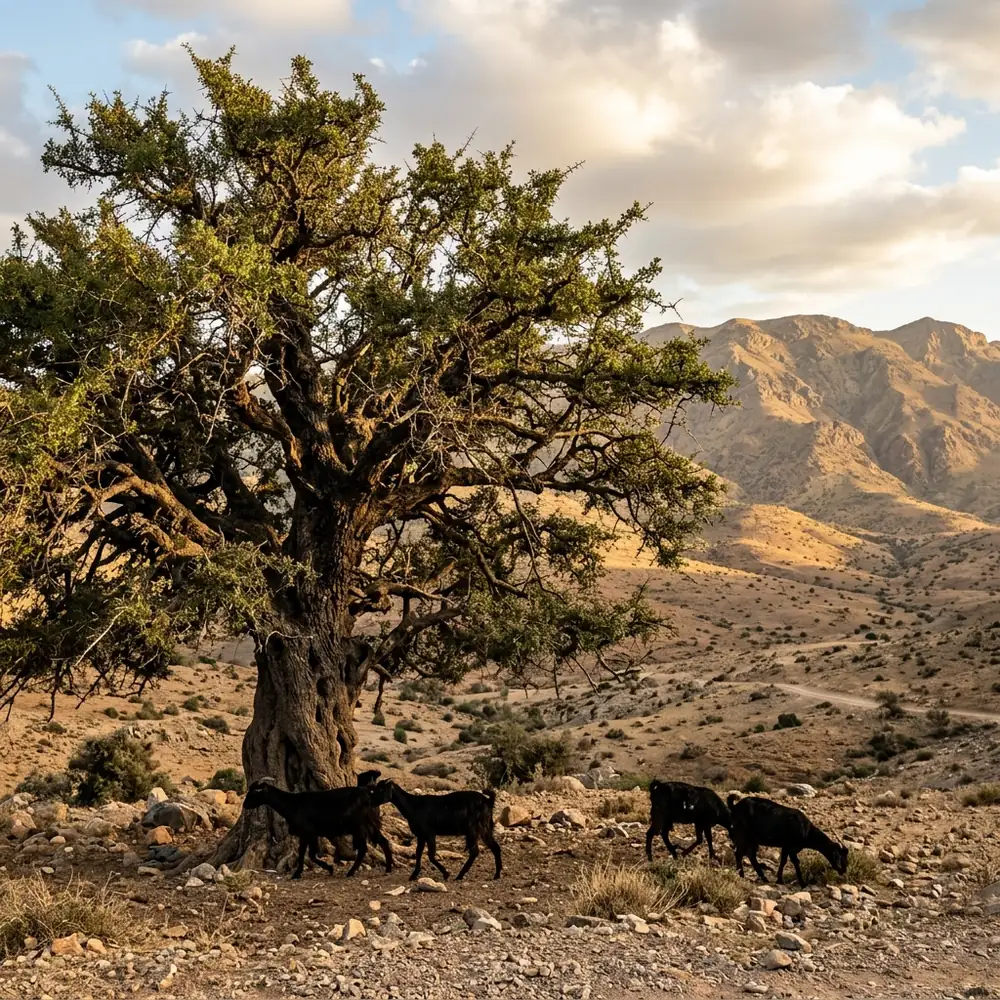
The argan tree (Argania spinosa) grows in a specific region of southwestern Morocco — the arganerie, a UNESCO Biosphere Reserve covering approximately 800,000 hectares in the Souss-Massa region — and almost nowhere else on Earth. The oil is extracted from the kernel inside the argan fruit’s nut, which is inside the argan fruit’s pulp, which is what the famous tree-climbing goats eat to reach (the goats cannot digest the nut and excrete it intact, which is the traditional starting point for kernel collection, though modern production does not use goat-processed nuts).
What Are the Two Types of Argan Oil and What Are They Each For?
There are two distinct argan oil products with completely different uses, appearances, and production methods:
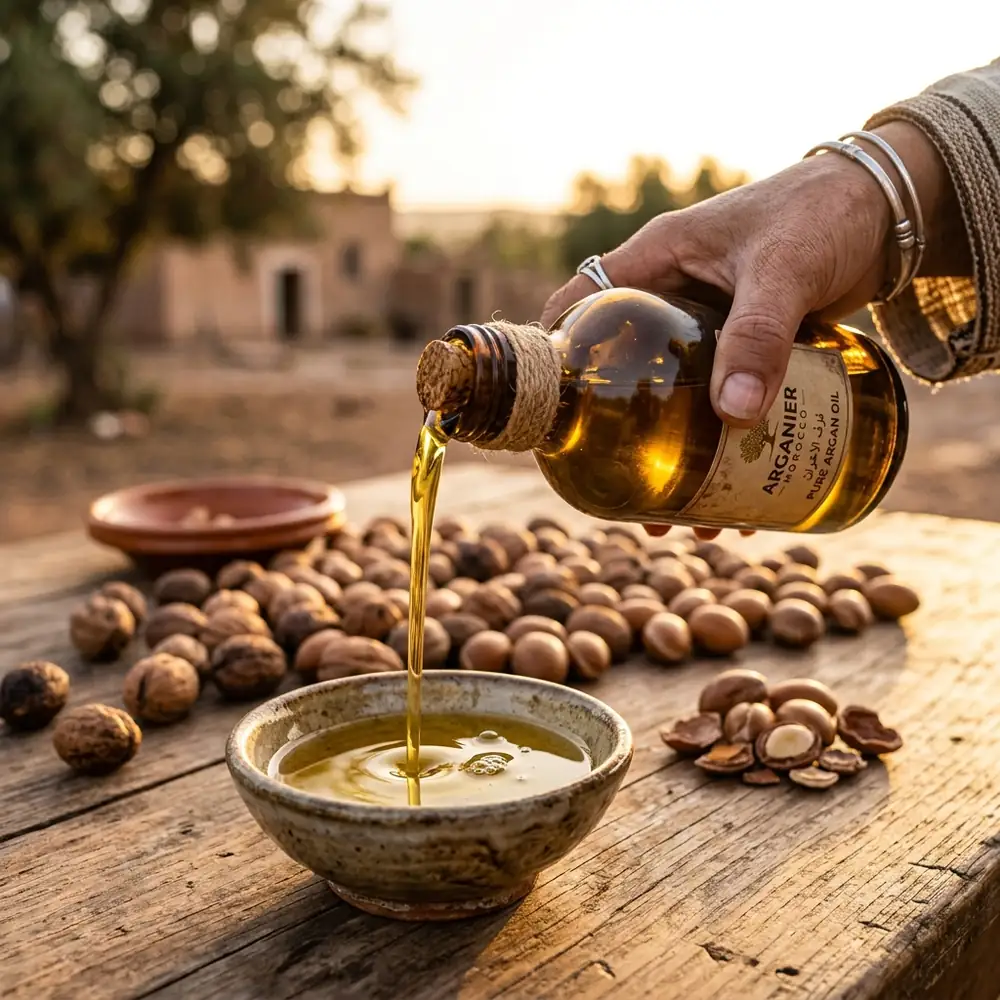
Cold-pressed cosmetic argan oil: produced from raw, unroasted argan kernels. The oil is pale yellow to nearly colorless, with a very light, slightly nutty smell. It is used for skin and hair — the high content of oleic acid, linoleic acid, and vitamin E in argan oil has well-documented moisturizing and antioxidant effects on skin and hair. The cosmetic oil is not for eating.
Roasted culinary argan oil: produced from kernels that have been roasted before pressing. The roasting produces a dark, amber-colored oil with an intensely nutty, slightly smoky flavor — one of the most distinctive flavor compounds in the Moroccan culinary repertoire. It is used at the table as a finishing oil and in amlou (the Amazigh spread of ground almonds, argan oil, and honey that is one of the great Moroccan breakfast foods). Roasted argan oil is not for cosmetic use.
The distinction between the two is important because they are priced differently, processed differently, and used completely differently. A bottle labeled simply “argan oil” without specifying culinary or cosmetic is either poorly labeled or may be the wrong type for your intended use.
What Makes Genuine Argan Oil Different From Adulterated Product?
The most common forms of argan oil adulteration:
Blending with cheaper oils: genuine cold-pressed argan oil blended with refined sunflower, rapeseed, or other neutral oils. The visual and tactile properties of argan oil are partially maintained but the active compound concentration is diluted. Price is the first signal — genuine argan oil at full purity cannot be priced below a specific threshold because the production cost is fixed by the labor-intensive extraction process (kernels are cracked by hand between two stones in traditional production). Argan oil priced dramatically below comparable specialty oils is blended.
Synthetic argan oil: products produced from other vegetable oils treated with argan-derived compounds to produce the characteristic smell, sold as argan oil. These have the correct smell and some visual similarity but lack the full compound profile of genuine pressed oil.
Labeling fraud: oil from outside the Souss arganerie labeled as Moroccan argan oil. The argan tree is grown in limited quantities in other countries (Mexico, Israel, California) for oil production; these oils may be genuine argan oil but are not Moroccan and are not from the Souss Biosphere Reserve.
The best verification: purchase from verified cooperatives or from suppliers with documented provenance from the Souss arganerie. The Union des Coopératives des Femmes de l’Arganeraie (UCFA) and similar certified producer organizations maintain standards and traceability. The PDO (Protected Designation of Origin) certification for Moroccan argan oil, established in 2009, provides a legal framework — look for this designation on products sold in Europe.
What Is Amlou and Why Is It the Best Use of Culinary Argan Oil?
Amlou is the traditional Amazigh breakfast spread — a thick paste of ground toasted almonds, roasted argan oil, and honey — that is one of the most genuinely distinctive flavors in the Moroccan food tradition and one of the least internationally known outside Morocco.
The preparation is simple: almonds toasted until golden, ground to a paste (traditionally between stones, now usually in a food processor), combined with roasted argan oil in approximately equal parts by weight, and sweetened with honey to taste. The result is something between almond butter and a very thick vinaigrette — deeply nutty from both the almonds and the argan oil, sweet from the honey, with the specific argan oil roastiness that makes it taste like nothing else.
Amlou is eaten at breakfast with bread — harcha (the semolina flatbread of the Souss) is the traditional companion — and with no further accompaniment. A small clay bowl of amlou and a piece of warm harcha and a glass of sweet mint tea is the complete breakfast of the Souss Amazigh tradition and one of the most satisfying breakfasts I know. The flavor combination — roasted nut, roasted oil, honey, mint tea — works on a level that is simultaneously simple and extremely complex, the kind of food that improves the rest of the day by being the way it starts.
The Invisible Invitation
Find an Amazigh women’s argan cooperative in the Souss region — there are many signposted along the road between Agadir and Tiznit — and stop. You will be shown the production process: the cracking of the argan nuts between stones, the grinding of the kernels, the pressing of the oil. The women who demonstrate this have been doing it for decades and their speed and precision with the stone tools is itself a kind of craft performance. Buy the oil directly from the cooperative. The price will be fair. The oil will be genuine. Bring it home. Make amlou. The twenty minutes of preparation will produce something that will make you understand why the argan tree’s region is a UNESCO Biosphere Reserve and why the women who work with it have been doing so for longer than any international luxury brand has been interested.
SEO Meta Description: Is your argan oil real? Cosmetic vs culinary differences, adulteration methods, PDO certification, how to buy from Souss cooperatives, and what amlou tells you about the oil’s quality.
Experience the true heart of Moroccan heritage through its culinary traditions. Join us in preserving and honoring these ancestral recipes.
What People Are Saying
No comments yet. Be the first — we'd love to hear from you.
Youssef Amazigh
Culturally Verified & Fact-CheckedThe Moroccan Food editorial team brings together native culinary researchers, heritage preservationists, and experienced home cooks across Marrakech, Fes, and Casablanca. Every recipe and cultural guide is reviewed against ancestral oral traditions and authentic regional practices.