Batbout: The Moroccan Pan Bread That Puffs Into a Pocket in Three Minutes
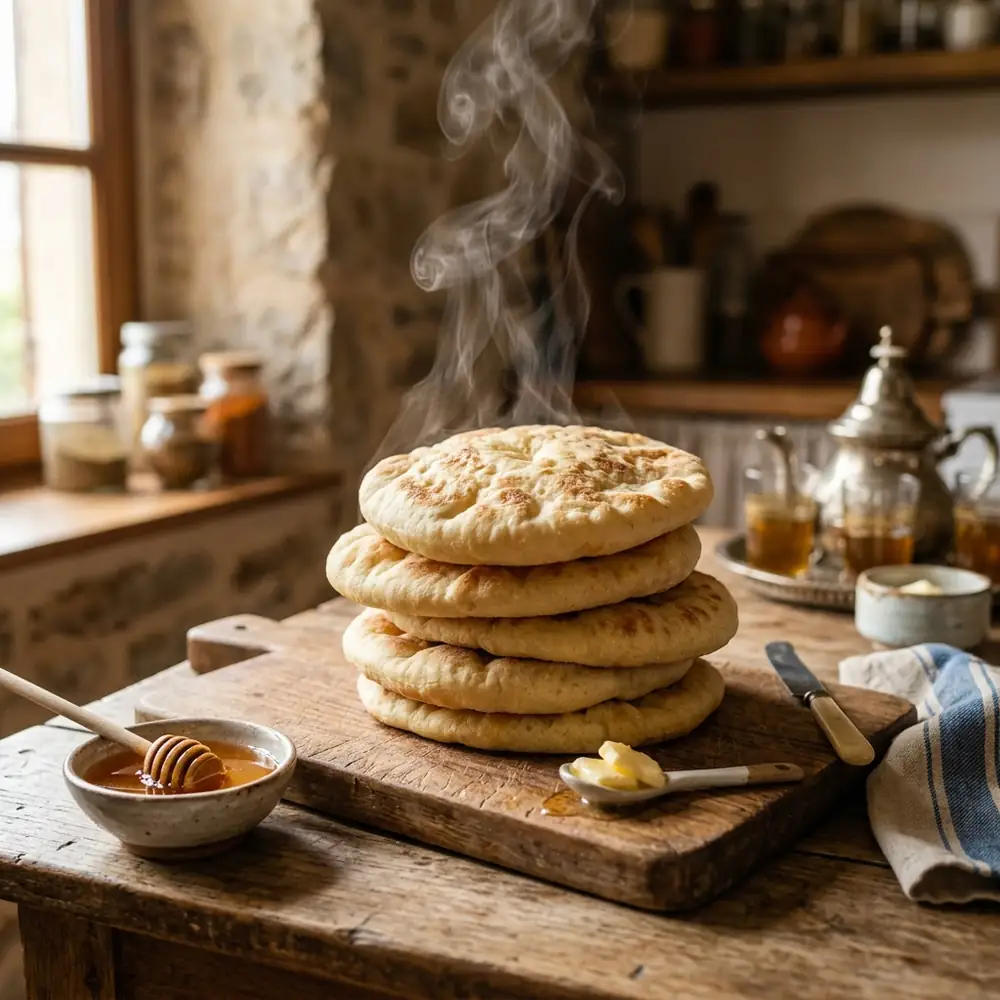
Batbout: The Three-Minute Pocket That Requires Twenty Minutes of Patience Before It
Batbout's appeal is in its reliable pocketing. Put a raw batbout disk on a hot covered pan and in three minutes it will have puffed into a complete pocket — the two layers of the dough separating cleanly, steam trapped inside, the bread a perfect hollow sphere that can be opened at any point on its circumference and filled with whatever is needed. Kefta. A fried egg. Zaalouk. Cheese. The pocket holds the filling instead of releasing it, which is the functional superiority of batbout over flat breads that don't pocket.
Why does it pocket? Because the dough, rolled thin and cooked quickly on a hot surface with a lid trapping steam above it, has its two layers — top and bottom of the rolled disk — heated so rapidly and so uniformly that the steam produced inside the disk by the water content of the dough has nowhere to escape except by separating the two layers and inflating the bread from within. This requires three conditions: the dough thin enough that the steam can push the layers apart (too thick and the dough is rigid), the heat high enough that the steam generates quickly (too low and the steam dissipates slowly without pocketing), and the lid on throughout the steam-pocketing stage (too early to remove and the steam escapes, too late to remove and the bread steams rather than crisps).
These conditions are not difficult to achieve once you know them, and batbout is genuinely one of the more reliable quick bread preparations I know.
What Is the Batbout Dough and How Is It Made?
Flour, fine semolina, dry yeast, salt, warm water. The flour-semolina combination — approximately two parts flour to one part semolina — produces the specific texture of batbout: slightly more substantial than a purely flour bread, with the faint graininess that semolina adds, which holds the pocket's structure better than all-flour bread would.
The yeast is dissolved in the warm water with a pinch of sugar before adding to the flour-semolina-salt mixture. The dough comes together quickly — batbout dough is softer than bread dough but firmer than something too slack to roll. Knead for five minutes. Cover. Let rise for thirty minutes — not the full hour or more of bread baking, just enough for the yeast to activate and make the dough slightly puffy and light.
Divide into small portions — golf-ball size for individual servings. Roll each portion thin — approximately four millimeters — on a lightly floured surface. The rolled batbout should be approximately ten centimeters in diameter. Let the rolled rounds rest for five minutes, covered with a cloth, before cooking. This brief rest allows any gluten tension from the rolling to relax, which helps the bread pocket evenly rather than pocketing on one side only.
What Is the Cooking Technique and Why Is the Lid Essential?
A dry pan — no oil — at medium-high heat. The pan should be hot before the batbout goes in: a water droplet on the surface should evaporate in under two seconds.
Place the batbout disk in the pan and cover immediately. The lid should fit well — steam escaping through a loose-fitting lid reduces the pocketing reliability. Watch the surface: within sixty to ninety seconds, the batbout will begin to puff, the center doming upward as the internal steam separates the layers. By ninety seconds to two minutes, the puffing is complete — the bread is a full dome. At this point, lift the lid briefly and check the underside: it should be lightly browned with some darker spots. Flip the batbout. Cover again for thirty seconds to one minute. The second side browns more quickly because the bread is already cooked through.
Remove from the pan. The puffed batbout will deflate slightly as it cools — this is normal, and the pocket remains intact for filling even after deflation. If you want to fill it immediately, the pocket opens more easily while the bread is warm.
What Are Batbout Filled With and What Works Best?
Kefta and harissa: the classic street combination. A small amount of freshly cooked kefta — from the pan or grill — pushed into the pocket with a smear of harissa on the interior. The pocket holds the kefta in place as you eat standing up, which is the correct way to eat kefta batbout from a street vendor.
Fried egg and cheese: breakfast batbout, found in Moroccan households everywhere. The egg is cooked over-easy — the yolk soft — and placed inside the pocket with a slice of fresh jben (Moroccan fresh cheese) or kefir cheese. The soft yolk breaks inside the pocket when eaten, dressing the interior.
Zaalouk or taktouka: the cooked salads are soft enough to be scooped into the pocket with a spoon, and the pocket's structural integrity holds them without leaking better than a flat bread.
Simply olive oil and argan oil with salt: the simplest and one of the best. A small pour of olive oil and argan oil into the open pocket, a pinch of coarse salt. The oils absorb into the bread's interior. Eat immediately. This requires no preparation beyond making the batbout and pouring the oils, and it demonstrates what good bread and good oil together are.
The Invisible Invitation
The pan is hot. The batbout disk is in. The lid is on. Watch the center: it is flat for forty-five seconds, then a dome appears, rising from the center, the bread becoming a sphere over the next sixty seconds. The speed of the pocketing — so fast that you can watch it happen in real time — is its own small pleasure, the kind of kitchen phenomenon that makes cooking interesting regardless of whether you are doing it for the first time or the hundredth. Flip it. Thirty seconds. Out of the pan. Split it open at the edge and feel the steam release from the pocket. Fill it with whatever you have that is warm. Eat it while the pocket is hot enough to warm your hands from outside. This is the correct first experience with batbout. The second experience can be more composed. The first should be immediate.
SEO Meta Description: How to make Moroccan batbout pocket bread? The semolina-flour dough ratio, three-minute covered-pan pocketing technique, why the lid is essential, and the best fillings from kefta to zaalouk.
Experience the true heart of Moroccan heritage through its culinary traditions. Join us in preserving and honoring these ancestral recipes.
What People Are Saying
No comments yet. Be the first — we'd love to hear from you.
Khadija Tahiri
Culturally Verified & Fact-CheckedThe Moroccan Food editorial team brings together native culinary researchers, heritage preservationists, and experienced home cooks across Marrakech, Fes, and Casablanca. Every recipe and cultural guide is reviewed against ancestral oral traditions and authentic regional practices.